The Conception, Consolidation, and Expansion of Islam.
622 to the first half of the 8th century. The Umayyad Caliphate.
During this period, the revolution consisted of the methodical and systematic use of armed force by believers to combat infidels (or idolaters). And, in the same political and religious context, to extend the lands of Dar al-Islam throughout the world. Dar al-Islam refers to the lands where Islam governs and where Sharia law is applied as a general social rule of life.
No other major religion has followed and used armed violence in the same way and with the same continuity as Islam. To impose its creeds and morals throughout the world.

This is not to say that other religions have not employed violence in their defense or in the active persecution of their infidels or those who differ from them throughout their history. There are the Crusades and the Religious Wars in Europe; the war of Joshua to conquer the land of Canaan, which Jehovah gave to the Jews, and the Maccabean War for the independence of Judea.

But this has never been part of its essence and nature, as an “instrument of redemption” for humankind, as another “pillar” of the basic duties of its believers. “War has been prescribed for you, and you have rejected it. So, Allah will seek out a more obedient people and reject you.” This has been confirmed in Islam throughout the centuries, albeit intermittently, by the ulema or ideologues, the muftis or jurists, and the imams or direct preachers of the people.
The initial trajectory.
In the time of Muhammad, barely into the 7th century, power in Arabia was divided among the tribes that inhabited it. But the Hijra, the migration of Muhammad and some 50 followers (gained through his preaching and that of a few disciples, since 610) from Mecca to Medina (the Prophet‘s City), ushered in a new era of transformation in the world and expansion of the Arab Islamic Theocracy.
Power throughout the Near and Middle East was divided between the Sasanian Persian Empire and the Byzantine Empire.

A few years later, the Arabs had seized control of the Sasanian Empire (644). They had also reduced Byzantine territory in Asia, which had previously extended from Egypt and Greater Syria to the Red Sea and northern Mesopotamia. Only Anatolia remained under Byzantine control in Asia.
Meanwhile, the Arabs were gaining control of North Africa: in 641 they occupied Egypt and quickly spread to Tripoli (Libya) and Ifriqiya, as well as the Atlantic coasts of the Maghreb (in 697). Finally, in 711 they invaded the Visigothic Kingdom of Hispania, which they conquered in just a few years.
They were «aided» by Arrian Christians, who denied the divinity of Christ and thus readily accepted the one God of Islam, particularly regarding the establishment and consolidation of bureaucracy. Interestingly, the so-called Christian Reconquista of Spain lasted seven centuries of fierce, not continuous, struggle.

But in 732, they invaded the Frankish Kingdom. There, they were defeated at the Battle of Poitiers, near Tours, in October 732. And they were repelled forever, beyond the Pyrenees.
The Berber and Rif Society.
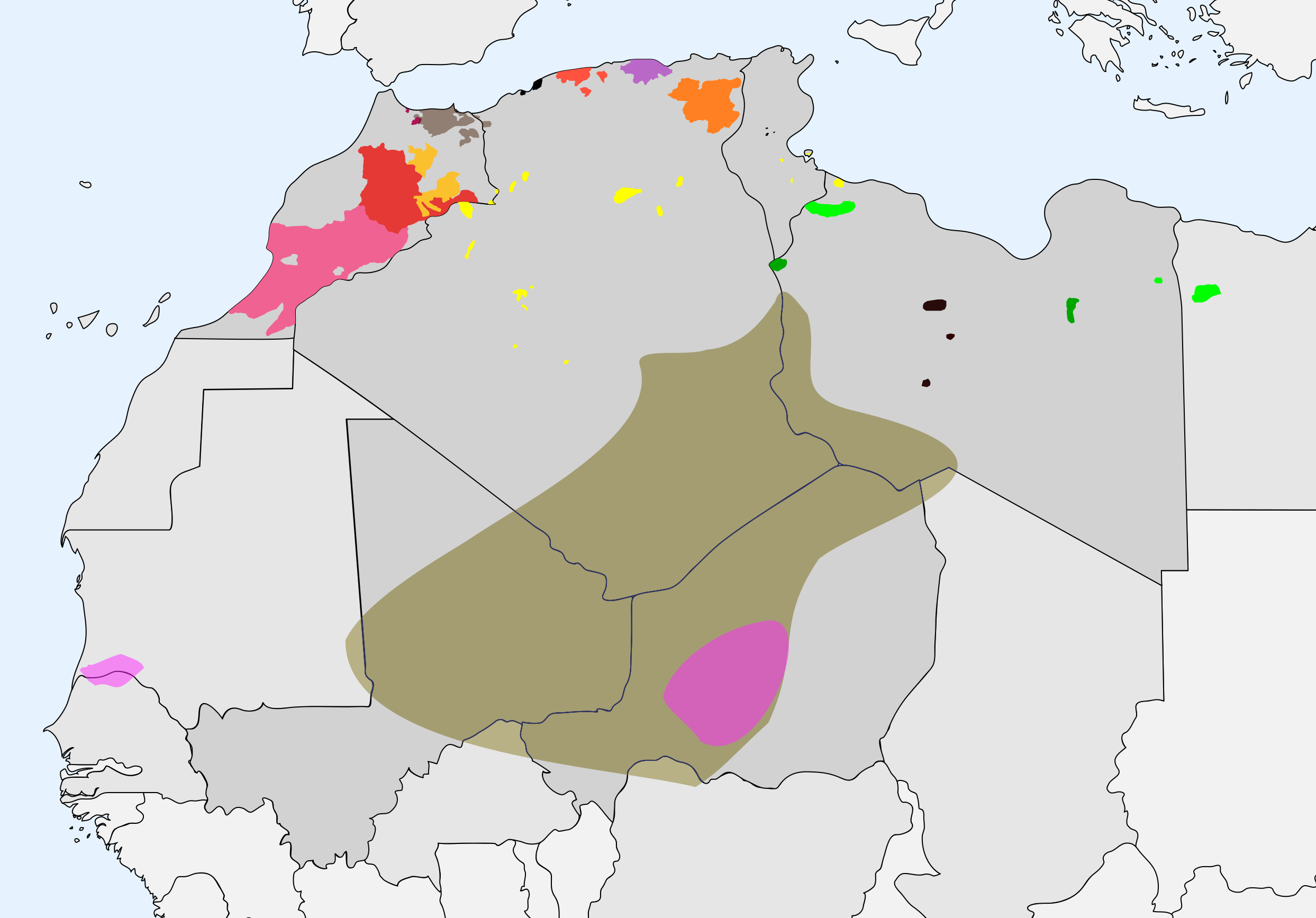
Berberia is a rather historical term, encompassing a broad region of North Africa, from the Atlantic coast of Morocco to the eastern border of Egypt. This region has been inhabited by Berbers since ancient times and was influenced by Phoenicians, Romans, Arabs, and Turks. Today, this term or designation does not refer to a single political or geographical identity.

The Rif is a mountainous region in northern Morocco, extending along the western Mediterranean coast. There is no official figure for the area of the entire «Rif cultural region,» as it covers several provinces in northern Morocco, from Tangier in the west to Melilla/Nador in the east, and from the Mediterranean Sea to approximately the Ouerrha River in the south. The Rif people predominantly belong to the Amazigh (Berber) ethnic group. There is no specific population census for the Rif ethnic cultural region.
Its population consists of local Berber tribes, who have maintained their culture and traditions throughout the centuries and fought to preserve them. The Rif region boasts great natural beauty, with mountains, valleys, and rugged coastlines. Its most important city is Al Hoceima, the capital of the province of the same name.
The resistance of the Rif Berbers to the Arab conquest was a long and complex process, spanning several centuries, and ultimately, barely noticeable. The Arab conquest brought significant changes to the Assabiyah of the inhabiting tribes. This refers to the consciousness and unity of the social group, which in this case are local tribes—that is, “original, primitive, primary social groups.” They base their unity and sense of belonging on it, defining who they are and what they recognize themselves to be.
In turn, it possessed sufficient spiritual strength in the nascent groups to help them feel they were enough strong and able of the first movements of expansion and settlement throughout the vast region. It was their primary and centripetal social force.
The Berbers of the Maghreb were “Old Christians” before the Islamic invasion. There were already 47 bishoprics functioning there in the 5th century after Christ.
The Berbers, with their light skin, are distinct from the Arabs or dark-skinned people (Moors) and constitute a characteristic majority in regions such as Kabylia, the Rif, and the Aurès (in Algeria). In Morocco, 44% of the population are Berbers of the Amazigh, Gomara, and Zenata ethnicities.
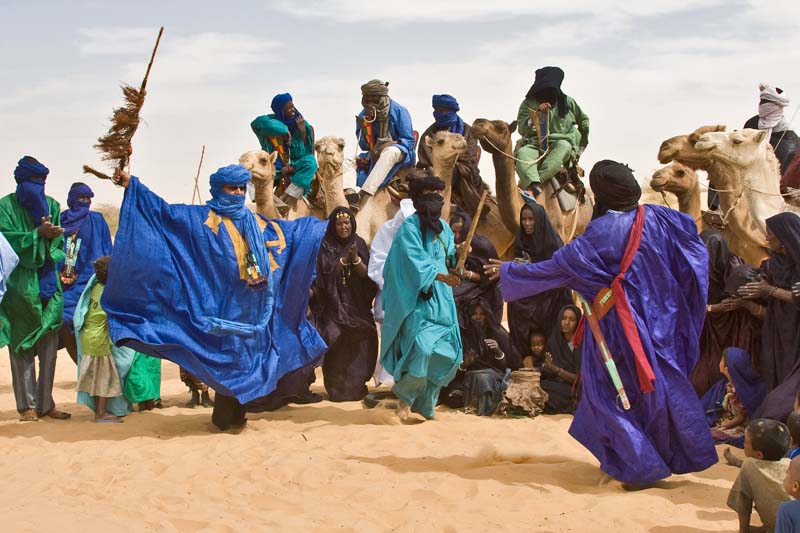
Their social structure divides them into relatively impermeable classes, based on their origins and occupations. The chiefs or amenokales are “first among equals,” elected by the noble classes and warriors in their sovereign assemblies, which make or ratify all important decisions for their community. These “chiefs” are like “privileged negotiators” with the various governments and authorities. They enjoy personal, rather than institutional, authority. And their agreements can be ignored by adult men if they are not ratified by those sovereign assemblies.
The natural and political conditions of their habitat have always been harsh.
Thus, the Rif people have developed a resilience, a human resistance, a social vaccine, to survive and endure in their ancestral lands. Therefore, their religion is not the only virtue of their ethnicity. Essential, enduring virtues or values also stem from the mutual interplay of rights and duties among the members of the social group. From this arise personal identity, defined and compared to their peers, and the mutual protection of individuals and their basic societies.
In modern times, with unmanned aerial vehicles, artillery and air bombs, and all-terrain tracked vehicles equipped with automatic weapons, the isolation of the Rif people has been largely overcome. The Rif people are participating in Moroccan politics and society through political parties and social movements, generally religious in orientation. They have been working to promote their rights and interests within the Moroccan government and society.
The social-political and religious mechanism of Jihad.
Three were the reasons that stimulated the tribes to starting the way of the conquest of large and distant lands and peoples, out of the Arabic peninsula. The first one was the religious reason. As in any religious primitive community, the Umma was the center of the mandates and Allah’s benedictions. They being collectively and keenly lived the fulfillment of a monotheistic and simple doctrine. This religion was demanding an active and coercive, constant and expansive proselytism, directed to the unfaithful persons and the hostile frontier peoples. “O believers, pursue the idolaters (or infidels) until all worship on Earth is given to Allah.”
(To be continued)


 IN THE TRIBAL ZONE OF PAKISTAN, AT THE BORDER WITH AFGHANISTAN.
 HISTORIC STUDY OF RESULTS Y VICTIMS.
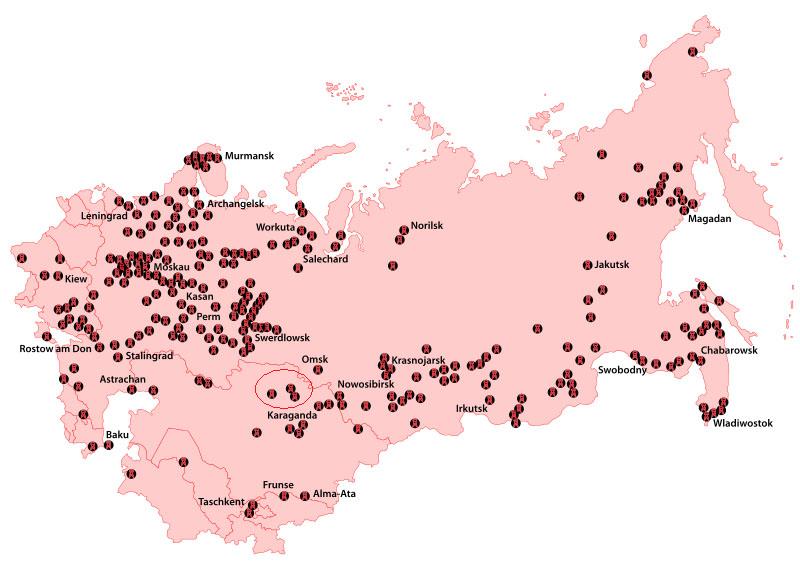 GULAGS IN THE USSR.