THE INFANTRY FIGHTING: EAST VS WEST.

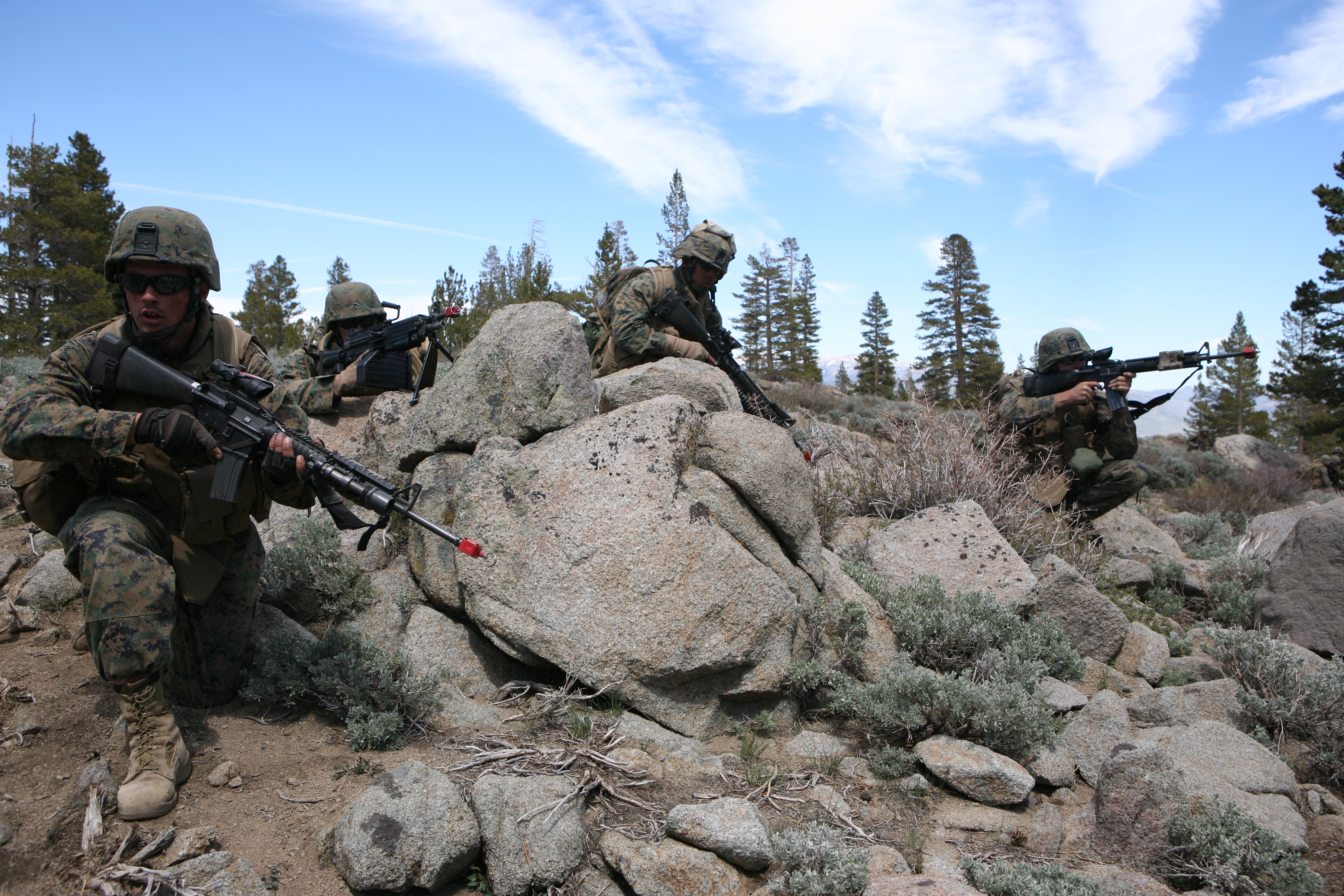
The last tens of meters up to reaching a determined enemy or gullible in his positions, form the fighting zone of the infantry. And she has yet major validity and importance in the actual wars. With the approximation to the combat from the brigade, the last global direct human possible vision of the units and resources, and the division, the western doctrines tend to be fixed in the dominant characteristics of the area and of his transitability or ground ongoing throughout the day and of the years seasons and according to the climate, to realize his plans.

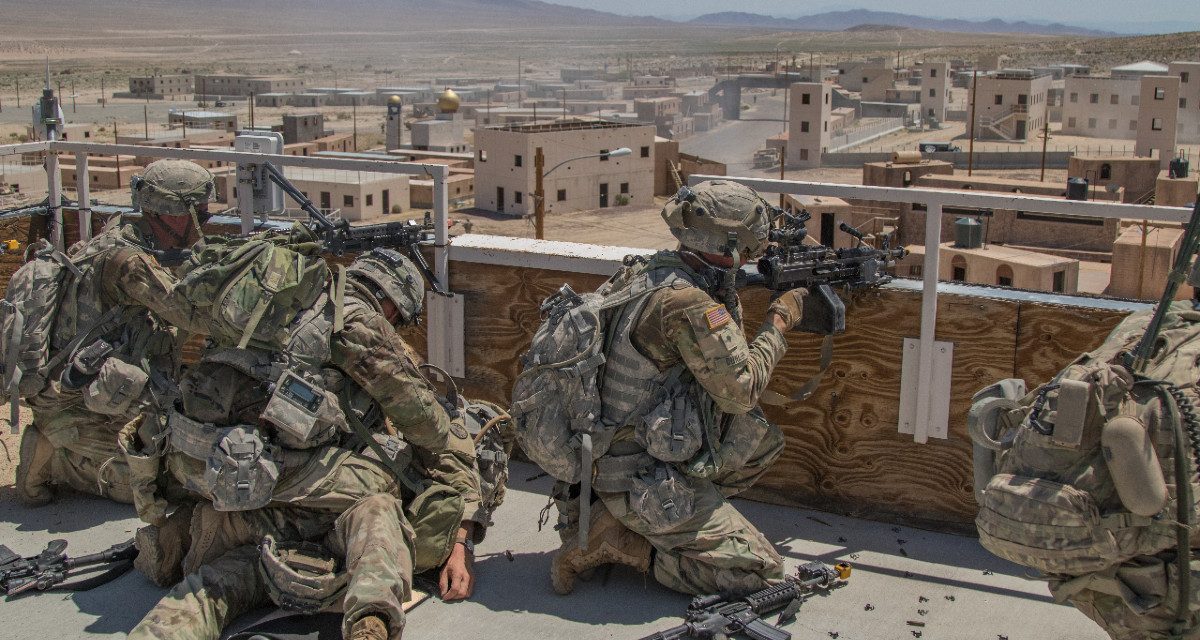
But they neglect the use of the microarea at the levels of squads, teams, companions pairs and weapon servants. In the microarea, by means of the cover, the patience, the secrecy and the concealment, those «combats groups» might use against the enemy, his capacities of resistance (to the surprise), of mobility or concealed tactical «activity» (in the defense), of initiative and of freedom of action. Operating over him in minuscule «action interphases» (or microsectors). This is specially actual and necessary in the fight against regular and irregular «nobody» enemy, which lack the modern military technological advances and the economic resources to provide them. And that search for need and/or idiosyncrasy, to compensate his asymmetries with the domain of this infantry fight, seeking to see this way the white of the eyes of the enemy.

The military American Doctrine for the modern Wars.

The news that are received since years from the war operations zones in the countries in conflict, proceeding from the journalists inserted in the fighting forces, of the correspondents detached in the different populations of those (Kabul, Baghdad, Saigon, Hue) and those that the armies in presence issue, are revealing a series of characteristics that are common to the forces of the different western modern armies. They all are following the trend initiated by the Americans of having the enemy less nearby, more seen and observed and more beaten by the heavy air and artillery fire. It is not looked with this, in increasing effects order, to blind it, to disturb it, or to neutralize it, but to destroy it. That is the costliest and improbabliest of his effects and that demands an increased and deficient expense of the resources. And the worse thing is that does not always exist his direct connection with the offensive maneuvers of the ground forces. That often do not come to beating the broken enemy after the fires blows. The ground deployments are «secondary» and, therefore, also are his movements, dispersions and concentrations. The heavy fire has turned into a «economic and industrial» substitute (it changes military effort into dollars) of the maneuvers and the assaults of the ground forces. And the reason of all that is known by the poor and asymmetric enemies of West: the horror to the risk in combat and to assuming falls.

Resultado de imagen de deep battle american doctrine MONGOLS SOUGHT FOR THE ENEMY DISRUPTION, ATTACKING ITS VULNERABILITIES, PENETRATING ITS EMPTY REARWARDS, MOVING FASTER AND CREATING APPEARANCES FOR THE ENEMY.

The massive employment of the heavy fire is the principal «argument» of the Pentagon. His doctrine (Field Manual of the US Army 100-5, Operations) does not emphasize the initiative and rests in enemy reacts to the «real or potential action» from protected positions in the whole operations zone. The USA has created a ground forces with few capacity and skill in his small units for the combat in the infantry fighting zone, where more risk take the men. The trend of the doctrine looks for a formation (knowledge, education and command) and an intelligence (as elaborated, sufficient and constant information) excellent and abundant for the chiefs and officials. They are the managers of conceptualize the combat and the persons in charge of the fulfillment of the mission of his units and small units. It is supposed that the soldiers will do well and will work well, being able to use his sophisticated equipments and those of his companions of unit and fulfilling the orders of his subofficials and officials. These are supposed elaborated at the sufficient level, to give them perspective and cohesion with the intention of the high controls.

Resultado de imagen de deep battle american doctrine GOOD AGAINST A II GENERATION ARMY AND MORE CENTRALIZED THAT OURS: THAT OF SADAM HUSSEIN.

One of the operation principles that gathers strength in this renewed doctrine is that of the simultaneity. This establishes to beat at the same time, with heavy fire of artillery and aviation, the first and second enemy attack echelons and even his reserve, using against her the aviation and the tactical rocketry. The infantry and tanks forces are designed to attack or to counter-attack this now beaten enemy in all his depth and to assure the battle decision. Here does not exist the detection and the assault to the enemy weak points. Nor the «general saving» (an essential, universal and original principle of the war, according to Fuller) of means and of human lives. Nor the skilful, risky and fruitful maneuvers of functional and/or positional dislocation of the enemy. In opened area, the infantry cannot attack without indirect and/or direct heavy fire support and without concealment (night, fogs, smokes, draggings). But this complementary support has been hypertrophying, up to turning into a «weapon» for itself (as decades ago it was tried to do with the tanks) in the mix of the military resources and in one supposedly «maneuvers warfare». About which speak, but not well applied, the updates of the FM 100-5 from 1985. The such promising, already omnipresent and wished “not driven planes” of exploration and/or bombardment or «drones» are not more than the global projection in scope, safety of employment for the user and game of possibilities of the heavy fire, about which we speak. The marshall von Hindenburg designed the adage: «A battle without Schwerpunkt (the place where or the unit that applies our “principal effort”) is like a man without character». The North American army acts generally evoking a heavy, forceful mace, hammering and excessive. The Afrika Korps, by the contrary, reminded us an elegant, agile, unforseeable, (almost) sufficient and effective foil.

The Employment of a IIIrd Generation Army in the “military asymmetric” Enviroment.

The wars of fourth generation are the counterinsurgency wars or guerrilla wars or irregular wars or armed revolts or national liberation wars or organized banditry, which always have existed, coexisting with the conventional variants where only regular forces combat. They are those that the USA has lost or not won lately: Vietnam, The Lebanon (Marines’ peace disembarkation, then demolished in his barrack), Somalia (the uncontrollable and unforseeable wasp’s nest of «all against all» of the tribal masters of the war and the militias of the Islamic Courts, now of al-Shabab), Iraq and Afghanistan. They are very unequal wars against an enemy of lower technological military level man relative to the own regular forces, taken root almost always in the own or occupied civil population, militarily low intense and extensive or long in the space and the time. With awkward frequency, when the human (own or local agents) or technological Americans «sensors» detect some probable rebel activity of the yellow ones, muhaydins or hostile foreigners, they first devastate the building, the «block», the zone. What for them is really a surface target. And then they are going to wipe off and to do the corpses inventory, the «body count». Sometimes between the rubbles they can meet the corpses of a yellow, blackish or innocent and numerous Muslim family. It abuses of the attrition, when the enemy fuses with the civilians. It is careless the active, unexpected patrolling work, who needs proportionally less material and human means. But that bases In the military trade, the physical and moral courage, the freedom of action and the creativity in the low and intermediate commands and in the men.

Imagen relacionada OBAMA FIRED CENTCOM GENERAL MATTIS WITHOUT A PHONE CALL.

The western soldiers have exchanged or forgotten the «principles» or rules of the good to do in the war, for the simultaneity and the depth of the distant fire, covering the whole enemy highly probable zone. With it there is neither means economy, nor principal effort, nor the necessary discrimination between soldiers and the potentially enemy civilians. The armies look eagerly for the safety and the confidence in his decisions and missions. Precisely when the environment in which they are and act in the last 5-years periods, the guerrilla or asymmetric wars, is variable, fleeting, without definite limits, confused and hard to grasp. The uncertainty, the chaos, the mistakes, the friction and the failures, the scanty means and the partially fulfilled plans, the weariness and the fear are the «omnipresent demons», that characterize and concern this neutral «magma» of the war. And it is neutral because it leaves being drive and guide largely by the human superior «plans and actions». That are stimulated by the «correct sense» of the commands, the determination, the will, the physical and moral courage, the motivations (ideological, religious, ethnic, social…), the suitable training, the sufficient equipment, the commitment with the tasks and missions and the respectable and respected commands.

Resultado de imagen de obama got away from iraq and afghanistan SOME DEADLY RECORDS.

George Bush’s strategic national doctrine established, but without being due explained, not tacitly accepted by both American parties, that the «asymmetrical wars» (irregular and with low level of military equipment) were supported and necessary, to remove of the American territories and those of his allies, the threats of the fundamentalist foreign terrorism of any origin, religion or ideology. It justified the ill-fated post war bad oriented occupations of Iraq and Afghanistan. But, with a fiscal and exterior deficits ran away and with a Democrat Administration, it is necessary for the USA to save in military resources. To dedicate them «to construct a nation here, at home», as defined Obama. This way, the USA lowered qualitatively the bar of the exterior terror, putting al-Qaeda as almost the only one violent not national enemy. This internationalist salafist terrorist «network», with delirious and impossible ideas, without own territory, with his operational chiefs known, fled and not wished as guests in a normal country, is a more attainable, adaptable and manageable aim for his forces and means of «rapid punctual incursions». This justifies the increase of the use of the drones, spy satellites, own or local agents in the hostile areas, operations of assaults by elite units and small expeditionary forces and of Marines amphibious assault. These transported by «ships of control and transport» of strategic projection with his naval escort. The deployments of tens of thousands of military men and his luggage and specific equipment for several years in an operations theatre, they are indefinitely rejected by the new «doctrine» of the «diminishing defense».

(TO BE CONTINUED)
THE TACTICAL FACTORS AND THE MILITARY SURPRISE.

THE TACTICAL FACTORS METT-TC OF THE RECEIVED MISSION FROM THE DIRECT COMMAND.

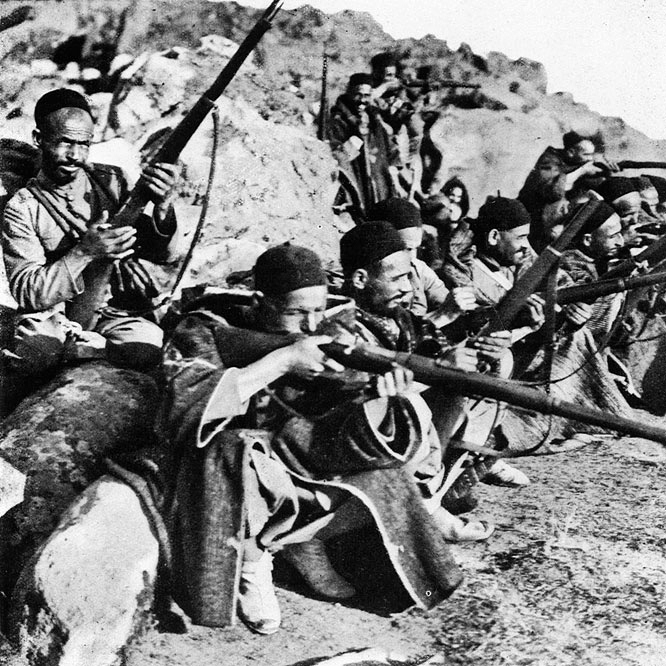
The Mission (M) determines the employ of the surprise, because it defines the «tactical environment«, over the merely spatial component, in which this one can apply and where it will be developed. The fulfillment of the received mission will determine decisively the possibilities of conception and application of the surprise. On having defined and express that one, the goal of the multiple and convergent actions of the efforts and means assigned by the superior command to a tactical chief. The detection by the exploration or the advanced “units of action” of a possible «interface of action» favorable over the enemy, does not authorize “per se” to a command to separate from the fulfillment of the mission of the top command.

The Enemy (E) is the essential and principal aim of a command. And the surprise is a multiplier essential factor of his potentials and means, to fulfill the received mission and to contribute to it. Surprise must then to look for: the spatial or functional dislocation of the enemy; or the economic wastage of his capacities; or a more rapid and effective fulfillment of the entrusted mission; or a positional advantage for the own deployment, for own immediate maneuvers; or the decisive assault or the counterattack to the critical or secondary vulnerabilities of the enemy, according to the plan of the top command.

The Terrain (T) and, for extension, the space is the essential support of the «tactical area» of the military action. This must use it always in its own profit, both in the assault and in the defense. In the rapid maneuvers, typical of the surprises, one will prefer using the favorable area for the employed weapon, in order that it favors the pace or tempo and the impulse or moment of them.

This way, the tanks (which fighting way is the attack) will use favorably in lightly wavy grounds and with great domain by the sights, without perpendicular cuts or water currents or rocky important outcrops. Nevertheless, the complete surprise can need the employment of tanks in difficult, not impossible ground, for them, so they are not waited by the enemy. Even, using in the spear of advance fewer armored units than the usual ones, which, with the surprise, would make feel with his presence equal fire power and shock.

The grounds provided with covers and/or concealments and the night and the atmospheric phenomena or meteors (rain, snow, hail), that reduce visibility and combative disposition in the defenders, favor the movement to the combat of the units and means of the surprise. Also, they allow their temporal concealment in the decided rest and departure zones. The inconvinient and/or disagreeable grounds facilitate the final approximation of the means of the surprise: gutters, edges of the streets close to the sidewalks, vertical walls that are practicable, cultivated fields, bushes, wetlands. In exchange for inconveniences and of time in the advance, we will win in the effective employ of the surprise.

In the defense, we will use the broken ground, with concealment relative heights (CRH) and covers for the small units (urban and industrial zones); partly resting on the rear slope and in natural obstacles (rivers, trees spots, etc.) that run parallel to the tracing of the defensive position; that impede or reveal the enemy movements, breaking his impulse, and facilitate the rejection from our own favorable positions. The counterattack from the depth of our tactical zone on the reverse or the flank of the enemy spears of advance, preferably after his determination, will be a very effective employ of the surprise. The fire traps (fire bags), the dispersed and small minefields, the fire blows from the defense points and resistance nests, retained up to the close distances with the enemy, are defensive surprises, but more waited by the enemy.

Being based on the ground characteristics and paying attention to the particularities of some part of the tactical area (enemy, mission, area, opportunity) the surprise will be planned and decided. And it will implement his assembly, deployment, support and unfolding, following a sufficient, protected and constant flow.

The Troops (T) necessary to execute and fulfill the conceived and decided surprise, must be adapted for the mission by his characteristics. The surprise is an offensive action over the enemy, developed unexpected, rapid and thougtlessly, in general. The equipment of the men and the air and artillery support must be the necessary and sufficient, in conformity with the determined plan. Besides his general training, the men must receive the specific training, depending on the characteristics of the mission and the actions to develop. The characteristics of obedience and initiative, patience, resistance and sobriety, physical qualities, enthusiasm and spirit of group, commitment with the mission, must be the best in the men. As they will be an important part of the actions. And they will act as chiefs and persons in charge of themselves and of his mission companions, in certain moments.

It is important a complete real time training of the mission. There are devices that fail at the X hours of use. The tension on the men and his sustained efforts affect their comfort and their efficiency and rapidity of action. With repercussions in his combative disposition, his alert and the precision of answers.

Often the heavy fire will be used to conceal the enemy from our surprise. The coordination of different weapon in the same mission or sector, is a critical point of it. For example, units of infantry, reinforced by some squads of engineers and supported by a few tanks sections, crossing a thick forest to surprisingly reach an enemy important position in the depth of his deployment. Acting in the same sector of advance or assault, the coordination between the small units must be tested and confirmed.

The Time (T) of the mission is a decisive factor of his success. On one hand, it must be the opportune one. For other part, the time must be enough and accelerated uniformly in the «successive cycles of action» of the development of the mission. In order that the concentration, the sequence or the simultaneity of employs and the forcefulness of our actions demolish the enemy human aim at which they are applied, once gotten the surprise.

It is necessary to consider always that all the actions need to happen an estimated planned time plus a complementary corrector time. This will depend on the degree of complexity of the mission: units, logistic support, demonstrative helping actions, crossing distances, passage difficulties, presence and intention of the enemy, simultaneity or sequence of employs, coordination. And it originates in the failures that arise in all the human activities and in the small and medium mistakes that are committed by the commands and men. Some call these the tactical friction of war. A serious mistake would suppose that the surprise was badly calculated or executed and it is an operational serious mistake.

The civilians (C) must not be damaged in a surprising mission. Even when the enemy mixes and protects in a civil area, it is possible to define and to make concrete a purely military aim. To isolate, attack and extirpate it with military accurate and mopping-up. Here is necessary the employ of the organic weapon of the ground attacking unit, which limit the not wished hurts and make concrete his effects in the selected targets.

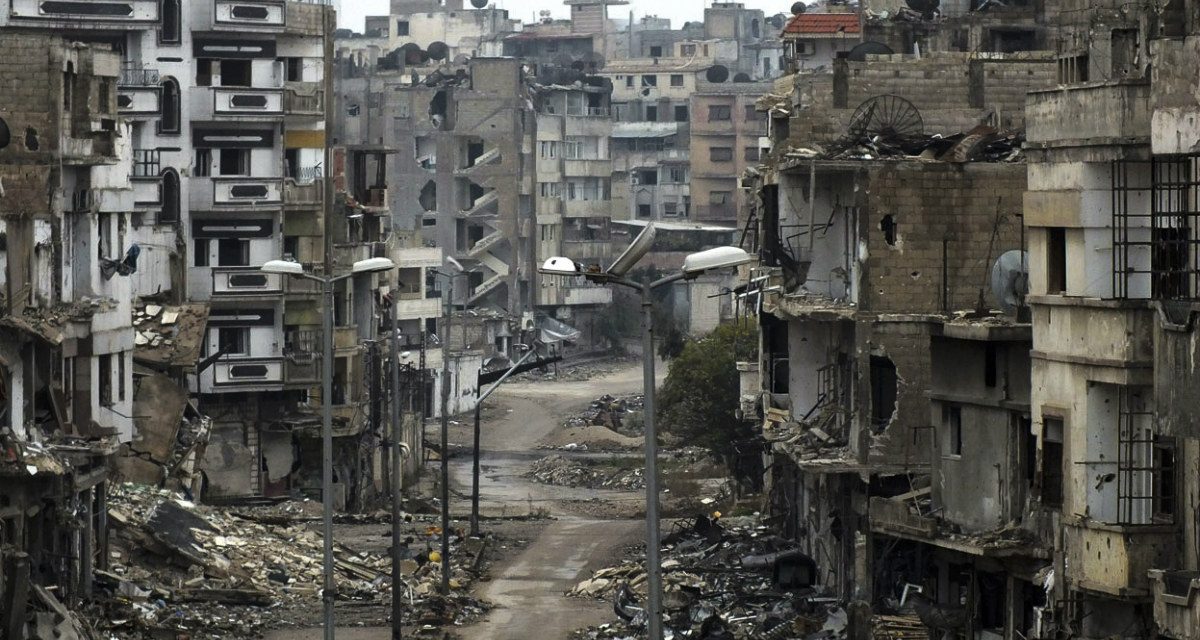
The heavy indiscriminate air and artillery fire is a weapon of merciless and spread results for the employ in urban areas. His aim is not to blind, to disturb or to neutralize the enemy. The excessive and insistent heavy fire seek to destroy it. That is the more uncertain and less economic goal of all. Both the Soviets and the western allieds have used it with profusion in the civil wars of the Southwest of Asia. His use has as goal to destroy from far off and before to the assault, the enemy positions in the villages. Avoiding as much as possible that the own ground forces fight at close distances with the islamist rebels.

THE NO “COMBAT AVAILABILITY” OF THE FORCES IN THE DEFENSE.


A variant exists of deficient or useless «combat availability» of a military force. And it happens when exists the «entrusted«, the «satisfaction» of the commands in the real state of alert of that one. Without assuming or to appreciate the failures in it.

The Development.

We know that the high limit of a characteristic or property is very difficult or impossible to reach. Some of them are the «total destruction» of the enemy and the absolute «public security» in a population or in a society. If you monitor the great public sites, airports, parks, they would attack a church or a mosque…There are always plenty of potential objectives and not enough security forces… But what is exigible and necessary is that the commands optimize the use of the received military resources, which always are insufficient, in the tasks at their charge. With it they will have made all the humanly possible for fulfilling them. Since the optimization of those is equivalent to his «good employment » and to everything what this involve.

The variant of the deficient «combative availability» that we treat, arises in the defense. And it has several possible origins and reasons. This way, we have the deficient organization and deployment of the security zone. That will allow in major or less measured its secret, patient and multiple penetration by enemy groups. That will not have to possess necessarily sappers’ training. Also the dominant positions near the more or less permanent and important position of the forces, must be garrisoned by advanced detachments of, at least, a squad.

The approximation routes to the forces, from certain distance, must be registered by the mortars, the artillery and/or the aircrafts of support. In some sections ambushes can be established and, in others, obstacles and barriers covered by the own fires. Other sectors can be provided with cameras and sensors. The thermal and acoustic airborne sensors can track and detect small enemy units in the different phases of their approximation march to the combat. The intelligence should facilitate trustworthy reports, with sufficient information and updated with the enemy intentions and plans in our zone and their development.

Resultado de imagen de soldados indisciplinados THEY ALSO COULD BE IRREGULARS.

In the irregular war, the enemy is in the habit of reconnoitre, at least initially and also in fluid conditions of fight, by observation. It is important to locate and eliminate these «reconnaissance positions», which will never be fixed, but alternative and ephemeral. The own patient observation is the way. And bearing in mind that, if the exigency is intense, every 30 minutes must be substituted the observer, Because he looks, but already he does not see. If additional means exist for it and as complement, it is necessary to use the patrolling against the armed or not native marauders, in the way of reconnaissances and attacks with limited aims.


Let’s remember that the correct security must prevent that our forces could be beaten by the fire of the enemy infantry weapons. Also, detecting the enemy, tactical surprises from him are avoided to those. And that the presence and/or the action of our forces in this zone, including the advanced detachments, have as a specific task, to win the sufficient time, in order that the forces that have advanced and deployed them, could reach the right «combat readiness» to reject the enemy. And for all this, the security is a irrenounceable part of our total “combat readiness”.

But, also the most experienced veteran or professional units can be «surprised» by the appearance in force of the unexpected enemy, in an assault against them. And it happens when they are entrusted or satisfy with a deficient security. That is another face, less evident and defined as such, of her not or insufficient own “combat availability«.

An Example from the Western Front in the Second World War.

On June 10 of 1,944, soon after the midnight, 2 º battalion of 29 ª division of infantry of U.S.A. was prepared to pass the night. The men had traveled approximately 25 Kms. during the last 20 hours. The executive official of the battalion, commander Maurice Clift, chose a zone formed by two meadows surrounded by hedgerows, in order that the troops were happening the night in the open. The men entered them and were left to fall down against the terraces of the hedges. So tired they were that nobody bothered to come untied the rucksacks and the personal equipment. The majority of they remained slept at once. Some few paid attention to the noise of a few engines coming closer, but they thought they were American vehicles.

They were actually German tanks and trucks belonging to 352 ª infantry division. Not known by none of two rivals, the Germans had been withdrawing and following the same route that the American battalion followed in its advance. When they stopped, the German explorers detected the North American movements in the meadows of encamped. The Germans advanced secretly and surrounded the meadows.

Suddenly, the Germans threw flares. Under the sinister light, almost as brilliant as the midday light, its assault cannons opened fire on the hedges against the Americans. Along one of the hedges, a platoon got up and was cut down by the German machine guns. Many Americans, scared and disoriented, were running across, looking for the meadows exit; the German infantries were knocking down them with its repetition fire. The shells of the German mortars were exploiting for all the zone of the meadows. The Americans were responding with a vague, jerky rifles fire, directed to the opposite hedges. Which could reach both the Germans and their own men in their strolling.

Resultado de imagen de soldados indisciplinados  WASTER SOLDIERS.

«It was terrible”, a survivor was indicating general Cota. «We had crawled more than 90 ms. out of the field, when we listened from behind, a shouting of our men. I thought that the Germans were launching a bayonet charge against them».

The commander of 2º battalion, lieutenant colonel William Warfield (ironically, camp of war), had his command post in a farm close to the highway. Warfield tried to establish a defense, but it was in vain. The officials who threw out the house towards the field, were brought down rapidly. A German shouted in English towards the command group: «Give up, give up!». «Of giving up, certainly not!», roared Warfield. He tried to lead a small group towards the meadows where his men were, but turned out to be dead immediately.

The battle extended about 20 minutes. The battalion had 150 casualties, including 50 dead, slightly more than one third of its effective. Little before dawn, a gravely injured young lieutenant who was reporting to his division commander, general Charles Gerhardt, was falling down suddenly on knees and was striking the soil with his fists. While was sobbing and was sorry that all his men were died and that he had left them to fall down.

The general Gerhardt got angry. «Without safety, shouted exalted. «Simply the battalion came to the field and threw to fall asleep».

An example of the modern counterinsurgency warfare.

The Bristish Complex Bastion in the province of Helmand.

Helmand is one of 32 provinces of Afghanistan. It spreads over 58.583 km ² at the southwest of the country and has a population around the million and half of inhabitants, of the pashtun and baluchi ethnias. The capital is Laskar Gah. In his Washer’s district, at the northwest of the capital, the Camp Bastion is installed. It is the principal military British base in Afghanistan. It can house between 20 and 30 thousand persons in all its facilities, British and American principally, depending on the Branch to which they belong and their missions, equipments and supplies. It occupies a total extension of 52 Km2, approximately 10 km per 5 km. It was designed to be the center of the logistic operations of the ISAF in Helmand. In addition, it is the major military British camp constructed outside their country after the II World War. Built by the British Engineers since the beginning of 2006, the Complex is placed in a desert zone and away from the populations and is provided with long clear sights in all directions.

The Camp is divided structurally in different «sections». Bastion 1 and 2 were first erected. Bastion 2 also contains the Camp Barber (USA) and the Camp Viking (Danish). Bastion 0 was added about 2010 and it houses the facilities of the external contractors. The Bastion 3 is used for the specific training of counterinsurgency. The Complex also includes Camp Leatherneck (of the USMC) and Camp Shorabak, of the National Afghan Army. Camp Bastion’s airport, which possesses two landing strips, attends more than 600 aircraft flights every day, in operations of combat, logistic and medicals. In the attached heliport are deployed the Westland WAH-6 Apache of multiple attack and the Boeing CH-47 Chinook of mixed transport. In these moments the Complex can handle and attend almost all the military and civil aircraft in use. The Complex also houses a great military campaign hospital. And large areas of this great base are protected by a nine meters high concrete wall, which spreads over a perimeter of more of 40km, inserted with special vigilance towers, with soldiers and high technology instruments.

Resultado de imagen de soldados indisciplinados SOLDIERS DRINKING IN THE JAIL.

The British base has been attacked in diverse occasions during his years of existence. The most “media” occasion has been this that we treat. In the assault were dead two Marines (of the attached Camp Leatherneck). And other nine persons, eight military men and a civil contractor, were hurt. Six McDonnell Douglas AV-8B Harrier II airplanes of the Marines Corps were destroyed and other two were very damaged. As for the logistic facilities, were destroyed three stations of fuels supply and damaged six aviation hangars not structurally reinforced.

The atack tactic of the Taliban.

The Taliban usual procedure to assault a weak defended or without spirit enemy position is this: at dawn they bombard with the fixed rocket launchers heavy fire, then they approach to use mortars, finally, the assault is realized by several independent squads, that converging advance shooting AK and RPD or PK machine gun bursts and their RPG and RL hollow charge grenade-launchers. They only fire on verified targets or from above and from below them. When they try to keep the surprise, the initiative and the confusion, to lengthen the military reaction time and to obtain a very local and temporary superiority, they act without their meager heavy fire support.

E incluso avanzan arrastrándose lenta y pacientemente. Por ejemplo, para romper un perímetro defensivo y dirigirse y atacar los hangares y aparcamientos evidentes de grandes aeronaves.

A characteristic of the Taliban is that they do not get involved in the defense of their positions. Once obtained the harassment of the enemy and extended the hurt, the mutilation and the stupor on the military men, they will move back. They are not so silly to wait intrepid for the heavy, precise and devastate military fire. Nor to presume of courage, in front of enemies with weapons of superior range and characteristics and capable of turning a surface target into a destruction zone. Also, there are the time and its corollary, the opportunity. The Taliban handle very well the tactical and operational times. They are masters of the patience, the waiting, the repetition of simple and easy trainings. For the important attacks they manage to use scale models of the goal. And, to penetrate in a base and attack the heavy and evident war aircrafts, only need to represent part of the perimeter, the directional location of the target and its identification, as well as the rejection fighting positions of the irruption sector.

Its execution.

Enough hours before 12 pm of Thursday, the 13th of September of 2012, the Taliban forces began to approach from several directions to the air zone of the Complex. To keep a low tactical trace, they followed dragging techniques in their advance to and through the security zone of the area. And up to there got, without being detected, 45 to 50 insurgents that, in three convergent spears of advance attacked by midnight, supported by their squad organic weapons. Not to being detected up to the beginning of the assault, also helped them the scanty combative availability of the men. And the tedious and unproductive routine of the guards and patrols, which creates the passive defense of a great protective barrack. Around 15 Taliban from two of the groups, managed to get through Camp Bastion’s perimeter and to effectively attack the air zone. Finally the attacking group was wiped out (dead and injured men and prisoners).

It was a «significant» assault, the British Defense Department declared, as the insurgents should never have come so far away. It was, admitted the ISAF, a «good coordinated» attack. Organized in three assault groups, the Taliban managed to get through the defense perimeter of the base. «They were well equipped and trained, dressing USA Army uniforms and armed with automatic rifles, grenade-launchers and explosive jackets», continued the ISAF in his communique. This mission assured that during the assault, the international troops killed 14 insurgents and hurt other one, who is arrested.

The British correspondents in Afghanistan assured that Camp Bastion has an excellent visibility from all parts and is extremely strengthened. The defense correspondent of the Daily Telegraph, who has been for more than twelve times in Camp Bastion, wrote on Sunday, the 14th: «In spite of being in the center of the most dangerous province of Afghanistan, I always felt completely sure, undoubtedly, from an assault of the Taliban. And honestly I believed that there were more possibilities of dying knocked down by a military vehicle that murdered by insurgents». The Coalition’s forces, make clear the correspondents, ask themselves how the Taliban were capable of giving this surprise attack to a strengthened and isolated complex barrack. And a spokesman, Adam Wojack, said that the Friday assault «was a sign for the Coalition that it is necessary to give much attention to the popular, local and international state of mind about Afghanistan».

On Monday, the 10th of September Zabihullah Mujahid, a spokesman insurgent, declared to Reuters that the Taliban were trying to use all their resources to kill the prince Henry (also called «Harry the Nude», his name of war), third in the succession line to the British throne. After the facts, another Taliban spokesman underlined that they attacked in «revenge» for the American amateur movie which offends Mohammed. And that they choose to commit an attack against Camp Bastion, because the prince Harry was there, acting as co-pilot gunner in the Joint Air Group.


And other one of an unsuccessful army …

On Sunday, the 18th of December, 2016, the franchise of the Islamic State in the Republic of Yemen realized an assault against the barracks of the so called National Security in al-Saulaba. That is placed 20 km at north of the coastal city of Aden, at the south of the country and that is now his nominal capital. One first showy characteristic of these suicidal assaults of the EI is that from August of this year, three assaults have been realized against the same barracks. Whose commands obstinatly mantain an ineffective and deficient «combative readiness» of the forces of the garrison, to keep their security.

In the last assault, the most lethal, died 50 soldiers of the Army of Yemen, loyalist to the president Abdo Rabu Mansur Hade. Hundreds of soldiers were still in the exterior of the barracks, waiting to receive the permission to enter and to receive their pays. One thousand soldiers had acceded already in the military facilities. But the access was limited to avoid agglomerations in the courts and facilities. Then, sunni terrorist slipped between the soldiers who were waiting out. And detonated his explosives jacket. Possibly liberating the so called “detonator of the dead man”.

The security is one of so called “principles of the war». That define «what to do» to obtain militarily our aims. And though it does not appear in all the existing lists of principles, specially in the shorter ones, the security is here to remain. And of its not observance, the efficiency and the power of other accepted principles will get reduced or disabled in their application. Since the principles constitute a global, harmonic and synergic set of the procedures of the to do well, for a military operational system.

EPILOG.

The combination of the usual defense and the mobile proactive defense exercises a synergic and convergent effect, of perfection and securement of the security zone. To detect and reject the tactical surprises of the enemy and to alert the own forces of his appearance from behind horizon. And to blur him the tracing of our defense zone. Thanks to the combat and observation advanced positions and the actions from them and of the patrols and advanced detachments. That would allow the enemy to glimpse and estimate where there would be the «defense positions» in the rejection zone and where the heavy fires of the defense would preferably go, in front of the forward limit of the mentioned zone.

THE MANEUVER WARFARE. THE CONCEPT OF THE MODERN AIRLAND BATTLE.

AN INTERPRETATION BY FIELDMARSCHAL ERICH VON MANSTEIN.


A little known example illustrates the omnipresent transcendence of logistics and the line of communication (more or less branched out) in operations and their final results. Between January 29 and mid-March 1943, the Soviets developed an operation called Donbass at the southwest of the Donetz. This operation forms part of what the Germans called the battle of the Donetz. And was Marschal von Manstein’s last strategic success. Which wasted by Hitler in Kursk.


General Nikolai Fiodorovich Vatutin, commander of the Southwest Front, created a mobile corp (under the command of general Markian Mijailovich Popov) in the Soviet Front, to exploit the break its armies had achieved at the south-east of Kharkov. The Corp was like an Army of tanks (the Soviets had five Armies of tanks in their battle order). It was integrated by 4 tanks Corps of limited capacity (3rd, 10th, 18th and 4th of the Guard), each of which was reinforced by an infantry mobile division (in trucks). For support it had the mobile Front reserve, the tanks Corps (full up) 25th and 1st of the Guard. These reserves would, at the beginning of February, pursue a exploitation direction different from that of the Popov Group. Assimilating those tactical subordination divisions into the mechanized Corps, thus making them stronger in men and heavy equipment, was hoped to compensate for the specific lack of infantry and artillery of the Soviet tanks Corps.

GENERAL VATUTIN.

Popov Group initially crossed the Donetz from a southwest direction. Its 4th Guard tanks Corp reached Krasnoarmeiskaia on the morning of February 12, after a night march of 60 kilometers from Kramatorsk. During this march, the Corp used one of its tanks brigades, the 14ª of the Guard, as anadvanced detachment”, to eliminate the tactical rubbing” in its advance sector and thus maximize its speed of advance.

GENERAL POPOV.

On February 15, General Vatutin employed his two reserve Corps in the Pavlograd-Zaporozhe direction, towards the mouth of the river Dnepr on the Black Sea. Zaporozhe was the Headquarters for the Don German Group of Armies (this Group had been called South until February 1, 1943) and the 4th Air Fleet (led by Marshal Von Manstein and General Von Richtofen, respectively) which were located in the low Dnepr.

The efforts of the Russians were aimed at trying to reach the coast and to cut the Germansland communications. But the Russians also stubbornly insisted on boasting. Their supporting forces (the rest of the Armies of the southwest Front, especially the 6th infantry and 1st infantry of the Guard) were not defending the advance sectors of their mobile forces. And these forces, advancing as fast as they could toward their ideal operational-strategic aim, stretched their communications lines to the maximum. And made them increasingly vulnerable by extending its length and, thus, the coverage required by antitank and anti-aircraft weapons supported with infantry.

The Soviets acted as if the speed of reaching the objective could, by itself, unhinge the German deployment, by cutting it off from its general Order of Battle and lines of communications towards the West. In reality, they were not given full credit to their enemys maneuver capacity, his ability to create and improvise resources and his still relatively powerful combat capacities, especially among his mobile and crack forces, in the operational zone.

THE SUPREME SOVIET COMMANDER.

Yet much of the pressure for a rapid advance came from Stalin. Probably through the Stavka, Stalin incited Vatutin to spur on Popov and the other mobile corps. Ultimately, this led to Stalins disenchantment (to the point of leading him to request a peace through Swedish diplomats) when the planned operations concluded. See Gerhard L. Weinburg. A World at Arms. Cambridge, 1944.

For their part, the Germans had difficulties in containing the Soviets winter offensive concentrated at the south of Belgorod. In the operational strategic zone of the Don Group of Armies, the Soviet forces overcame the Germans at a proportion of 8 to 1, whereas, in the case of the German Center and North Groups of Armies, that ratio was only 4 to 1.

Von Manstein maintained a front that was 750 kilometers long with 30 divisions. This left him vulnerable to envelopment on the north flank, in a maneuver that could reverse his front or turn his forces back in his operational or strategic rear. Or his forces could be broken through by a forceful action in any zone and he would be left without sufficient available mobile forces to launch an operational strategic counterattack. It was necessary to readjust the front, anchoring it on natural obstacles; and to push back the Soviet offensives toward Kiev (north flank) and the Black Sea or the Azov Sea, creating for it the necessary mobile reserves. Hitler, probably affected by the fall of 6th Army at the end of January in Stalingrad, compromised with Manstein’s requests to yield land in order to gain safety and mobility.

IN THE COVER OF «TIME» NEWSMAGAZINE…

Thus, during the first fortnight of February, the Hollidt Army moved back from the low Donetz, following the Rostov and Tangarov route and dug in again along the river Mius, approximately 80 kilometers to the west of Rostov. The 48 panzer Corps that were in action at the east of Rostov, moved to the north of Stalino, to join the 4th panzer Army of General Hoth and to form part of the mobile counterattack force.

In the middle of February, despite Hitler’s orders to resist at any price, the SS Army Kempf (formerly Lanz) evacuated Kharkov, when its north flank was enveloped by the Soviets from the direction of Belgorod. Meanwhile, the 4th panzer Army was moving back from the low Don toward positions to Stalino’s northwest. This was a difficult march of more than fifteen days over poor road conditions and railroad connections and lines. For its part, the 1st panzer Army, formerly part of the A Group of Armies in the Caucasus, could have moved back through Rostov, thanks 4th panzer Army hold on the front in the low Donetz area. And was taking positions in a front from north-east of Stalino up to the north of the Mius river.

THE GERMAN FIELDMARSCHAL’S COMMAND BATON.
With these maneuvers the Germans left the projecting in their front formed by the Don and Donetz rivers, readjusted their defensive front and managed to create an important operational maneuver force, formed by all three mentioned armies. It is important to emphasize that the Germans were not reacting to the Russians; they were adapting to the general conditions and the forces relations existing, with the expectation that they would act positively when the opportunity arose. This is probably the secret behind their operational blow (like a scythe blow) and the operational and strategicstunning waves” that they were to unleash on the Soviet Armies, which reached the enemys Supreme Commander.

On February 22, the two armored Corps (48 at the right side and the SS panzer at the left side) of the 4th panzer Army of Hoth initiated an offensive movement in the northwest direction on the communications lines of Popov Group and both independent Soviet tanks Corps of the southwest Front.

The terrain was highly favorable for using armored vehicles. Its surface was slightly wavy, allowing for extensive sight control. The narrow creeks that interlaced it were frozen.

Simultaneously there was a convergent attack by the SS Army Kempf from the west, completing the operation of the other five panzer divisions (reduced). This Army also had to prevent the advance on the Dnepr of forces from other Soviet Fronts, either around Krasnograd and Dnepropetrovsk or around Poltava and Kremenchug. This soviet attack, that was aimed at Kiev, was of a larger scope and, therefore, had scantier prospects for success before the spring thaw. The army SS Kempf had limited capacity to reject it.

It is worth emphasizing that, at the time, the 4th Air Fleet of General Richtofen enjoyed air supremacy over the operations zone and his aircraft could support the objective of cutting the enemys communications with up to 1,000 daily sorties.

THE FÜHRER ADOLF VISITS HIM IN ZAPOROZHE, TO CALM DOWN.

The Russian armored vehicles and truck columns were moving back toward the north and north-east at a distance of between 15 and 20 kilometers from the Germans, making them prey to the German divisional and army Corps artillery and aviation.

It was not a question of thesurrounded bag”-style operations that the Germans had carried out in 1941. The area being covered was larger, the German combat capacity (mainly based on infantry forces with artillery and antitank weapons) was scanty and the Soviet forces were elite mobile units with great fire and shock capacities. And knew the danger presented by the loss of its logistical support, at least their commands.

On February 23 both armored army Corps (the SS and 48th) of the 4th panzer Army were converging on Pavlograd. They cut the communications line of the Popov group, which was situated around Grishino, and of the 25th and 1st of the Guard tanks Corps (the mobile reserve of the Southwest Front) which were already approaching Zaporozhe, although not yet in full force. Likewise, the Germans severely struck the 6th infantry Army (at the west of Isyum), following the Front’s mobile reserve, and the 1st infantry Guard Army, which was behind the Popov group, before they cross the Donetz, moving back to their rearguard.

This temporarily liquidated the combat capacity of the Southwest front (General Vatutin). Unless that front focused on reorganizing and re-equipping itself and covering its casualties. And also tried to revive its combat morale by encouraging cohesion and retraining its units and small units.

(TO BE CONTINUED)


THE ARMED DEFENSE OF THE ISLAMIC STATE OR DAESH.

Introduction.

The Islamic State has the strategic advantage of his territorial unity, which allows him to support the fights following his interior communication lines. His enemies are dispersed by his borders and operate in multitude of combats sectors or strips. This advantage can be used to fix and keep his enemies, dispersed and operationally unconnected for the different countries and zones. This way, IS preventing them any concentration to attack him.

So, in his Mosul’s operational center, with approximately 2 million habitants, the major city under his power, and the third of Iraq, he keeps the Erbil’s peshmergas fixed, the capital of the Iraqi autonomous Khurdistan. These are not capable of throwing an individual offensive, to go snatching cities and zones from the ISIL and are kept at the defensive. They are Sunnis Kurds, that do not want to coordinate with the army of Iraq and the sectarian Shiites militias.

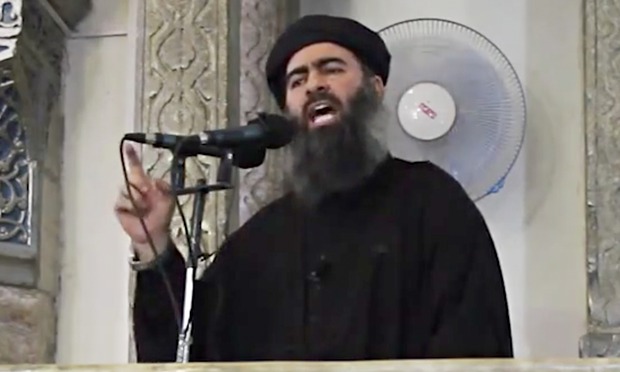
 ABU BAKER AL-BAGDADI.

In Anbar, the ISIL occupied al-Ramadi, its capital, where the Iraqi army went out, here also, at the disbandment, in an unforeseen and accelerated retrograde march. Los iraquíes culparon de sus desventuras operativas a una gran tormenta de arena, que facilitó la “marcha al combate” de los muyahidines del DAESH. And he threatens the western flank of Baghdad, which says to be training and concentrating forces to recover her, departing from the new base in Taqaddum, at 25 km from al-Ramadi, where are a reinforce of 450 new American soldiers of the four stars American general James Terry. Which acts as a bolt, a ground perpendicular obstruction, against the projection of the ISIL over Baghdad.

The Islamic State has now three great operational areas.

The first great zone includes all the south of the Caliphate, from Aleppo’s south-east up to al-Ramadi, following the course of the high Euphrates. In her, the ISIL is spreading and being consolidated, occupying Palmyra city, finishing the expelling of the National Syrian Army from Dar-ez-Zour’s province (his last troops in her are surrounded at the west of the capital) and the Iraqi soldiers and the Shiites militias from Anbar’s province. At the west of Palmyra are Tiyas and the military airports of the Shayrat, occupied by the NSA, which are vulnerable targets for the ISIL, capable of attacking them from two marching directions. With it, a western defensive flank, directed to Damascus, might be established.

In the north of Iraq, the ISIL keeps his positions in Nínive’s province and part of Saladin’s province, so being consolidated also in the high Tigris.

In Syria, at Aleppo’s north and north-east, along around 400 Kms. of the border with Turkey, up to Hasaka’s frontier province, the ISIL keeps a strategic base, using small offensives and tactical retreats, in a zone of great operational instability. Trying to debilitate the Front al-Nusrah (near the frontier Azaz), the Syrian peshmergas (in Kobani) and other opponents groups and to keep open the narrow frontier sectors, Ras al-Ayn, between others, where he realizes his exchanges of crude oil and derivatives, seized goods, armaments and new supporters. Also he wants to stop the offensive of the opposition in Aleppo, since the ISIL does not have now free means to exploit any destabilization in Aleppo, that would be produced this way. But in Hasaka he wants to be consolidated, to increase his geographical continuity, to protect his frontier passages with Iraq and Turkey, here is Tel Abyad, and to increase his strategic rear, reinforcing this way the Palmyra’s projection over Damascus.

 AN EXECUTION IN PALMIRA.

Turkey, which wants to keep in his south border a difficult military politic balance of power, suspects so much of the (Syrian) Kurds of the YPG and of the ISIL, both approaching in force to his territory. And Erdogan is considering to establish a safety zone of 10 Km. in depth in Syrian territory from the common border, occupying her with around 12 thousand Turkish soldiers. From her, the Turks might also partially control other more 25 or 30 Km. in depth, using his heavy artillery. It is a thorny and controversial topic, of international indefinite transcendence, so the command of the Turkish AA.FF. has asked Erdogan for a formal wrote order, that the President still has not granted.

The air bombardments of the Coalition of the 60 nations, assigned to the Operation «Inherent Resolve», erode and cause casualties to the Islamic State during almost one year. But they do not stop his military principal operations of fixation of his enemies and of increasing the territory of the Islamic State. At less that the western countries, including the USA, the NATO and the European Union, in any degree and practical necessary national combination, are ready and resolve to put on the Syrian and/or Iraqi territories a “sufficient investment of their own soldiers”, in the form of combined ground forces, distributed in the combinations adapted for the tasks that they will assume, the ISIL will not be beaten by his enemies of these Arabic infected countries. And it seems that the ISIL will possible be indefinitely defend from his frontier enemies. In the air raids in Syria take part Arabia, the USA, Bahrain, Canada, the Arab United Emirates and Jordan. In Iraq, asking for the authorities permission attack Australia, Belgium, Denmark, the USA and Great Britain.

The Geographical Scene of the Islamic State (ISIL).

This organization acts in a diffuse, not occupied, but controlled strip, of 300 thousand Km2., that spreads over Iraq and Syria, from Baghdad up to Aleppo and the mountains of the center west of Syria. The width changes along the route. The pillaged territory begins in Faluya, at 60 km to the west of Baghdad, and includes the nearby cities of Habbaniya and al-Ramadi and and Anbar’s extensive and desert province. And, following the Euphrates towards the northwest, it reaches the riverside cities of Haditha and Âna, before penetrating in Syria by Abu Kemal, leaving behind Níniveh and part of Saladin provinces. In the middle of the south and eastern desert of Syria, only relieved by the river, is Dayr al-Zawr. And continuing by the river, we come first to Raqqa, close to the river mouth of the river Belikh in the Euphrates. And then to the artificial lake al-Assad in the great meander of the Euphrates, to continue up to Aleppo and the Kurdish mountains of the center west, in the border with Turkey. Up to 10 million persons might be controlled by the ISIL in this territory.

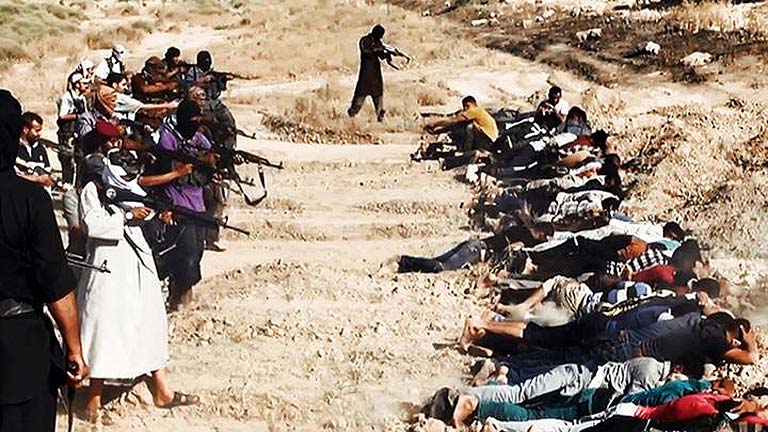
EXECUTIONS OF ENEMIES OF THE DAESH

It is not easy to move by these lands, which are infertile, beyond the irrigations of the Euphrates and of the artificial lake of al-Assad, without leaving a «tactical fingerprint» of the march. The lands of this great strip lack concealments and natural covers, in the shape of forests, extensive bushes and mountains. This does that the most frequent refuges and stays for the yihadists groups are the villages and populations along his backbone: the Euphrates, his aluentes, as the Jaipur in Hanaka’s province, and his banks. For his defense and more lasting cover they have to disperse by them, forming one or several «muyahidins squads» of not more than 40 men each one.

Operational decisive possibilities.

In any case, the fight in the occupied territories by the Islamic State is an urban fight. It is not an area for a movements warfare. It was so in June, 2014, when the Islamic State spread out, uncontrollably and overwhelming, by the north and north-east of Iraq. And the 30 thousand Iraqi soldiers of the Niniveh and Saladin provinces, went out, afflicted and in stampede, towards Baghdad. Looking for protection and refuge between the walls of the gigantic city and his al-Sadr shii neighborhood, at the east of the Tigris (known as al-Sadr city). And it before the simple «march to the combat» of several hundreds muyahidins. Mounted in Toyotas pick-ups, half “roof opened”, without any armoured and armed with light cannons and heavy machine guns. Certainly, who does facilitate the always present Toyota vehicles to the muyahidines? Some neoconverted concessionaire to al-Bagdadi?

THEY LOVE TOYOTAS, WHOSE PAY IT?

The operational strategy of the irregular bands of the Islamic State centres on never let been got in combat by the Armies or other great forces in «lost in advance» combats. His technics and tactics are the constant and far-sighted mobility; the dispersion and the infiltration in the urban fight, going forward in a flexible and wearing out defense, with space cession; the small, dispersed and more or less simultaneous or sequential actions in an area; the flight by covered bounds; the fight with limited goals and in profitable temporaral conditions; the systematic giving up of positions, forcing the enemy to redeploy and to be prepared every time. They can win to the ISIL the necessary time to survive.

In the temporaral occupations of great populations, they extend his defensive positions beyond what it is necessary in the conventional defense. Covering this way a major surface. His «delaying points» are diffuse, secret and imperceptible to the strangers. It is necessary to enter the houses to detect perforated walls and to find alleys under a furniture or a carpet. The destruction that generates the vague heavy fire, reinforces his combat positions, surrounding them with debris that divide and impede the accesses of the enemy. Except when they are reached by one direct impact. The “resistance nests” have more importance in this fighting form. Because the occupation of the defense zone is more tenuous, they cannot strengthen too much the positions, the sights are more short and there exist numerous approximation routes. They depend on the delaying points, to which they return if they are invaded or destroyed. Numerous “alternative positions” exist. This “resistance structure” allows to deceive the enemy, who attacks and burst, on the forward limit of the defense position: about his real extension, the limits of the sectors that form her and the interest of the rebel commands in the defense of the zone; and manages to disperse the heavy fire of the attacker.

The Ground Ongoing: a Parameter of the Operational Strategy.

Introduction.

The «transitability» (or ground ongoing) is the geographical dimension, either superficial or spatial, where take place the ground military operations.

It is principally framed by the superficial capacity of an area to support the means or military capacities. It is completed nowadays in a spatial dimension, by the range of the heavy fire means and by the aircrafts.

It has independent and absolute functions, as are the “passing time” by a point, the distance traveled time between two of them and the not superficial simultaneity of the military means.

The transitability also possesses relative functions, dependent in general on the geography. They are more concretely determined by the roads, railway and fluvial nets (urbanized geography) and by the climate, the hydrology, the orography, the year station, the meteorology and the hour of the day (physical geography). These functions change with the different national and regional surfaces.

The transitability determines the facility or the physical difficulty for the maneuver rapidity and, in consequence, determines basically the total time of the operations, through the phase of execution of the successive «cycles of action«. Which are formed by the observation, evaluation, decision and execution phases.

The transportation Networks and the Transitability.

The roads and railroad nets are the most suitable physical support to obtain low times of execution in the operations or high «tempos«. Its transitability characteristics would be its availability in the operations zone, the road surface resistance, the traffic saturation conditions and the narrows or critical points in the nets and the continuity cuts.

In effect, the passing time of a mobile by a given point is almost instantaneous: at 40 Km./hour covers more than 11 ms/sec. But when it is a column of more than thousand vehicles of all kinds, a. e., an armored western division, crossing in march formation a distance of 200 Km. along one route, its passing time by a point tends to confuse and equalize with its distance traveled time in this march and it will approach to 9 or 10 hours. When both times are alike in the practice, we can say that a route is saturated.

Convoy Indio Del Ejército De Camiones Foto de archivo editorial - Imagen de  indio, himalaya: 38314978

Another characteristic of the land nets, as restrictive tempo or pace of advance, are the narrows as mountain passes, small and median populations and bridges over obstacles. On having prolonged the passing time (covering those almost punctual elements in the map), they lengthen equally the distance traveled time in saturated or sole roads or lanes.

The resistance of the roads to supporting great weights is also a limitation of the tempo. The highways that support weights of 40 Tm in vehicles of several axes are limited to the principal road net of the developed countries. The reason is that the pressure that a vehicle axis exercises on the pavement is a function of the cube of the weight on it: any growth of the supported weight has an exponential effect and the construction and maintenance costs go off. So, the road availability to achieve a good pace of advance is problematic, since out of the mentioned countries the absence of highways is also very common. More than about transitability, we might speaks of non transitability, as operational element, against which struggling physically to move on.

Large group of German troops advancing up a hill on the Eastern Front. :  GermanWW2photos

                      MARCHING WITHOUT AVIATION DISTURBING…

We can think, at first, in using the superficial dimension or even the spatial one to improve the transitability (or ground ongoing) in different cases, in which the better conditions before mentioned, already do not exist. The first one leads us to a cross country mechanized formation and due supported logistically, that would be the imaginative ideal of the more qualified strategists and tacticians during the decade of the thirties of last century. But there are problems.

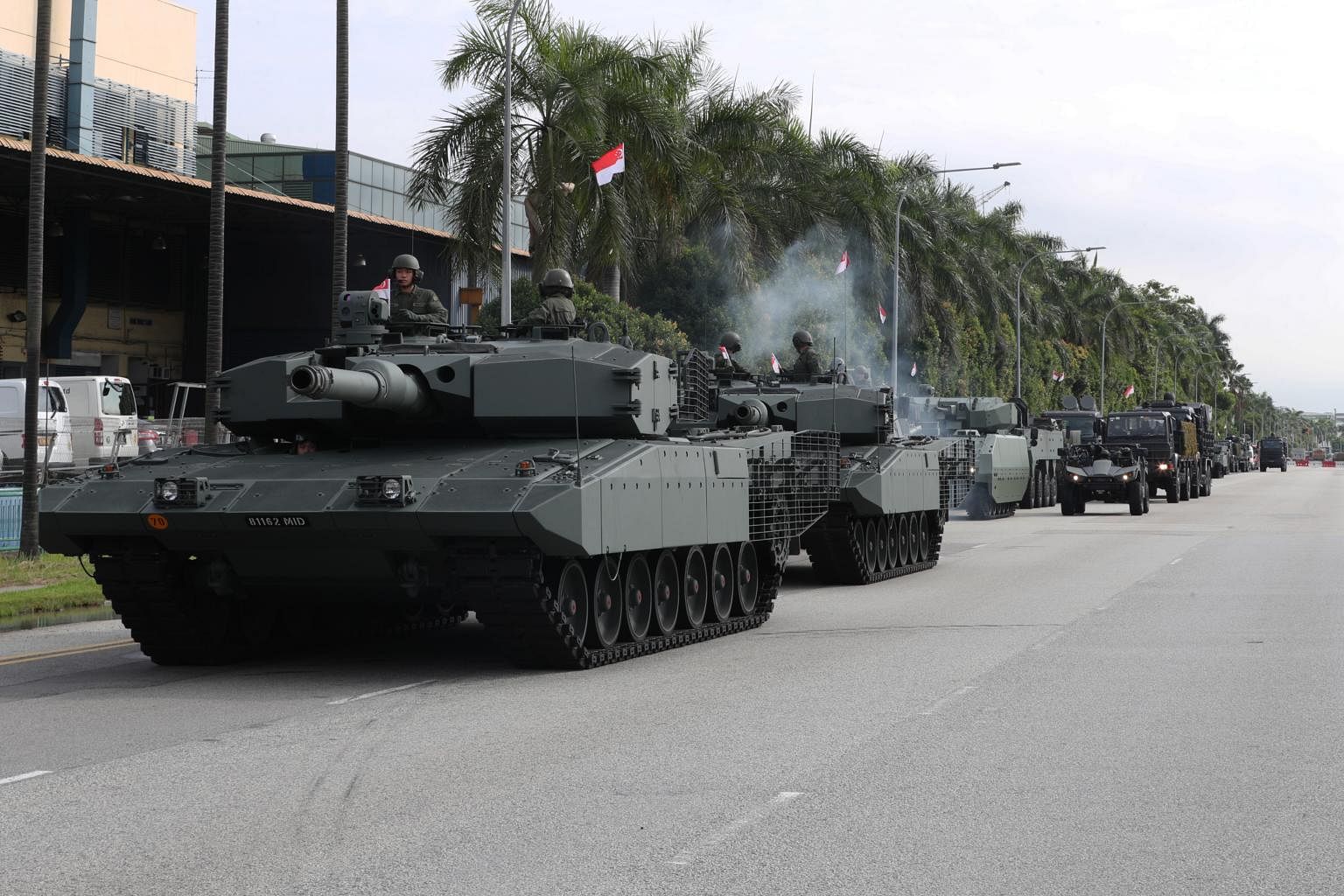
NDP 2020: Mobile column to cover record 200km route and reach more  heartland areas, Singapore News & Top Stories - The Straits Times

On one hand, the best all ground vehicle or on tracks moves itself better in a highway that on the field, for «easy» that it is the tour. For a given useful load weight, the all field vehicles or on tracks have more tare than the vehicles only for roads or by wheels. For total given weights, the vehicles both by tracks and by wheels that advance cross country, have more wears, more breakdowns and more fuel consumption, that those who circulate along highways. It raises an economic and logistic double inconvenient of very difficult solution.

Movement of military vehicles through SoCal is routine and not related to  coronavirus, officials say | KTLA

Because of it, the ideal thing is to operate by steady road surfaces, even using if possible the railroad for marches up to little beyond the hundred Km. to the front or to the enemy. And the roads network up to where allows the operational situation and the need to deploy from the march. And to fight cross country, taking advantage of the covering, the concealment, as the tactical characteristics of the field.

The spatial dimension also encloses an impossibility, like that of the saturation of the land roads, which forbids the simultaneous arrival at a point of numerous aircraft. Or the airships fly in row, arriving at the same hour, but extended laterally or they go in line to unload or arrive successively in a «single» point or zone of discharge operations. The helicopters give more concentrated results than those of the airplanes, but these have more lifting capacity for means, men and ordnance.

Grounds characteristics and the Transitability.

The channels, the water obstacles, as continuity cuts, constitute another relative conditioner of the transitability of a zone.

On one hand, they constitute an almost inevitable restraint of the maneuver impulse. In effect, in almost any direction that follows an operational route during sufficient Km., it ended up confronting the crossing of a natural or artificial water obstacle. We have seen the bridges that surpass them, as part of a road network, but not always they will exist or be at hand of the marching column. Given the actual amphibious means, the main obstacle to the transit will offer by the water flows banks. So, it will be necessary to consider the slope of both banks and the characteristics of resistance, adherence, consistency, etc. of them and of their immediate approach soils.

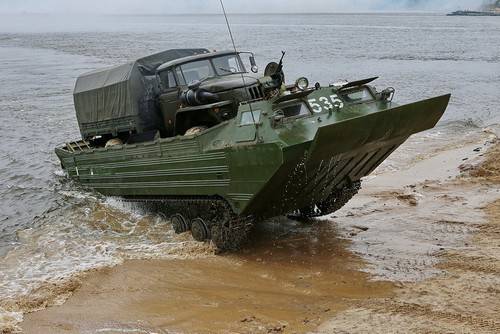
Driving "Wave" on the shore of the enemy. Part one

Nevertheless, the rivers and channels are also means of insertion within a territory of a combat patrol platoon type. At a speed of 4 or 5 Km/hour of advance by the water, the patrol can cross several hundreds Km. in 3 or 4 days.

British Troops Show Off Amphibious Skills In River Crossing

The effects of the climate, the year station, the hour, the hemisphere will be superposed to the mentioned conditioners, worsening or mitigating them, to our favor or against us.

Orography deserves a specific treatment, for its special direct influence in the transitability. Orography affects transitability when makes difficult the development of the road layout and when increasing the slope to surpass in all the marches. The cross-sectional passing of “height lines” can get to be impassable, except by defiles or mountain passes. So being generated authentic bottlenecks, that collapse the maneuver momentum and prevent the deployments of the units that cross them. The fight in the heights has a generic gravity center in the control of these passages.

Diminishing in height gradient, there exists a less evident, but more frequent and very important factor, which is the «drop«. We call “drop” to height variations of a few meters up to dozens of meters in relation to the immediate surroundings. It appears in the cross-country crossing, in areas of more or less waviness, in broken grounds and even in sections of the highways that pass for them. It has also a high expression in the urban zones, so much residential as industrial, because the buildings, houses and facilities and conduction also shape «relative concealing heights» for men and arms. These generate protection and danger, definitively opportunities and risks, and are another expression of the «drop«. A stitch or detail: a difference in height of little more that 2 ms allows to conceal the hull of a tank or of an infantry combat vehicle in a smoothly wavy area, with full domain by the sight.

The Destructive Age of Urban Warfare; or, How to Kill a City and How to  Protect It - Modern War Institute

The urbanized or industrial zones shape very numerous parallel and transverse lines of «drop«, which interweave. They canalize all the military effort in the above mentioned zones, generating innumerable «interfaces of action» with the enemy, that are determined frequently by surprise conditions. These zones, definitively, paralyze the impulse of the units and generate in them attrition (in military means) and wear (in logistic), disproportionate to the purely military obtainable results with its occupation.

The City Is Not Neutral: Why Urban Warfare Is So Hard - Modern War Institute

                                    AN IMPROVISED AMBUSH…

For the winter warfare, you can read our article «The talvisota or Winter War of Finland and Russia in 1939».

                                                   JUST TAKING A REST…

The forest would be a special variant of this case. It offers antitank unsurmountable obstacles, concealment, cover and protection until the range of infantry fighting distances.