THE DRONES AND THE ENEMY OPERATIONAL ZONE. SECOND PART.

(continuaton)

The range of the most specific tactical actions extends from 12-15 km to 40-50 km deep into the enemy position.

We have already seen that the operational zone was very vulnerable to deep exploitation by enemy mobile groups. However, the support mass, made up of structures based on stability and management and with units with qualitatively lower combat readiness, due to their unnecessary nature, is even more vulnerable. It is another matter whether, with modern armies, based on the countless manufactured products necessary for their operations, the exploitation of an enemy’s deep rear is operationally easy or even feasible.

Theory of using drones in reconnaissance and combats.

The countries of Eastern or Central Europe, as some of them say, as if they could modify geography, have land and sea borders with Russia, and these are their lengths:

Country Land border Percentage Sea border

Finland 1,271.8 km 21.7% 54 km

Belarus 1,239 km 21%

Ukraine 2,093.6 km 35.7% 567 km

Norway 195.8 km 23.3 km

Latvia 270.5 km

Lithuania 266 km 22.4 km

Estonia 324.8 km 142 km

Poland 204.1 km 32.2 km

Total……………. 5,865.6 km 840.9 km

European countries are overwhelmed by the lack of means, tactics, techniques, and doctrine to stop attacks and incursions of varying depth by the “unmanned aerial vehicles” (drones). The decided solution is to equip the entire eastern European border with a «physical network of reconnaissance and attack drones from short to long range.» However, this is structurally unsafe, imperfect, and insufficient.

INCORPORATING ARTIFICIAL INTELLIGENCE TO OPERATIONAL DRONES

Following the recent Russian drone incursions into Poland and Romania, the Defense ministers of the so-called «frontline» countries decided on Friday, September 26, to begin as soon as possible the joint construction of an «anti-drone defense system» covering their entire extensive border with the threatening enemy. The intensification of incidents and grievances involving this innovative weaponry by Putin’s Russia has directly contributed to this decision.

For its part, Ukraine, through its Defense Minister Skmyhal, has pledged to assist its European allies in developing technology and tactics in this field of weapons. European Union Defense Commissioner Andrius Kubilius believes that the Ukrainian army has the most experience in the development and use of various types of drones.

RUSSIAN LONG RANGE ATTACK DRONE

The defense ministers decided that they should move «from discussions to concrete actions.» The first objective would be to create a national and interoperable drone detection system, building on the aforementioned experience of Ukraine. According to Kubilius, this is currently the biggest shortcoming. Heads of State will be informed at the European Council Meeting at the end of this October, so they can provide political support for developing this objective. It was suggested that its implementation could take a year.

EU DEFENSE COMMISSIONER, ANDRIUS KUBILIUS

By concentrating the enemy sufficient drones in depth and in a narrow sector of the European drone front, it can be penetrated and overrun from the flank, from the rear, and from deep penetration into the rear, our operational zone. Depending on the drones’ range, payload capacity, and weapon types.

The concept of modern warfare is almost equivalent to hybrid warfare. This would be, according to the US term, fifth-generation warfare. We now approach it with digital and computer methods, using the discrimination and precision of algorithms and electromagnetic radiation and pulse technology—V-generation warfare, hybrid or multifaceted warfare.

The Laser Defense System against drones employs three phases of action: Detection, Location, and Destruction. First, the drone is detected and classified according to its size, speed, and flight path. Once classified, the target is locked onto using tracking mechanisms to maintain precise aiming on the drone. This phase is crucial to ensure that the laser beam remains focused on the target throughout the entire engagement process.

And this model of dialectical confrontation, with an essential component of physical force, requires a holistic, harmonious integration of the available multidisciplinary means with the different objectives, whether simultaneous or successive, that we wish to achieve.

Before now, the endless plains of Poland and Germany could allow Soviet mechanized units, stronger in infantry, to adequately combat in the vast urbanized and industrial areas of the invaded countries. After attack and penetration by shock armies and mobile exploitation groups, they could rapidly advance across them, covering their flanks from any Allied counterattack and reaching the North Sea.

MARSHAL MICHAIL TUJACHEVSKI’S AND DEEP PENETRATION DOCTRINE.

In doing so, they broke the cohesion of Allied defensive positions, dispersed heavy defensive fire and its coherence, and disrupted the comprehensive Allied defense direction in Central and Western Europe.

Today, and not so long ago, tactical weapons are «drone swarms,» ​​organized into various types, missions, and aircraft and its own deploy, and operational weapons are «large swarms,» ​​organized into appropriately varied «groups» in its own deploy. Fighters can operate as some of the aerial vehicles deployed to protect the aforementioned tactical and operational weapons.

The need to defend many things (borders, command and communications centers, troop concentrations, weapons and tracked and wheeled vehicle depots, spare parts, ground movements) will literally leave reconnaissance and attack resources at a complete loss. Until the last moment, until the Slavic enemy reveals its objectives through its mobilization and march/attack deployment, the allied «defense swarms» (reconnaissance, drone attacks, and ground forces) will not be able to adequately engage the allied points under attack.

THE END.

THE DRONES AND THE ENEMY OPERATIONAL ZONE.

The operational zone. Its functions and vulnerabilities.

The operative zone is the geographical space where develops the process of turning the mass of support of the strategic rear (forces, supports, logistics, communications, headquarters) into «units of action» qualified and specialized for its employment in «interfaces of action» with the enemy. These constitute the active points of what can call front, increasingly mobile and discontinuous, due to the dispersion of the forces, its tactical speed and its fire power.

The above mentioned units of action join combined arms groups, which low tactical level is in the habit of being the reinforced battalion or company, that have subsets or elementary units, in the mobile combat.

The critical elements of this zone, which is the physical support of that activity, are the communications of all kinds, the spaces of maneuvers (zones of deployment, of equip, of wait, of advance, provided with covers or desenfilades), the engineers units and of operational reconnaissance, the logistic means (stores, distributions means and zones) and the centers of production of the intelligence and the transmission of the reconnaissances.

The operational zone must have the sufficient geographical depth to be able to contain, supply, deploy, direct and command the sufficient number of units, following the necessary advance or assault spears close to the front, to repeat the efforts in «interfaces of action» and to achieve the tactical aim that in these appears and decides.

In practice a spatial symmetry is in the habit of existing, as general Richard Simpkin indicated, in the operational zones of both contenders, along the supposed constant line of the front. A difference very marked in the depth of a zone, can indicate the tactical weakness of a rival, either by minor resources or by a slower enrollment for the combat of its strategic reserves or military means in general (great strategy or total strategy level).

The reasons for including the engineers troops among the critical elements of the operational zone, reside in its specific fighting functions: they act against the enemy center of gravity; they are very scanty forces for all the tasks that they can fulfill; its action has a great multiplier effect on the enemy effort; they provide other forces engineers’ material for its particular use; they are responsible for the interceptions and reinforced cuts on the area and the most effective obstructions: antitank stable positions, minefields and more elaborated fortifications. With it they affect gravely the effective effort of our capacity of movement as operational system.

The functional mentioned elements of the operational zone are highly vulnerable. In effect, they lack enough nearby capacity of defense (including the infantry antitank, though they are of support), that is usually is limited to the security elements detached by the units and the centers and that, though it is circular, they are of punctual type in its positioning. If there takes place the destruction or the breaking up of these functional critical elements, which act as a connected and interdependent net of an alone seam. Generating the affected elements “commotion waves” for all it and this will affect exponentially the functionality of the operational rear, making it finally collapse.

Deprived the enemy action units in its active points of the front, of its operational zone, which qualifies, supports and stimulates them, the survival of the whole front sector affected is impossible after a time, for exhaustion or consumption. Likewise, the moral effects of the ungrateful surprise and the loss of the expectations precipitate the collapse of its front more rapidly yet. Its forces will tend to move back towards its deep rear, to protect the functional elements that allow them to operate tactically.

And, what about of the capacity of combat of deployed units in the operational zone, being prepared to operate in this front sector or in contiguous one? Can they defend the functional elements of its operational zone? Can they counterattack the enemy penetration?

We must remember that any military group, from a tank crew up to an army, passes most of its time, neither deployed nor prepared to fight. Its time passes doing labors and operations that allow it to go to fight in the chosen moment.

Whether training, embarking, moving, equipping, supplying, reorganizing, waiting, or resting, no unit is fully combat-ready. It is precisely in the operational zone where units prepare to conduct their operations against the enemy. Even if this is a tactical march, «pushing» a flexible and discontinuous front with weak combat readiness on the part of the enemy.

For the defense of the operational zone, we can only rely on the ready operational reserves and the deeper tactical reserves, both located in that sector or in adjacent ones.

The support mass is the set of military assets that converge in the theater or campaign. Its means of action is stability and is governed by the «management» of senior commanders. This is based on defined processes and standards, which are stable over long periods of time, which give it the necessary predictability of the desired effects of its action. They maintain and demonstrate the cohesion and the functionality of these military structures and hyperstructures.

At the army group level, the support mass extends from the forward limit of the defensive position to 300-500 km in own depth and with a width of approximately 300 km.

Towards the 75-100 km zone, the support mass hyperstructure disaggregates into the most active structures and microstructures, which constitute the operational and tactical units. These will operate in the “fields of action” and at the “interfaces of action” with the enemy, up to approximately 150-250 km in depth. To this end, they will follow operational-tactical combat and maneuver procedures, guided by the criteria of decentralization, exploitation of opportunities, surprise, counterattacks, enemy gaps, etc., and governed by the superior intent and its center of gravity, all of which are specific to the structures and microstructures active with the enemy.

(to be continued).

The New Times Coming for Defense.

Introduction.

It is said that military deterrence is a quality and that it cannot be measured. If I do not know the Effect of my investment in weapons, how do I know that I am protected? Will I not need more means of one kind or another?

Precisely, Science always tries to measure the variables in phenomena. And, it succeeds. The politician should read the “Scientific Forecast in Military Art”. Text by a Soviet military man, translated into Spanish.

And, now that we have to invest up to 5% of the GDP to defend ourselves from the “threats of the felonious East”. More.

Are most of the medal ribbons of the most lucid officer, the same..? That means that the event is repeated. And this can only be because they are given for pure seniority in service… Stagnation. But, they do not care to show them off, to those who have no idea of ​​what they mean,. This is self-deception and the capital (not mortal) sin of vanity.

Martin van Creveld, a professor at the University of Jerusalem and author of several excellent books on military strategy and operations, said that “the country’s military institution had become an arthritic structure without creativity.”

And, without the qualities of initiative and flexibility, creativity becomes lame, if not paralyzed. And everything becomes stagnant.

Van Creveld was expelled from his post by the Israeli military caste.

Development.

The huge surprise of Saturday, October 7, 2014, given by the irregular militia of Hamas to the IDF (Israel Defense Forces) was a confirmed evidence.

You do not prepare such a complex and extensive operation, almost in full view of many people, as if it were a country party. And, just like that.

You always have to do a general rehearsal of the total operation. And, subject the means to tests of duration and demands, at least equal, as in action. For example, a drainage motor must be tested, using it for the same number of hours that will be needed in the action. A combined arms operation must always be carried out, since, except between units that have already acted together before, implicit communication will not exist, and “mutual collaborative actions” are difficult to improvise.

The training space must have the same characteristics and complications as the real one. And, it would be convenient for it to be located far from the mission operations area, so as to be free of giving indicative signals to the enemy’s observation and espionage. Men, means and supplies must be moved to the training areas and returned to their bases of departure for the actions.

Communication between units must be practiced without failure, especially those of different arms (infantry with tanks, tanks with artillery, ground support aviation with those that have to support), that must collaborate in tactical subordination during the development of the attack.

Each important function must have a “reserve executor”. For example, a glider cannot be unique, in case the winds carry it down far from the target of attack:

German airborne forces attack on Fort Eben Emael, Liege, Belgium, in May 1940. It controlled, by means of heavy fire from a fortress (as well as several bunkers and armored and consolidated redoubts), the paved approach route towards Brussels for the combined German forces.

The airborne forces in gliders landed on the roofs of Eben Emael, closed the Belgian exits to the roof and used hollow-charge bombs-grenades (an Originality not used before) to overcome the roofs of the various redoubts of the fortress. The roofs were designed to withstand the fire of German heavy artillery. But the hollow-charge bomb concentrates the force of its explosion in a jet of fire and molten metal, which penetrates concrete and armor and whatever else is thrown at it.

The fortress surrendered as soon as the redoubts began to be blown up and assaulted.

In spite of all the needs and the long preparation time for the attack, all the Israeli intelligence agencies were surprised by the unexpected and sudden attack by Hamas irregulars, trained for this war action.

And the Israeli people realized that the protection of their lives and property by their unbeatable Army was not effective. And they remained frozen and seriously distressed for a long time. This vivid emotional wound does not heal easily or quickly. Because the possibilities of it happening again exist. And they are not inevitable as a quality. The psychiatrist has no arguments… only tablets ones…

And why did Hamas surprise?

The strongest, most powerful proxy of Iran and coreligionist of the Shiites in South-West Asia was Hezbollah, the Party of Allah. This one was guarded, it was infiltrated like a Gruyere cheese by Israeli agents and there were middle and high-level personnel from suppliers bought by them and the Israelis knew all the traces left by suppliers, collaborators, goons and relatives.

Israel‘s foreign action and special espionage means silently «occupied» Hezbollah. And, they were prepared to make it implode or explode unexpectedly.

Hamas was the poor militia, squeezed into a very densely populated area. Capable of making a mobile or rigid Defense in Urban terrain against a trained, equipped, modern, motivated army. And, to endure the unbearable.

But, it was not supposed to carry out a more or less usual military attack, outside its external lines, keeping the objective won.

But, the Gaza attack did not intend to occupy, even for a couple of days, a tangible objective.

And, it was equipped with considerably fewer free-flying or guided rockets than Hezbollah was.

That is, it could pose a much less Orthodox threat to Israel than Hezbollah. It had tens of thousands of rockets of Iranian origin and acquisitions of very variable characteristics.

Hezbollah had a great political force in Lebanon and participated in its governance, and was a stronger and more motivated military force than the Lebanese national army.

There was plenty of information. Otherwise, it would have attracted attention and they would seek it out or implement it.

But, no one saw, detected, or heard of a Muslim militia capable of attacking Israel in the form of a “swarm” of “small units” (platoon or section type), operationally simultaneous. Trained as “reinforced mobile light infantry”.

It seems that the Ideologist and Military Leader of the successful and unstoppable Attack on Israel (for a short time) was the late Yahya Sinwar. He was a prisoner of war in Israel for a long time as a young man. And, he was released in one of those agreed prisoner exchanges.

Sinwar had time to think and mature the plan. And then, to prepare it and carry it out. And, he had his advisors, from the Revolutionary Guard of the Islamic Republic of Iran.

General Qassem Souleimani, the original head of its Foreign Branch, in charge of supporting all internal Islamic movements in the countries of Southwest Asia, sureness participated in the military training of Yahya Sinwar. Souleimani was killed by an American attack drone, after landing confidently and safely at the Baghdad airport. And he received a salvo of powerful Hellfire II HE (high explosive) rockets.

And, Sinwar was impervious to Jewish (intelligence) penetration, even in a very poor population environment, prone by character and necessity to bribery.

And, in the early hours of Saturday, October 7, 2024, Hamas launched its thundering Lightning.

Russia and its Super Hypersonic Ballistic Missiles

Introduction.

Russia, the predatory Empire, which sells raw materials, oil, natural gas, electricity, rare minerals, and buys and copies technologies of all kinds and more sophisticated goods and maintains an incomplete Armed Forces. In 2024, they totaled some 900 thousand active troops.

The structure of these has an immediate officialdom, Junior Officials and Officers, in charge of carrying out the orders of the battalion commander. The orders of the battalion commanders are received from their brigade commanders (general brigadier), where the operational action of the forces is specified: making the tactical actions of the subordinate forces have a transcendence, an already operational importance, in the «higher plans».

The non-commissioned officers, corporals and sergeants, rise from the troops, from among the most active, experts and, perhaps, loyal. There are no non-commissioned officer academies in Russia, which would prepare them for their duties in the ranks. And these “classes” (the non-commissioned officers) are the ones that accompany, inspire and directly command the soldiers in all kinds of military operations.

The troops see them “as one of their own, not necessarily always the best.” And they consider this promotion to be their merit, distinguishing them from the troops. The officers, in turn, maintain their training status, command and prerogatives.

It is difficult to find here the weft and the plot for the forces of an army to always function in harmony, efficiency, training and professionalism.

We exclude the Rocket and Space Forces, Special Forces, Engineers and part of the Artillery and Armored Forces. They are an elite that boasts of it. And, on which Russia and its ruling class depend for its survival.

Valery Gerasimov is the Chief of the General Staff. And, in view of the successes that Russian soldiers were achieving in their combats and other operations in Ukraine, Putin also appointed him Chief of the Special Military Operation Forces in Ukraine. And, practically, Valery disappeared from the sight of the public and journalists.

A Chief must have his Advanced Command Posts so close to the active enemy, that it facilitates the leadership of the Chief.

During the Polish-Soviet War, from February 1919 to March 1921, Mikhail Tukhachevsky, Chief of the Red Army in the Field, had his command post in Kyiv, 500 km from the Front. And, Jozef Pilsidski, the Polish Supreme Commander, continually visited his divisions on the Warsaw front, half surrounded by the Reds. The Reds acted like an Asian horde, living off the territory they trampled, for their vital human needs. Suddenly, Pilsudski counterattacked and the Workers’ and Peasants’ Red Army retreated to Vilnius, the capital of Lithuania.

There are four stages in the trajectory of offensive missiles in which an anti-missile system could act.

They could be destroyed in flight in the atmosphere (even over enemy territory), shortly after their launch. The smoke trail that the engine throws out and the burning flames that accompany it can be detected immediately by satellites and reconnaisance aircraft.

Some attacking missiles could be altered in their trajectory by the strong and punctual action of an electromagnetic field, which acts on their control and guidance device. And it can do so throughout the post-launch stage.

Once fragmented or not, active warheads with multiple ogives, when the targets are already close, can be acted upon, by following final ballistic trajectories. These are easily calculated by the defense against aircraft (DCA).

In the final phase of flight, both missiles and their active multiple warheads can be intercepted by friendly missiles and aircraft, during descent or approach to their target.

An interested perceptive reader can already glimpse the crux.

One of the most important effective factors of the defense system is the Time of Arrival at the Enemy Target.

Current combat systems work up to speeds of Match 3, perhaps 4, more than 3700 km/h.

The Oreshnik (Hazel) 9M729 attack missile, launched from the Kapustin Yar cosmodrome in the Astrakhan region, reached the Ukrainian city of Dnipro, on the Dnieper River.

The Russians (Putin) wanted to show clearly what they have.

We must keep in mind that propaganda tends to deceive the enemy as best as possible. One way is by magnifying real, possible and uncertain successes.

The Hazel weighs about 50 tons and its approximate theoretical speed is Match 11, more than 13,500 km/hour. It is not an intercontinental missile, because its characteristics make it difficult to make a parabolic journey as short as the one in fact (Kapustin Yar-Dnipro).

Short-range missiles, up to 500 km, are considered part of reactive or rocket artillery and their attack operations zones are in the enemy tactical zone and in its operational rear. Here the enemy units reform and recompose, rest, supply themselves, advance to occupy combat positions or retreat towards their operational rear in that sector of the front. And, here there are almost no Units in Combat Readiness, for the defense of those areas.

Apparently, the Hazel is capable of carrying 6 submissiles, each of which would carry up to 6 attack warheads, with or without nuclear charge. The Hazel would fly at an impossible speed for the defense against aircraft (DCA) to work with. Because, simply, the data from radars, detection aircraft, would arrive already outmatched, no aircraft or missile of its own could reach and destroy it. It would be like the fox seeing and reaching the Road Runner.

In the Beginning it was the long range. The great enemies were the United States versus China and Russia. Both groups of enemies being geographically far away. The Europeans were stammering in the military nuclear field.

But everything evolves. France, Great Britain and Germany, the latter with its American military bases, were and could be, at first, effective aviation bases with nuclear capabilities.

Russia realized this and began to prepare its medium-range nuclear warhead missiles, capable of destroying nuclear vectors in Western Europe and attacking factories and logistics hubs and cities on the subcontinent.

This was achieved by vectors with a range of 500 km to 5,500 km. A new field of military air operations was born, unthinkable a few decades ago.

It soon became necessary for everyone to control and regulate medium-range vectors. On December 8, 1987, Ronald Reagan and Mikhail Gorbachev signed the Treaty on Intermediate-Range Nuclear Forces, which stopped the proliferation of these weapons.

But on 02/01/2019, under Trump, the United States suspended the Treaty, accusing Russia of continuing to test-launch this type of medium-range missile. The next day, Russia also abandoned the Treaty.

And a new battlefield was left open, messy and unfinished.

The Soviet Union is “no longer that”. The Russian Federation is a corrupt and backward country, to which a market economy has been applied. Its military industry is quite suited to its interests.

The Hazel supposedly has a range of 6000 km, which puts it squarely in the category of an intermediate or medium-range missile. And its capabilities crown it as the “Queen of the Party”.

How much does it cost? How many Hazels can they manufacture in a given period of time? Will they dare to use it with atomic nuclear warheads? Do they all work equally well? Is there reproducibility in the manufacturing series? These are fission bombs with a capacity of “tens of thousands of kilotons” of destruction.

Quite sufficient, quite sufficient.

The Tactical Maneuver in the Defense.

Introduction.

The spirit of mobile defense is ingrained in forward detachments. They fight the enemy using mobility, surprise, harassment, opportunity and local and punctual superiority, depending on the case. And, whose fight is always framed in the probable transfer of space to the enemy. Maneuver always presides over his tactical behavior.

This “active spirit” that animates and inspires the units that fight in front of the defense positions, must animate, or, at least, not be neglected or forgotten by the units that occupy them.

The defense must not only cling to its fortified or improved positions, to carry out the effective rejection of the enemy attack, through its precise, decisive and opportune fire.

Development of the Fight.

At least part of the defense forces, depending on the missions, the possible opportunities, the battlefields, their own capabilities and that of the enemy, must be trained and emotionally prepared to carry out tactical movements, to more effective and timely defense positions.

For example, carrying out from another support point, with part of its garrison, a local counter-shock against a partial penetration, not yet consolidated, achieved by part of the attacker. Enemy break-in that closely threatens another support point, preferably in the same defense sector.

If we make a delay defense, staffs from other delay points will make larger and more definitive tactical maneuvers. In the former, when a delay point is in danger of being surpassed or overwhelmed by an enemy attack, it must release and withdraw. Generally, by successive jumps, to the rear or to another delay point in the mobile defense by forward detachments. Where they should be received, to facilitate their new deployment in the location.

These delay points would be supported by a natural obstacle, a height, a river, etc. Delay points should never be deployed on the forward slope; seeking, for example, to open fire on the enemy at maximum distances. On the other hand, observatories and resistance nests should be placed on the forward slope or on the military ridge. The delay point will be deployed well down the back slope.

Use of tactical reserves.

Own reserves, concentrated at the end of the infantry zone or at the front of the artillery zone, as part of the defense, will also carry out marches and attacks, that is, maneuvers, in their tactical zone. That they will be, perhaps, more complicated in their deployments, unfolding and opportunities. To attack, from starting points in one’s own depth, the enemy forces that have broken through. Or, that are stopped in front of the defense zone.

The critical moment for the reserve counter-attack will be: when the enemy has passed the “culminating point” of his attack; is quite weak and is disorganized (loss of cohesion). The fire of the own artillery and of the nearby support points, those affected by the enemy attack, must also harass, neutralize the attacker.

These attacks by a combined arms reserve from depth, taking advantage of their mechanical mobility, and attacking on the enemy’s flanks and/or rearguard, are very effective for active tactical defense of friendly forces.

Heterodox applications of good working in Defense. And, if you want to be perfect…

Even, many times, with an unexpected Maneuver and, better yet, if it is also unusual, an enemy can be upset, confused and frightened. If he is governed by military more orthodox and serious canons and norms.

A premature withdrawal and, obviously, with cession of space, can mislead and disturb the enemy. Or, boost his self-esteem and greed and lure him into a dangerous chase.

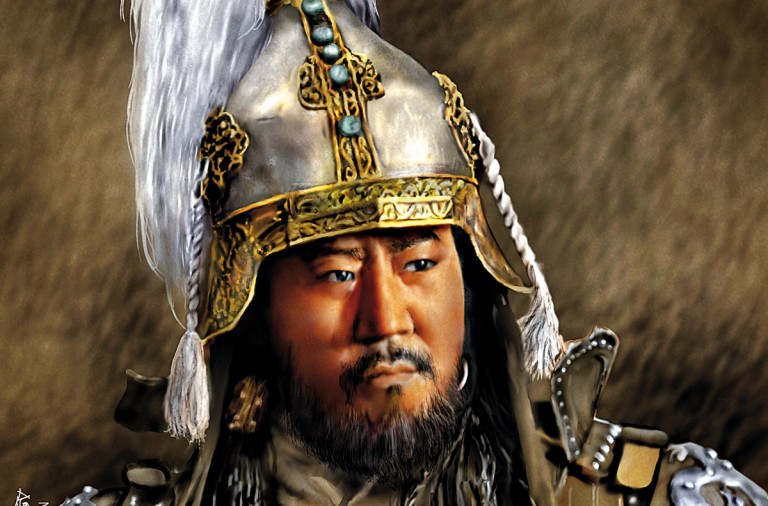
A favorite Tactic of the Mongols, especially effective when their enemy was longing for the encounter or more confident of success, for reasons of sheer initial numerical superiority, was the «mangudai«. It consisted in the fact that an «army» corps of the Mongols, inferior to the enemy, seriously engaged in the fight. Its size was large enough for the Mongol effort to be considered significant.

With this, they were going to mentally attract the enemy and separate him from any other thought.

BATTLE OF LIEGNITZ, SILESIA, POLAND

After a hard battle, the sheer weight of the enemy forced the Mongol corps back. What was a tactical withdrawal, never disorderly, was taken by the enemy for an exploitable defeat, a rout.

His total and permanent ignorance of the Mongols did not make him suspect anything. And his desire for victory, increased by the real effort made in combat, did not let him see beyond.

The promising pursuit ended by scattering the close and solid formations of the enemy horsemen. At one point in the pursuit, always far from the rest of the waiting enemy forces, the bulk of the Mongol heavy cavalry emerged, hidden, fresh, and thrown into the shock. Which ended up breaking up the disjointed cavalry groups, into which the pursuers had scattered. After a real hunt, the enemy forces remaining in the initial positions in the battle either dispersed or were in turn attacked by the whole Mongol force.

We will now quote a special case of how the mental and moral dialectic of the two opposing commands, the given circumstances and the development of defense and attack, led to an incredible result of the faced battle.

Chu Ko Liang ordered Wei Yen and other generals to gather their forces and march east. He, waiting for news, stayed in Yanh Ping with 10 thousand men to defend the city.

His rival Ssu Ma I said to himself: «Chu Ko Liang is in the city, his forces are small, his position is weak, his generals and officers have lost courage.»

For his part, Chu Ko Liang was calm and confident. He ordered to remove the army banners and silence the drums. He forbade the soldiers to leave the city. And then, opening its four gates, he spread out his men in small groups through the streets of Yanh Ping.

20 "Chino Kongming Chu ko Tres Reinos Zhuge Liang Zhu ge Sabiduría  Estatua|statue| - AliExpress
Chu Ko Liang idealized

Informed Ssu Ma I of the existing situation, he feared a prepared ambush. The «appearances» had done damage to his courage, discernment and reason. And hastily he retreated with his larger army to the northern mountains.

Chu Ko Liang explained to his commanding general, «Ssu Ma I believed that I was laying a trap for him and fled to the foot of the mountain range.»

When Ssu Ma I learned later all that had happened, he was overwhelmed with disappointment and disgust.

An opera has even been written about this Chinese war episode.

Well, but what you are telling us seems to be something very special and very difficult to repeat. And, as if from other times of fear and superstition.

Now see you an almost similar case. Only more modern. And, where all the maneuvers and combats are in sight. But, its result is just as spectacular, unexpected and incredible. Than the previous one, taken as «unusual and difficult to repeat».

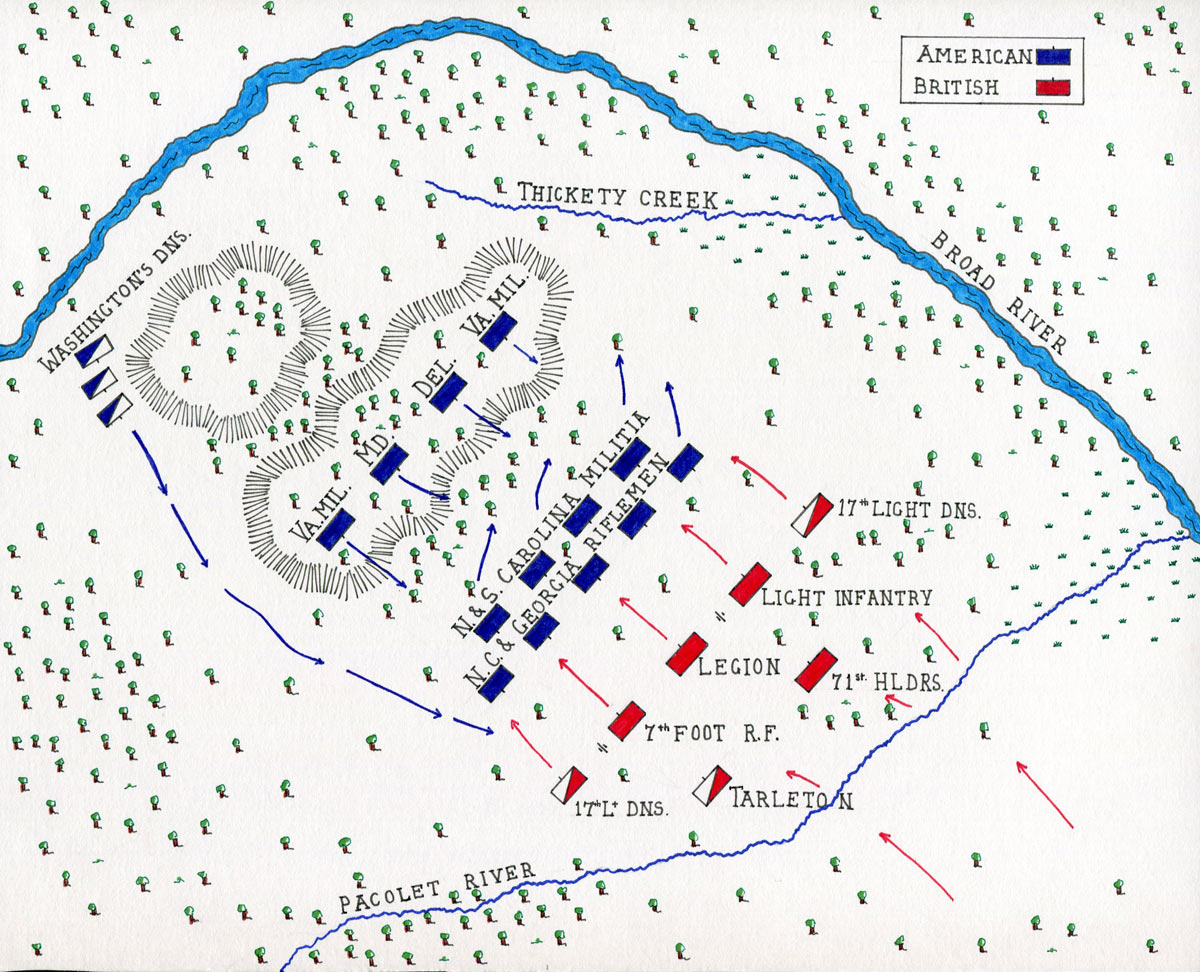
Battle of Cowpens
(Washington’s cavalry attacked on the other flank.)

On January 17, 1781, the 45 year old American General Daniel Morgan engaged in a small battle in Cowpens the English regular forces of 27 year old Lieutenant Colonel Banastre Tarleton. Both had similar contingents but 2/3 of Morgan’s around 1,000 men belonged to American territorial militias.

These troops were at risk of shock in face of the force of the regular troops, whose use of bayonets in close combat would terrify them. The militia men were better than normal shooters, being hunters, and had great personal initiative, but they lacked training in close fighting.

(TO BE CONTINUED)

THE URBAN COMBAT OF ISRAEL IN GAZA

The Israeli Tsahal.

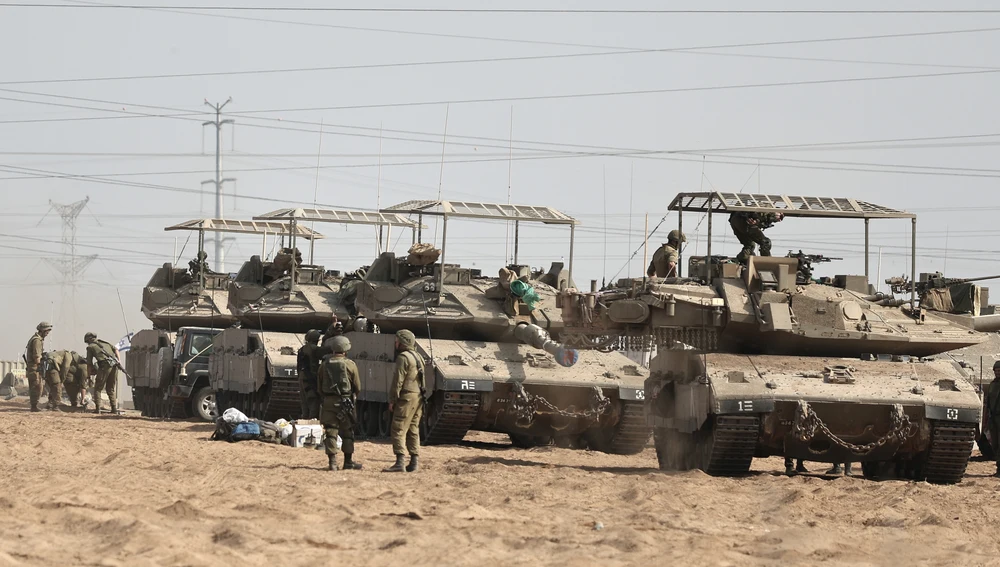
The Israel Defense Forces (IDF), the Tsahal, is a fairly capable national army, with modern military doctrine and well equipped and regularly trained. It has about 190 thousand professional personnel (permanent). Which can be increased in two or three days to near 750 thousand troops.

Mobilizing for this up to around 550 thousand men and women, who are in the active reserve. These have a varied combat training, depending on their age, profession, training and missions carried out. The first 300 thousand are the most outstanding to decisively join the fight. The other quarter of a million are called according to needs to update and finish training them effectively.

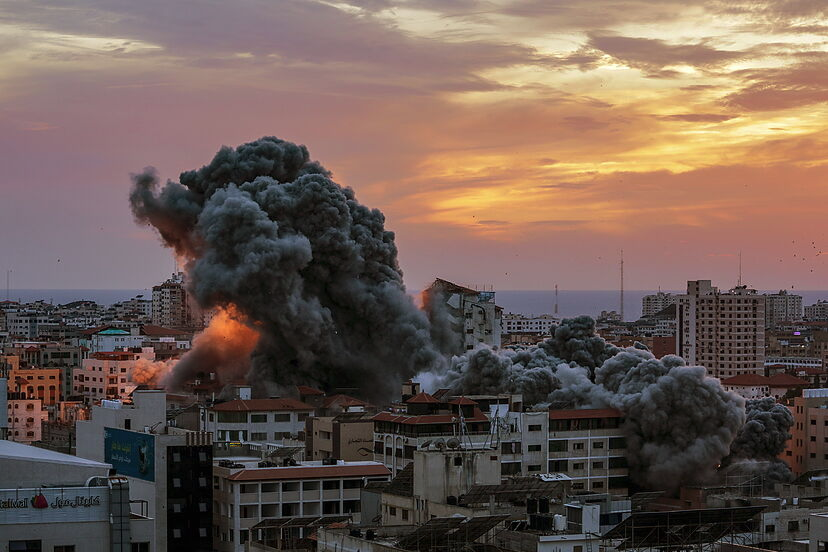
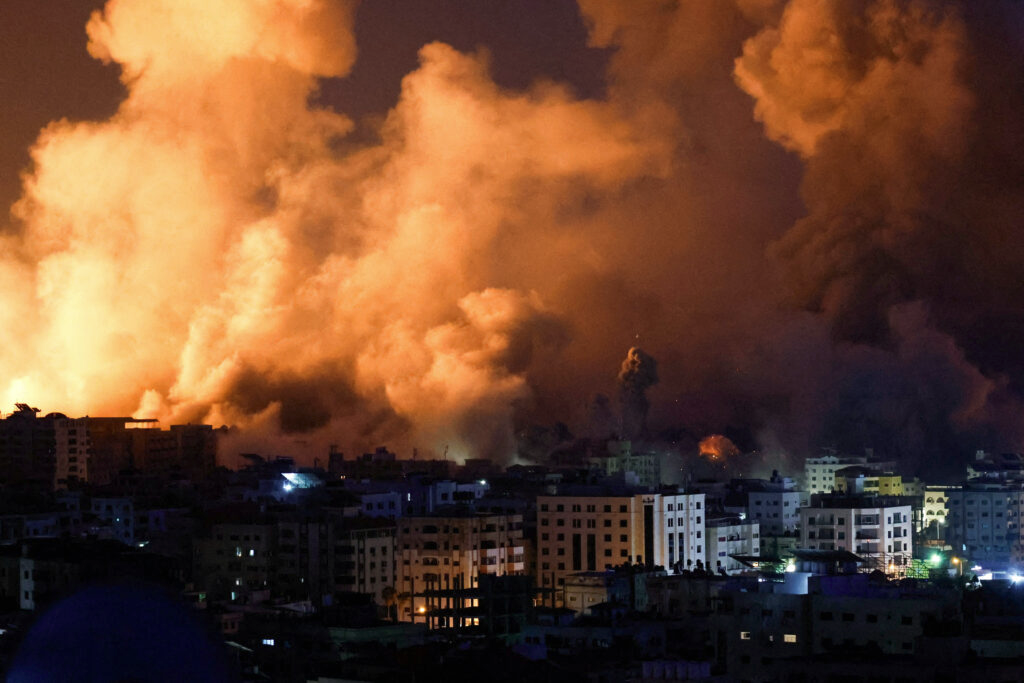
ISRAEL DOES NOT HESITATE TO USE PUNCTUAL MASSIVE BOMBING

The ugdot or Israeli brigades (ugda is its singular name) of mechanized or motorized infantry are the main Israeli units to carry out a fight in enemy urban terrain. They fight against a much less capable enemy. But, with equal resolve and motivation, because they consider themselves muyahidin or warriors of Allah.

Let us see some aleyas or verses from the Quran, to realize the catechized and motivated Palestinian enemy:

“Oh, Believers, persecute the infidels (all others) until all Worship on Earth is given to Allah.”

“War has been prescribed for you and you shun it. Well, Allah will find another more obedient people and will disown you.”

The infantry ugda consists of 3 infantry battalions, another tank battalion, a field artillery group, 1 anti-tank fighting company, one motorized engineer company and 2 combat and tactical reconnaissance companies. The armored ugda consists of 3 tank battalions, one special forces battalion, one motorized engineer battalion, one armored reconnaissance battalion and a mixed artillery group.

FORCES OF THE GIVATI BRIGADE MAKE A STOP ON THE ROAD

The infantry ugdot are better known. Tanks are, however, the most effective weapon that Israel generally has in its wars. And, within the deliberate concealment and lack of precision of the data that reaches the public, which is practiced on these issues in Israel. Among the five infantry ugdot available, the “Givati”, “Golani” and “Kfir” stand out.

Characteristics of the fighting terrain.

Fighting in “urban or factory terrain” means that the combatants’ views are short in most directions. And, on the other hand, the enemy has a multitude of “relative hiding heights” that hide him and even, sometimes, cover him from opposing fire. This is a source of tension due to the uncertainty it creates.

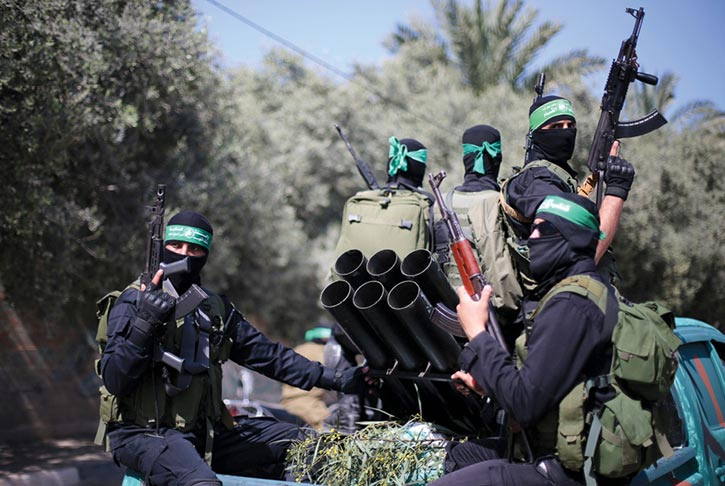
HAMAS MOBILE REACTIVE ARTILLERY WITH ITS TEAM AND INFANTRY SECURITY

Physical and mental loneliness also act here. The combatant is separated from the officers commanding him. And, he is part of the squad or crew of the organic support weapons. Whose members are as affected as he is.

Automatic and more precise fires allow and force extreme dispersion and camouflage of combat forces in presence. And, the terrain of struggle here is particularly empty and hidden.

The maneuvers here consist of relatively very short movements. This also affects the loneliness and uncertainty of the combatants. The operational movement capacity of the units in motor vehicles is almost unnecessary, if we discount the direct heavy fire support from their weapons to the combatants. Other marches are simply “marches to combat.

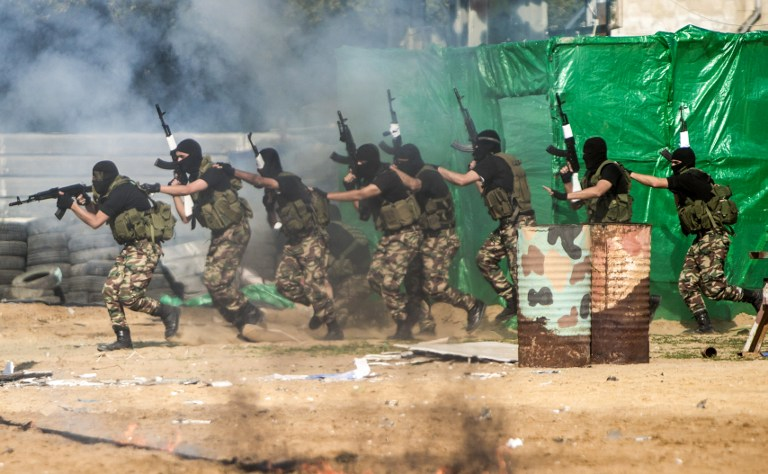
A SECTION OF HAMAS IRREGULARS MANEUVER INTO COMBAT

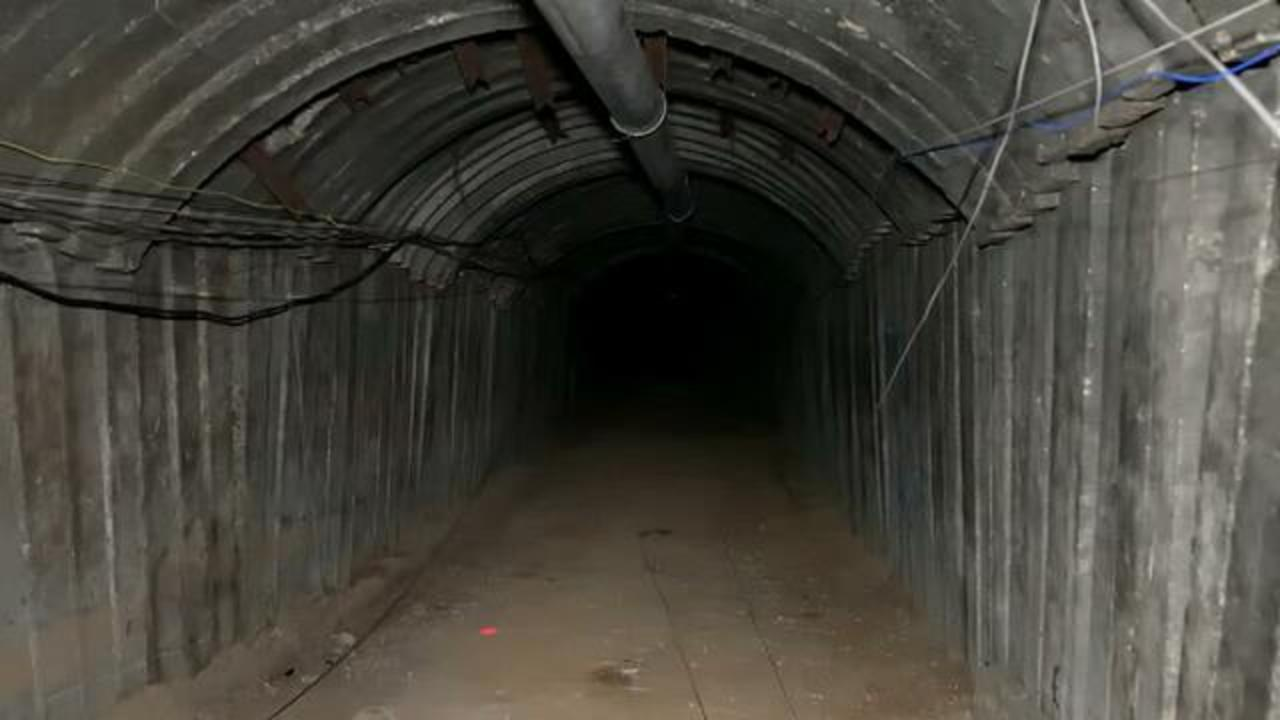
Hamas members and others have built an immense defensive “fortress”. It is a structure of tunnels at two levels of depth (circa 9 ms and 50 ms) studied and created over years. This structure qualitatively resembles those used by the Taliban in Afghanistan and the Vietnamese Vietcong in the Mekong area of southern Vietnam. But, it is more elaborate, larger and capable. Level A is used in the militants’ rejection fighting: here they fight, obtain shelter and temporary hiding place, allows them to move parallel and covertly to the ground of the Strip, use alternative delay positions against advancing or reorganizing soldiers, launch short and middle distance range rockets. Level B acts as a large refuge and general warehouse for Hamas forces and his men and relatives. Intermittently, there are direct paths between both levels of the structure.

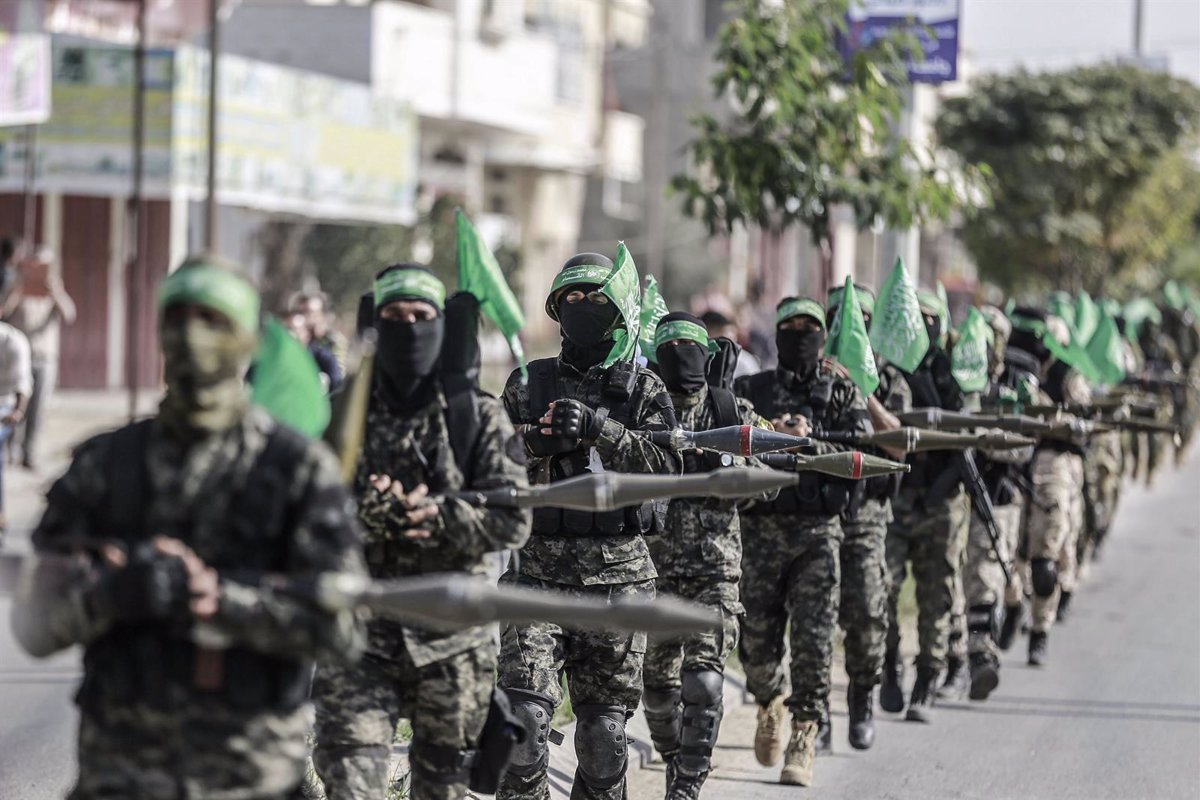
HAMAS IRREGULARS POSING FOR THEIR PEOPLE

This “main protective cover” cushions the heavy fire of Israeli attackers. And it forces soldiers to fight at close range with Hamas irregulars. Thus, the “combat capabilities” of both enemies are quite equal and the sum of military casualties will inexorably rise to figures not expected by the population of Israel. The Israelis’ attempts to flood some tunnels with sea water or a kind of propelled lightweight foam rubber inside them, did not meet expectations.

General situation.

More or less, so far, there is talk of about 6,000 militiamen and about 200 Israeli soldiers as total casualties in Israel’s attack on Gaza. Also, there are just over 23,000 Gazeti civilians dead and 250 inhabitants of Israel’s cooperatives, party places and small barracks captured as hostages, in an unnecessary massacre that is overdone by its cruelty and ferocity.

On Saturday, October 7, irregular Hamas forces launched a “swarm attack” on southern and south-central Israel. Supported by the prior and/or simultaneous launch of thousands of short and medium range ballistic rockets. And, the small “action units” of Hamas, strong in about 3 thousand militiamen employed in total, achieved their tactical objectives: the defeat and/or destruction of Israeli positions (cooperatives, villages and small military posts), causing about 1,300 total casualties to the population and the Tsahal and capturing the said precious hostages. And, producing a strong and general commotion in Israel and in the Tsahal, much greater than the sum of the individual effect of each small attack received.

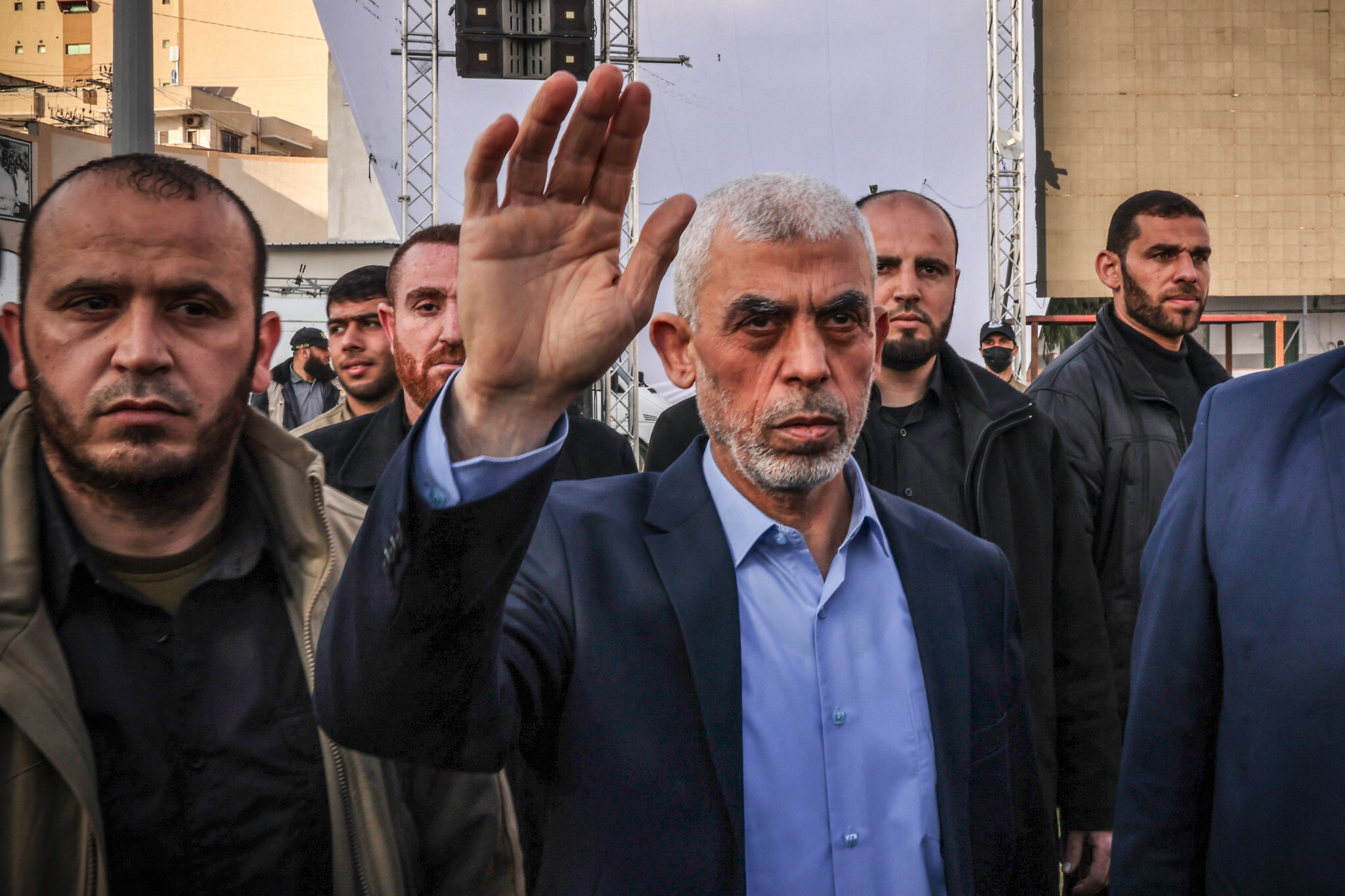
YAHYA SINWAR, MILITARY CHIEF OF HAMAS IN GAZA, PROTECTED BY A CLOUD OF «PALESTINIANS». ISRAEL CANNOT DESTROY IT, BECAUSE IT LIVES SURROUNDED BY HOSTAGES.

We are not going to repeat now the operations to be carried out by the Tsahal in the Gaza Strip, since in our recent article “The Urban Defense of Hamas in Gaza” they are already described.

We are going to discuss some ideological and strategic positions of both enemies.

Israel has estimated more than 12,000 Hamas military targets destroyed. Which include command centers, medium and short tunnels and their accesses, communications centers, storerooms, military materials, unit locations and small militia units. Also, it has killed (according to Hamas’ Health Department) 23 thousand civilians and injured tens of thousands of people; not exactly from chafing, punctures and large scratches or fractures. Israel is carrying out not only a military liquidation of armed enemies, but an “ironing” of the Gaza Strip with blood and fire.

This has no signs of progressing towards a stable and secure solution.

The total annihilation of enemies is a devilish mission or total objective. That would require a long and very high commitment of human resources and material means. A close comparison would be between artillery fire to neutralize or destroy.

A VIEW OF THE LARGEST TUNNEL IN THE HAMAS NETWORK OF TUNNELS IN GAZA

The Nazis were unable to eliminate the Jews of Central Europe and the West of the USSR in four years of presence in the territories of the Gehime Statz Policei and Himmler’s SS.

Nor could they eradicate Bolshevism from the USSR, inhabited, according to them, by “untermensch”, subhumans, an inferior race or severely degraded race by their vices. Which was supposed to be, therefore, affordable and easy.

The human soul, essential and shunned.

When you put a people, race, or large community under the threat of destruction, new “soul energies” emerge from it, generated in the depths of the human soul. They boost his “national morale” and lead him to fight fiercely. Recovering that certainty of survival that was taken from him.

Israel’s bombing has seriously damaged or destroyed more than a hundred buildings, including churches and mosques, some up to 4,000 years old. Belonging to the Gazan Arab cultural heritage. The attacks targeted the social cultural essence of Gazans, their identity. And the Israelis had to respect them, so as not to give serious arguments to the enemy.

Hamas’ Urban Defense in Gaza:

Irregulars mixed with Civilians against Regulars

Introduction:

The structure of Hamas‘s military deployment is based on the «short brigade«, which is a tactical operational unit widely used by irregular or partisan or guerrilla forces, when they reach a certain development in their military capabilities and deployments. These Hamas´short brigades” have between 1,000 and 1,500 men in their combat order, depending on their basic weapons. The most numerous are infantry and elite. They also have some independent companies specialized in adequate short staffing.

The brigades lack defense against aircraft or armored units as such or organic field artillery. This necessarily turns them into light irregular forces, capable of fighting in a mobile manner and using irregular fighting tactics. Looking more for their mobility and areas not adequately defended in the enemy deployment. The rejection in urban areas gives them extra effectiveness, protection and security against the regular military enemy. Since populations form or are molded into a multitude of hiding places, passageways, tunnels and relative hiding heights (floors, parks, gutters, windows, balconies, roofs and gaps in different classes of walls).

Intersections of major urban streets, high-rise buildings and steel-frame buildings (especially factories) can mainly form the core of defense delay points. The nests of resistance depend on these strong positions. Of them there are a large number, also as alternative positions. These nests, when active, are manned by two or three men and may be staffed by riflemen or a light machine gun, also forming an anti-tank or sniper position. In the interior patios of the houses, even on rooftops, they deploy their 80 or 60 mm mortars, whose position is changed as soon as they launch a few bombs. All of this gives cohesion to a defense position that operates in a sector of the Gaza Strip.

Normally, except in the final moments of an assault, civilians remain intertwined with irregular Hamas positions. The loss of Palestinian civilians is one of the collateral objectives “desired” by Hamas. To present to the world and discredit Israel for its “Asymmetrical against Unarmed Civilians” fight. Until now, the Palestinian civilian death toll is about 300 a day on average. A disturbingly tolerable number of “martyrs of Islam and its Minor Jihad.” The Mayor or Real Jihad is the Muslim Effort in the Path of Allah.

Development.

Among the few tens of thousands of Hamas militiamen, no more than 30% are currently trained to use time-limited defense as a form of fighting. These “urban irregular Islamists” protect themselves by extending their defensive positions beyond what is necessary in a conventional defense, thus covering a greater controlled surface. These “fortress” are diffuse, hidden and even imperceptible to outsiders. In just a few hours, the previous works are completed and reinforced. Their communication ways require more work time, but are also less obvious. You have to enter houses to detect perforated walls and find passageways or real tunnels under a piece of furniture or a rug. In their defensive struggle they try to cause the military enemy the highest possible losses and force him again and again to reorganize and redirect his deployment. But they always do it without exposing themselves excessively to a fight at short distances, to being overwhelmed or to losing their freedom of action. This is inexorably linked to the cession of urban space to the military. To do this, they withdraw at the moment they deem appropriate from the direct attack of their enemy, not from their extensive, imprecise bombardment or cannonade. And so it is announced, again and again, that this or that city has been liberated from “bitter enemies.”

Occupying towns is technically the same as raiding a block, an apartment block or a house. How is this? Because the structure of the objectives is similar: walls, spaces between walls and gaps in the walls. There are three stages of attacking a town: isolating it, entering and settling in it, and fighting inside against the defenders.

Isolation implies occupying or covering with effective and seamless medium and heavy fire all possible obvious and hidden escape routes for the rebels, from a certain distance to the population. Likewise, all water, energy and communications services must be cut off externally. As there is a possibility that a nearby enemy band will come to harass or distract the surrounded group to help them escape, it is necessary to establish an external fence at a certain distance from the inner fence, equally ferreous and without views or fire gaps, which covers all possible approach routes. We will call ring the sufficient space created between both discontinuous fences to provide protection, supplies and shelter to the assault forces. Throughout the ring, double sentries will be placed at sensitive points, reinforced by small mobile patrols, intended to thwart rebel infiltration in both directions. The ring will contain 2 mobile reserves of variable size, placed in opposite directions (e.g. north-south), to repel serious breach attempts. Command of the defense of the ring will be carried out by a single commander, different from the attacker command.

A good approach route must allow the attacker to take advantage of a space not covered by the defense and reach his objective without initial loss of his combat capacity. Sewer networks may contain booby traps. And here there are no adjoining forests to provide concealment and cover for the heavy fire. Given that the rebel defender is surely going to retreat from the urban edges, defended only by combat outposts, it will be best to reach the first selected positions inside the urban perimeter in a first push. Entries can be searched from multiple directions. And even to avoid civilian casualties, do some prior preparation on the exterior prominent buildings, starting with bursts of heavy machine guns and then using artillery or helicopter gunships.

As an example, a platoon would advance following the layout of an Arab street. One section would go inside the buildings on one side and the other through those in front, covering him with their light automatic fire. The third section would follow behind, alternately on either side. The forward observers attached to the Ugda (or Israeli brigade), whose plural is Ugdot, could go with it, while the direct heavy fire means would follow behind down the street. Tasks would be exchanged between sections. The reinforced company would advance along one or two semi-parallel streets and relieve the sections after a time. You would have a section in reserve to eliminate flanking attacks or hidden snipers.

The reinforced battalion would attack in a sector of the city, maintain the cohesion of the effort with the higher command plans, give the initiative in combat to the companies and guarantee a continuous and sufficient flow of equipment and material from its rearguard. It would also facilitate heavy fire support and have sections for clearing enemy, hidden or flanking positions.

Why is it not used?

And why is this not done systematically? I still vaguely remember the news about the high award-winning Captain Palacios and his comrades, after years of harsh captivity as prisoners of war in the USSR, arriving on the “Semiramis” at the Barcelona port.

I am also very fresh with the views and statements of all kinds of the 15 British sailors and marines, in March 2007: after their capture in supposed Iranian waters, their illegal display (against the Geneva Convention) before the cameras, their emotional farewell to President Mahmud (it could be pronounced Mammoth) and to Iran and his return home, immediately selling profitable news exclusives, in exchange for sensitive data not being leaked to the public.

They are examples of what we can expect in general from the ultra-technical Western soldiers of the 21st century. Radicalized fanatical Islamists will be rubbing their hands and renewing their resolve, inside and outside our borders. Well, that’s why…

Military and National Intelligence, failures and results.

Introduction and Development.

The intelligence services of large countries are often correct in their opinions and forecasts.

The specific intelligence tasks to which a few modern agents are dedicated usually end with partial or total success.

Complex works with ramifications and developments, which hide an estimable but not certain future, fail miserably. Because of this complex and future peculiarity. And, because the ability to observe and measure a parameter of the human soul is something elusive, doubtful and uncomfortable. Next we will see several specific cases.

The reasons for the divergence of successes between singular cases and the projection into the future (foreseen solution) of complex issues, transcending time, are partly in the difficulty of their conception, in the risk that is run in venturing and in the non contrasted exposure to the commands. Obviously, there is a dialectic here between the concealment carried out and the cognitive and intuitive process of its imagination, development and projection (estimated solution).

Only analysts freed from Scholasticism and field manuals are capable of placing themselves in the free, impartial and lucid mental state or position. To capture anomalous, complex and difficult enemy situations. Since they are paid for results and speed, which are contradictory variables, the luxury of putting an analyst agent in a “quiet position” for an unpredictable, indefinite period of time is not usually acceptable.

The new techniques for detecting, observing and tracking targets should not be underestimated. Based on computers, electronic sensors, Artificial Intelligence. But, the presence of field agents should not be suppressed, but rather supported and increased. Cyber monitoring can specify for our spy the precise area of investigation and study.

BRIEFING OF A FIELD AGENT

The field agent is an infiltrator in a neutral or hostile environment. Able to approach and penetrate the government, business or social media of the rival. And capture relevant, important information in a consistent and sustained manner. The field agent gives a seal of verisimilitude or even reality to the information captured from the enemy.

It is not easy to recruit, train and insert your own field agent. Hence, in an era of haste, superficiality and intellectual complexity, technological means have been favored over field agents for espionage work.

Afghanistan 2021.

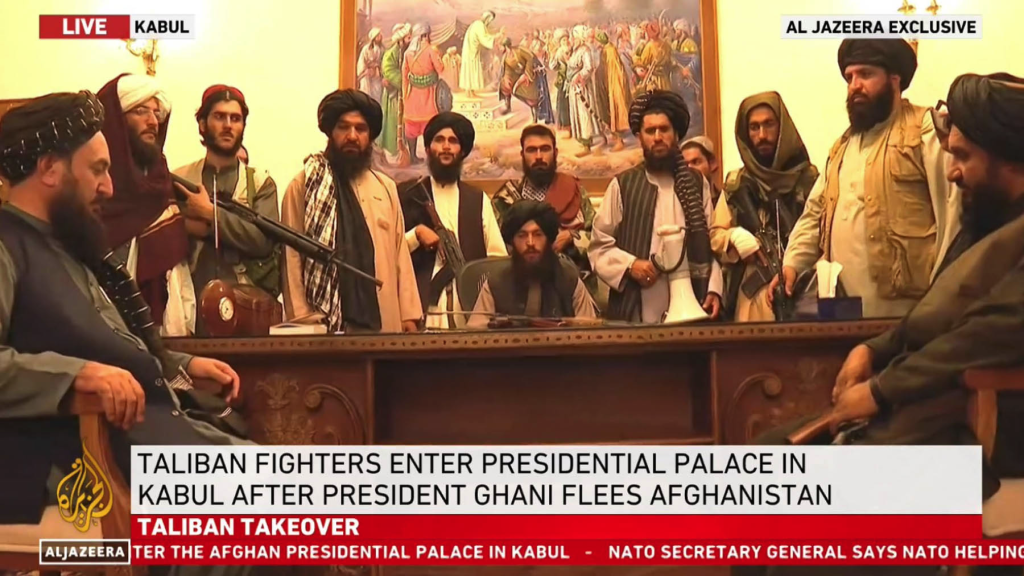
We all remember the moments of the change of government in Afghanistan in August 2021.

During almost 20 years of staying there, the United States had spent enormous sums of money on said stay, providing various support to the Afghan State and to choosing, training and equipping the Afghan National Army. The Americans even boasted in their public communications, especially from the Defense Department, that they were making progress in the anti-terrorist fight against the Taliban.

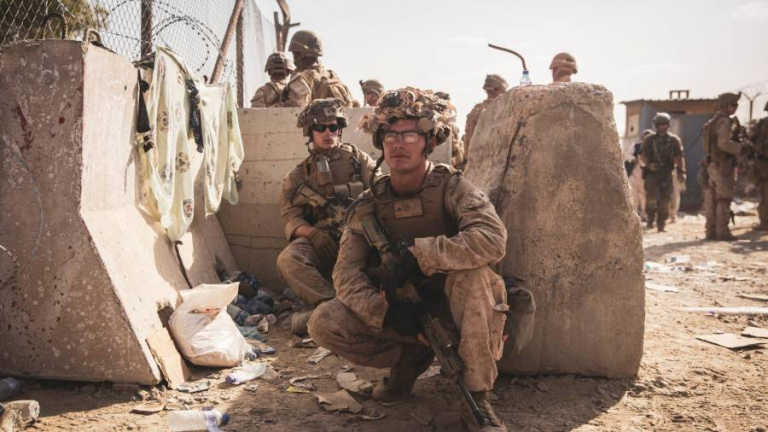
MARINES GUARDING KABUL AIRPORT

This turned out to be like the “Potemkin villages.” That the Russian minister of that name prepared in the path that Tsarina Catherine the Great would follow on a trip. So that her trashy inhabitants would appear happy and shiny as her Imperial Majesty passed by.

As soon as the last American troops had to withdraw, the Afghan soldiers, who also turned out to be shoddy, began to surrender their weapons and escape the feared wrath of the Taliban. US forces were only able to secure a defensive perimeter of the Kabul airport. But, the “friendly Afghans” and their families had to get there to board a flight. Fleeing the tidal wave of the barbarity of the Taliban (scholars of the Koran).

As it had been negotiated with the Taliban to accept control of the airport by Western soldiers for a few days, this was not enough for many «collaborators» of the Westerners (translators, drivers, cleaners, etc.) and their families. Many had to make a painful journey to Pakistan to gain their freedom and their lives.

Vietnam War. American stage,

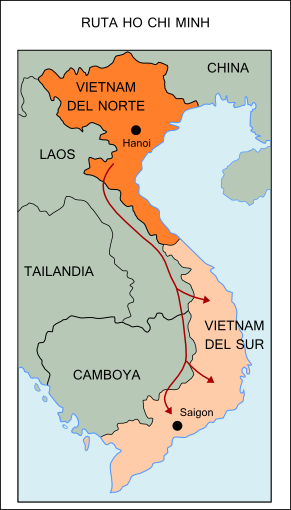
In the United States, during the Vietnam War, the “Igloo White” program was established, endowed with 1.7 billion US dollars, between 1966 and 1971, for the tasks of collecting information on the North Vietnamese and Vietcong supply routes in South Vietnam. The route started from North Vietnam, entering Laos, near the common border, and was the line of all kinds of supplies for the aforementioned forces, operating in South Vietnam. The route was strewn with devices that simulated a plant and were transmitters of information for US intelligence. They measured 1.2 ms. and their battery lasted 50 days. Many times an unmanned flying object, a drone, was used, which collected information from the ground and transmitted it via television to a distant plane.

A SECTION OF THE HO CHI MINH ROUTE

With the data collected from traffic on the roads, the Americans decided on interdiction bombing actions, carried out by their different aerial devices, including the invisible, inaudible and precise B-52 strategic bombers. In early 1971, data from aerial photos after the bombings, taken from planes flying after the attack formations, allowed analysts to assume that the “truck war” was causing a very severe strain on the industrial capacity of North Vietnamese suppliers (China and the USSR).

Historia Desterrada: La ruta Ho Chi Minh: Eje logístico clave en la Guerra  de Vietnam

But, if it was true that so many trucks and equipment were destroyed, how was it possible that the communists maintained the initiative in South Vietnam? On the other hand, where were the tens of thousands of remains of trucks and other materials that literally plagued many of the roads and logistics parks on the Ho Chi Minh Route? Who bothered to remove them?

A more primitive stretch of the Ho Chi Minh Route

Another embarrassing issue was that the total number of vehicles counted by the US aviation as destroyed, exceeded several times the total number of cargo transport vehicles that North Vietnam had, according to Intelligency.

The answer to this essential mystery was soon given by the young American officers (juniors): they were eaten by a monster called the “Great Laotian Truck Eater”; a horrendous scavenger that rose towards dawn and devoured the vehicles destroyed by aviation during the night, after the required photographs for the “wreck count”, the count of debris achieved. Because Americans are very scrupulous with statistics and consider lying a «social sin» that is almost unforgivable for officials.

(TO BE CONTINUED)

Valery Gerasimov, Russian military commander in Ukraine. 2nd. Part.

(continuation)

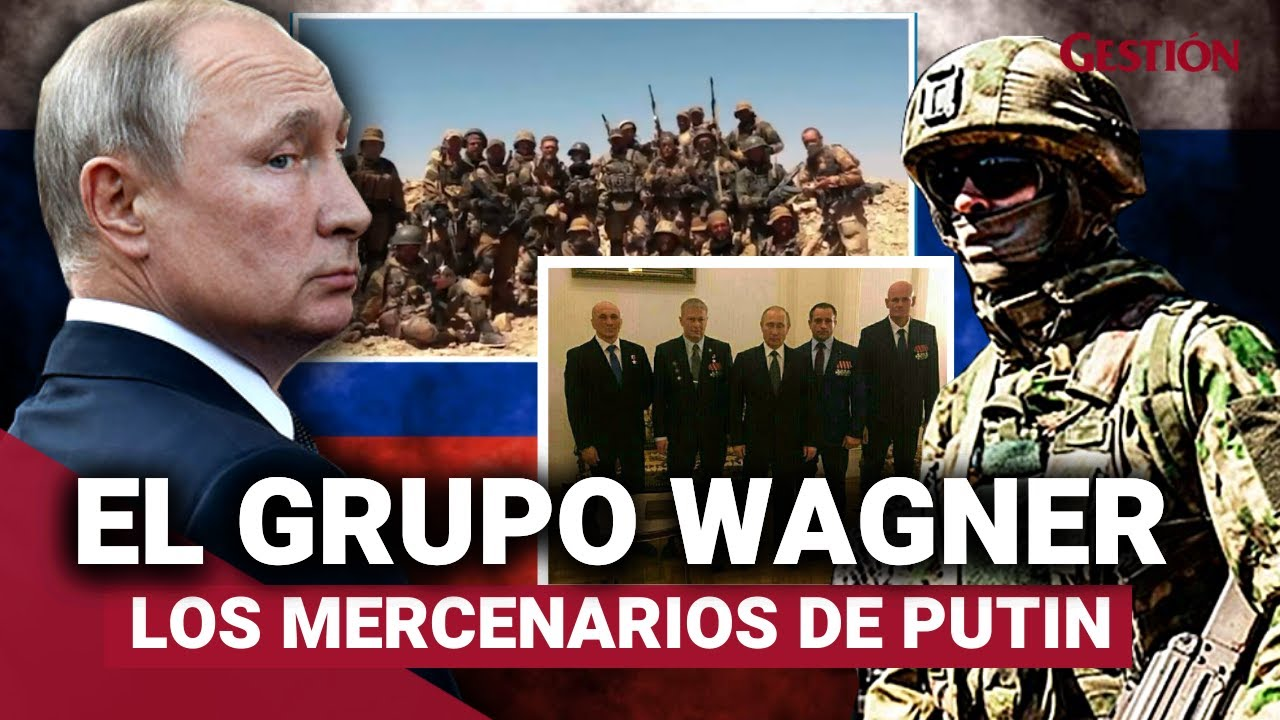
The mercenary and rapacious Wagner Group.

A minor issue arises, but of great importance due to the disagreements it creates in Moscow and with the troops in the campaign. It is the growing presence of the Wagner Group as a Russian fire extinguisher in the war in Ukraine.

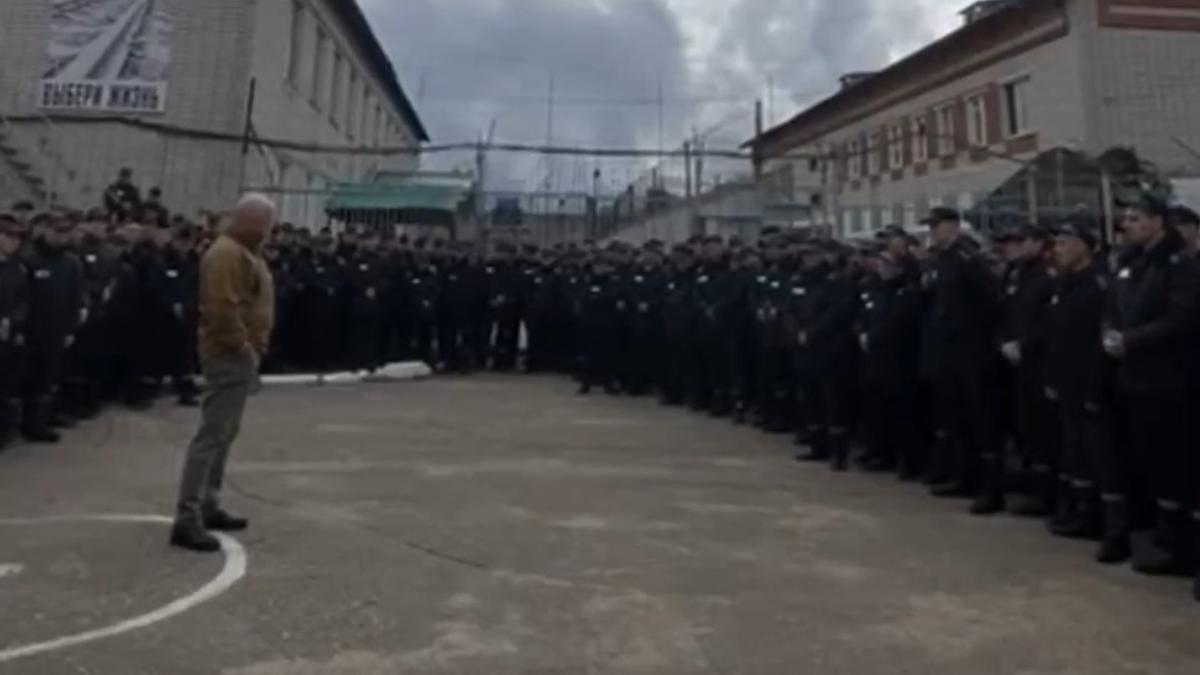
WAGNER RECRUITS RUSSIAN CONVICTS.

It includes convicted criminals, Syrian and Libyan mercenaries «among other elements of bad living» and Russian volunteers. In general, they enjoy disparate salaries, depending on their experience, origin and life path; a convict is basically paid with his freedom, more or less garnished with a clean record.

Their boss is Prigozhin, a Russian plutocrat and Putin henchman. This man is in conflict with part of the Kremlin and with senior military leaders over the permanence of his «private mercenary armed group» in the Russian ranks in the campaign.

The implicit tolerance of the Russian military commands in Ukraine with the men of the Wagner Group generates enormous discomfort among the officers, non-commissioned officers and soldiers stationed there. And it greatly lowers their combat morale and their «esprit de corps«.

If Gerasimov comes with full powers as commander of the campaign and considers the previous arguments, in relation to the motivation and combative disposition of his Russian regular forces, he has to recompose the situation of the forces, in relation to the presence of the Wagner Group in the Russian ranks.

Unity of Action and Concentration of Efforts in the Campaign.

Another of the capital problems that Gerasimov will have to solve is the strategic and operational Integration of all the active Fronts of the Russian forces in presence.

To establish a strategic «Superior Effort Unit» that is coordinated, proportional and synergistic. To optimize in «effective times«, according to the «superior universal saving means» principle and the «military principle of the Objective», the distribution and coordinated use over time of the human and material capacities assigned to the different Fronts.

Thus, the Russians have several Fronts with different importance and presenting different opportunities.

The Kiev Northern Front is inactive. Lukashenko is Putin‘s due ally and with his bravado and maneuvers he causes uncertainty in Kiev. It offers an opportunity to drain mobile Ukrainian troops, to fix and protect the Front from possible Russian rapid raids.

Here the presence in Belarus of a mechanized Russian “task force” would suffice. Counting on tanks and infantry combat and transport vehicles, with support from artillery, engineers, defense against aircraft and ground support aviation and its escort. And integrating a couple of divisions. That moved around the south of Belarus, prowling.

The Crimean Front is active towards Kherson, Mariupol and Zaporiya and creates uncertainty towards Odessa. It allows the defense of the 4 territories annexed by Putin.

The Donbass Front, in southeastern Ukraine, is active in the oblasts or provinces of Lugansk, to the north, along the border with Russia, and Donetz, to the south. The Northeast Front, towards Kharkov is in hibernation. Both hold promise in theory in this new phase of the war.

The joint and coordinated action from both Russian Fronts, of «breaking shock forces» of the Ukrainian Tactical defense. Followed, after the irruption, by «armored mobile groups» with air support, advancing in the Ukrainian operational rear towards a town or small area. Forming a wide and double enveloping movement around the enemy. It can create a “pocket” of it or, at least, a serious threat of cutting off communications for the most active Ukrainian forces, and therefore equipped with heavy equipment, deployed in the east of the country. Russia has more than enough regular mobile forces for this.

The Ukrainian Counterattack.

The Ukrainians can counterattack by employing armored forces with sufficient punch, such as the more modern Main Battle Tanks. The “heavy” tanks that Zelensky claims from the US and Europe now. The Challengers (with their Chobham armor); Leopards 2 A5, of German engineering; Leclercs, the first type built of this new generation of tanks and the Americans Abrams.

Advancing rapidly from the depth of the Ukrainian deployment, on one flank of the Russian advancing points. Let’s remember that this territory is favorable ground for armored vehicles.

For this, Ukraine will need to have several battalions of such tanks. Distributed by their most important concentrations, each with about 50 tanks. Distributing or employing it by isolated companies is to waste its special and unique off-road forward speed, shock and firepower, protected by effective armor. Which is completely decisive in modern combat.

In all this theoretical filigree of maneuvers and combats, the most capable, equipped, motivated and prepared will win.

The denatured current Russian air front.

The goal of the current Russian air front is the weakening of Ukrainian morale. Through the successive attack on civilian facilities (energy, water and communications) and urban centers of some importance in Ukraine.

It should be noted that this rather criminal objective does not target the enemy military forces, but their unarmed rearguard populations. For more INRI, it began to be used shamelessly when Putin and his Kremlin bosses and henchmen realized that his “special military action” in Ukraine was a “bluff”. And that the Ukraine was a tough nut to crack for the Russian forces employed in it.

MASTER SUN.

Almost 2,500 years ago, Master Sun (Sun Tzu), in the Warring States Era, already warned that «when the general is already appointed by the sovereign, he should not interfere in his affairs» and «when the courtiers and ministers interfere in his command, they bring misfortune to the Kingdom”.

In addition, this objective has already been used in other cases and with zero effectiveness, by the way.

Japan was mercilessly bombarded by the US, when it had already managed to occupy the Japanese islands (e.g., Okinawa) close enough to insular Japan. The Japanese were already preparing their civilian population for a Numantine resistance to the invader. Creating an immense natural fortress on its islands, where each one was a fortified redoubt of it.

They were the two atomic bombs of Hiroshima and Nagasaki, which represented an «ascent to the upper limits» in the fight against civilian rearguards. Because they were much more than a very large cannon shot. The ones that forced Japan to surrender unconditionally to the Americans. Because they threatened (although they didn’t have any more artifacts at the time), to destroy the essence and Japanese national identity.

In general, the use of the «indiscriminate bombardment of the civilian rearguards», what it achieves is to galvanize them around their government and their armed forces. Because they perceive from the enemy a demonic, fierce hatred towards them, which would seek the destruction of their identity, culture and idiosyncrasy.

Modernly, such bombing type was used by the US in North Vietnam. They left South Vietnam in 1973 and in 1975 the communist forces occupied it, almost without resistance.

Russia’s Air Support to its Ground Forces.

The Russian air front in Ukraine must be directed against enemy troop concentrations (reserves, attack preparations, marching forces), their ground communications and logistics network, command posts and communications centers, attack points of their forces, artillery and rocket and drones launch positions.

FINAL.

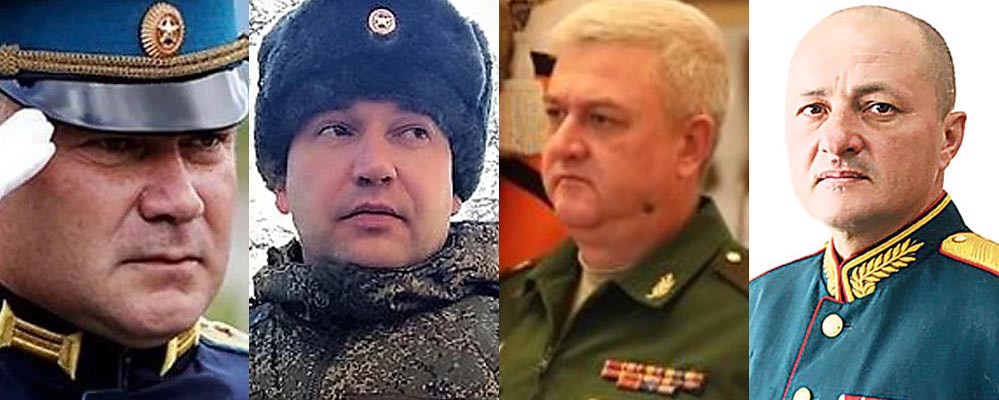
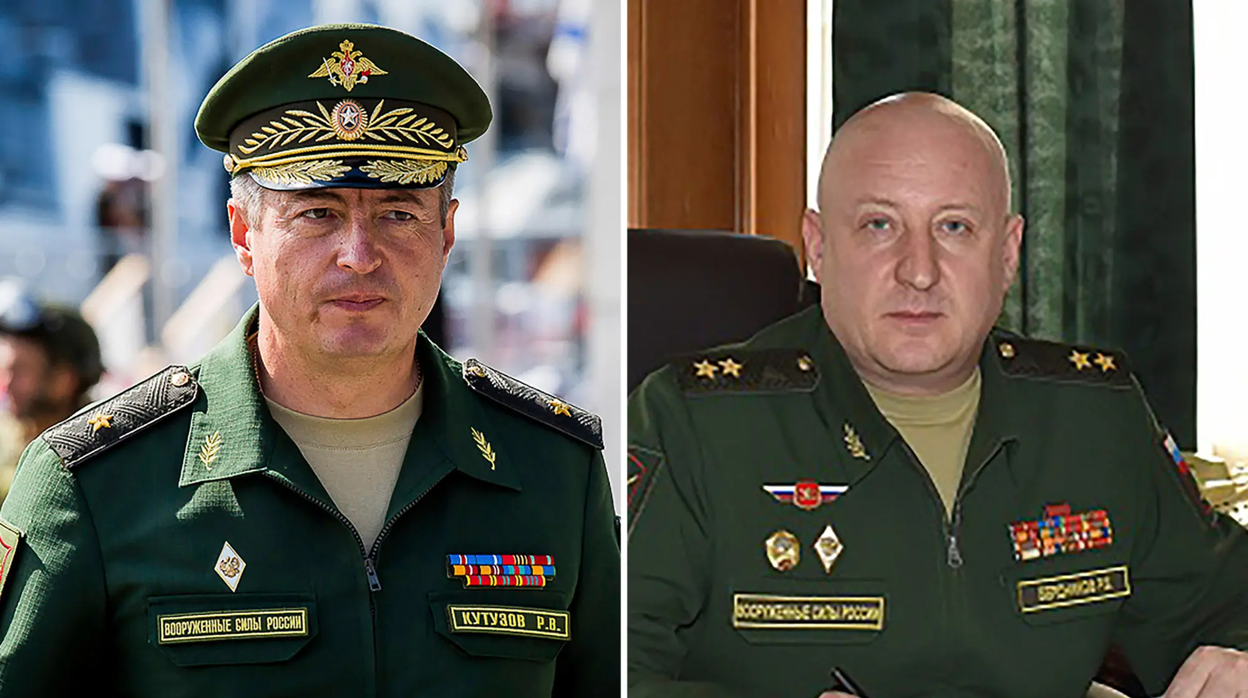
Fallen Russian Generals in Ukraine.

Russian Generals missing from their Battle Forward Post in Ukraine

Introduction.

There are hundreds of videos of Ukrainians neutralizing Russian air, naval and ground vehicles. That more than fighting at close distances, it seems that they pose as if they were shooting ducks at a town fair.

Cuatro generales rusos muertos en Ucrania en 20 días, tantos como en  Afganistán en 10 años

These videos are mostly produced by almost unknown film companies.

And sometimes even a supposed Russian general falls almost in the battle’s first rows.

Developing.

A general never accompanies or stands in combat with a platoon lieutenant or company captain or a battalion commander or lieutenant colonel.

His tasks are not to hit shots. Nor haranguing the men around him. Or drive them into combat by his example. That is done by the officers in charge of the units and the non-commissioned officers in immediate command of the soldiers. Who know their soldiers like nobody else. Or will it not be so here?

Ucrania mata en un mismo día a dos generales rusos y pone en evidencia el  grave problema del ejército de Putin

The task of the general officer is to conceive and conceptualize the combat and the maneuvers of his tactical units, fulfilling the Tasks and Missions of the Army in campaign.

And, facilitate the means in: combined arms units; anti-tank, artillery and air support for them and the logistics for it: from health to supplies of all kinds, from fuel to ammunition, through maintenance teams and removal of damaged vehicles and kitchens and food distribution to the collection points of the units.

Baja en el ejército ruso: muere el alto general Sukhovetsky - AS.com

He harangues and drives the commanders and chiefs of units dependent on him. And, to all the soldiers on rare occasions.

To fulfill Those, fulfilling the universal principle of the economy of human and material means. That is, following the best and most optimized use of it.

And, as I have said before, the death of a general is a national disaster. And, the death of a 4-star general, commander-in-chief of an army of many tens of thousands of soldiers, is a national catastrophe.

Simply because they are very important military assets.

The Russian Campaign for the Donbass’ Basin.

Introduction.

When the Russians have attacked the vast area of the Donbass, as the Center of Gravity of their military efforts in eastern Ukraine, they have done so by employing other, more primitive tactics, if possible.

Russian attempts to employ their modern combined weapons units, the Mobile Battalion Groups, a kind of demi mobile brigades or light brigades, against the ecumens of Kyiv, in western Ukraine, or Kharkov, in eastern Ukraine, were met with unexpected defeats. Thanks to the effective rejection tactics of the Ukrainian units, employing a mobile defense with cession of space and a favorable terrain for defense, almost always.

After the capture of Mariupol, with its port to the Sea of Azov and its gigantic steel industry Azovstal, the time came to attend and occupy the Donbass’ basin, with the oblast (province) of Lugansk, to the north, next to the Russian border and the oblast of Donetz, to the south, towards the peninsula of Crimea, occupied already in 2014.

In this new performance of the Russian Army, «support» heavy fire is no longer such. It has, as an Army Branch, an Own Use, «per se«. That it is surgical and almost total destruction of Ukrainian positions. This guarantees greater survival to their soldiers in the assault on those positions. Operation, on the other hand, that will rarely be important already.

These are not brilliant tactics, nor exemplary ones they use.

SwashVillage | Cómo Ulysses S. Grant ganó el sobrenombre de Subvención de  rendición incondicional
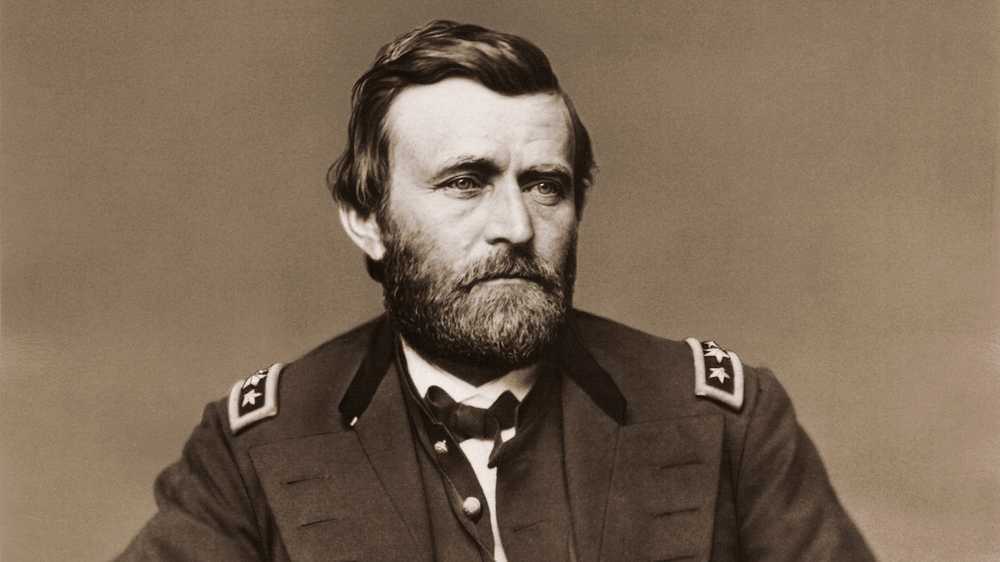
GENERAL ULYSSES GRANT

They are similar to the Attrition and Wear tactics employed by Grant at the end of the American Civil War. He systematically chased Lee and attacked him, not caring too much about the cost. But, he wore him down inexorably. And it led him to his surrender at Appomattox in April 1865.

As he won and as in the war is debatable almost everything, Grant was commended for his perseverance, definition and concentration on a decisive goal and other things…

Or, those used by Foch, Generalissimo of the Allies in the Western European theater in 1918. Who hammered uninterruptedly the German positions in some sectors. Until breaking them, bursting behind their lines and trying a shallow exploitation. That always broke the opportune German operational counterattack. And, that only changed his effort to other sectors, when the German resistance was strong or hardened in them.

Ferdinand Foch, general francés y comandante supr...
GENERALISSIMO FOCH, ALLIED SUPREME COMAND IN 1918

But this unfailingly exhausted the means available to an adversary inferior to the Allies. And, it led Germany to a humiliating surrender before them. And to the dismemberment of the Second Reich and the establishment of the Weimar Republic. That did not direct positively the desires and wishes of the German people.

They are the tactics of the great mace or hammer on the anvil. In contrast with indirect actions and maneuvers of other generals and theaters of operations and epochs. They have the elegance, cleanliness, speed and efficiency of Foil fencing.

These Russian tactics are more costly, long and bloody. And, they are applicable when:

One’s means are far superior to those of the enemy.

The Russian’ Command and Control structure does not respond effectively to the needs of modern warfare. Regarding the complementary use of maneuver and combat, according to the needs of the command and the taking advantage of the opportunities that arise.

Politicians Only ask the military for victory.

Own commands are mediocre and subject to a «zero fault» control by their superiors. Above all, such commands lack imagination and freedom of action.

We will see bad, costly and painful results.

Campaign’s General Development.

Tactical mobile battalions attack in a sector of between one and three km, according to the intensity of the effort that the brigade leaders want to apply in the area. The mobile battalion, which is the effective autonomous tactical unit of the Russian Army, possesses its own organic artillery. But, for certain missions seeking the wear and tear of the enemy, the division can assign them even one more artillery group in direct support, coming from the reserve of it.

Los posibles escenarios militares para una invasión rusa de Ucrania -  Infobae
PARTIAL PHOTO OF A RUSSIAN MOBILE BATTALION IN PARADE

The advance by an attack strip is carried out by a mechanized or motorized infantry company and a tank company, with the corresponding services of the battalion. As fighting takes place on enemy urban terrain, villages and districts, command is exercised by the infantry chief. Which the tanks support from positions further back. Using their powerful cannons with direct fire and HE-type charges, against enemy infantry «support points» and «resistance nests» and anti-tank positions in the infantry zone. In the appearance of Ukrainian tanks and/or Infantry Fighting Vehicles, Russian tanks or a part of them, as decided by the tank command, would quickly switch to anti-tank ammunition and/or smoke charges, if appropriate.

Rusia tendrá en órbita 150 satélites para 2025
RUSSIAN SATELLITE

There is no operational exploration by parts of the Russian ground forces here. This function is fulfilled by the many surveillance satellites deployed in space. And, the «unmanned aerial exploration vehicles» or drones launched from the ground by the Army.

It is assumed that all this information collected by several different means and commands, is centralized in a common Intelligence Center.

Guerra en Ucrania: Rusia tiene drones con tecnología española, según  investigadores británicos – FayerWayer
RUSSIAN UNMANNED AERIAL VEHICLE

Responsible for such reception and its analysis and projection for various times, days, weeks, months. Creating a reasonably reliable, up-to-date, continuous and timely Intelligence. That would facilitate to the ground commanders of brigades or mobile groups, in charge of operations.

The mobile battalions in contact only advance a small combat exploration for their different Weapons. To narrow down and outline the various immediate targets that correspond to them.

If the Artillery, Rockets and Tactical Aviation were used at heart in any of the battles of the Campaign, the Russian ground troops would have as mission in that battle the occupation and consolidation of the objective to «assault». In which there would no longer be enemy soldiers, because they would probably have withdrawn in advance to the attack of the Russian ground force.

The Combat and the Operational Movement as the Essential and Complementary Opposites of War. 2nd. Part.

(FINAL)

A favorite tactic of the Mongols, especially effective when their enemy was willing to meet or was more confident in its exit, for reasons of pure initial numerical superiority, was the «mangudai». It was that a Mongol «army» corps, inferior to the enemy, was seriously engaged in fighting. Its size was large enough for the Mongol effort to be considered important. With it he would mentally attract the enemy and remove him from any other thought or possibility. After a hard battle, the sheer weight of the enemy forced the Mongol corps to retreat. What was a tactical retreat, never really disorderly, was taken by the enemy as an exploitable defeat. His total and permanent ignorance of the Mongols made him suspect nothing. And his desire for victory, augmented by the true effort made in the combat, did not let him to see beyond.

Mangudai - Wikipedia, la enciclopedia libre
MANGUDAI

The yearning persecution ended up scattering the tight, solid formations of the enemy riders. At a moment of pursuit, always far from the rest of the enemy forces waiting, the bulk of the Mongol heavy cavalry emerged, hidden, fresh and thrown to the clash. That ended by undoing the disjointed cavalry groups, in which the persecutors had dispersed. After a real hunt, the enemy forces that remained in their initial positions in battle, either dispersed or were in turn attacked by the whole of the Mongol forces.

The modern working of the combat and operational movement binomial.

In putting into practice with a «correct sense» these things, the combats and the operational movements are continuously and cyclically renewed in their possibilities. Giving each one mutual impulses, opportunities and reasons for action. In this intimate collaboration, decisions are outlined and consolidated until objectives are achieved.

The operational movement of units in military operations, returning to the physical force simile, is not an applied force, but a potential one, that has not yet produced work. It is like free gas or a stream of water. Its potential character, which is perceived by the enemy, is a threat that can cause disorganization and dislocation on its operational advance. Combat is like a concentrated, regular and kinetic force, capable of immediately performing the service asked of it. It springs into action as steam exits a boiler and as water moves the turbine paddles of a dam.

Another pair of better-known complementary «opposites» exist between interarms groups and it is the factor of efficacy that they possess.

FDRA - Historia de la Defensa: SGM: El frente oriental y la Operación  Barbarossa
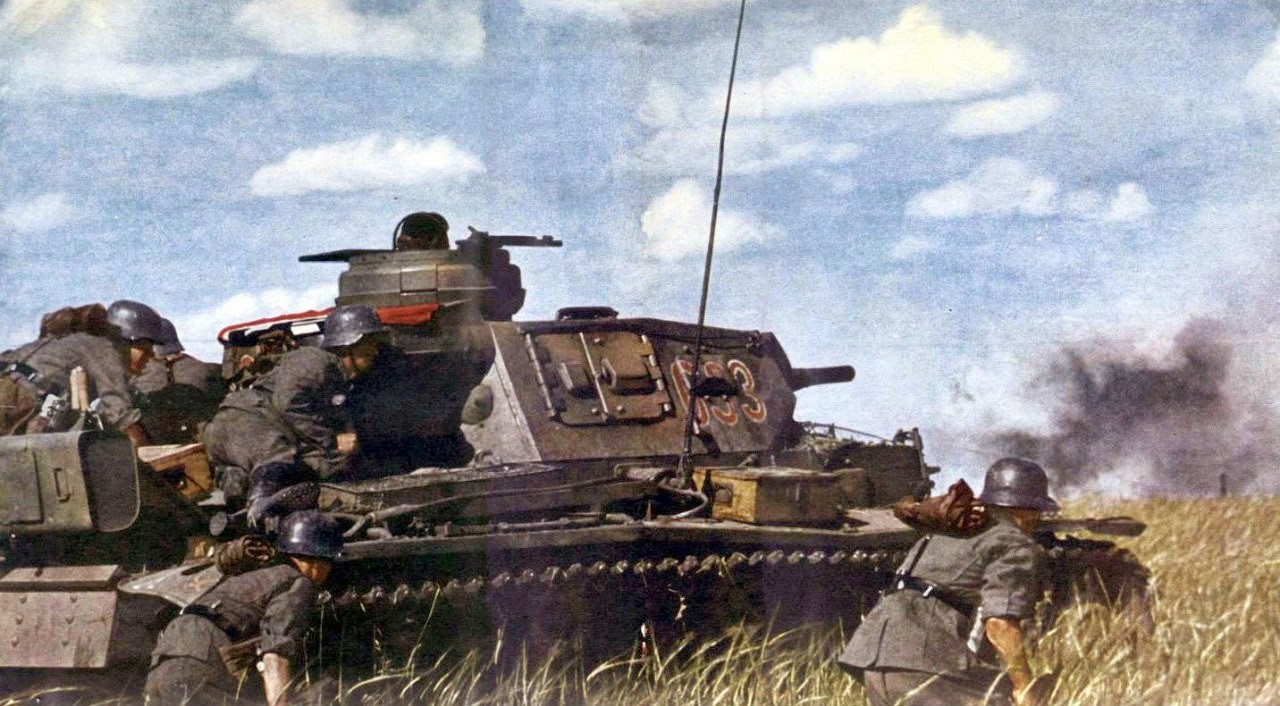
GERMAN TANKS, ICV AND RECONNAISSANCE VEHICLES.

This refers to cooperation between mechanized infantries and tanks, which is derived from the nearby combat capacity of the first and the protection and direct fire power of the second, that are united in comparable tactical and operations speeds. Both forces maintain the impulse and the shock of the armored corp, according to opportunities that are offered to it and framed by its intentions and resources, the terrain, and the intentions and means of the enemy.

We have to remember that at the end of 1980s and the beginning of 1990s, proponents of a war of maneuvers in America argued that combat (bad) harmed movement (good).

BMP-3 - Wikipedia, la enciclopedia libre
The BMP-3 is a ICV very good equiped to fulfill its missions

But, without combat there is no decision and without operational movement there is no exploitation of the operational and strategic enemy zones, nor there are high profitable combats against enemies whose deployments have been dislocated. A mobile corp «influences» the enemy by damaging him through combat or by the timely interruption of vital parts of his deployment. Nuclear dissuasion worked because its destructive capacity was real and intolerable and because the possibility of its employment was credible.

Amx-56 Leclerc Carro De Combate Principal Frances - Fondos de pantalla HD,  Fondos de escritorio, Imágenes y Wallpapers HD para móvil, tablet y  ordenador
MAIN BATTLE TANK AMX-56 LECLERC

Operational movement and combat are necessary, complementary, cooperative and mutually transcendent instruments of the operational strategy. Problems and contradictions arise when, deprived of freedom of action, it is necessary to use or substitute one in the detriment of the other, in order to generate a new impulse for continued military action. When forced to do this, the effects are grave, as they harm «total time» required to planning, preparation and accomplishment of combat or movement operations. It is for this reason that, for example, to engage in an unexpected combat during a march, is inadvisable, as it wreaks havoc on operation «time» and squanders the combat capacity of the units.

Los primeros vehículos blindados de reconocimiento CRV 8x8 Boxer, con la  torreta de 30 mm llegan a Australia. – Galaxia Militar
SPANISH MODERN RECONNAISSANCE HEAVY VEHICLE

In the movement phase, combat is secondary and should be used against opportunistic objectives, to secure the sector of advance, and, especially, to thwart enemy efforts when possible. In the combat phase, combat capacity should be used according to tactical established procedures and looking in its conception to ensure that decisions have transcendence in operational strategy. Doing this results in each element stimulating and strengthening the other in their respective operations, something that often has a multiplier effect in causing final results that were unexpected «a priori». The feeling that a special «pace» or tempo has been achieved is a sure enough sign that one’s forces have freedom of action and are operating correctly with the nature of war in its favor.

The relative characteristics of combat are:

Its great intensity in a tactically «dense» environment, with heavy operational actions; the depletion of combat capacity, with a corresponding loss of «influence» on the enemy, that comes from not being able to further damage him; and the maintenance of movement capacity to carry out an operational exploitation.

Descargar fondos de pantalla Coche blindado, Fennek, de reconocimiento de  coches blindados, alemán de vehículos de combate, modernos vehículos  blindados, el Ejército de Alemania | Military vehicles, Army vehicles,  Armored vehicles
LIGHT RECONNAISSANCE VEHICLE

Combat allows one to gain operational «impulse» by breaking through and penetrating, enveloping and pursuing the enemy. Including a delayed defense when forces are obliged to stop their advance, and, in general, to take advantage of tactical opportunities.

The relative characteristics of operational movements are:

Operational lightness that allows for a high speed of march; the depletion of its movement capacity with the corresponding loss of «influence» on the enemy, that comes from not being able to reach him; and the maintenance of combat capacity in a system where combined arms are balanced.

Operational movement becomes obstructed when mobility is impeded. This can be caused by: the enemy (mine fields, reinforced and/or covered by fire obstacles); the necessity of responding to enemy fire or tactical movement; the lack of supplies or the dislocation of mobile groups from their «mass of support«; deployment changes, the force reorganizations, the uncertainties caused by the lack of intelligence, and the undecisions or doubts within the command.

Finally, when logistics are well-organized and communication lines are secure and adequate, the capacities of combat and operational movement can be recovered. Even if they have been depleted by the mobile corps and by its support mass in the different operations, in order to move forward on objectives ordered by the command.

THE END.

The Combat and the Operational Movement as the Essential and Complementary Opposites of War

Combat and operative movements are not antagonistic forces. Rather, they are necessary and complementary forces. That move harmonically and opportunely our military resources in the effort to achieve the objectives that an enemy would violently denies us. Combat is the utilization of combat capacity, while operational movement refers to the employment of the operational movement capacity of a military system.

Introduction.

Both form a unit of action, so that one without the other can not exist from conceptual and practical points of view in the machine of war. One force may sometimes be predominant, such as when it is being employment, and during that period it is more visible to observers and in its effects.

UNED - Literatura Inglesa de la Primera Guerra Mundial: Poetas en las  trincheras (I) - 25/07/14 - RTVE.es
The trenches covered soldiers from enemy machine guns deadly fire.

The combat without opportunity and operational transcendence ultimately falls, in unbearable human and material losses and brutal and successive shocks. That enervate and degrade participants. Effects that could get in «the chaos born from itself». An example are the battles on the Western Front during World War I. Which originated the tactic of slow, prolonged, stabile and undecided fighting, whose results and personal and economic costs were terrible.

Maurici de Saxònia - Wikiwand
THE MARSHAL OF SAXE.

Operational movement that systematically avoids combat also fails due to the lack of decision and transcendence. It becomes superfluous and useless, a spendthrift arabesque that depletes logistics and results finally in paralysis. This is illustrated during the epoch of Marlborough and Marshall of Saxe. As Beaufré claims, this war that began in the 17th century lasted through much of the 18th century was characterized by mobile but only slightly decisive operations.

John Churchill, I duque de Marlborough - Wikipedia, la enciclopedia libre
THE FIRST DUKE OF MARLBOROUGH

An example of the synthesis of these factors in an almost perfect system of war is art of war achieved by the Mongolians through their conquests and invasions. As example, its series of sustained attacks that managed to seriously threaten the center of Europe in the middle of 13th century.

The Mongolian Warfare: an harmonic synthesis of the combat and the operational movement.

On one hand, the Mongolians possessed an incredible capacity for consistent movement. Their minimal needs were met by pillaging the land and each rider possessed several mounts. These provided both meat and transport for their rapid tactical and operational actions. One Mongol horse could supply enough meat for more than 100 men’s daily rations in campaign. Their success was enhanced by a few polished, simple and forceful tactics. Based on discipline and that made use of their hunting experience with the compound bow, their expertise in managing herds and their knowledge of the human feelings that combat intensifies. The know-how of the Mongolians with the compound bow –a skill that takes much time to acquire and that must be maintained by frequent training– came from their productive activities as nomadic shepherds, who had a great deal of free time.

What was the operational zone of the Mongols?

They did not have it, nor did they need it. Their optimal level of enlistment was both simple, effective and quick to achieve. They start from «their» strategic zone, defined by the advance and the location of their nomadic hamlets, never observed or suspected by their enemies, to the tactical zone with it. No need for the transition or adaptation imposed by the complexity of manufacturing technology and the combined arms groups and their deployments and the entire logistics chain of an army. Their operations do not require the physical support of the operational zone.

In front of the discontinuous front of the positions of their enemies, there is a wide, unprotected and empty area, controlled by no one, that the Mongols use to the fullest for their strategic approach.

There is nothing, on the part of its enemies, that reminds advanced detachments or reconnaissance groups. Although the Marshal of Saxony in a similar war context, because there was not yet mechanization of armies or long-range fire, warns that they can be relatively safe, in their operations independent of the forces advancing behind them.

This double character, punctual of the combats and independent of them in the operations, favors to the maximum the art of the Mongol war, which is always operationally offensive.

En busca de la tumba de Gengis Khan
GENGIS KHAN

The Mongol preoccupation with the enemy is generally strategic, thinking of its exposed flanks at the level of the occupied countries. Somehow, it is originated in its ever-small number for their objectives and in the tactical non invincibility of their forces. If they find an organized, skilled and, above all, serene enemy. Genghis Khan, in 1221, after the conquest of the Muslim empire of Samarkand, located in Turkestan, Persia and Afghanistan, systematically sacked Afghanistan. His son Tului killed most of the inhabitants of northern Persia (Khorasan). With this they protected the southern flank of the empire.

Subuday-Bagatur.Mongolia | Монголия, Скульптура, Доспехи
MONGOL GENERAL SUBUDAI

In 1241 100 thousand Mongols, under the command of the crown prince Batu and general Subudai, crossed the Polish-Ukrainian border to attack Hungary. Around 20000 men, two Tumans or divisions, under the command of Prince Baidar and Prince Kadan, are charged with ensuring that the Hungarians will not receive reinforcements from Poland, Germany or Bohemia.

To this aim, they defeat the concentrations of the forces of these nations in Chmielnik (attracting the enemy in their pursuit, without a previous fight, to an ambush, appearing as a incursion group that was retiring to its base), at 18 Kms of Krakow, and in Liegnitz (by means of a “mangudai”), at 60 Kms to the west of Breslau. With this last victory and a feint to penetrate in Germany, they drive away, until more than 400 Kms of Hungary, the King Wenceslau of Bohemia, who goes back to defend his lands. In less than a month, the Mongol detachment had travelled 650 Kms and fought two decisive battles for its plans. Poland was stunned and prostrated after their passage and the Germans, at west of the Oder, were preparing to defend their lands. This action also protected the Mongol’s land communications with Ukraine, their base of departure, where their nomadic hamlets remained. Which were unable to follow or logistically support so spectacular advances.

Its large units, divisions or tumans always advance covertly, disguised and informed by what was an operational reconnaissance with combat capacity. It was based on squadrons of light cavalry (archers protected with a silken wadding that enveloped, isolated and allowed to remove very easily the points of enemy arrows) from 50 to 100 men. Their exploratory tests and rapid movement also contributed directly to misleading and intimidating an enemy who was unaware of the role of these units. And many times he took them for the vanguard of the armies. Also, this way, the enemy saw Mongols everywhere…

Guerra abierta: Sd.Kfz 232
SdKfz 232 reconnoissance vehicle. It had a 20 mm. gun to do it «in force».

This function of operational reconnaissance has not always been recognized by modern armies. The Germans were masters in it, especially in theaters like the African and the Soviet, where discontinuous fronts and the vacuum of enemy operational areas allowed very well it.

Independent of this reconnaissance of their immediate area of operations, the Mongols maintained another strategic exploratory activity, as a generator of intelligence for immediate use: espionage and the use of agents at their service, inside enemy countries. They sought to understand the characteristics of those nations and the alliances and divisions among them. The Mongols, in turn, were virtually impervious to their knowledge by their enemies. Even in tactical details that, when they found the Mongols, had to be more obvious to them.

(TO BE CONTINUED)

THE FIGHT OF LIGHT INFANTRY AGAINST SUPERIOR ENEMY

Introduction.

It is possible to bring «coherent collective microdirection» to the tactical microterrain, giving specific missions and orders at battalion or company level. The units used will be light infantry, reinforced with material and experts (engineers, mines, mortars, anti-tank, anti-aircraft). The lower tactical unit will be the section with 2 or 3 squads of 3 to 5 men and their supports. She will receive a direct and simple mission, however dangerous, difficult and laborious. The operating time and available equipment will necessarily be short and light, unless the equipment can be bring forward at a protected . From the time of departure or crossing our own lines until their extraction or disengagement should not pass more than 40 hours. And, it would be preferable not more than 24 hours for an individual mission.

Operations.

The combatant’s means are: the terrain, with which he must melt and blend for his basic operations: march, attack and defense; the grenades are a part of his organic «heavy fire». Completing or replacing the 60 mm mortar, when the combatant is at the distance of subreptitious penetration or infiltration.

And the mode or manner of actions must be guided by harmony in the system «friend, enemy and ground» and the serenity and silence of the combatants. Thus, for example, harmony requires that in the infiltration of an enemy position the effect of camouflage on the advance of the fighter be respected. A shrub or bush cannot move forward or change position in such a way that it is shocking to one of the elements of the enemy’s security or combat advanced.

The attack.

Rather than attacking from afar, favoring the use of enemy heavy fire (artillery, mortars, aviation), the combatant must subreptitiously slide to more or less depth in the enemy’s tactical rear. To attack there operational or tactical targets: command and communications centers; warehouses, trucks parks and vehicles and general logistics equipment; barracks, heavy weapons and observatories of all branches. Depending on the type and the entity of the enemy unit attacked.

In a major attack, the section can advance 2 or 3 teams or raid squads. And, for a thorough reconnaissance of the enemy position, it can send 1 or 2 groups or scouting squads. The advancing sector or band of the section can reach 150 ms.

The enemy, in this subreptitious attack, can defend itself by changing the structure of its security zone. By increasing surveillance positions, it will further strengthen it. But, its security will not have improved qualitatively. Effective protection will come from superimposing that network of sniper pits and defense nests, a network of patrols without a fixed route. To hinder or detect and prevent the work of concealed, patient and silent penetration of the attacking groups.

The defense.

In defense, the fighter will do the same, but almost the other way around. It will melt and blend with the surrounding micro-terrain. Hiding as much as possible their battle positions and fortifications to the more numerous and/or technological enemy. Dissipating the tactical trail of their strong positions, both for combat or support.

Japanese in Battle. Enemy Methods

If fortified redoubts are used, they must be camouflaged and covered and partially excavated in the ground. Around them, there will be a swarm of shooters or pairs of them, covering its approaches at the appropriate distances. It is good to be able to maintain a crossfire, which distracts the attention of the enemy on the origin of it.

In urban areas, the light infantry will create a series of defense positions articulated in defense zones. The use of sewers and tunnels shall be continuous for concealment, protection and subreptitious maneuvres. The positions of direct heavy fire (anti-tanks, machine guns, light guns) will be embedded inside the buildings, controlling the rebuffs.

FM 7-8 Chptr 6 URBAN OPERATIONS

On a block, some buildings will be defended by pairs of fighters and others by sections. The movement of the fighters between and across the floors for tactical opportunity will be decided by the defenders. Access to the lower floors from the streets shall be obstructed and protected by booby traps and/or fire from other positions. The courtyards and lots can be suitable for the deployment of anti-aircraft and indirect heavy fire positions.

The mines, barricades, cuts and obstacles will be «interruptions covered by fire«, which break the enemy impulse. The «relative hidden heights» of any urbanized area and the twists and turns of the streets and tracks hide us and break enemy units. Our indirect artillery can register approaching routes and parks and squares, to disrupt enemy advances, concentrations and deposits.

Our tactical actions will seek to: override the enemy impulse; prevent it from encircling and surpassing our units; erode their advances from various sides; destroy their armored and transport vehicles; block their entrances to buildings from terraces and top and bottom floors; and advantageously anticipate their intentions and attempts.

FM 7-8 Chptr 6 URBAN OPERATIONS

All our efforts seek to make that the enemy, with our defense deployment and with the technics and tactics we use to make it work, lose all its numerical, technological, and fire and tactical motion capabilities advantages over us.

If we can have a «detached mobile group» outside the urban perimeter, that is not located by enemy reconnaissance or its air or ground units. It could harass, ambush, erode or attack, as the case may be, the enemy in its tactical rearguard. Their offensive actions must have the operational objective of weakening and disrupting enemy tactical capability. And with this task in mind, the various opportunities to fight against small enemy units and their supports of all kinds will arise. Another premise of their action is that our «detached group» must keep its security, always avoiding an unwanted encounter with the enemy, its premature detection and being surrounded by it.

The marches.

There is a third category of actions that are marches. These would be to the combat, between our own near or far positions and retrograde, with enemy persecution or not. The march to the combat, especially at the near and medium distances, aims to reach the combat positions of each branch with the enemy. Protecting and maintaining the combat and tactical movement capabilities of all units. To make the enemy feel, without any reduction, all our fighting capacity: fire, shock, infiltration.

Here, it is also necessary to get melt and blend with the march terrain. It can be different according to the sections of the route. Protection is the primary condition of our march, as we have not yet begun combat with the enemy. And, without it, we will have squandered and thrown away our opportunities and scarce military means.

Every march with the possibility of an unwanted encounter with the enemy is a march to the combat. And that possibility will define the security and concealment needs of our «marching groups«.

Chindits: The British guerrilla warriors who crippled Japan - Americas  Military Entertainment Brand
CHINDITAS ADVANCING ON NONHOSTILE GROUND

The reconnaissance of our routes must be sufficiently advanced, depending on our knowledge of the route and the enemy and their characteristics. That reconnaissance will be supported by a “vanguard with fighting capacity”. And considering always that its mission includes avoiding the fight with the enemy, except our rejection in a suffered ambush. The hidden and silent features of our fight strongly advise it.

Protection is a necessary element of surprise. Which is a cheap and effective multiplier of the combat capabilities of our light and lean units. Since the enemy tends to not «combat readiness» for most of the time. But this is a desirable and natural thing: lions rest more than 2/3 of their daily available time. And since the enemy needs a «time of detection and alert» to prepare to fight, he has to maintain an advanced security in an effective deployment. That guarantees him to count on such «essential time«, so as not to be surprised by our attack incursion.

The technological weakness of our deployment will be amply compensated, with the concealment, the longer running time, the security of this, the careful and necessary reconnaissance and use of the ground, which gives us that desired fusion with it.

Employing the most favorable terrain to advance: its folds, unevenness and concealment; and dragging to cross over waterlogged lands or near to the enemy and difficult to cross terrain; and the creative and varied camouflage; and making use of the concealment that gives us the night, as a natural reinforcement of our actions. To leave as little tactical footprint as possible for the enemy.

In the cities, there are means of concealment, which gives us their layout, their elements and their construction, the parks, the ditches and the sidewalks. Along with the metropolitan railroad system, the general sewer system and the tunnels of circumstances that we can excavate or reinforce.

To advance through the slopes, it is important to use our side or slope of the relative military crests. Considering that, the enemy will deploy on its side. And, whether or not advance some security, branches observers or forces near them. The distance to the ridge is important and different for the types of fighting. If the defender is somewhat separated, he could be attacked with grenades. And if it is very separately, this means leaving the attacker the domain of the subreptitious approach. Somewhat close, may allow you to detect the assailant and beat and reject him with grenades.

The Command Conduction.

The conduction of these units must include and then inspire and reflect the complementary and continuous character of their «essential polarity«. And that it acts in its conception, development, doctrine, implementation, equipment and training, logistics and support, marches and execution of missions and tasks.

Let us remember, now, that they are regular or semi-regular units, which protect themselves and fight, in a characteristic and singular way, with a greater or better equipped technologically enemy. And, employing in its dialectic war any form of fight (attack, rejection, retardant defense) or maneuvers. And acting partially and to the appropriate degree, as an irregular unit, confusing and merging with the tactical terrain.

Whereas, if we insist too much on a form, conception and implementation, the dynamics of the processes underway can end up moving us away from good doing and even from success. All this has to do with quantum mechanics, Heissenberg’s indeterminacy principle and Hobber’s principle, as natural and ultimate regulators of processes.

Thus, the direction, mode and realization of our means and objectives must be guided as the pilot of a small boat guides it. With the objective on the horizon and employing small course corrections to resume the initial and successive intentions.

Flowgram and Balance processes, actions and facts in the fight of light units in an different or extraordinary way.

Centralization // Coordination // Delegation

Authority // Information

Terrain // Terrain and Micro terrain

Strategy and Operations // Implementation

Intentions // Contingencies

Means // Chances

Organization // Error’s correction and prevention

Reinforcements // Carrying out

Intelligence // Reconnaissance and Intelligence application

THEORY AND REVIEW OF THE AMERICAN “MODERN BATTLE” AND ITS UPDATINGS. 2nd. PART.

(CONTINUATION)

Simultaneity seeks to directly and immediately shock the most enemy echelons allowed by one’s own combat capacity. But, it does not discriminate among objectives according to their importance, which violates the previous and universal principle of the economy of means (one of the most accepted by authors) and it does not create a center of gravity for one’s own efforts. Its action is purely and clearly focused on enemy attrition, demanding a proportionally high consumption of ammunition and missiles of different types, since the action does not look only to neutralize the enemy, but to destroy him. This action commits the equipment and maintenance logistics, demanding a greater number of substitutions of tubes, of ammunition, etc.

In any given moment, simultaneity gives equal preference to objectives such as tactical reserves in depth and obstacles to the advance in the forward edge of the enemy defense position (observatories, infantry combat positions, heavy infantry weapons firing positions, anti-tank positions in the infantry zone). Simultaneity also gives equal preference to objectives that are explored in depth, to objectives that flank one’s advance in the rupture (including an antitank bolt, which has enfilade and firepower cover).

Norman Schwarzkopf - Wikipedia, la enciclopedia libre

THE ARMY GENERAL NORMAN SCHWARZKOPF WON THE GULF WAR ATTACKING SIMULTANEOUSLY ALL THE LEFT FLANK OF THE IRAQ’S DEPLOYMENT.

This simultaneity demands a combat capacity greater than that of the enemy. Since the principal task of our forces of containment and of maneuver is to strike at the same operational «time» all the depth of the attacking deployment. Seeking to shock it, to undo its coherence and to disintegrate it. And the theoreticians ones call «own synergy» to the simultaneously and linearly created effort over the enemies whole front and flank and/or rearguard. This “own synergy” is adding and rather meagre. And it would enrich with the operational indirect, not frontal, fighting, with the surprising action, with the application of the effort on enemy weaknesses. This way, it would be an exponential synergy.

Simultaneity is really a tactical principle. It collaborates in making a breakthrough in a battle, extending contact with the enemy or in taking advantage of different weapons ranges in a defense in depth, in order to beat the tactical echeloned forces of an attacker, for breaking the continuity of his effort by tactical isolating his different echelons. Its transcendence at the operational level is through planning of the battle and is achieved when a positive decision in battle is obtained.

On the other hand, complementariness, when focused on fire (heavy infantry arms, tanks, artillery and aviation), does not respect the combined-arms systems. That place the enemy deployment in a centripetal effort (derivative of different and complementary actions). That tend to place him in a “tactical defenseless dilemma”. We have already indicated that the destruction of an objective is always very onerous (goes against the saving of costs looked for in budgets). The difficult thing is to obtain this effect. If we use maneuvers of combined-arms groups, it will be sufficient the neutralization or temporary loss of the actuation capacity of the objective against us.

On the other hand, given the distance of most enemy objectives from one’s combat capacity, some are immediately attainable only by indirect heavy fire or aviation. This tends to trade one’s mobility and shock elements (including tanks and mechanized infantry) for heavy firepower units, in the mix of one’s available combat capacity. It is hoped that these produce the simultaneous destruction. In favor of this interchange of funds for the defense, is the psychological and politically preferred fact that the precise or the saturation heavy fire theoretically diminishes the “interfaces of action” with the enemy at close distance. The existence of a more than proportional heavy fire tends to favor its use as an attrition element on the enemy in the doctrines and regulations.

The two last reasons fix heavy fire as a key weapon in operations, enhancing mobility as its capacity to locate itself very quickly in successive and/or effective fire positions forces. That it is in fact a tactical mobility, measured at the rate of Kms/day in advance. This harms operational mobility and the main instrument for the decision in that level will be that of “successive combats”, which not always will be wished and transcendent. That is to say, the simultaneity and complementariness unbalancedly support the employment of attrition or pure destruction. And undesirably favor the interchangeability of mobility (operational mobility of troops) and shock for indirect heavy fire and/or aviation bombing.

The Center of Gravity:

In addition, the principles of means economy and of the systematic use of surprise (as a multiplier of combat capacity, even in defense, with reverse slope positions echeloned in depth, opportune counterattacks, fire bags) are directly related to the principles of the concentration of means and mobility in all operations (combats and movements, activity in the defense). Employing by the command the use of the “center of gravity” of the joint effort, as a factor of planning, actuation and direction of combined-arms systems.

That is to say, the center of gravity is the main integrator of the principles of war, in its conduction and execution and is a natural feature of it. As Marshal Von Hindenburg said: “A battle without Schwerpunkt (center of gravity) is like a man without character”.

Battle of Ulm - Alchetron, The Free Social Encyclopedia

NAPOLEON WON THE BATTLE OF ULM USING A FULL CONVERGING ADVANCE ON ULM, BY HIS «GRANDE ARMEE» INDEPENDENT CORPS.

As far as concentration goes, the so called “principal effort” expresses an effect of penetration in a given direction and sense, to be able to arrive at the rupture and exploit it. The combined-arms and aerial efforts of the units are concentrated on this. The main effort is exemplified by the «hammering strategy» of general Foch on the European Western Front, beginning in the summer of 1918. This strategy was used to overcome the Germans, purely by eroding their combat capacity in the theater of operations. And only shifting the direction of attack, when German resistance was excessive in a sector.

Batalla de Ulm - Wikipedia, la enciclopedia libre

WITHOUT ESCAPE, THE AUSTRIANS GIVE IN TO NAPOLEON OUTSIDE ULM.

The center of gravity has a more spatial and temporary sense, looking for an “operational convergence” of the “related effortstowards an objective. Those are not necessarily contiguous, simultaneous or sequential. But are synergic and resulting in the effects and outcomes. Which based on consideration of the optimal form (energy economic) of action of each weapon and service.

The center of gravity is more global or holistic; the main effort is more adding and cumulative. The effects of the main effort are more direct, predictable and evident. Those of the center of gravity are more subtle and unexpected, at least in the first phases of a military action. The ramified lines, in a final centripetal action, are peculiar to the center of gravity. The accumulation of forces in a sector, reiterating (inserted or successive units) or strengthening (adding tanks or engineers, narrowing the strip or sector or providing greater fire support) the effort is peculiar to the concept of main effort.

The center of gravity supposes a centripetal action of all the lines of performance, of the ramified activity of all the units and the services, not necessarily coincident, but convergent on the enemy objetive. The center of gravity directs, canalizes, gathers and orients the creation and the direction of the strike of different units and supports in each case. Its shift by the command allows the continuous adaptation to circumstances and the maintenance of focus on intermediate goals.

At the National Strategy Center of a Society, the center of gravity guide and drive all the different diplomatic, economic, military and social available or created means of a society in synergy and continued actions over the enemy and its allies, to get and produce our National Strategy Objectives (NSO). This is what discovered and found recently the theory of Asymmetric Warfare.

The Tactical or Operational Success. Its Signs. 2nd. Part.

(CONTINUATION)

The Signs of Tactical or Operational Success related to the Physical and Environmental Support:

Land transitability will be neutral or favorable to the operation.

Transitability is the geographical (superficial or spatial) dimension where military actions take place. It is principally framed by the superficial capacity of an area to support certain means or military capacities and their movements. It is completed today in a spatial dimension, by the range of heavy fire and aircrafts.

It has independent and absolute functions, as are the passing of specific points during a period of time, the time it takes to travel the distance between them and the not superficial simultaneity of military means. These refer on the transitability, related to how the Nature and obstacles interact with operations. Transitability also has relative functions that are generally dependent on geography. These are more concretely determined by the availability and quality of roads, railways and fluvial nets (urbanized geography), the climate, the hydrology, the orography, the season and meteorology and the hour of the day (physical geography). These functions change with different national and regional surfaces.

Transitability determines the facility or physical difficulty for rapidly maneuvering and, in consequence, determines the total time of an operation, in the phases of execution through the successive «cycles of action«. Roads and railroad networks are the most suitable physical support to obtain low times of execution in operations or high «tempos». Their transitability characteristics will be their availability in the operations zone, the road surface resistance, the traffic saturation conditions and the “narrow or critical” points existing in the ways networks and their “continuity traveling cuts”.

Roads that support a good advance pace are problematic, as outside of developed countries pave roads are uncommon. More often it is the case that a terrain is untransitable as an operational element and will require units to physically struggle in order to going on. The channels, the rivers, as continuity cuts, constitute another relative conditioner of the transitability of a zone. On one hand, they constitute an almost inevitable restraint of the impulse of maneuver. In effect, in almost any direction that follows an operational route during sufficient Kilometers, it ended up confronting the crossing of a natural or artificial water obstacle. The bridges that surpass them, as part of a road network, not always will exist or be at hand. Given the present amphibious means, the main obstacle to the transit will be offered by the water flows banks. It will be necessary to consider the slope of both banks and the characteristics of resistance, adherence, consistency, etc. of them and of their immediate approach grounds.

Resultado de imagen de MILITAR traveling grounds

One can try to use the superficial dimension, or even the spatial one, to improve transitability in different cases when good conditions do not exist. The first leads to employ a cross country mechanized formation, supported logistically. This was the imagined ideal of strategists and tacticians in the 1930s. On one hand, the best all-field or tracked vehicle moves better along a highway than across a field. For a given useful load weight, all-field or tracked vehicles have more tare than wheels vehicles. For total given weights, vehicles on tracks and on wheels that advance cross country have greater wears, more breakdowns and more fuel consumption than those that travel on highways.

Resultado de imagen de MILITAR river fording

This raises a double economic and logistic inconvenience, whose solution is very difficult. For this reason, it is ideal to operate along steady surfaces and using the railroad up to a bit more than one hundred kilometers to the front or the enemy. And to fight cross-country, taking advantage of shooting cover sectors, concealment and so on. Using the tactical characteristics of the field. Specially, rolling grounds that favor the mechanized fighting.

The spatial dimension also encompasses the impossibility, like that of saturated ground roads, of the simultaneous arrival of numerous aircraft at a given point. Or the airships fly in row, arriving at the same time, but laterally extended or they go in line to unload or arrive successively in a «single» operations point. The helicopters give more concentrated results than those of the airplanes, but these have more lifting and ordnance capacity.

Resultado de imagen de Military airborne falling

The effects of climate, season, hour, and hemisphere are superposed on these conditions, worsening or mitigating them. Orography affects transitability when it make difficult the construction of a road layout and when it increases the slope that military marches must cross. The cross-sectional passing of “height lines” can become impassable, except by defiles or mountain ports. Which create bottlenecks that collapse the maneuver impulse and prevent the deployments of the units that cross them. Fights at heights have a generic “gravity center” in order to control these passages.

Resultado de imagen de urban warfare city A RESOLUTE ENEMY  IS STILL WAITING YOU OVER THERE

When “height gradient” diminishes there exists a less evident, but more frequent and very important factor, which is the «drop». “Drop» refers to height variations of a few meters up to dozens of meters in relation to the surroundings. It appears in cross-country running, in areas of more or less waviness, in broken areas and even in roadways sections. It has also an expression in urban zones, both residential and industrial. As well as buildings, houses and facilities form «relative concealing heights«. These generate protection and danger, opportunities and risks. And are the urban expression of the «drop». The forest is a special variant of this case, with obstacles and shorts views for both enemy forces.

Urbanized or industrial zones shape numerous parallel, transverse and interweaving «drop» lines. They channel all military effort in the mentioned zones, generating innumerable «interfaces of action» with the enemy. That are frequently determined under surprise conditions. These zones definitively paralyze the impulse of the units and generate attrition (in military means) and wear (in logistical terms) disproportionate to the results obtainable by their occupation.

THE END.

The Principle of the Objective, Today. 2nd. Part.

(CONTINUATION)

An Historical Application of the Principle of the Aim in the War.

A clear and simple example of the application of this principle in the operational strategy, we have in the campaign of Ulm. In May, 1805 broke out the war between France and the Third Coalition, formed by Russia, Austria and England, its promoter. The main body of the French army was deployed along the coast of the English Channel, preparing itself to invade England. But the threat for the French army in campaign, which was the real strategic aim in the Napoleonic wars (let’s remember that the occupations of Madrid, Vienna, Moscow, were not decisive), was arising in the East Europe, from the armies of the Russian and Austrian empires. In September, 1805 Napoleon moved his «Army of England» to the Rhine, deploying it between Mainz and Strasbourg and renamed the «Great Army». The Great Armée was formed by 145.000 infantrymen and 38.000 riders, joined 7 army corps. Each one at the orders of a French marshall, a great cavalry reserve, at the orders of the marshall Prince Murat, and the Imperial Guard, directly under Napoleon. To them 25.000 Bavarian allies were added.

Taking the initiative, as was habitual with him, Napoleon decides to give the first strategic blow against the army of 72.000 Austrians, which, at the orders of the general Mack and the archduke Fernand, son of the emperor Francis II, was advancing towards Ulm, without waiting for the arrival of the Russian help. Napoleon maneuvered his army corps in a centripetal spiral over Ulm. It supposes the joint action of all the means in his “lines of action”. Of the «branched out» activity of all the units and the services, not necessarily coincidental in the time, but convergent and resultant in his efficiency and in the result. By means of the different and coordinated,lines of advance or action, the uncertainty and insecurity is induced in a prepared enemy. And always his rejection capacity is dispersed and is disturbed his plan of defense and its systematic conduction.

Resultado de imagen de battle of ulm 1805

The general Mack went out at the doors of Ulm, to surrender to Napoleon, at the foothills of mounts Michelsberg.

In a wide advance of his independent army corps, the great Armée quickly crossed the center of Germany, from the Rhine to the Danube, between septiembre, 25 and October, 6. With this he operationally intervened between the Austrians and the Russian allied forces, still distant.

The Austrians did not understand the need of the rapidity of these movements. They were thinking only about the battle, as the only instrument of the decision. Their operational strategy did not exist. And they waited his enemies, centred on Ulm and expectant. The Frenchmen initiated the crossing of the Danube on the 7th. And, during the whole week, Napoleon made converge, on an enormous constrictive maneuver, the majority of his forces on Ulm. While, an army corp was monitoring the possible arrival of the general Kutuzov from the East. The trap was remaining closed in irresistible force.

The general Mack uselessly realized several attempts of breakthrough, with the major efforts in Haslach and Elchingen. Both Austrian commanders fought between them. And the archduke Fernand separated from the main body with his 6.000 riders and tried to escape in North-East direction. But, near Trochtelfingen, his forces were surrounded and defeated by the Murat’s corps cavalry. Other 12.000 Austrians gave up themselves in Neustadt. The general Mack and the rest of his men (around 27.000, after the combats and mentioned incidents), with Napoleon in scandalous majority at the doors of Ulm from October, 14, went out to surrender their weapon at the foothills of mounts Michelsberg. The general Mack signed the capitulation of the army on the 20th. The campaign, without battles in strict sense, cost to Austria more than 50.000 men, almost 70 % of his initial troops.

The Current Process of Definition and Follow-up of the Aim.

The retreat of the USA of Vietnam produced a readjustment and another appreciation of the principle of the aim. The later evaluations of the politicians and military men led to proclaiming the imperious need to give always to their armed forces in any future conflict: the support without fissures of the people; a few clear and expressly defined operational and strategic aims and the necessary means for its achievement. This «check list» of supports of the national strategy to the military strategy, appears today as a good summary of the moral and material commitment that the peoples and the controls have with their military men, when they send them to the war for reasons of «national interest».

In the practice, the development of the operational strategy will be defining new operational and tactical aims. That are the surveyor’s poles of the sinuous way that leads to obtaining the strategic aims raised to the military men. That can be so precise and so general as: the occupation of an enemy territory, the recovery of a some provinces pillaged by that one, his effective military defeat or his surrender with or without conditions. Let’s remember that Moltke the Old was saying that the own initial plans only were resisting or were viable up to the first contact in force with the enemy.

The western democracies are provided with extensive, direct and deep communications through all their social tissue. Everything appears easily at first sight. And all the persons take the right or the obligation to debate about everything. But, in the «political military area» that is great more unstable, insecure and opaque. This does not want to say that the operational requirements should not exist. And that the need to prescribe and keep the discretion and the security necessarily limit the «universal exhibition» to the mass media in the area of the national safety.

Resultado de imagen de senate of the us

The Senate of the United States controls the evolution of the wars objectives.

It is necessary to define and to give clear aims to the military men. It implies the need of that the politicians study and compromise themselves with the high or national strategy. And, as necessary and inevitable corollary, that they give the sufficient operational autonomy to his military men. In order that they do not waste lives, efforts and a material means. In order that they neither get entangled, do not even be distracting in unproductive or secondary actions. In order that they do not lose the respect and the support of his people and gain the scorn of the neutrals and potential enemies.

But, closing an ideological and practical «curl», the age of the communications also offers advantages of rapidity and constant, reasonably trustworthy and sufficient intelligence using the military information and his management. Even in the fleeting and delicate cases, with the wireless communications of several levels and accesses, it is possible to obtain a «virtual presence» of the military chiefs and of certain politicians, in the operational distant field. This would facilitate to these controls, a successive approximation and the graduation of the actions of the military means in presence, towards the operational action. And it would facilitate the dilution in the space and the time of the need to fix the successive secondary aims, already from the beginning of a “cycle of military operations”. Keeping always a constant acceleration of the «cycles of action» on the enemy, to dislocate his rejection capacity and to seek and to act on his operational weaknesses. Already those must seek to go successively forward to the enemy, progressively turning ineffective his actions and induce in his men the abandonment of not being capable of offsetting nor overcome our tactical actions guided by our “in real time” operational strategy.

(THE END)

IN PURSUIT OF THE MILITARY EXCELENCE.

THE INCOMPLETE AND SLANTED THEORY OF SHIMON NAVEH

The author realizes a methodical and deep critique of the different fighting forms in each of the historical epochs.

It is specially hard and mordant with the form of fight of the Germans during the World War II. His aim is to degrade and minimize it, to reduce it importance and validity in the history of the ground operations. Depriving this way the evolution of the American theory on the those operations, of any intellectual influence or debt with the doctrine of the German war.

The one that the author considers to be more opportunist and tactics, that complete and scientific. And he thinks that it was favored in its results by the lacks and the mistakes of its enemies. It is possible that an academic analysis of the form of German fight, approaches to give this verdict.

But, the evidence is the touchstone of the reality without appearances. And the case is that the Germans triumphed widely and extensively with that one, during the first stage of the World War II in Europe: 1939 1942. During which, his enemies could learn of the tactics, technologies and the German operational strategy. Since it extended too much in the time, on having multiplied the theatres of the war.

Imagen relacionada

And that, in the last phase of the war: 1943-1945, the Germans were exceeded, overwhelmed and, finally, defeated. To what contributed the qualitative and quantitative differences in the logistic flows, which supported both armed rivals; the enormous bleeding of the German commands and cadres, which turned out to be irrecoverable and reduced the qualities of his units; and the quantitative demography of the Allies.

Naveh grants wide quality and esteem to the military doctrine of the Soviets. That he considers to be scientific, because it was following a linear process of arguments, logic and results (that for a long time, were only longed for or foreseen). And that was adapting and guiding specifically and really, to an army of slightly educated masses and nourished by a resounding demography. That always had an insufficient logistic support, when it was not precarious. The mechanization of the infantry to collaborate with the tanks, was always a longing and a hope, more than an average real capacity.

Resultado de imagen de germany military power ww2

At the first times after the Bolshevik revolution, even directed by the young theorist of the deep maneuver, general Mikhail Tujachevski, the Russian armies remembered «slow and exhausting hordes» in their marches. That were living for the sustenance from the own or strangly territory where they were advancing. The men more relatively educated, always scanty, were enlisted in the technical weapons: artillery, engineers, aviation. Or in the most effective and necessary branches for the penetration and the exploitation of the enemy operational rear: tanks, Guard infantry.

Finally, Shimon Naveh concentrates his efforts, summary and praises in the long process of development of the American AirLand Battle doctrine and his following updates. Whose kindness and efficiency got reality in the air and ground offensive against the Iraqi regime in the War of the Gulf of 1991, looking for the liberation of Kuwait from the power of Saddam Hussein. War that was the touchstone of that doctrine supposedly culminada.

Initiated the ground offensive, the American forces and his allies rapidity faced to practically all the Iraqi forces that were occupying and defending Kuwait. From the Persian Gulf operated the naval forces, that threatening with an amphibious disembarkation on the narrow coasts of the emirate. From the south, the American marines took charge in fixing the Iraqi forces of the south flank of the defense. Confirming this way, for the Iraqis, that the assault front of the allies would be the south and east.

Resultado de imagen de soviet polish war THE SOVIET POLISH WAR OF 1920.

But, at the south of Iraq / Kuwait, the bulk of the Allies mechanized forces penetrated in whirlwind along the western front of the Iraqi deployment, blind and static. Immediately afterwards to be divided this allied deployment in several advance spears, over all the Iraqi units of this flank.

The campaign was a great atrition operation: of the strongest against the strong, for the major technological means and capacities of the Allies. Where a simultaneous assault was looked, to the Soviet style, to all the steps of the enemy order of battle and in the depth of his defensive rigid deployment. In the south of this one there existed armored or motorized Iraqi divisions, ready to counter-attack any allied penetration. Towards the center and north, there was the thickness of the Republican Guard, ready to counter-attack any operational Allied action.

Where a simultaneous attack was looked for, of the Soviet style, to all the levels of the enemy order of battle and in the depth of his defensive rigid deployment. In the south of this existed armored or motorized Iraqi divisions, ready to counter-attack any Allied penetration. Towards the center and north, was the bulk of the Republican Guard, ready to counter-attack any Allied operational action.

The concentrations, maneuvers and actions neither were searching, nor had, a gravity center of the efforts. That was successively defined and applied as the campaign was developing. But, using the already mentioned advantages, the allied forces were seeking to fix and crush the enemy units at their range, by a direct and almost joint form. Creating really this way, a battle of encircle and annihilation, of the family of Cannas and Tannenberg, where the liquidation of the siege was done by parts and was uniformly accelerated in the time.

Resultado de imagen de soviet polish war SWEEPING THE RUSSIAN HORDES.

The Iraqi divisions at the east were submitted to the central and direct control of Saddam Hussein and his Central Staff. That depriving them of initiative, flexibility and freedom of action. If not, some Allies’s corps or divisions could have been put in difficulties by the action of some great Iraqi unit. After the beginning of the ground attack and having the Allies the air supremacy in the campaign, the Iraqis were deprived of the operational exploration. So, the surrounding maneuver of the Allies by the east and towards their rearward, was concealed to them.


The operational Strategy in the Irregular War.

Naveh, nevertheless, does not approach, far from it penetrates and analyzes, a type of war that already existed from a lot of time ago. Before the genesis and ripeness of the American operational strategy. And that is the guerrilla warfare, word taken from the Spanish by all the languages. The one that, pompously, the Anglo-Saxons called war of IVth generation. Though it is almost as ancient as the human conflict. The modern technological armies find difficulties to face this form of fight. Using the means, the doctrine and his regulations, the order of battle and the trainings with which they are provided.

The guerrilla war is synonymous of long and deeply rooted conflict in the civil society, where it appears and develops. It is of low military intensity, except in its last stage (if she reaches it) and of great ideological politicization and polarization of the rivals. These characteristics do that inevitably the civilians are involved in her and that the military conflict is arbitrary, hard and cruel. There face positions and antagonistic interests, which, in the use of the violence, derive towards her limits and that of the suffering of whom involve her.

The author might speak about the application of the operational strategy in the guerrilla warfare. Or used in the direction and the operations of the elite units (marines, rangers, SEALs, etc.), that realize counterinsurgency missions. Here, the gravit centers of the efforts, globally coordinated, include the economic, military, political and social areas. And will exist in these fields and will be applied in a harmonic, joint and coordinated way. Working for a common and convergent effort, using different combinations of means in the different cases that appear.

A central counterinsurgency command will exist, that must bring together and direct the efforts, means and actions. In agreement with the specialization of the means that act and the actions and the aims that are looked for in each of the mentioned levels or fields of action. A characteristic of the acts and their effects is that they must be convergent. Looking for the multiplication and increase of these and the synergy of the first ones. This way, in any action, from a level of forces, budget or looked for results, will act the Counterinsurgency Command.

As examples, in the military area will be gravity centers the semipermanent bases, the communications between the bands and with the countrymen, including the logistics, and the movements of the rebels groups. The static defense will be kept in the centers and means necessary for the effort of war. Others will have to defend by a system of garrisons for the defense of the territory. That will be supported by a military system of mobile patrols and of reconnaissance and of ground attack aviation. The special units will realize deep incursions of attack, exploration and harassment in the areas in dispute with the guerrillas or in power of these.