Generalities.
Among the Principles of War that deal with the human Control and Creation of the phenomenon of war are Direction, Decision, and Initiative.
Decision implies a Reasoned Command Action in accordance with the means and superior intentions for it. It is the transition from theoretical direction to an Active and Decisive Resolution. Here, it is possible to employ Commitment in a concentrated, powerful, and supreme Action.
Being Resolute means overcoming the demons of dispersion, uncertainty, fatigue, and the enemy’s imperious action. Resolution, as a reasoned and motivated force of will, imposes the Law of Action on the enemy. And this supreme action imposes surprise, imbalance, and increases the enemy’s vulnerabilities, either revealing or magnifying them in operations.
Development.
To be sufficiently resolute, one must be well-trained. And this is definitively achieved after the first engagements with an enemy. But the «maturation time» needed to turn a newly formed unit into an «effective unit» is incredibly short, usually measured in weeks.
One must be qualitatively motivated by the appropriate and strong Ethos of the military. These characteristics are generally found in elite army units:
Rangers, Marines, Texas Rangers, the German SS, Soviet Guards units, the Persian Immortals, the Spanish Legion, the French Foreign Legion, Italian Carabinieri of Special Operations and the early units of the Bundesheer in World War II.
American SEALs do not fit this description, as they are small units that typically do not have significant operational impact on their usual operations.
Powerful action against the enemy imposes the law of action upon them and overcomes and mitigates the negative effects of combat, its preparation, and the enemy itself.
Here, team spirit, brotherhood in arms, the fight for the ideal, and the pursuit of victory drive men to give their all.
Simplified Employment of Units.
Decisive units impose their will locally using their two active means: surprise and/or daring maneuvers, and direct and indirect fire from their artillery and the support weapons of infantry fighting vehicles (IFVs) and infantry transport vehicles (ITVs).
Normally, if the units have a separate mission, the heavy artillery will be subordinate to their command.
Fire from .50 caliber machine guns and 20-30 mm rapid-fire cannons will directly support their advance and the neutralization or destruction of their successive objectives.
The type of combat employed by decisive units will result in high ammunition consumption for the infantry weapons of the units and their accompanying transports and combat vehicles during their successive advances and actions against objectives.
The tank units accompanying them will be a battalion in size and will employ at least two companies. Any smaller number of tanks will mean losing a significant portion of their Concentrated Shock and Firepower. And the presence of an enemy anti-tank bolt defense will negate their effectiveness as a weapon.
Final details.
Often, the difference between an ordinary unit and a decisive one lies in the proper execution of all its capabilities and its development by the latter. That is, fulfilling all existing functions and regulations effectively.
The U.S. Army’s 88th Infantry Division was considered by the Germans to be a «shock division.» And when the 88th was deployed to a sector of the front, the Germans directed their reserves toward it, anticipating that the Allied main effort in that battle would be concentrated in that sector. In other words, the Germans considered this American division to be something special.
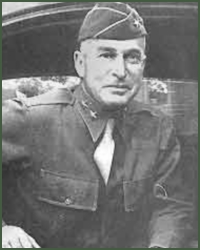
Why did this happen? The most important factor was the leadership skills of the division commander. In other respects, the 88th was similar to other newly formed divisions. The leadership qualities demonstrated by the 88th included:
Aggressiveness; Strict discipline; Attention to detail; Rallying speeches and messages that rallied the troops; General Sloan‘s personal presence on the front line; Ensuring all orders were properly carried out; Ensuring subordinates had the means to carry them out; Tactical skill, demonstrating that following orders was essential for survival; The ability to grasp the overall picture and each unit’s role in achieving the general objectives; and Friendly demeanor to build rapport with subordinate commanders.
And, in short: Personal Presence on the front line, Aggressiveness, Discipline, and Courage.
It is usually rare for two enemy elite units to engage each other simultaneously. This would result in a costly battle of attrition.
Given the impact of these decisive actions on the enemy, it is advisable for every army to prepare and maintain some Special Forces units that possesses the necessary high-level combat capability and remains as a reserve and special employment force.
This characteristic of Decisiveness in combat usually compensates for the apparent greater attrition and casualties in a campaign or operation involving successive engagements. The Quality of appropriate and decisive action always outweighs the effects of attrition and losses in combat.



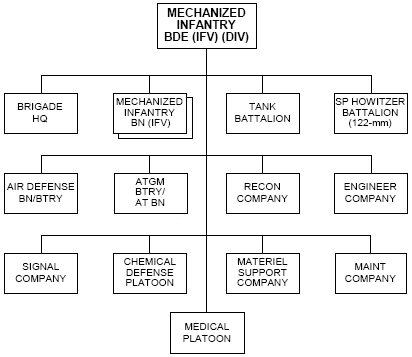


 GOOD AGAINST A II GENERATION ARMY AND MORE CENTRALIZED THAT OURS: THAT OF SADAM HUSSEIN.
GOOD AGAINST A II GENERATION ARMY AND MORE CENTRALIZED THAT OURS: THAT OF SADAM HUSSEIN. OBAMA FIRED CENTCOM GENERAL MATTIS WITHOUT A PHONE CALL.
 SOME DEADLY RECORDS.