The Tactical Inertia of living forces in combat.
One of the command’s means of overcoming men’s «combat laziness» is to always use forces according to their actual capabilities, allowing the phases of the «action and recovery cycle» to be fulfilled at all times.
For example, «militias» could never be the spearhead of a breakthrough, nor operate permanently and aggressively far from their support bases. But they could defend established positions, «redoubts,» against professional units and even successfully counterattack them locally, if well-led. Their objectives had to be simple, easy, and even phased, so that they would not be swept away by a superior enemy combat capability and could accomplish them. And the rewards for the successive stages achieved would maintain and strengthen their morale and self-confidence.
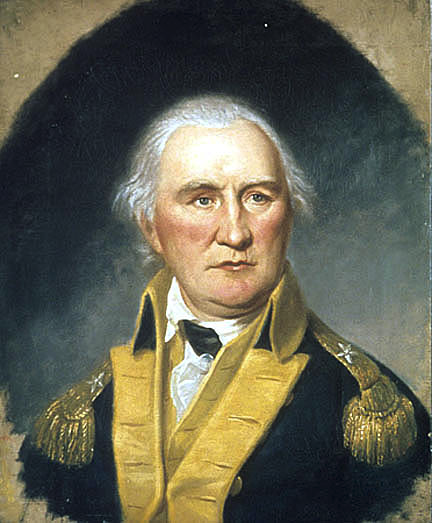
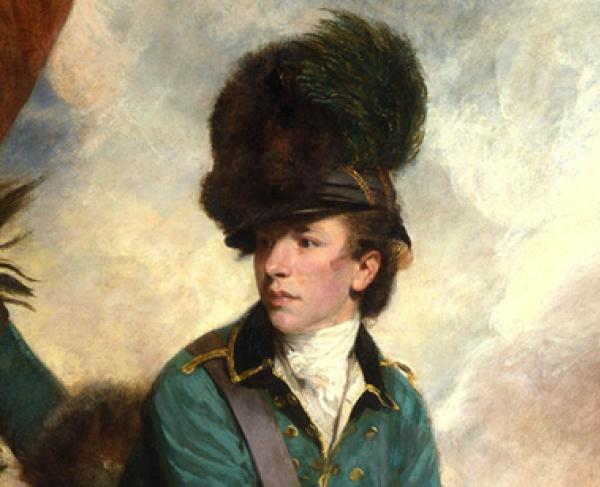
On January 17, 1781, the 45 year old American General Daniel Morgan engaged in a small battle in Cowpens the English regular forces of 27 year old Lieutenant Colonel Banastre Tarleton. Both had similar contingents, but 2/3 of Morgan’s 1,000 men belonged to American territorial militias.
These troops were at risk of shock in face of the force of the regular troops, whose use of bayonets in close combat would terrify them. The militia men were better than normal shooters, being hunters, and had great personal initiative, but they lacked training in close fighting.
Morgan moved them away from the bayonets and took advantage of their “enemy attrition capacity” by firing at ranges of many tens of yards on even small targets. He did not forget his survival instinct. He remembered that if an enemy infantry charge prevails, the persecution and annihilation of his troops was almost inevitable, since they had their back to the Broad river and the English had a advantage of 3 to 1 in cavalry.
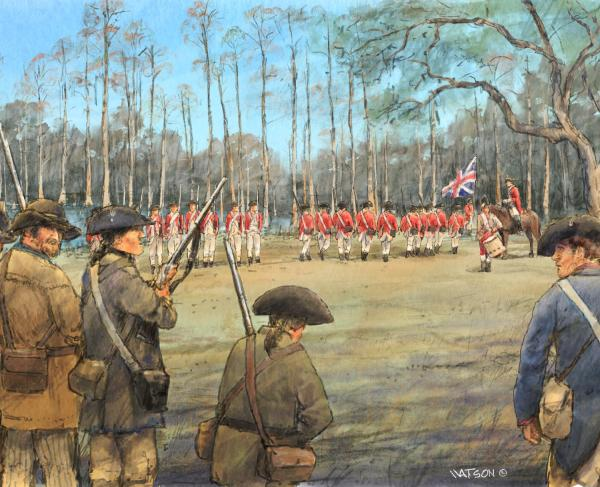
Morgan established his militias in one forward line of dispersed shooters for harassment and in a second line in formation, further to the back to receive the first one. The men of both lines were asked to only make two deliberate shots, allowing the troops to then retire to rear through their left flank, without waiting in fear for the English. The last line of Morgan was his only line of regular troops.
The militias’ moral and survival instincts were also stimulated. No emotion that exceeded their training and aptitudes was requested of them, since this would have generated mental tension and enervation. This was sufficient to seriously hinder the bayonet charge of Tarleton‘s infantry regulars. In addition, without his intermediate commands warning of it, as the troops advanced over lines of militias that behaved as were expected to, that is to say, avoiding assault and running away (or retreating).
In his rear, covered by small knolls, Morgan personally intervened to flood his troops with confidence and to send them, around his line of regulars, in a charge on the left flank of the English. When they were exhausted and fixed by American regulars in front of them, they were surrounded on their left flank and rear. The small American cavalry completed the dispersion of the English by attacking them on their right flank.
In an insignificant battle, that lasted little more than one hour, one sees how a commander (24 days short of retirement due to rheumatism or, what was more likely arthritis, more than a sciatic) knew to successively remove from weakness from his troops, to renew their combat capacities and recreate a small Cannas. And without their characteristics had changed at all. He did so well and so impetuous was his enemy (he was an official of the cavalry hated by the Americans for his attacks on civilian that were not loyal to the crown), that the results surpass his expectations, since Morgan only aimed to reject the intense harassment of the impulsive English on his force.
The losses of Morgan were 12 dead and 61 wounded, equivalent to 7% of his contingent. The English had 110 dead and 830 prisoners (about 200 were wounded), accounting for 85% of their forces. They also lost 2 regimental flags, 2 pieces of artillery, 800 muskets, 35 cargo wagons and about 100 slaves.
Tarleton in his later memoirs declared: «(it happens that) some unexpected fact can sow terror among the most disciplined troops and cause resistance to even well-conceived plans”. This is usually called surprise and is an element which multiplies combat capacity.
Sun Tzu also deals with this phenomenon: “He chooses his men and they take best possible advantage of the situation” Li Ch’uang also comments on it: “The brave know to fight; the prudent one knows to defend himself; the learned person knows to advise. The talent of no one is wasted”.
Chang Yu said: “Then the true method in commanding men consists of using the avaricious and the idiot, the learned person and the brave and in giving to everyone the responsibility that best agrees with him in the situation. Do not entrust people with tasks that they cannot fulfill. Make a selection and give to everyone responsibilities suitable their qualities”. “Those who consider the situation, use their men in combat as one who trunks or stones roll. For it is in the nature of the trunks and stones to be balanced on firm ground and to roll on unstable ground. And if they are square, they stop and if they are round, they roll”.
(to be continued)