THE RECONNAISSANCE AND THE INTELLIGENCE: A MILITARY OPERATIONAL SYSTEM.

The reconnaissance generates information of the different operational levels of military action. This must be turned into intelligence. That is the reasonably trustworthy and sufficient knowledge of the enemy, his intentions and capacities and the fighting possibilities and transitability of fields, etc. To enable us to take a “founded resolution”, based on the use of our means and fighting forms, in accordance with our objectives.

Concepts y Principles of the Reconnaissance.

Reconnaissance is one of the most important functions to be fulfilled by units during operations. The information it provides, how it is elaborated and transmitted and to whom is a fundamental part of intelligence. This, finally, is one of the key factors of decisive command.

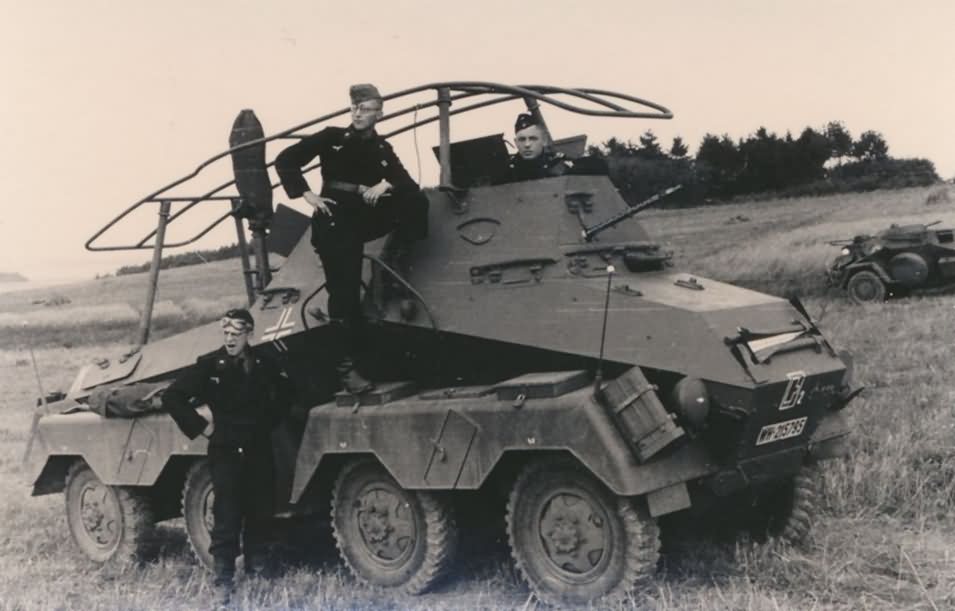
Resultado de imagen de SDKFZ 263.    SDKFZ 263.

Reconnaissance can be divided into strategic, operational or tactical and combat, according to its mission and the area it encompasses. The strategic one seeks to uncover key information about the enemy in the operations deep theater: his concentrations of forces, his great movements, his important defensive lines and possible surface targets, etc. A surface target becomes a “destruction zone” by the effective action of heavy weapons of destruction, for example, reactive artillery or tactical nuclear devices.

The operational or tactical reconnaissance tries to define the situation and the intentions of the enemy in the operations area of the great units, type division, corps or army. It determines the movements of the enemy in the border zone between forces, his formations and deployments, his defense lines and possible surface targets. This reconnaissance is carried out by aviation, drones, specific reconnaissance units and the reinforced reconnaissance armored battalion of the corps. In this respect, a total connection and complement must exist in the missions of aviation and ground reconnaissance and keeping in mind that its task is never of fighting.  

The reinforced reconnaissance battalion operates in a sector of up to 60 kilometers wide and 100 kilometers deep. Its advance over the parent unit must be at least 6 hours in order to utilize gathered information. On the basis of its reconnaissance order, battalion commander, keeping his companies always under control, can send up to 16 patrols of 3 vehicles to covering his sector, looking always for a gravitational center of the deployment. Having done this, he can send on the concentric center of the effort up to 2 patrols’ echelons, being relieved or being inserted, according to the used method. Finally, if the area to reconnoiter is occupied by the enemy, he can advance his companies as attack spears, under the screen of advance patrols. The battalion must not infiltrate very deeply inside the enemy deployment, if there exists a serious risk of being isolated.

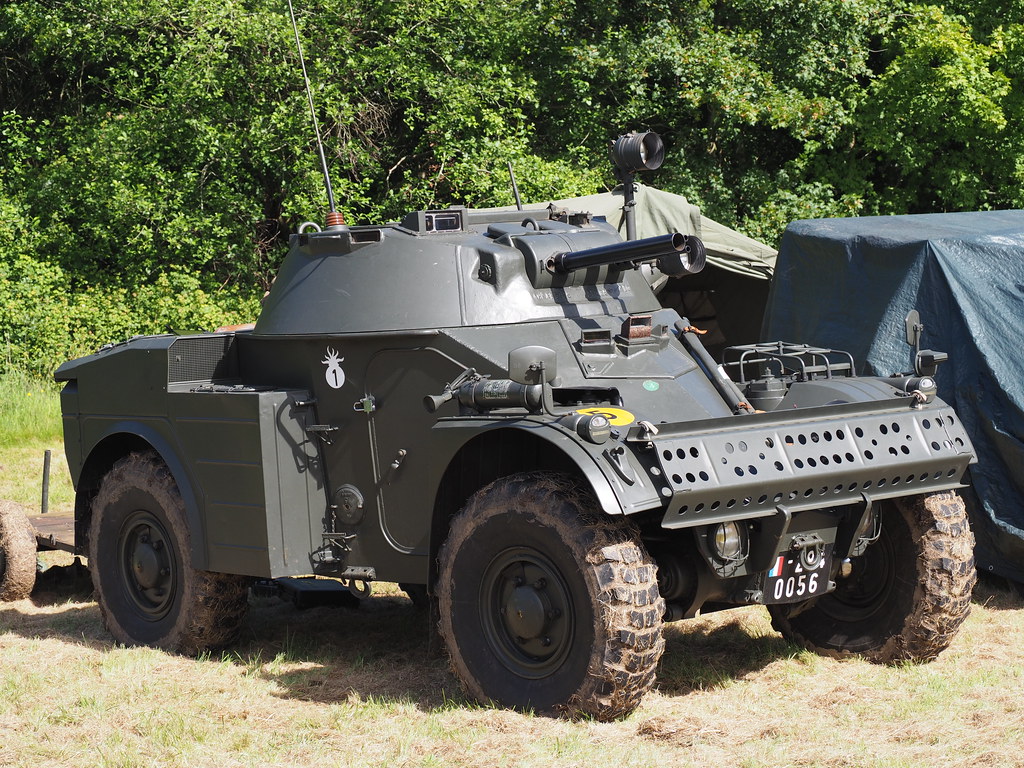
Resultado de imagen de Panhard AML-245    PANHARD AML 245.

Not all Armies have given or given sufficient value to this last reconnaissance type, which depends on their military doctrine.

All the operational principles of reconnaissance could be summarized as follows: Always focus on the objective received from the command (its mission is to generate information, the combat will be done by others), seeking the maximum use of time and its means, getting and maintaining contact with the enemy and never losing the freedom of action. It will allow him to perform and to escape, without being caught by ever higher forces.

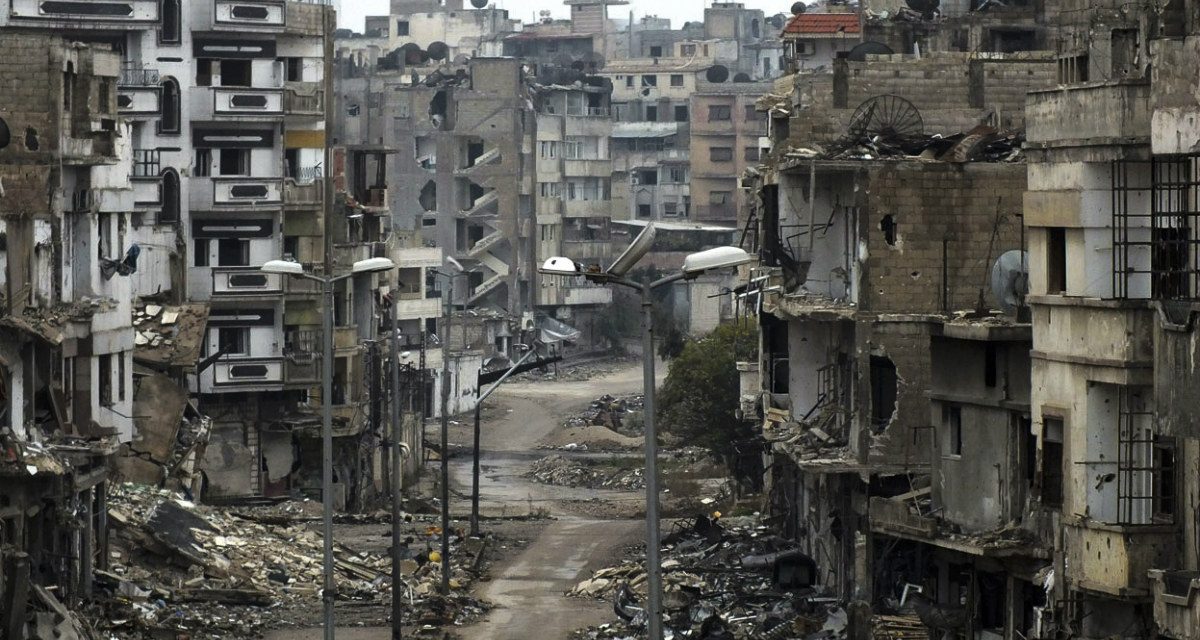
The tactical reconnaissance is also needed in the urban combats. Not always the tactical reconnaissance penetrates too much in the disputed or enemy area. The industrial or populated zones, full of «concealing relative heights» and staggered in depth, which offer protection from the enemy sights, even nearby, and covers against the light and heavy fire, «thicken» considerably the tactical maneuver of the contenders. Reducing this way, the depth of the fighting zone of the infantry. So, masses of the artillery, as batteries and medium groups of it, are deployed at very short distance to his enemy. In a artillery fighting zone then very next to the forward limit of the own defense position.

On October 9, 1942 a patrol of Soviet reconnaissance entered behind the German lines in Stalingrad, seeking to detect the enemy movements in his rear. The 4 men sheltered in an auxiliary railroad coach, torn and left, placed in a railroad between the workshops of the Red October factory (where before were made metallic pieces and small weapon), at North-East of the city. And the disputed Mamaiev hill, towards the geographical center of Stalingrad, which was offering grand sights on most of the city.

Resultado de imagen de Engesa EE-9 Cascavel brasileño. ENGESA EE-9 CASCAVEL.

During almost the whole day they remained in that hiding place, communicating by radio to his lines the German activity. They had located several dozens of German mortars and howitzers, accompanied by the trucks which were moving his ammunition, by the rear roads to some emplacements placed in the suburbs of Stalingrad’s west. Also they located numerous mortars and pieces placed in a glen at the north of the Mamaiev hill, doing fire against the Soviet positions in the city.

On having got dark, the explorers broke a telephonic cable of the fixed enemy network of communications and hoped that the Germans were coming to repair it. Very soon they observed the light of a lantern and when the soldier came closer, killed him to shots. One of the Soviets disguised himself with his uniform and placed close to the route of the railroad, hoping that another German came closer the cut cable. Soon another lantern started approaching by the way. The soldier fell in the ambush and the explorers made it unconscious. On having recovered, he met 4 Soviets of foot together near him. Pulled down the soldier Willy Brandt gave his name, range and unit of belonging. Psychologically they had already gained the hand on him.

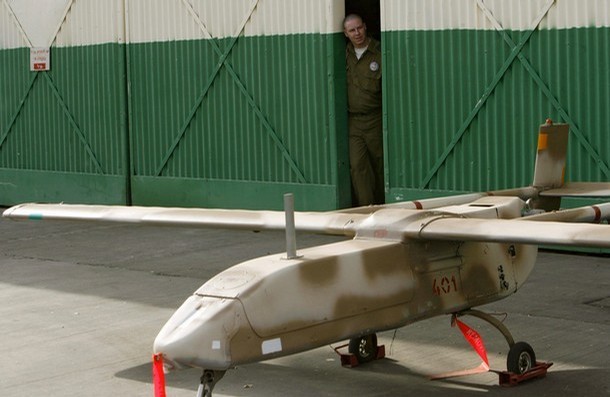
Resultado de imagen de drones guerra Vietnam   DRONE AQM-34 Ryan Firebee, IN VIETNAM.

Immediately afterwards, the German told to the explorers that 94th German infantry division had come to the factories zone from the south of the city, that 24th panzer division was going towards there and that the Fuehrer had ordered that Stalingrad should be totally taken by October, 15. This confirmed to them the reason of the extensive movements estimated by them in the German operational zone.

For the small reconnaissance patrol, to take with it after his lines, a prisoner already interrogated, was more a nuisance and a danger that a minimal success. And, in spite of the hardness, even the brutality, of the combats in the city, they neither killed, nor mutilated him. The Soviets reported to Brandt that had revealed military secrets, took him to the railroad line and indicated the direction that he had to continue to reach his comrades and left him free”.

But, what is this of speaking about operational reconnaissance in the age of the electronics, the robotics and the computer science?

Almost 50 years ago, the North Americans had developed an arsenal of electronic devices, directed to the vigilance (surveillance) of his enemies in Vietnam. Already they had reconnaissance drones to monitor «from above» their guerrilla slippery enemy. That transmitted his images by television to the planes of detection and transmission, placed at dozens of km from the observed zone.

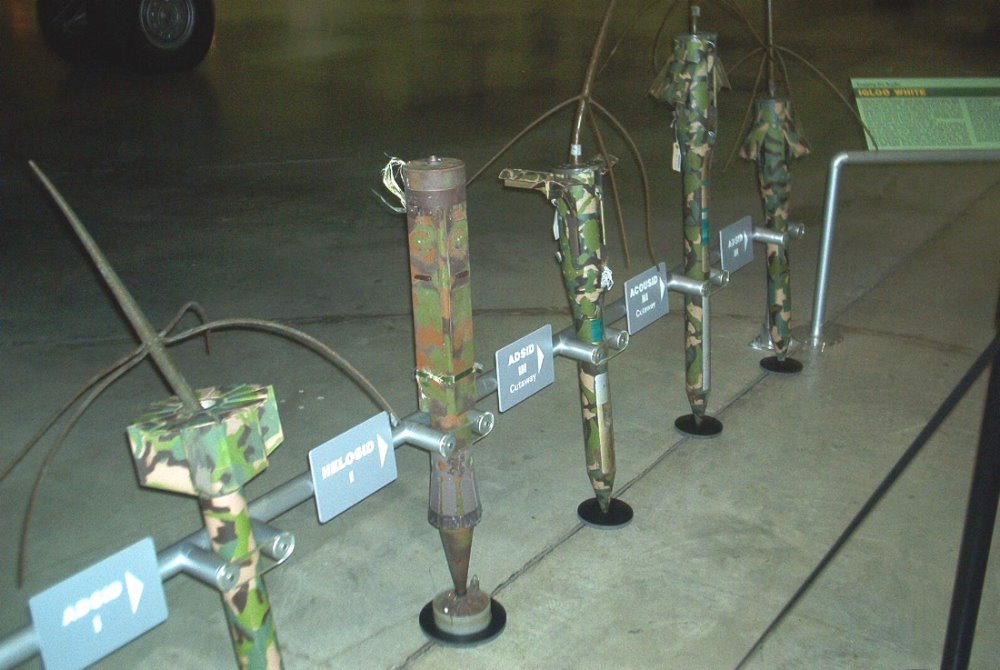
Resultado de imagen de sensor ADSID   ADSID SENSORS .

The principal sensor used in the remote vigilance was the ADSID (Air Delivered Seismic Intruder Device). It was thrown principally from the F-4 Phantom, following guidelines of navigation by radar, in order to cover adequately the observing zone, as a traffic route of men and vehicles, a parking or store. The device measured 91 cm. of length and 15 cm. of diameter. And on having fallen down was remaining almost buried, opening then a transmitting aerial of 120 cm. height, camouflaged as if it was a defoliated bush. His battery allowed it to issue during a month and half.

With these sophisticated artifices they were trying to observe the traffic of goods and men by the Ho Chi Minh Route, the route of supplies of the Popular Army of North Vietnam and the Vietcong in South Vietnam. It was a highly branched out and protected route that, departing from North Vietnam penetrated in Laos and crossed it. And then, detached diverse routes towards the different communist operations zones in South Vietnam.

The program «White Igloo» destined 1,7 thousands of million dollars between 1966 and 1971, for these tasks of compilation of information with the ADSID. With the information gathered from the traffic in the routes, the Americans were deciding the interdiction bombardment actions, using his different air devices, including the invisible and inaudible (with his cruise height) B-52 strategic bombardiers. At the beginning of 1971, the information of the aerial photos after the bombardments, taken by planes that were flying after the assault formations, allowed the analysts to suppose that the «war of trucks» was causing a very severe effort to the industrial capacity of the suppliers of North Vietnam (the USSR and China).

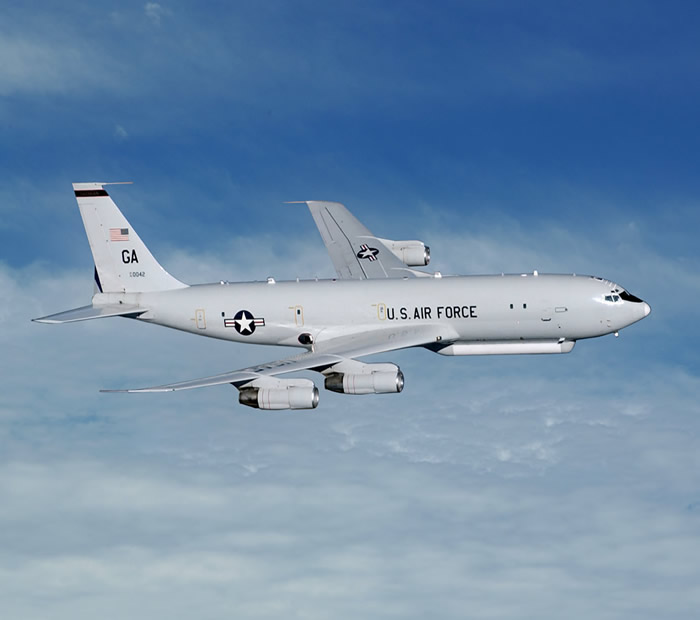
Resultado de imagen de Joint Surveillance Target Attack Radar System  A BOEING OF THE JSTARS SYSTEM.

But, if it was true that were destroying so many trucks and equipment, how was possible that the communists were keeping the tactical initiative in South Vietnam? On the other hand, where were the tens of thousands of remains of trucks that literally had to cover many of the ways and parks of the Route? Who were bothering to remove them? The response was given soon by the American junior officers: they were ate by a monster called the «Great Laotian Truck Eater»; a horrible rotten that was getting up towards the dawn and was devouring the vehicles destroyed by the aviation during the night, after the photography for «wreck count». Because the Americans are very scrupulous with the statistics and consider the lie an almost inexcusable social sin for his civil servants.

Up to today, almost 50 years later, the electronics, the robotics and the computer science have continued improving. But it does not seem that they are useful in Iraq, Afghanistan or Syria, to detect a “donkey bomb”; to avoid that group of cruel fanatics without God («as Allah does the Good, make you also the Good and do not promote the corruption (the “evil», the Noble Koran orders them), destroys great part of one of the principal mosques sanctuaries of the chiism in Samarra; to know if in an Iraqi or Syrian house are terrorists or only a terrified Arabic family, before demolishing her with heavy fire from a distance and extremely, according to his military operational doctrine.

In addition, during enough time still the air and spatial American means, as spy satellites, drones or not crewed planes and planes of the system Joint Surveillance Target Attack Radar System (JSTARS), will have serious limitations for the detection and check of small ground, even regular, forces. In the areas of difficult transitability and with possibilities of concealment, as mountains, jungles and forests, marshes and urbanized zones (industrial, of logistics, and of housings). Those not only offer concealment, but also coverings from the fire up to the near combat distances.

The Americans do not use the tactical reconnaissance, which demands some tactical characteristics of semi independent elite forces and a specific moral courage. And that is one of the most difficult tasks of the infantry. They use the combat reconnaissance and call her, expressively, reconnaissance.

(TO BE CONTINUED).

The Will of Defense of a Society. 2nd Part.

(FINAL)

And the Strategy, the Operational Strategy and the Tactics, as Levels of its Military Actuation.


The Levels of Military Actuation.

The first level of activity in the defense of a society is called national strategy or, also, in a some antiquated form, great strategy. In it are included the economic and diplomatic resources of the State. As part of the resources of a nation to get his great strategics aims in a war.

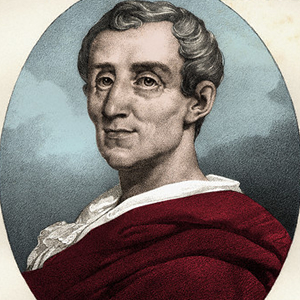
Resultado de imagen de montesquieu  THE BARON OF MONTESQUIEU.


Military Strategy, or simply Strategy, in a great second level of activity, refers to the definition of the larger aims of a war, of an operations theater or of a campaign, including the distribution of the generally scanty military resources used to fulfill them.

Tactics refers to the ideal execution of the combats with an enemy, who opposes with armaments, to the achievement of our strategic aims.

Between strategy and tactics exists an essentially practical space of prominent activity, called the operational level or operational strategy. Its mission is to optimize tactics and the means available in a campaign and in the theater of operations. As such, it defines and conceptualizes the battles, marches, etc., both the military operations and its correct succession, according to those decisive aims. It provides the tactics and the decision, a transcendence far beyond of the pursuit and the tactical exploitation of success. That is to say, operational strategy employs tactics as an essential instrument, combining them to achieve the ultimate objectives to which they are orientated and dedicated to achieving, forming then part of its strategic nature.


Thus, the operational strategy defines its own aims in the theater or in the campaign of action, which are the incapacity and disorganization of the enemy by exploiting his strategic and operational vulnerabilities. The first is orientated to reducing the enemy’s combat capacity, seeking to functionally or positionaly disable it, while protecting own’s combat capacity. The second is get by occupying or destroying the enemy’s critical vulnerabilities in the operations zone.

Resultado de imagen de refinería de petróleo OIL REFINERY: SYMBOL OF THE ECONOMIC STRENGTH OF A MODERN SOCIETY.


The critics vulnerabilities of the enemy are those whose occupation or destruction produces his serious disorganization and/or the loss of his will of defense. They are those elements, characteristics, possessions that give sense to the fight that he maintains. Its loss instills inevitably in the enemy a sensation of hopelessness and a sense of uselessness in continuing the fight at those moments, except for accumulating more losses.

The critics vulnerabilities are different in each one of the levels of military action, although the effects produced in the superior levels are transmitted to the inferior ones.

A strategic critical vulnerability, handled capably by the Spaniards in century XVI during the conquest of America, was the capture of the great chief or emperor of the indigenous confederations of the great invaded countries (Moctezuma in Mexico, Atahualpa in Peru). But, once turned hostage, the symbolic representation of a leader of this type plummeted, because the social vitality of the community which he directed, demands his renovation, as if he had died.

In II World War, the occupation of the capital and the fall of the government were strategic critics vulnerabilities, to which was acceded through an operational strategy of mobile warfare: spring campaign of 1,940 in the Western Front. The same tried Hitler in 1941 in relation with Moscow in the East front. Probably in that total war, almost of extermination, its fall had not the political importance that was attributed to it. But Moscow constituted a great hub, a railway communications center vital for all the U.R.S.S. at the west of the Urales and, in this sense, it had been a critical operational vulnerability.

To achieve these strategic intermediate aims, the operational level has some specific operational means that are the intelligence, the imbalance and the incapacity of the enemy, the time or speed of the operations and combats, the logistic organization and his physical support or line of supplies and the correct sense of the own command.

It uses these means to drive and to use ideally (and without squandering) the tactical-operational means at his disposition.

Resultado de imagen de reuniones sindicales grandes  THE NATIONAL MORAL FLOURISHES IN ALL THE PLACES OF SOCIAL COEXISTENCE.

These are:

The ground transitability (in the whole geographical dimension of the nature of the areas, climate, station and hour of the day),

the combat capacity (military means made concrete in men, equipment, supports and combat vehicles) and the capacity of operational movement (transport of great and small tonnage, the supplies of all kinds and combustibles and the warehouses and accessible parks in the zone) owns available,

the freedom of action and the «favorable interfaces of action» with the enemy (that exist and that they can also be created always, by means of the extension or decrease of the «field of action» on that, as a tactical operational zoom, or by means of his change to another front sector or in the depth of the enemy zone). With these last 2 «systems» we can act always according to our criterion and interest and not simply react to the actions of the enemy.

This way, the mentioned «operational systems» realize the employment and the functioning of all the levels of the national defense. And they go from the conception and the great creation of aims, interests and available resources, received from the command and the nation, up to its practical final accomplishment. Involving in this also the necessary and the inevitable and imposed by the enemy, tactical employments of the military means, as stages for the ideal achievement of those commended aims.

THE END.

IN PURSUIT OF THE MILITARY EXCELENCE.

THE INCOMPLETE AND SLANTED THEORY OF SHIMON NAVEH

The author realizes a methodical and deep critique of the different fighting forms in each of the historical epochs.

It is specially hard and mordant with the form of fight of the Germans during the World War II. His aim is to degrade and minimize it, to reduce it importance and validity in the history of the ground operations. Depriving this way the evolution of the American theory on the those operations, of any intellectual influence or debt with the doctrine of the German war.

The one that the author considers to be more opportunist and tactics, that complete and scientific. And he thinks that it was favored in its results by the lacks and the mistakes of its enemies. It is possible that an academic analysis of the form of German fight, approaches to give this verdict.

But, the evidence is the touchstone of the reality without appearances. And the case is that the Germans triumphed widely and extensively with that one, during the first stage of the World War II in Europe: 1939 1942. During which, his enemies could learn of the tactics, technologies and the German operational strategy. Since it extended too much in the time, on having multiplied the theatres of the war.

Imagen relacionada

And that, in the last phase of the war: 1943-1945, the Germans were exceeded, overwhelmed and, finally, defeated. To what contributed the qualitative and quantitative differences in the logistic flows, which supported both armed rivals; the enormous bleeding of the German commands and cadres, which turned out to be irrecoverable and reduced the qualities of his units; and the quantitative demography of the Allies.

Naveh grants wide quality and esteem to the military doctrine of the Soviets. That he considers to be scientific, because it was following a linear process of arguments, logic and results (that for a long time, were only longed for or foreseen). And that was adapting and guiding specifically and really, to an army of slightly educated masses and nourished by a resounding demography. That always had an insufficient logistic support, when it was not precarious. The mechanization of the infantry to collaborate with the tanks, was always a longing and a hope, more than an average real capacity.

Resultado de imagen de germany military power ww2

At the first times after the Bolshevik revolution, even directed by the young theorist of the deep maneuver, general Mikhail Tujachevski, the Russian armies remembered «slow and exhausting hordes» in their marches. That were living for the sustenance from the own or strangly territory where they were advancing. The men more relatively educated, always scanty, were enlisted in the technical weapons: artillery, engineers, aviation. Or in the most effective and necessary branches for the penetration and the exploitation of the enemy operational rear: tanks, Guard infantry.

Finally, Shimon Naveh concentrates his efforts, summary and praises in the long process of development of the American AirLand Battle doctrine and his following updates. Whose kindness and efficiency got reality in the air and ground offensive against the Iraqi regime in the War of the Gulf of 1991, looking for the liberation of Kuwait from the power of Saddam Hussein. War that was the touchstone of that doctrine supposedly culminada.

Initiated the ground offensive, the American forces and his allies rapidity faced to practically all the Iraqi forces that were occupying and defending Kuwait. From the Persian Gulf operated the naval forces, that threatening with an amphibious disembarkation on the narrow coasts of the emirate. From the south, the American marines took charge in fixing the Iraqi forces of the south flank of the defense. Confirming this way, for the Iraqis, that the assault front of the allies would be the south and east.

Resultado de imagen de soviet polish war THE SOVIET POLISH WAR OF 1920.

But, at the south of Iraq / Kuwait, the bulk of the Allies mechanized forces penetrated in whirlwind along the western front of the Iraqi deployment, blind and static. Immediately afterwards to be divided this allied deployment in several advance spears, over all the Iraqi units of this flank.

The campaign was a great atrition operation: of the strongest against the strong, for the major technological means and capacities of the Allies. Where a simultaneous assault was looked, to the Soviet style, to all the steps of the enemy order of battle and in the depth of his defensive rigid deployment. In the south of this one there existed armored or motorized Iraqi divisions, ready to counter-attack any allied penetration. Towards the center and north, there was the thickness of the Republican Guard, ready to counter-attack any operational Allied action.

Where a simultaneous attack was looked for, of the Soviet style, to all the levels of the enemy order of battle and in the depth of his defensive rigid deployment. In the south of this existed armored or motorized Iraqi divisions, ready to counter-attack any Allied penetration. Towards the center and north, was the bulk of the Republican Guard, ready to counter-attack any Allied operational action.

The concentrations, maneuvers and actions neither were searching, nor had, a gravity center of the efforts. That was successively defined and applied as the campaign was developing. But, using the already mentioned advantages, the allied forces were seeking to fix and crush the enemy units at their range, by a direct and almost joint form. Creating really this way, a battle of encircle and annihilation, of the family of Cannas and Tannenberg, where the liquidation of the siege was done by parts and was uniformly accelerated in the time.

Resultado de imagen de soviet polish war SWEEPING THE RUSSIAN HORDES.

The Iraqi divisions at the east were submitted to the central and direct control of Saddam Hussein and his Central Staff. That depriving them of initiative, flexibility and freedom of action. If not, some Allies’s corps or divisions could have been put in difficulties by the action of some great Iraqi unit. After the beginning of the ground attack and having the Allies the air supremacy in the campaign, the Iraqis were deprived of the operational exploration. So, the surrounding maneuver of the Allies by the east and towards their rearward, was concealed to them.


The operational Strategy in the Irregular War.

Naveh, nevertheless, does not approach, far from it penetrates and analyzes, a type of war that already existed from a lot of time ago. Before the genesis and ripeness of the American operational strategy. And that is the guerrilla warfare, word taken from the Spanish by all the languages. The one that, pompously, the Anglo-Saxons called war of IVth generation. Though it is almost as ancient as the human conflict. The modern technological armies find difficulties to face this form of fight. Using the means, the doctrine and his regulations, the order of battle and the trainings with which they are provided.

The guerrilla war is synonymous of long and deeply rooted conflict in the civil society, where it appears and develops. It is of low military intensity, except in its last stage (if she reaches it) and of great ideological politicization and polarization of the rivals. These characteristics do that inevitably the civilians are involved in her and that the military conflict is arbitrary, hard and cruel. There face positions and antagonistic interests, which, in the use of the violence, derive towards her limits and that of the suffering of whom involve her.

The author might speak about the application of the operational strategy in the guerrilla warfare. Or used in the direction and the operations of the elite units (marines, rangers, SEALs, etc.), that realize counterinsurgency missions. Here, the gravit centers of the efforts, globally coordinated, include the economic, military, political and social areas. And will exist in these fields and will be applied in a harmonic, joint and coordinated way. Working for a common and convergent effort, using different combinations of means in the different cases that appear.

A central counterinsurgency command will exist, that must bring together and direct the efforts, means and actions. In agreement with the specialization of the means that act and the actions and the aims that are looked for in each of the mentioned levels or fields of action. A characteristic of the acts and their effects is that they must be convergent. Looking for the multiplication and increase of these and the synergy of the first ones. This way, in any action, from a level of forces, budget or looked for results, will act the Counterinsurgency Command.

As examples, in the military area will be gravity centers the semipermanent bases, the communications between the bands and with the countrymen, including the logistics, and the movements of the rebels groups. The static defense will be kept in the centers and means necessary for the effort of war. Others will have to defend by a system of garrisons for the defense of the territory. That will be supported by a military system of mobile patrols and of reconnaissance and of ground attack aviation. The special units will realize deep incursions of attack, exploration and harassment in the areas in dispute with the guerrillas or in power of these.

The Will of Defense of a Society.

And the Strategy, the Operational Strategy and the Tactics, as Levels of its Military Actuation

The Ideology or Concept and its Range.

The “will of defense” of a nation is its capacity to cause, create, develop and maintain defense forces. The strength of the defense forces, in turn, rely on the necessary support of the economy of the country and the diplomacy of the state. The will of defense is an expression of the will of being and the vital capacity, even biological, of a society. This concept overcomes and perfects the so called hybrid war or of V generation. That implies and supposes the employment of all his «orthodox and heterodox means of intervention» by the social belligerent group.

Resultado de imagen de GUERRA V generación  IMPRECISE ALLEGORY OF THE FIFTH GENERATION WAR.


As the term implies, will of defense is healthy, normal and sufficient when defense forces and the strength of the country’s economy and the quality of state leadership and diplomacy are proportional and adapted to the political objectives of society. These must also be adequate to the possible threats that the country may have to oppose, both within and out the country, within its geopolitical region or other sources of threat. This capacity and its performance in different situations stems from a correct “national moral”.

The will of defense is shaped normally in the Armed Forces, in its capacity of specific instruments of the defense function. The resources of the Armed Forces include the human resources, psychological and intellectual resources and material resources. The basis for the will of defense, the source from which these resources flow is the society itself.

At the level of human resources, troops must have suitable training, the combat readiness and a certain esprit de corps. Human resources are shaped by doctrine, military direction and military moral. So, they can carry out the military operations withstanding the effort and the wear of them, while maintaining their conviction in the missions to which they are assigned.

Resultado de imagen de fuerzas armadas

Materials resources must support the military theory of the Armed Forces and have the necessary technological sophistication to serve the military’s objectives. They include the weapon systems and all the military hardware. All of these resources flow from a society that provides, maintains and nourishes them.

Which is operational about this natural phenomenon of the society’s capacity of defense?

In a modern society, the chain of transmission of the popular will to the Armed Forces, passes through a series of intermediate sociological gears of authorities and institutions. In them, crystallize and fulfill the popular will, albeit with all the shades, errors and deviations, derived from the degree of imperfection of society’s institutional system and of some authorities.

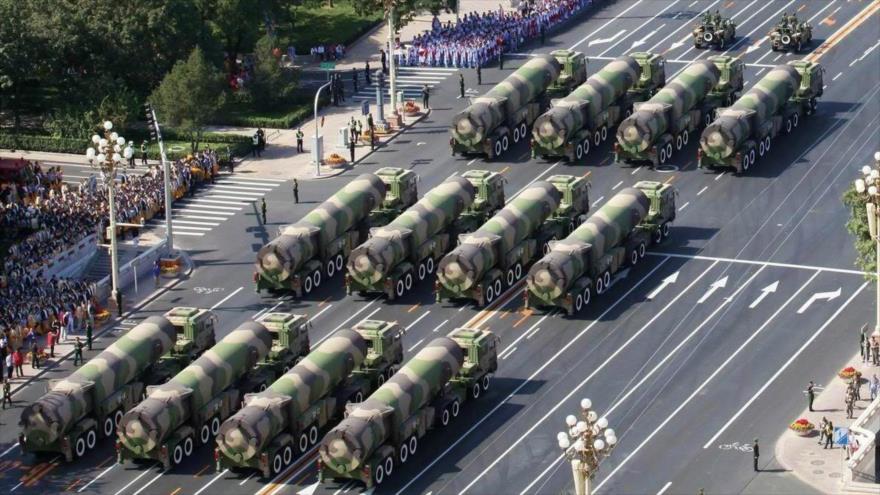
Resultado de imagen de misiles nucleares CHINESE INTERCONTINENTAL DF-41 MISSILES.


This implies that a direct military attack on the civil populace, does not debilitate the will of defense already shaped within its Armed Forces. So, military action is better focused on undermining the will of defense of the enemy armies, not on the society from which it springs.

To do this, the immediate goal would be the enemy’s Armed Forces, followed by the political system of the enemy’s country including its political objectives, plans, and alliances, as well as its military and auxiliary industries. Only finally would the focus of attack or pressure be on civilians of the enemy country.

The civil population, which is not intrinsically organized but is dominated by the ideological and institutional apparatus of the state, is capable of absorbing tremendous military blows. Examples of this are the bombing raids that Germany and North Vietnam endured for years. Ultimately, only the invasion of Germany forced its surrender. There is also the case of Iraq which was submitted to a kind of military siege in which its people were impoverished. Still, the Iraqi regime was even stronger than at the end of the allied invasion in the winter of l991, having suppressed internal opposition from Shiites and Kurds and having attracted the support or admiration of its resistance in the Arab world. Despite the first war against Iraq and the following siege, Iraqi’s did not rise against their political institutions and the content and expression of Iraq’s national will of defense was not altered. In the most radical case of a nuclear war, great civilian losses would occur initially, yet if the Armed Forces remained relatively intact due to defensive deployment and protection measures, it could prolong the defense of its country and even win.

This brings us to time as the environment in which the will of defense is expressed, and whose “effective factor” is “national moral”.

In effect, the will of defense is constructed in the time. And to destroy it requires actions within time. Those engaged in insurrection come to understand this point well. That a prolonged war directed at the source of the will of defense, the country’s people, will in effect attack the country’s national moral.

The National Moral, source of the Will of Defense.

The “national moral” is the collective conviction of how best to live by following historically-proven trends of peace, progress, own satisfaction, service and justice. This certainty is assumed by a society as its own vision, or conception of its destiny.

When individuals or groups do not subscribe this vision, or when they pervert it, the quality of national moral can deteriorates and often produces messianism. But, without illusion and enthusiasm, societies cannot achieve or create beneficial enterprises. Enthusiasm is a force of spirit, which conquers moral and ideological entropy (that is inevitably generated in societies), enlightened by a «reasonable illusion«.

Resultado de imagen de lideres mundiales THE DOCTRINE OF XI JINPING «illuminating» Socialism with Chinese Characteristics for a New Era. IT WAS INCLUDED IN THE CONSTITUTION OF THE CHINESE COMMUNIST PARTY. ONLY MAO AND DENG XIAOPING DESERVED SUCH AN HONOR.


When leaders also are in tune with the right social trend, and with the wishes of their people, a moral community is established between leaders and their people, that harmonizes and promotes national and social feelings. This process is the origin and creator of the national moral of societies and is at a different qualitative level than that of purely biased, ethnically-based or group-based interests.

There is an ideological creation from the people and to the people, which reason is that it most be in favor the people. Still, this process remains subject to deviations and historical aberrations.

The process of creating the national moral are positive when leaders act collectively with honesty and inspire their people to follow «correct ways» of living, within all the possible ways of living available to them. This implies and demands a certain ideological control on the part of the state’s leadership, which is one of its main functions. Abuses of this responsibility are best represented by Hitler’s Minister of Propaganda, Mr. Goebbels; the political deputies and the party structure for the proletarian dictatorship with Stalin, etc.

Resultado de imagen de winston churchill

The natural organs for forming and transmitting the “national moral” are far removed from official propaganda offices. The reason is that the natural organs that generate national moral are found in the nuclei of society’s collective action and in its natural and institutional leaders. That is to say, the spaces in which national moral is created are homes, schools, churches, political parties, unions, working centers, and associations in general, etc.

After the battle of England, Churchill said that the future generations would say that «that one was our more glorious hour». This was possible thanks to an unbreakable social discipline, which was not ensuing from the study of manuals of civic education, but of the follow-up of a model spread by infinity of personal testimonies. The diffusion of the moral model of the citizen owed in a great extent to the educational labor of the Anglican Church.

The own Montesquieu admitted that the republican virtues only existed in the tales of the antiquity. This way, they were attractive to a leader minority, but his adoption by the citizens could not be done by legal or constitutional mandate. The moral theoretically proposed values, were seen as something artificial and remote. Without real connection with a practical and known moral code, highlighted with alive examples that could be follow.

(TO BE CONTINUED)


Genesis and practice of the Russian strategy of deep incursion. 2nd Part.

Incursion to Tatsinskaya’s airport in the Christmas of 1942

The Deep Incursion to Tatsinskaya.

In the exploitation of the break success, Vatutin threw on December 18, the 24 Corps of Tanks (Badanov) to attack and occupy Tatsinskaya and the 25 Corps of Tanks (Pavlov), against Morozovskaya‘s airport. Behind them, advanced the 1st. Mechanized Corps of the Guard, following their moving directions, to support and stimulate it and to eliminate the resistances of the enemy units remains in his deep rear. Badanov had 5 thousand men, 300 trucks, 90 tanks T-34 and 55 light tanks T-70. These, for his characteristics of fire, armour, mobility and with 2 crew members for the multiple tasks, were not suitable companions of the first ones. The infantry brigade of the Corps had the task of the occupation the aims captured by the tanks.

Resultado de imagen de soviet infantry over tanks Soviet infantry tanks riders.

Resultado de imagen de nikolai vatutinLieutenant General Nikolai Vatutin, chief of the Southwest Front.

The orders were not right and both Corps should go on eliminating the enemy resistances in his advance sectors, distracting from his main goal. Badanov also received orders to facilitate the advance of the I Guard Army, on which he was depending and that followed him at distance, increasing the exploitation. The radio communications with Vatutin and the I Guard Army were insufficient and spasmodic, due to the increasing distance and the characteristics of his only transmitter RSB-F. That, for example, had in march 30 Km of range.

From the second day of march, the support to both mobile groups by the 17º Soviet Air Army was diminishing drastically. In a winter hard environment, with a poor road network, the armoured vehicles and the trucks of troops and supplies were advancing slow and dificultly. This did that the ground support planes of both rivals could attack, without risk, the enemy vehicles and was favoring the Germans.

Resultado de imagen de general Vasily Badanov Major General Vasily Badanov.

Both Corps of Tanks were advancing towards his aims with great effort from the drivers and deployed in brigades, forming 2 or 3 echelons of march. Seeking to save fuel and to keep controlled the almost 500 vehicles of a Corps. Only there was daylight between 7 and 15:30 hours. Though on the paper, Vatutin was waiting for an advance of 50 km per day and calculated 5 days of march to reach both aims, placed at 240-250 Km, the results were of scarcely 25 Km per day.

At 25 Km from Tatsinskaya and 30 Km from Morozovskaya the Bystraya river was traversing. The Germans placed to the south of this natural without reinforcing obstacle, several Kampfgruppen or Task Forces, created ad hoc to prevent the enemy advance and to exhaust it. Von Manstein knew this incursion and wanted to protect, by all means, the airports. This way, he withdrew 6ª Panzer Division from Hoth, to create a mobile reserve for the Group of Armies Don

Resultado de imagen de field marshal von manstein Fieldmarshall Erich von Manstein.

Against 24 Corps faced 4 small Kampfgruppen, which eroded it. The Gruppe Spang designated with the name of his command, faced in a difficult fight the 25 Corps of Tanks. Pavlov thought that it was a German small resistance and, forgetting his strategic aim and instead of flanking it cleanly, he attacked it. The Gruppe received the air support of a dozen of the dive bombers JU-87, that were returning quickly to his base to refuel, and that teared to pieces Pavlov’s unarmed tanks. The arrival of 1er. Mechanized Corps of the Guard allowed Pavlov to get out of the combat and to continue his march to Morozovskaya, though his Corps was exhausted in his combat capacity and with its fuel spoiled.

Pavlov came up to Uryupin, at 25 Km from Morozovskaya. But, the bombers placed in this airport submitted it to hard attacks, that reduced his combat capacity to 25 tanks with scantiest fuel. The Mechanized Corps, after a day of combat with the Gruppe Spang, was also very reduced and was not in conditions to support it. With which, were eliminated the possibilities of an assault to Morozovskaya.

Resultado de imagen de Kampfgruppe Spang 1942 Karl Spang, as German general.

One of the great disadvantages of these operations of deep incursion was also the absence of the logistic support to the operational units. This required them to advance, attack and occupy up to the exhaustion of his available resources. But, they did not have another option.

Tatsinskaya’s Defense.

The commaner of the airport was the lieutenant general Fiebig, commander of the VIII Air Corps of the Luftwaffe. On November, 30 he was nominated Chief of the Air Supply to Stalingrado. And he established his H.Q. in Tatsinskaya, which was occupied by the Germans on July, 21. Fiebig was a good organizer, so his appointment was justified, but he did not rise to the occasion, as tactical commander, neither in the defense, nor in the evacuation of the airport before the Soviet assault.

From the safety of Berlin and already failing the ground rescue, Goering ordered Fiebig that his men should resist in Tatsinskaya. And only will evacuate it when the Soviets already were firing in his runway. This did that Fiebig was late beyond the prudence in giving the evacuation order. And only the fogs, the enemy weariness, and the exiguous Soviet forces, 20 tanks and 55 infantrymen, who assaulted Tatsinskaya, allowed to evacuate the majority of the parked planes.

Resultado de imagen de general Martin Fiebig Luftwaffe Lieutenant General Martin Fiebig

The base force were 1800 men, without counted the crews and mechanics of the planes. They had, at the moment of the assault, 2 88 mm cannons and 4 cannons of rapid shot of 20 mm, since great part of the artillery was tranfered to the Kampgruppen entrusted to block the Soviet advances. The Germans did not organize any defense in Tatsinskaya. When the explorers of 24 Corps approached the airport in the night of 23, observed that the anti-aircraft positions were not occupied and that did not exist ground defenses.

The assault to Tatsinskaya.

Finally, at 8:30 of December 24, tanks of the 130 Brigade of tanks (Nestorov) assaulted Tatsinskaya’s airport from the east and some tanks of 54 Brigade of Tanks (in reserve) penetrated by the northwest at the end of the operation.

Until that evening, Badanov did not give for finished Tatsinskaya’s and his surroundings capture. Near 125 planes of the Luftwaffe escaped and came to other airports of the Axis. The Soviet mediocre gun fire and the impacts between planes at the takeoff destroyed 50 planes. But, the Lufwaffe already had lost 250 airplanes between November and December, 1942 during Stalingrado’s air supply, due to breakdowns, the weather and the enemy action. The Germans had 100 fallen, between dead and wounded, and 350 men were captured.

The 24 Corps still had 39 T-34 and 19 T-70. And each tank had less than 40 rounds for the principal weapon and its remaining fuel allowed it to cover 50 km. Badanov transmitted to Vatutin that he was assuming the defense of his positions.

Resultado de imagen de T-70 light tank T-70 Russian light tank.

Similar to what happened with the VI Army of the Wehrmatch, at 7:30 of the 26th, Badanov received a Vatutin’s message: «His Corps has been transformed into a unit of the Guard. You has granted Suvorov’s Order of 2º degree». But, the happiness never lasts very much in house of the poor man. The situation was indefensible and, four days later, Badanov broke, slipping, the functional, not physical siege. To which he was submitted by the different German units that were coming on the 24 Corps of Tanks of the Guard. At the end of the operation Small Saturn and by indication of Stalin, Badanov was nominated commander of the remains of the three Corps Mechanized and of Tanks that took part in this deep incursion. But, possessing each one less than 20 tanks, they were too weak to carry out a joint operational action.

THE END

Genesis and practice of the Russian strategy of deep operation.

Incursion to Tatsinskaya’s airport in the Christmas of 1942

Introduction.

After the invasion of the USSR by the 3 Groups of Armies of the Wehrmatch (North, C; Center, B; South, A) on June 22, 1941, remained clear the higher capacity and efficiency of these, opposite to the Soviet armies deployed in the border and in the strategic rear. The disorder was general in the Red Army, as evidence of his demoralization and lack of a military modern doctrine, after Stalin‘s purges of 1937. That was worried that the force and capacity of the Red Army, could turn it into a rival of the Party and of himself in the distribution of the State powers. In addition, the social characteristics of the Soviets were making them more inclined to the obedience, the resistance and the sobriety and less towards the originality, the assumption of responsibilities and the take of decisions of the commands and his men. Then, the Red Army only had some real capacity of fight in the artillery and in the almost inexahustible demography of the Sovíet country.

This prompt did that the strategists and planners of the Red Army realized that, if they wanted to survive, stabilize his nation and the army and begin to gain the war, they had to start gaining all the battles that were turning out to be strategic for this social military effort. This way, on one hand, they began to deepen and develop the operational and strategic defense, connecting her with the operational counter-offensive, establishing fortified in depth zones, areas and regions, and creating mobile reserves in the different steps of fight.

Resultado de imagen de ROTMISTROV Colonel General Pavel Romistrov, commander of the 5º Tank Army of the Guard.

For the great positive actions, of assault or counterattack and victory, of exploitation and consolidation, the high commands of the Stavka or Central High Staff of the Red Army, presided by Stalin, developed throughout several years the Tanks Armies. By 1944, in the order of battle of the Red Army existed up to six of the above mentioned strategic Armies. They were destined to operate independently in the operational (up to 80 Km in the depth) and, even, strategic rear (up to 200-250 Km) of the Wehrmatch and his allies.

His tasks were to attack, occupy, consolidate and defend some area or important city, which was not capable of offering an effective defense; to spread the destruction, the disorganization and the panic in his «zone of advance» in the enemy rear, using also the «tactical influence» that was generating on the enemy, at both flanks of it and in function to his distance to it, measure in time of arrival. Behind this great strategic unit, would advance the «mass of support» of the armies of the Soviet Front at which the Army of Tanks was subordinated. That would initiate his exploitation operations, after concluding the irruption and break of the defensive enemy front by the infantry or shock Armies of the Front or Soviet Group of Armies, due supported by the heavy fire, the engineers and the supporting tanks.

Resultado de imagen de task force baum Telegram of condolence of the General Assistant of the Secretary of the War to the family of one of the «missing persons» of the «Task Force Baum». 

This is theoretically easy and simple. But it is necessary to count for his accomplishment with the almost innumerable collective (small units, units and great units) and personnels actions, that are the source of mistakes, failures and diversions, in relation with the foreseen in the calculations and plans. It is necessary to have, to put it into practice, a military well trained organization, which guarantees the constant and sufficient flow of communications, updated intelligence and logistic. It is needed the appropriate, coordinated and convergent action of the units used in the complex and successive operations. It is necessary to count with the transitability characteristics of the areas of operations, influenced not only by his orography, but also by the network ways, the waterways that should cut more or less perpendicularly the ways, the climate, the seasons, the moments of the day. In March, 1945, the general George Patton arranged a deep incursion, not authorized by his superiors, using the Taskforce Baum (integrated by approximately 314 soldiers and 16 tanks) to 80 Km behind the German lines and at few days of the capitulation of the IIIrd Reich. His mission was to rescue a group of American prisoners, who were in Hammalburg. The result was disillusioning and the action, for painful, was not too much spread to know. The attackers were surrounded by the German forces and destroyed by his counterattacks. Only 11 % of the men returned to the lines of the famous Army III of the U.S. Army.

Antecedents and Introductions.

On November 23, 1942 at 2 p.m., the VI German Army, the most powerful great military unit of the Wehrmatch, got definitively surrounded in Stalingrad by several Soviet Fronts. The Operation Uranus was creating a strategic siege. And the contact of the VI Army and other units of the IIIrd Reich or of his allies, 267.000 soldiers of the Axis, with other units of this one by land, already did not exist. In Stalingrad, the Germans did not have the shuttle of ferries crossing the Volga, to supply the city and to re-equip and re-put the sieged mlitary units, as the Soviets had.

Resultado de imagen de friedrich von paulus Recent Marshal von Paulus surrenders his Staff in Stalingrad.

The nearest airports in hands of the Germans were those of Tatsinskaya and Morozovskaya, at west of Stalingrad. In them, the colonel general Wolfram von Richtofen, command of 4 ª Air Fleet of the Wehrmatch, placed rapidly a tasks group of transport, bombardiers and fighters, with the mission to move the military and material supplies to all the sieged ones. Von Paulus, command of the surrounded forces, was promised to deliver 500 Tm daily of supplies. But, the daily average delivered during the siege was 100 Tm. And only one day, the German aviation could deliver 500 Tm. And, in those moments, the rejection capacity of the besieged to the Soviet assaults, to break by parts the defensive zone or to reduce his area, was depending on the number and the quality of the supplies that were receiving by air.

Resultado de imagen de wolfram von richthofen  Colonel General of the Luftwaffe Wolfram von Richthofen.

On December 10, the IV Panzer Army of the colonel general Hoth initiated from Kotelnikorski, 100 Km at east of the edge of the siege, an attack to establish a ground link corridor with the defense zone of Stalingrad and to relieve the besieged. It was the operation Wintergewitter or Winter Storm. The VI Army would initiate the break of the Soviet ring, towards the helping forces, which was the most predictable direction and which did not possess the surprise factor, when these were at 30 Km of distance. The vanguard of the German forces corresponded to the reduced 57º Panzer Corps. In this operation the Soviets counter-attacked with mastery and continuously and the principal weapon of both sides were the tanks. Finally, on the 26th, this Panzer Corps was depleted and the Wintergewitter was stopping, at 46 Km from the Stalingrad’s siege.

But the Soviets, who had prepared themselves well for his winter offensive, were still keeping another disagreeable surprise to the Germans. In the Stavka, the colonel general Aleksander Vasilievsky, among other Soviet high commands, was thinking and controlling her, seeking to complete in it the German defeat in the south of Russia. Vasilievsky gave, as chief of the Central Staff, rationality and patience to the «interchanges of impressions» with Stalin.

Resultado de imagen de Aleksandr Vasilievsky  The Marshal of the USSR Aleksander Vasilievsky.

On December 16, lieutenant general Vatutin threw a strategic blow with his Front of the Southwest (the Operation Small Saturn) against the VIII Italian Army, deployed in the left flank of the Group of Armies of the Don (marshall von Manstein). In the breaking forces of the Italian front were the 1st. and 3er. Armies of the Guard, who moved forward three Corps of Tanks (one was the 25º, of the major general Pavlov) and a Mechanized Corps (bigger and more balanced in combined arms) and 9 infantry divisions. That already on the 17th had achieved diverse irruptions and breaks in the Italian front.

The crumbling of the Don’s front, at north of Stalingrad, opened several possibilities to the Soviets: a) To consolidate Stalingrad’s siege, being able to operate in the whole deep rear of the Axis, dismantling its defense capacity and pursuing the support units (logistics, aviation and artillery) and the remains and reserves of the Armies who were spreading out in her. b) To make move back the Group of Armies of the Don towards the Donetz, as a new sustainable line of his defensive front, forcing him to a rapid retreat. This forced the forces of von Manstein to shorten his lines, for, in the new front that they presented to the Soviets, to be able to have not only first line forces, but mobile armoured forces, to counter-attack the Soviet onslaughts. c) To force the Germans to keep in Rostov, near the river mouth of the Donetz, an opened corridor with his south rear, to avoid that the Group of Armies of the Caucasus (marshall von Kleist) could get cut off, as it happened with the VI Army. And could go out by it towards the new German rear at the west. d) To facilitate the final push of all the Soviet Fronts towards the Donetz and to consolidate this way all the strategic earnings obtained in his complex and extensive winter offensive of 1942.

The Intellectual Baggage of the Deep Insertions.

The theoretics of the Soviet deep operation (glubokaya operatsiya) in the period between 1928 and 1936 were the lieutenant general Triandafilov, the brigadier Isserson and the marshall Tujachevsky. This one established the Instructions for the Deep Battle (glubokiy boy) in 1935. That then incorporated into the Regulations of the Service of 1936, as military official doctrine, PU-36.

The preexisting concepts were based on the good results of the cavalry operations, singularly Cossak, on high fluid situations of fight and movement, on the operational enemy rear. And acting against small enemy detachments and the communication lines. But, the armies based on the employment of the fuel engine, to develop an operational or strategic penetration the enemy rear, and in the armored moving platforms for direct fire cannons (tanks) and trucks (infantry and artillery), had logistic needs (maintenance, rotation of crews in long marches, supplies) that were not even glimpsed by the ancient commands.

(TO BE CONTINUED)

The Tactical or Operational Military Success. Its Signs.

Introduction.

It is not a question of defining how to act, thing that already we try to do in other published articles or that they will be in a future. But that, perceiving in the operations development certain facts, guidelines or behaviors of the conflicting parts and of the objective conditions (of the ground, etc.), we will be able to diagnose a very probable forecast for the culmination of those operations.

This way, we will be able to trust in and to rest on these favorable forecasts. And to reinforce mental and physically our signs of the Tactical and Operational Military Success. To control better the fears, worries, assignments of the scanty forces, uncertainties, endless lacks, unexpected bad understanding, recoverable frustrations and the partial crises. Which will arise inevitably during the operations development.

The main Signs of the Tactical or Operational Military Success to look for:

The Signs of Tactical or Operational Success about Us:

The operational military plans will be simple, flexible and with capacities of alternative developments. They must be capable of adjusting to the unforeseen and the contingencies. And endlessly incorporating intelligence updates about the intentions and possibilities of the enemy and ground reconnaissance. This is specially important in maneuver operations.

There will exist an operational own initiative, that will allow us to develop our plans. Always using us the activity, even in the defense. And keeping endlessly the action freedom and given priority to its recovery, in case of its loss.

The own exploration and intelligence are fundamental, the more creative and risky is the operation to realizing. Reciprocally, the enemy exploration and his perceptions will be pushed back and/or be disturbed systematically. Will be included in this repulse and mixtify, the security of the units, false positions, advanced detachments and combat patrols, fogs and smokes, the combat for the wireless communications, etc.

The knowledge of the enemy and his actions will be always incomplete and imperfect. And will be extended with the evolution of the situation in relation to him. They will not be known temporarily, even positions, movements, combat readiness, deployments or fundamental units. But not those that affect us direct and tactically in our operation under way. On those we will place the gravity center of our exploration. That will be even “in force” against certain enemy hard objectives.

The own combat capacity for the propose operation will be sufficient and will be equipped, distributed and protected. Considering the friction and inevitable minor errors, derivatives of our own military activity in the hyperfunctional chaotic environment, and the necessary reserves. Our security will inexorably be kept during the operation and in the consolidation of occupied terrain. And specially defending, with combat detachments, the advance sectors of our “mobile groups” operating in the enemy operational rear.

Decisions on which tactical battle areas will be engaged, will consider: accessibility (whether they offer neutral or favorable transitability); vulnerability, whether one’s forces can apply sufficient combat capacity against an enemy, in an area that had not attracted much of his attention; transcendent, the action will produce the decision or will contribute decisively to her and the tactical result will have operational efficiency.

One example is the operational counterattack of the German Armies Group Don of Marshal Von Manstein. That was carried out between February and March of 1943 in the Donbass river basin and around the city of Kharkov. Let us remember the development of this counterattack, its tactical combats and their effect on the “sui generis” Tanks Army of General Lieutenant Popov (Group Popov), the Infantry Armies and both Tank Corps as the mobile reserve of the Southwest Front of General Vatutin and, apart and also, the 3rd Tanks Army of Lieutenant General Ribalko.

The logistics is an essential piece of the victory. When the armies are modern, mechanized and technical. And they are, this way, highly dependent on the fuels, the spares, the supplies of all kinds and on the rotation or reinstatement of units. It is supposed tactic and operationally that the means of all kinds are available and more or less nearby. To support the impulse, the fire and the operative efficiency of all the “units of action”, it is necessary to guarantee them a constant and sufficient flow of the mentioned means. Therefore, the commands must take the actions to defend the «physical support» of the logistic structure. Specially against assaults from the enemy depth or in sensitive and critical points or in the routes most far from our units. Constituted by all the “supplying routes”, from the units up to our operational rear. And that are still more important that the so called “retreat routes”. Though they could coincide in some sections. Among other things, because the modern forces must count with remaining isolated for a certain time. And keeping in this period their tasks, in agreement with the entrusted missions.

The Signs of our Tactical or Operational Military Success about the Enemy:

There will be a passiveness or operational delay in the enemy. Generally he will act with an intention that is not convergent with our own. And, at least, not harmful for our operation, especially in the first stages of the process. When she develops her impetus or push or movement quantity (combat capacity X average sustainable speed, in every stage). This sign of the tactical or operative success is a «pear in sweet», that not always will give itself so clearly, as in the following example.

It is worth to remember the development of the Blitzkrieg in the West and invasion of France by Germany in the spring of 1940. The main part of the French maneuver troops, their three more modern armies, and the British Expeditionary Force rushed toward Holland and Belgium to stop the German scythe-like advance. That was supposed directed at the interior of France and the rear of her Maginot line. The Allied High Commands, whose doctrine had not evolved, were thinking that in May 1940 Germany would repeat their “Schlieffen modified plan” of 1914 in their new invasion of France.

Resultado de imagen de INVASION francia 1940 THE OPERATIONAL DEVELOPMENT.

Resultado de imagen de INVASION francia 1940 ITS RESULT

In agreement with the new plan of General Erich Von Manstein, really the “blow of scythe” was given by the Armies Group A of colonel general Von Rundstedt. Which was possessing as spear lance the Panzer Group of general Von Kleist. His five Panzer and five Motorized divisions, integrated in three Panzer Corps, were going to cross the Ardennes and to carry on a wide break in the French line around Sedan. Turning then rapidly towards the west and pressing finally on the flank and the rear of the Allied forces in Belgium. Which would find operationally isolated, with their line of communications, support of their logistics of supply, cut off.

The tactical enemy activity is inevitable. It will be permanent, harmful and even it will be unexpected and will partially affect us. But it will not be fundamental for our plans. Remember that we are looking for signs of our success, not those of the enemy. The best sign of maturity will be that it does not worry excessively to our tactical or operational commands. If this activity did not exist, it would be because the enemy was not there. To overcome and to get used to these tactical accessory crises and not be left to drag by them, harming our principal operation, is the touchstone of the serenity of the commands. Always we must bear in mind the possibility that the enemy appears tactically in «the moment and in the zone» more inconvenient and difficult for us. If it does it operatively it is that we have incurred a mistake of intelligence or of the valuation of the correlation of forces and of the enemy capacities or intentions.

Napoleon, without getting to exhaust the reserves, but without they were exceeding, attended to the different local tactical crises that appeared in Austerlitz’s battle. After the occupation of Pratzen’s heights by two infantry divisions of the Army Corp of marshal Soult. This sealed the destruction of the joint Russian Austrian army and his Austerlitz’s victory.

Resultado de imagen de Napoleon Austerlitz CREATED THE CONDITIONS FOR THE MILITARY DECISION: AUSTERLITZ.

Let’s see the process of development of the tactical containment of the Allied enemy. With the enemy forces concentration attacking the supposed tactical and operative (without protecting the line of retreat towards Vienna) Frenchmen deployment weakness. The grenadiers of Oudinot were sent from the Zurland hill to support the south flank, where the principal battle was getting away. Bernadotte advanced up to Blaswitz village, to cover the Soult’s north flank. The Murat’s cavalry reserve, in the Santon hill, the left flank (at north) of the French deployment, had to fight against Liechtenstein’s cavalry, to support the novices of Lannes’s Corp who were defending it. Kutusov managed to bring towards Pratzen part of the forces of his left wing (at south). And Soult, attacked by three sides, had to employ part of the general artillery reserve to contain the enemy with its wearing fire. Around 1 p. m. Constantine and the imperial Russian Guard counter-attacked the already tired Frenchmen in Pratzen. Their first line yielded. The cavalry of the French Imperial Guard, who had been advanced by Napoleon, supervised by marshal Béssiers and general Rapp, attacked the Russians and put them in escape. And Bernadotte, from Blauswitz, sent a division in support of the center of the punished French deployment.

(TO BE CONTINUED)

THE INFANTRY FIGHTING: EAST VS WEST.

The last tens of meters up to reaching a determined enemy or gullible in his positions, form the fighting zone of the infantry. And she has yet major validity and importance in the actual wars. With the approximation to the combat from the brigade, the last global direct human possible vision of the units and resources, and the division, the western doctrines tend to be fixed in the dominant characteristics of the area and of his transitability or ground ongoing throughout the day and of the years seasons and according to the climate, to realize his plans.

But they neglect the use of the microarea at the levels of squads, teams, companions pairs and weapon servants. In the microarea, by means of the cover, the patience, the secrecy and the concealment, those «combats groups» might use against the enemy, his capacities of resistance (to the surprise), of mobility or concealed tactical «activity» (in the defense), of initiative and of freedom of action. Operating over him in minuscule «action interphases» (or microsectors). This is specially actual and necessary in the fight against regular and irregular «nobody» enemy, which lack the modern military technological advances and the economic resources to provide them. And that search for need and/or idiosyncrasy, to compensate his asymmetries with the domain of this infantry fight, seeking to see this way the white of the eyes of the enemy.

The military American Doctrine for the modern Wars.

The news that are received since years from the war operations zones in the countries in conflict, proceeding from the journalists inserted in the fighting forces, of the correspondents detached in the different populations of those (Kabul, Baghdad, Saigon, Hue) and those that the armies in presence issue, are revealing a series of characteristics that are common to the forces of the different western modern armies. They all are following the trend initiated by the Americans of having the enemy less nearby, more seen and observed and more beaten by the heavy air and artillery fire. It is not looked with this, in increasing effects order, to blind it, to disturb it, or to neutralize it, but to destroy it. That is the costliest and improbabliest of his effects and that demands an increased and deficient expense of the resources. And the worse thing is that does not always exist his direct connection with the offensive maneuvers of the ground forces. That often do not come to beating the broken enemy after the fires blows. The ground deployments are «secondary» and, therefore, also are his movements, dispersions and concentrations. The heavy fire has turned into a «economic and industrial» substitute (it changes military effort into dollars) of the maneuvers and the assaults of the ground forces. And the reason of all that is known by the poor and asymmetric enemies of West: the horror to the risk in combat and to assuming falls.

Resultado de imagen de deep battle american doctrine MONGOLS SOUGHT FOR THE ENEMY DISRUPTION, ATTACKING ITS VULNERABILITIES, PENETRATING ITS EMPTY REARWARDS, MOVING FASTER AND CREATING APPEARANCES FOR THE ENEMY.

The massive employment of the heavy fire is the principal «argument» of the Pentagon. His doctrine (Field Manual of the US Army 100-5, Operations) does not emphasize the initiative and rests in enemy reacts to the «real or potential action» from protected positions in the whole operations zone. The USA has created a ground forces with few capacity and skill in his small units for the combat in the infantry fighting zone, where more risk take the men. The trend of the doctrine looks for a formation (knowledge, education and command) and an intelligence (as elaborated, sufficient and constant information) excellent and abundant for the chiefs and officials. They are the managers of conceptualize the combat and the persons in charge of the fulfillment of the mission of his units and small units. It is supposed that the soldiers will do well and will work well, being able to use his sophisticated equipments and those of his companions of unit and fulfilling the orders of his subofficials and officials. These are supposed elaborated at the sufficient level, to give them perspective and cohesion with the intention of the high controls.

Resultado de imagen de deep battle american doctrine GOOD AGAINST A II GENERATION ARMY AND MORE CENTRALIZED THAT OURS: THAT OF SADAM HUSSEIN.

One of the operation principles that gathers strength in this renewed doctrine is that of the simultaneity. This establishes to beat at the same time, with heavy fire of artillery and aviation, the first and second enemy attack echelons and even his reserve, using against her the aviation and the tactical rocketry. The infantry and tanks forces are designed to attack or to counter-attack this now beaten enemy in all his depth and to assure the battle decision. Here does not exist the detection and the assault to the enemy weak points. Nor the «general saving» (an essential, universal and original principle of the war, according to Fuller) of means and of human lives. Nor the skilful, risky and fruitful maneuvers of functional and/or positional dislocation of the enemy. In opened area, the infantry cannot attack without indirect and/or direct heavy fire support and without concealment (night, fogs, smokes, draggings). But this complementary support has been hypertrophying, up to turning into a «weapon» for itself (as decades ago it was tried to do with the tanks) in the mix of the military resources and in one supposedly «maneuvers warfare». About which speak, but not well applied, the updates of the FM 100-5 from 1985. The such promising, already omnipresent and wished “not driven planes” of exploration and/or bombardment or «drones» are not more than the global projection in scope, safety of employment for the user and game of possibilities of the heavy fire, about which we speak. The marshall von Hindenburg designed the adage: «A battle without Schwerpunkt (the place where or the unit that applies our “principal effort”) is like a man without character». The North American army acts generally evoking a heavy, forceful mace, hammering and excessive. The Afrika Korps, by the contrary, reminded us an elegant, agile, unforseeable, (almost) sufficient and effective foil.

The Employment of a IIIrd Generation Army in the “military asymmetric” Enviroment.

The wars of fourth generation are the counterinsurgency wars or guerrilla wars or irregular wars or armed revolts or national liberation wars or organized banditry, which always have existed, coexisting with the conventional variants where only regular forces combat. They are those that the USA has lost or not won lately: Vietnam, The Lebanon (Marines’ peace disembarkation, then demolished in his barrack), Somalia (the uncontrollable and unforseeable wasp’s nest of «all against all» of the tribal masters of the war and the militias of the Islamic Courts, now of al-Shabab), Iraq and Afghanistan. They are very unequal wars against an enemy of lower technological military level man relative to the own regular forces, taken root almost always in the own or occupied civil population, militarily low intense and extensive or long in the space and the time. With awkward frequency, when the human (own or local agents) or technological Americans «sensors» detect some probable rebel activity of the yellow ones, muhaydins or hostile foreigners, they first devastate the building, the «block», the zone. What for them is really a surface target. And then they are going to wipe off and to do the corpses inventory, the «body count». Sometimes between the rubbles they can meet the corpses of a yellow, blackish or innocent and numerous Muslim family. It abuses of the attrition, when the enemy fuses with the civilians. It is careless the active, unexpected patrolling work, who needs proportionally less material and human means. But that bases In the military trade, the physical and moral courage, the freedom of action and the creativity in the low and intermediate commands and in the men.

Imagen relacionada OBAMA FIRED CENTCOM GENERAL MATTIS WITHOUT A PHONE CALL.

The western soldiers have exchanged or forgotten the «principles» or rules of the good to do in the war, for the simultaneity and the depth of the distant fire, covering the whole enemy highly probable zone. With it there is neither means economy, nor principal effort, nor the necessary discrimination between soldiers and the potentially enemy civilians. The armies look eagerly for the safety and the confidence in his decisions and missions. Precisely when the environment in which they are and act in the last 5-years periods, the guerrilla or asymmetric wars, is variable, fleeting, without definite limits, confused and hard to grasp. The uncertainty, the chaos, the mistakes, the friction and the failures, the scanty means and the partially fulfilled plans, the weariness and the fear are the «omnipresent demons», that characterize and concern this neutral «magma» of the war. And it is neutral because it leaves being drive and guide largely by the human superior «plans and actions». That are stimulated by the «correct sense» of the commands, the determination, the will, the physical and moral courage, the motivations (ideological, religious, ethnic, social…), the suitable training, the sufficient equipment, the commitment with the tasks and missions and the respectable and respected commands.

Resultado de imagen de obama got away from iraq and afghanistan SOME DEADLY RECORDS.

George Bush’s strategic national doctrine established, but without being due explained, not tacitly accepted by both American parties, that the «asymmetrical wars» (irregular and with low level of military equipment) were supported and necessary, to remove of the American territories and those of his allies, the threats of the fundamentalist foreign terrorism of any origin, religion or ideology. It justified the ill-fated post war bad oriented occupations of Iraq and Afghanistan. But, with a fiscal and exterior deficits ran away and with a Democrat Administration, it is necessary for the USA to save in military resources. To dedicate them «to construct a nation here, at home», as defined Obama. This way, the USA lowered qualitatively the bar of the exterior terror, putting al-Qaeda as almost the only one violent not national enemy. This internationalist salafist terrorist «network», with delirious and impossible ideas, without own territory, with his operational chiefs known, fled and not wished as guests in a normal country, is a more attainable, adaptable and manageable aim for his forces and means of «rapid punctual incursions». This justifies the increase of the use of the drones, spy satellites, own or local agents in the hostile areas, operations of assaults by elite units and small expeditionary forces and of Marines amphibious assault. These transported by «ships of control and transport» of strategic projection with his naval escort. The deployments of tens of thousands of military men and his luggage and specific equipment for several years in an operations theatre, they are indefinitely rejected by the new «doctrine» of the «diminishing defense».

(TO BE CONTINUED)

THE MANEUVER WARFARE. THE CONCEPT OF THE MODERN AIRLAND BATTLE. (SECOND PART).

AN INTERPRETATION BY FIELDMARSCHAL ERICH VON MANSTEIN.


(CONTINUATION)


Results of the German counterattack and its trascendence.

Nevertheless, the booty gained was scanty. Von Manstein declared that there were approximately 23,000 dead Soviet soldiers and 9,000 captured Soviet soldiers. The materiel captured were approximately 615 tanks (probably largely recovered), 354 campaign guns, 69 anti-aircraft pieces and more than 600 machine guns and mortars. It was not possible to encircle the enemy and Soviet soldiers took advantage of this by leaving the heavy equipment and retreating. Von Manstein said that, because the extreme cold, his soldiers were bunched into small, tight groups, leaving wide spaces and lines in his rearguard, without effective cover. This partly happened because they were elite troops and because the war was without mercy.

COLONEL JOHN BOYD, AN AMERICAN TEORIST OF ITS MANEUVER THEORY.

At the beginning of March, 48th panzer Corps pressed toward the east of Kharkov and the SS panzer corps of General Halder was entrusted with recovering the long-suffering city for the Germans.

At the middle of the month, the Germans had a defensive resistant front from Tangarov to Belgorod, supported on the Mius and the Donetz. They also possessed in the south of Russia sufficient mobile reserves to push back possible Soviet operational breaks in the zone.

As late as 1944, the Soviets had 26 tanks Corps and 11 mechanized Corps. Part of them joined together to form 6 tanks Armies. Each of which had two tanks corps and a mechanized corps (bigger and more balanced inn infantry and artillery). Some mechanized Corps joined a cavalry Corps, forming a great unit similar in capacity to the tanks Army but with fewer armored vehicles and more mobility in areas of difficult transitability (marshes, mountains, woods). These were used to exploit the break in the swampy areas of the south of the Soviet Union, as that of the Pripet river in the north of Ucrania. Although never coexisted more than two or three in the order of battle of the Soviet Army.

WILLIAM LIND, A CIVIL TEORIST.

The destruction of 6 tanks Corps of the Southwest Front (especially equipped with mobile forces) and dismantled them from their “support masses, was an especially prominent, profitable and low cost operation for the Germans.

In addition, in its advance toward Kharkov between March 1st and 5th, the SS and 48º panzer Corps smashed from its flank and rearguard the Soviet 3rd tanks Army, led by general Pavel Semjonovic Ribalko. This Army was launched to relieve the forces of 6th infantry Army and had continued advancing toward Kharkov. This city that was by then, attracting all the attention and efforts from both sides.

As poor results and large losses mounted for the mobile Soviet forces, pessimism also grew in Stalin, who asked Sweden to mediate in seeking a solution to the war with Germany.

Nevertheless, the advance on Belgorod, outlining Kursk’s projection inside the territory occupied by Germany, sealed the aim for Germanys strategic summer Campaign. After all these events had passed, the strategic initiative returned to the Germans at the level of the theatre of operations.

But, beginning on July 5, delayed in relation with the victories of Von Manstein, their action gave the Soviets time to extensively strengthen themselves, to establishfortified regions” at the front level, and to assemble and organize a powerful counterattack force in the north and south of the projection. The allied landing in Sicily on the 10th of July, aborted the Wehrmachts already disastrous Operation Citadel. The Germans would never recover the strategic initiative on the Eastern Front.

GENERAL DONN STARRY, HIGH COMMAND OF THE U.S. ARMY’S TRADOC.

Was it possible to avoid what happened to the Popov group and, thus, to the Soviets strategic plans for its 1942 winter campaign and to the Soviets strategic initiative, at least in the Southern theatre of the Soviet Union?

It was possible.

We have observed, in parallel and in a very second plane with some key facts, the getting absorbed (to get very much in), the delight (to be delighted with) and the fixation (to do without other rational arguments) of Stalin, in relation with the results that he promised himself with the impelled operations by the mobile corps of the Southwest Front of general Vatutin.

General Vatutin, one of the best field chiefs of the Soviet army, died before his time at hands of Ukrainian (anti-Soviet) guerrillas, only participated in this in a minor degree. Still, the delegate of the Stavka in charge of these crucial operations (Zhukov, Vasilevsky?) remembered him the transcendence that for the Supreme Commander and for the Soviet people they had.

A little time ago, Hitler also fixated on Stalingrad. This fixation led him to squander the capacity of his best Great Unit (the 6th infantry Army of general Paulus—yes, without the aristocratic Von) in a street struggle and a force-to-force confrontation. Their enemies were arranged on a static defense. A position that they were better able to defend and maintain than were the Germans, in the gigantic steel and cement fortress that was Stalingrad.Fight in which was not counting the German superb capacity of operational movement, which reduced the effort done to a confrontation between man vs. man and machine against machine. And, thus, causing a terrible attrition to the combat and movement capacities.

We can discuss about the strategic mistakes of high chiefs. As the line of communications (branched out) is so crucial, it is necessary to protect it adequately. But this fact is obscured and blurred by the desires of commanders.

What are the possibilities of defense for the advance sector that contains the communications line?

Independently of the advance deployment of mobile groups and their support mass (which must include the securities elements adapted for marches in enemy areas), «advanced detachments» must be brought forward.

These will be integrated by 15-30 % of the forces that bring them forward and will possess sufficient operational movement and combat capacities. The time it takes for the main group to join them is a function of the transitability of the terrain and of the capacities and intentions of the enemy in the operations zone. Its mission in defensive operations is to be used asstable hinges” between the deployments of Great units, facilitating and protecting the movement of forces and supplies between them.

If the mass of support is too slow for the mobile group to continue advancing at a reasonable rate, it will end up lengthening dangerously the distance between the units and their support. This situation is very vulnerable to a mobile assault by the enemy from the depth of his zone and the sector of advance would be under threat of being cut, depending on the means and intentions of the enemy. This probability would require that amechanized group” be placed between the mass of support and the mobile group to reduce the distance between all three deployments and reducing reaction times to respond to a crisis. This would reasonably stabilize the sector of advance after the mobile group.

The mission of the mechanized group, which has less capacity for operational movement than the mobile group, will be to carried out thesector mobile defense”. And will last until the forces of the mass of support arrive to relieve it. The anti-aircraft and antitank defense plan, the centralization of reserves and the defense of key points of the area, by means ofdelay positions” and together with necessary heavy fire support, will be characteristic of the fight to stabilize the sector.

That is to say, it is necessary to sacrifice speed for safety to consolidate the stability of the sector of advance in enemy territory. A territory that does not need to be all occupied in force. Because would be defended by a mobile defense for a limited period of time. Taking disproportionate risks would be reckless and would put men, materiel and the operation in danger.

But, men (in this case, Hitler and Stalin are two examples) continue to make mistakes when faced with such circumstances

THE END.

REASONS AGAINST A WAR WITH NORTH COREA.

Being afraid of an imperialistic aggression, the authorities of the Party of the Workers of North Korea (or Choson Rodongdang) and of his Armed Forces (or Inmun Gun), can perceive as the only escape from his chronic evils, to undertake a «revolutionary war of national unification«. What possibilities are of this happens? We examine afterwards the parameters of the «North Korean problem» and his “ways of develpoment» of his conflicts.

Introduction.

On June 25, 1950, Kim il Sung’s North Korean troops invaded South Korea, with Stalin’s approval, to realize by the force the reunification of the peninsula of Korea. That was divided in two countries with faced ideological regimes from the end of the World War II. The United States surprised in the first moment, came rapidly to help the South Koreans. The support of the People’s Republic of China, which sent trained forces in his recent civil war, and the military systems and equipments delivered by the USSR to the communists, allowed to reach a stalemate without victors by 1953. In July of this year, a truce was signed in Panmunjong, that not an end of the war. And the 38º north parallel was established as the border between both nations. A blood river of was spilt by all the actors only to keep the prewar situation.

Resultado de imagen de kim il sung KIM IL SUNG, THE FOUNDER OF THE DYNASTY.

To celebrate on Saturday, the 15th of April, the 105 º anniversary of the birth of il Sung, the «Father of the Mother land», Kim Jong-un prepared a great cake. That was luminous, shining, with his 105 «rockets candles» ignited. Jong-un does not want to be unworthy in anything to his dynasty and is playing like thunderer Jupiter, threatening with his atomic weapon and ballistic missiles of the first generation. With them he would have to face unfavorably and without possibilities of victory the modern combined weapon systems of the United States. It might damage very much South Korea. But it would not give him the victory and would affect all the Koreans.

The ideology and his Practice in North Korea.

To foresee the seemingly capricious and erratic behavior of the North Korean elites, it is necessary to know the ideological and psychological parameters of such catechized, closed and organized into a hierarchy society. And these parameters stem from the Marxist Leninist postulates. According to the interpretation and the applications realized during the Stalinist regime in the USSR. Finally, the most mellow communist ideology put in scene by the North Koreans, leads them to the use of expressions and linguistic turns, unusual and inexplicable, according to our forms of expression and formation of the thought.

Resultado de imagen de kim jong un

The North Korean direction aspires to the absolute unit of his strategies, his doctrine, his organization and his plans. In the North Korean terminology, the “Monolithism” represents a social politician structure as the granite, with absolute internal homogeneity and external unity of action. A «Structure» lacking fissures, across which the enemy could penetrate and damage it. There does not exist a significant or radical distinction between the peace and the war in the national North Korean strategy. Both are «phases» of the national politics, with different participations of the Inmun Gun. This is the Korean name in of the Armed Forces of North Korea. This way, the political, economic and military strategies are ways of the total North Korean strategy.

The leaders of North Korea consider, deriving it from the Soviet Stalinist strategy, that the North Korean strategy possesses an orientation and a style of exposition and formation for his plans and decisions. His foundation is the «supposedly sensible and scientific» calculation of the «correlation of forces» between the North Koreans and his enemies. This forces relation or ratio is a deliberate and calculated check of the potential relative capacities between both rivals, for the different conflict situations.

The North Koreans prefer obtaining his aims by pacific means. But the determinism of the dialectical materialism leads them to believe that the wars are inevitable, while the social classes, the existing oppressions between them and the imperialistic countries. Or, since in the last 65 years, they are surrounded with capitalist States, subject to the successive phases of growth and decadence in his economic cycles. The North Korean elites, with his special and distinctive psychology as mental vital substratum and with their ideology and the whole resounding paraphernalia where it expresses, do not wonder if they will have or not an external conflict. But, what kinds of conflict is it more profitable for us to destroy the enemy? And, in addition, who can triumph over whom in every case?

And they consider that, in agreement with the premises and the development of the dialectical materialism, that the successive clashes of the social antagonic oposites (those who are incompatible and/or not complementary). That are arising progressively and successively, as the historical materialism describes, finally will give them the reason. And they will obtain the victory over the stupid and decadent Yankee and Japanese imperialisms. To facilitate the things and as shallow and pale approximation, we can say that the historical materialism is as a Marxist description of the events or general History and that the dialectical one is as a scientific theory of the creation, development and solution of the social conflicts (that are all).

Resultado de imagen de kim jong un

We believe that the nuclear weapon is not more than a North Korean bet for covering all the «fissures», before a hypothetical imperialistic threat (of the hostile foreigners) against his regime.

Exposition and Development of the Situation.

Several are the reasons that dissuade the North Koreans from the preventive or initial use of a military assault.

The first in practice is the nearness of China, his principal support and mentor, that embraces the whole north border of the country. Though China does not be affected directly by the scanty atomic fires that cross the Korean peninsula, the radioactive clouds can reach his territory. And to damage his industrial factories and his external and internal sales, so much if pollutions take place, as if are rumors on them. Also China, as the only ground border, would receive a chaotic and important flow of Korean refugees.

China is today a state controled democracy of manufacturers and merchants. China has a modern dictatorial political system (of an only party); that is controlled and directed by an elite that supposes 10% of his population. China is one of the principal world economies: it has around 4$ trillions (million of millions) in American debt, with what he finances his principal world importer. The Chinese middle class is increasing, prosperous and forceful and is overwhelming affiliated to the Chinese Communist party. Very expressively, these elites of any economic system, also add up 135 million Chinese, around 10% of his population. There are not far ago the times of the cannibalism and of the successive famines and penuries in the lands of the Middle Kingdom. But, already many Chinese have known and enjoyed the innumerable goods that the modern capitalism and the industrial system produce. And, though their distribution between the population classes and the exports is yet very asymmetric and deficient, the Chinese do not want to risk getting lost them.

Resultado de imagen de nivel de vida China ECONOMIC DEVELOPMENT IN CHINA.

And let’s remember that, in spite of the proliferation of the atomic and thermonuclear weapon during the 40 years of the cold war, no country of the so called Socialists or Popular democracies used them ever.

A psychological basic reason is that the Leninist Marxists look for the paradise in this Earth. That only will bring them a society without classes and without oppressive State, at the end of the times. After many, many, many generations of the «new man». Mao Ze Dong calculated that «there would be necessary more than ninety». «Long you entrust me it, Sancho». And if they lose this survival opportunity by a devastating war, they get totally bemused. And they are kidding themselves.

To any normal or delirious, even primitive religion, has never guessed to offer the paradise here. There are two cases in which the nuclear weapon can be used without ideological obstacles or preventions. The islamist jihadists offer the Paradise to the martyrs of the Yihad. With which they give the security to his believers in the future and solve their problems in this » tears valley». The Israelites consider themselves to be the people chosen by Jehova. And this has not changed opened and directly by Him. For them, the Christianity is a religious diversion, a blasphemous schism. They have the security of Jehova’s promises to Abraham, to Jacob and to Moses. In this exclusivity of the God’s favors, is based his void proselytizing interest. This way, it is not important for them to face a nuclear holocaust. If the existence of his nation, always threatened by his anxious and not democratic neighbors, meets irreversibly threatened. For example, losing a conventional war against the always surronding Muslims.

Resultado de imagen de Consejo Defensa Corea del Norte THEY FAIL TOO MUCH…

A total war with crossing of nuclear volleys with the enemy, would be hiper asymmetric against the elites of North Korea. That would lose everything what they possess and wish: the life, the exercise of the almost all-embracing power and a top living standard, in quality and variety, to that of their compatriots. Of future life, nothing. Therefore, it would go against the natural existing drives in all the men to tackle it in these lamentable conditions and with these apocalyptic perspectives. This one should be the principal reason to remove the adventurous deviationist, initiating this war, from the leaders of North Korea. So, largely, the Initiative, at his level and perspective, would continue in hands of the Maximum Leader of the Revolution of the United Workers and Peasants. The «Dearest Fatty» and his National Defense Council.

Orography of the conventional ground Conflict.

Korea is a mountainous peninsula. A central mountain chain crosses it from north to south, with its maximum heights overcoming 2000 ms. And forming, specially in the north, numerous and narrow valleys. These are orientated principally from north or northeast to southwest. The plains spread in the west of the peninsula, up to the coasts of the Yellow Sea. North Korea, therefore, does not present many favorable areas for the maneuvers of the mechanized forces. These can be easily canalized by broken areas and with short or half sight domain.

Resultado de imagen de Consejo Defensa Corea del Norte A FORMER NATIONAL DEFENSE COUNCIL…

The natural obstacles can be reinforced by abatis, vertical cuts, numerous and small minefields, etc. They are natural areas for the employment of the antitank rejection, based on the hollow load missiles with varied effective shooting distances, got ready with a defense at charge of light infantry units. In support, a well protected and camouflaged artillery, with the enemy approximation avenues and the important or singular points of the area registered before. The flanks of the defense positions can rest on the compartments of the area that form the heights lines.

THE NO “COMBAT AVAILABILITY” OF THE FORCES IN THE DEFENSE.


A variant exists of deficient or useless «combat availability» of a military force. And it happens when exists the «entrusted«, the «satisfaction» of the commands in the real state of alert of that one. Without assuming or to appreciate the failures in it.

The Development.

We know that the high limit of a characteristic or property is very difficult or impossible to reach. Some of them are the «total destruction» of the enemy and the absolute «public security» in a population or in a society. If you monitor the great public sites, airports, parks, they would attack a church or a mosque…There are always plenty of potential objectives and not enough security forces… But what is exigible and necessary is that the commands optimize the use of the received military resources, which always are insufficient, in the tasks at their charge. With it they will have made all the humanly possible for fulfilling them. Since the optimization of those is equivalent to his «good employment » and to everything what this involve.

The variant of the deficient «combative availability» that we treat, arises in the defense. And it has several possible origins and reasons. This way, we have the deficient organization and deployment of the security zone. That will allow in major or less measured its secret, patient and multiple penetration by enemy groups. That will not have to possess necessarily sappers’ training. Also the dominant positions near the more or less permanent and important position of the forces, must be garrisoned by advanced detachments of, at least, a squad.

The approximation routes to the forces, from certain distance, must be registered by the mortars, the artillery and/or the aircrafts of support. In some sections ambushes can be established and, in others, obstacles and barriers covered by the own fires. Other sectors can be provided with cameras and sensors. The thermal and acoustic airborne sensors can track and detect small enemy units in the different phases of their approximation march to the combat. The intelligence should facilitate trustworthy reports, with sufficient information and updated with the enemy intentions and plans in our zone and their development.

Resultado de imagen de soldados indisciplinados THEY ALSO COULD BE IRREGULARS.

In the irregular war, the enemy is in the habit of reconnoitre, at least initially and also in fluid conditions of fight, by observation. It is important to locate and eliminate these «reconnaissance positions», which will never be fixed, but alternative and ephemeral. The own patient observation is the way. And bearing in mind that, if the exigency is intense, every 30 minutes must be substituted the observer, Because he looks, but already he does not see. If additional means exist for it and as complement, it is necessary to use the patrolling against the armed or not native marauders, in the way of reconnaissances and attacks with limited aims.


Let’s remember that the correct security must prevent that our forces could be beaten by the fire of the enemy infantry weapons. Also, detecting the enemy, tactical surprises from him are avoided to those. And that the presence and/or the action of our forces in this zone, including the advanced detachments, have as a specific task, to win the sufficient time, in order that the forces that have advanced and deployed them, could reach the right «combat readiness» to reject the enemy. And for all this, the security is a irrenounceable part of our total “combat readiness”.

But, also the most experienced veteran or professional units can be «surprised» by the appearance in force of the unexpected enemy, in an assault against them. And it happens when they are entrusted or satisfy with a deficient security. That is another face, less evident and defined as such, of her not or insufficient own “combat availability«.

An Example from the Western Front in the Second World War.

On June 10 of 1,944, soon after the midnight, 2 º battalion of 29 ª division of infantry of U.S.A. was prepared to pass the night. The men had traveled approximately 25 Kms. during the last 20 hours. The executive official of the battalion, commander Maurice Clift, chose a zone formed by two meadows surrounded by hedgerows, in order that the troops were happening the night in the open. The men entered them and were left to fall down against the terraces of the hedges. So tired they were that nobody bothered to come untied the rucksacks and the personal equipment. The majority of they remained slept at once. Some few paid attention to the noise of a few engines coming closer, but they thought they were American vehicles.

They were actually German tanks and trucks belonging to 352 ª infantry division. Not known by none of two rivals, the Germans had been withdrawing and following the same route that the American battalion followed in its advance. When they stopped, the German explorers detected the North American movements in the meadows of encamped. The Germans advanced secretly and surrounded the meadows.

Suddenly, the Germans threw flares. Under the sinister light, almost as brilliant as the midday light, its assault cannons opened fire on the hedges against the Americans. Along one of the hedges, a platoon got up and was cut down by the German machine guns. Many Americans, scared and disoriented, were running across, looking for the meadows exit; the German infantries were knocking down them with its repetition fire. The shells of the German mortars were exploiting for all the zone of the meadows. The Americans were responding with a vague, jerky rifles fire, directed to the opposite hedges. Which could reach both the Germans and their own men in their strolling.

Resultado de imagen de soldados indisciplinados  WASTER SOLDIERS.

«It was terrible”, a survivor was indicating general Cota. «We had crawled more than 90 ms. out of the field, when we listened from behind, a shouting of our men. I thought that the Germans were launching a bayonet charge against them».

The commander of 2º battalion, lieutenant colonel William Warfield (ironically, camp of war), had his command post in a farm close to the highway. Warfield tried to establish a defense, but it was in vain. The officials who threw out the house towards the field, were brought down rapidly. A German shouted in English towards the command group: «Give up, give up!». «Of giving up, certainly not!», roared Warfield. He tried to lead a small group towards the meadows where his men were, but turned out to be dead immediately.

The battle extended about 20 minutes. The battalion had 150 casualties, including 50 dead, slightly more than one third of its effective. Little before dawn, a gravely injured young lieutenant who was reporting to his division commander, general Charles Gerhardt, was falling down suddenly on knees and was striking the soil with his fists. While was sobbing and was sorry that all his men were died and that he had left them to fall down.

The general Gerhardt got angry. «Without safety, shouted exalted. «Simply the battalion came to the field and threw to fall asleep».

An example of the modern counterinsurgency warfare.

The Bristish Complex Bastion in the province of Helmand.

Helmand is one of 32 provinces of Afghanistan. It spreads over 58.583 km ² at the southwest of the country and has a population around the million and half of inhabitants, of the pashtun and baluchi ethnias. The capital is Laskar Gah. In his Washer’s district, at the northwest of the capital, the Camp Bastion is installed. It is the principal military British base in Afghanistan. It can house between 20 and 30 thousand persons in all its facilities, British and American principally, depending on the Branch to which they belong and their missions, equipments and supplies. It occupies a total extension of 52 Km2, approximately 10 km per 5 km. It was designed to be the center of the logistic operations of the ISAF in Helmand. In addition, it is the major military British camp constructed outside their country after the II World War. Built by the British Engineers since the beginning of 2006, the Complex is placed in a desert zone and away from the populations and is provided with long clear sights in all directions.

The Camp is divided structurally in different «sections». Bastion 1 and 2 were first erected. Bastion 2 also contains the Camp Barber (USA) and the Camp Viking (Danish). Bastion 0 was added about 2010 and it houses the facilities of the external contractors. The Bastion 3 is used for the specific training of counterinsurgency. The Complex also includes Camp Leatherneck (of the USMC) and Camp Shorabak, of the National Afghan Army. Camp Bastion’s airport, which possesses two landing strips, attends more than 600 aircraft flights every day, in operations of combat, logistic and medicals. In the attached heliport are deployed the Westland WAH-6 Apache of multiple attack and the Boeing CH-47 Chinook of mixed transport. In these moments the Complex can handle and attend almost all the military and civil aircraft in use. The Complex also houses a great military campaign hospital. And large areas of this great base are protected by a nine meters high concrete wall, which spreads over a perimeter of more of 40km, inserted with special vigilance towers, with soldiers and high technology instruments.

Resultado de imagen de soldados indisciplinados SOLDIERS DRINKING IN THE JAIL.

The British base has been attacked in diverse occasions during his years of existence. The most “media” occasion has been this that we treat. In the assault were dead two Marines (of the attached Camp Leatherneck). And other nine persons, eight military men and a civil contractor, were hurt. Six McDonnell Douglas AV-8B Harrier II airplanes of the Marines Corps were destroyed and other two were very damaged. As for the logistic facilities, were destroyed three stations of fuels supply and damaged six aviation hangars not structurally reinforced.

The atack tactic of the Taliban.

The Taliban usual procedure to assault a weak defended or without spirit enemy position is this: at dawn they bombard with the fixed rocket launchers heavy fire, then they approach to use mortars, finally, the assault is realized by several independent squads, that converging advance shooting AK and RPD or PK machine gun bursts and their RPG and RL hollow charge grenade-launchers. They only fire on verified targets or from above and from below them. When they try to keep the surprise, the initiative and the confusion, to lengthen the military reaction time and to obtain a very local and temporary superiority, they act without their meager heavy fire support.

E incluso avanzan arrastrándose lenta y pacientemente. Por ejemplo, para romper un perímetro defensivo y dirigirse y atacar los hangares y aparcamientos evidentes de grandes aeronaves.

A characteristic of the Taliban is that they do not get involved in the defense of their positions. Once obtained the harassment of the enemy and extended the hurt, the mutilation and the stupor on the military men, they will move back. They are not so silly to wait intrepid for the heavy, precise and devastate military fire. Nor to presume of courage, in front of enemies with weapons of superior range and characteristics and capable of turning a surface target into a destruction zone. Also, there are the time and its corollary, the opportunity. The Taliban handle very well the tactical and operational times. They are masters of the patience, the waiting, the repetition of simple and easy trainings. For the important attacks they manage to use scale models of the goal. And, to penetrate in a base and attack the heavy and evident war aircrafts, only need to represent part of the perimeter, the directional location of the target and its identification, as well as the rejection fighting positions of the irruption sector.

Its execution.

Enough hours before 12 pm of Thursday, the 13th of September of 2012, the Taliban forces began to approach from several directions to the air zone of the Complex. To keep a low tactical trace, they followed dragging techniques in their advance to and through the security zone of the area. And up to there got, without being detected, 45 to 50 insurgents that, in three convergent spears of advance attacked by midnight, supported by their squad organic weapons. Not to being detected up to the beginning of the assault, also helped them the scanty combative availability of the men. And the tedious and unproductive routine of the guards and patrols, which creates the passive defense of a great protective barrack. Around 15 Taliban from two of the groups, managed to get through Camp Bastion’s perimeter and to effectively attack the air zone. Finally the attacking group was wiped out (dead and injured men and prisoners).

It was a «significant» assault, the British Defense Department declared, as the insurgents should never have come so far away. It was, admitted the ISAF, a «good coordinated» attack. Organized in three assault groups, the Taliban managed to get through the defense perimeter of the base. «They were well equipped and trained, dressing USA Army uniforms and armed with automatic rifles, grenade-launchers and explosive jackets», continued the ISAF in his communique. This mission assured that during the assault, the international troops killed 14 insurgents and hurt other one, who is arrested.

The British correspondents in Afghanistan assured that Camp Bastion has an excellent visibility from all parts and is extremely strengthened. The defense correspondent of the Daily Telegraph, who has been for more than twelve times in Camp Bastion, wrote on Sunday, the 14th: «In spite of being in the center of the most dangerous province of Afghanistan, I always felt completely sure, undoubtedly, from an assault of the Taliban. And honestly I believed that there were more possibilities of dying knocked down by a military vehicle that murdered by insurgents». The Coalition’s forces, make clear the correspondents, ask themselves how the Taliban were capable of giving this surprise attack to a strengthened and isolated complex barrack. And a spokesman, Adam Wojack, said that the Friday assault «was a sign for the Coalition that it is necessary to give much attention to the popular, local and international state of mind about Afghanistan».

On Monday, the 10th of September Zabihullah Mujahid, a spokesman insurgent, declared to Reuters that the Taliban were trying to use all their resources to kill the prince Henry (also called «Harry the Nude», his name of war), third in the succession line to the British throne. After the facts, another Taliban spokesman underlined that they attacked in «revenge» for the American amateur movie which offends Mohammed. And that they choose to commit an attack against Camp Bastion, because the prince Harry was there, acting as co-pilot gunner in the Joint Air Group.


And other one of an unsuccessful army …

On Sunday, the 18th of December, 2016, the franchise of the Islamic State in the Republic of Yemen realized an assault against the barracks of the so called National Security in al-Saulaba. That is placed 20 km at north of the coastal city of Aden, at the south of the country and that is now his nominal capital. One first showy characteristic of these suicidal assaults of the EI is that from August of this year, three assaults have been realized against the same barracks. Whose commands obstinatly mantain an ineffective and deficient «combative readiness» of the forces of the garrison, to keep their security.

In the last assault, the most lethal, died 50 soldiers of the Army of Yemen, loyalist to the president Abdo Rabu Mansur Hade. Hundreds of soldiers were still in the exterior of the barracks, waiting to receive the permission to enter and to receive their pays. One thousand soldiers had acceded already in the military facilities. But the access was limited to avoid agglomerations in the courts and facilities. Then, sunni terrorist slipped between the soldiers who were waiting out. And detonated his explosives jacket. Possibly liberating the so called “detonator of the dead man”.

The security is one of so called “principles of the war». That define «what to do» to obtain militarily our aims. And though it does not appear in all the existing lists of principles, specially in the shorter ones, the security is here to remain. And of its not observance, the efficiency and the power of other accepted principles will get reduced or disabled in their application. Since the principles constitute a global, harmonic and synergic set of the procedures of the to do well, for a military operational system.

EPILOG.

The combination of the usual defense and the mobile proactive defense exercises a synergic and convergent effect, of perfection and securement of the security zone. To detect and reject the tactical surprises of the enemy and to alert the own forces of his appearance from behind horizon. And to blur him the tracing of our defense zone. Thanks to the combat and observation advanced positions and the actions from them and of the patrols and advanced detachments. That would allow the enemy to glimpse and estimate where there would be the «defense positions» in the rejection zone and where the heavy fires of the defense would preferably go, in front of the forward limit of the mentioned zone.

THE MANEUVER WARFARE. THE CONCEPT OF THE MODERN AIRLAND BATTLE.

AN INTERPRETATION BY FIELDMARSCHAL ERICH VON MANSTEIN.


A little known example illustrates the omnipresent transcendence of logistics and the line of communication (more or less branched out) in operations and their final results. Between January 29 and mid-March 1943, the Soviets developed an operation called Donbass at the southwest of the Donetz. This operation forms part of what the Germans called the battle of the Donetz. And was Marschal von Manstein’s last strategic success. Which wasted by Hitler in Kursk.


General Nikolai Fiodorovich Vatutin, commander of the Southwest Front, created a mobile corp (under the command of general Markian Mijailovich Popov) in the Soviet Front, to exploit the break its armies had achieved at the south-east of Kharkov. The Corp was like an Army of tanks (the Soviets had five Armies of tanks in their battle order). It was integrated by 4 tanks Corps of limited capacity (3rd, 10th, 18th and 4th of the Guard), each of which was reinforced by an infantry mobile division (in trucks). For support it had the mobile Front reserve, the tanks Corps (full up) 25th and 1st of the Guard. These reserves would, at the beginning of February, pursue a exploitation direction different from that of the Popov Group. Assimilating those tactical subordination divisions into the mechanized Corps, thus making them stronger in men and heavy equipment, was hoped to compensate for the specific lack of infantry and artillery of the Soviet tanks Corps.

GENERAL VATUTIN.

Popov Group initially crossed the Donetz from a southwest direction. Its 4th Guard tanks Corp reached Krasnoarmeiskaia on the morning of February 12, after a night march of 60 kilometers from Kramatorsk. During this march, the Corp used one of its tanks brigades, the 14ª of the Guard, as anadvanced detachment”, to eliminate the tactical rubbing” in its advance sector and thus maximize its speed of advance.

GENERAL POPOV.

On February 15, General Vatutin employed his two reserve Corps in the Pavlograd-Zaporozhe direction, towards the mouth of the river Dnepr on the Black Sea. Zaporozhe was the Headquarters for the Don German Group of Armies (this Group had been called South until February 1, 1943) and the 4th Air Fleet (led by Marshal Von Manstein and General Von Richtofen, respectively) which were located in the low Dnepr.

The efforts of the Russians were aimed at trying to reach the coast and to cut the Germansland communications. But the Russians also stubbornly insisted on boasting. Their supporting forces (the rest of the Armies of the southwest Front, especially the 6th infantry and 1st infantry of the Guard) were not defending the advance sectors of their mobile forces. And these forces, advancing as fast as they could toward their ideal operational-strategic aim, stretched their communications lines to the maximum. And made them increasingly vulnerable by extending its length and, thus, the coverage required by antitank and anti-aircraft weapons supported with infantry.

The Soviets acted as if the speed of reaching the objective could, by itself, unhinge the German deployment, by cutting it off from its general Order of Battle and lines of communications towards the West. In reality, they were not given full credit to their enemys maneuver capacity, his ability to create and improvise resources and his still relatively powerful combat capacities, especially among his mobile and crack forces, in the operational zone.

THE SUPREME SOVIET COMMANDER.

Yet much of the pressure for a rapid advance came from Stalin. Probably through the Stavka, Stalin incited Vatutin to spur on Popov and the other mobile corps. Ultimately, this led to Stalins disenchantment (to the point of leading him to request a peace through Swedish diplomats) when the planned operations concluded. See Gerhard L. Weinburg. A World at Arms. Cambridge, 1944.

For their part, the Germans had difficulties in containing the Soviets winter offensive concentrated at the south of Belgorod. In the operational strategic zone of the Don Group of Armies, the Soviet forces overcame the Germans at a proportion of 8 to 1, whereas, in the case of the German Center and North Groups of Armies, that ratio was only 4 to 1.

Von Manstein maintained a front that was 750 kilometers long with 30 divisions. This left him vulnerable to envelopment on the north flank, in a maneuver that could reverse his front or turn his forces back in his operational or strategic rear. Or his forces could be broken through by a forceful action in any zone and he would be left without sufficient available mobile forces to launch an operational strategic counterattack. It was necessary to readjust the front, anchoring it on natural obstacles; and to push back the Soviet offensives toward Kiev (north flank) and the Black Sea or the Azov Sea, creating for it the necessary mobile reserves. Hitler, probably affected by the fall of 6th Army at the end of January in Stalingrad, compromised with Manstein’s requests to yield land in order to gain safety and mobility.

IN THE COVER OF «TIME» NEWSMAGAZINE…

Thus, during the first fortnight of February, the Hollidt Army moved back from the low Donetz, following the Rostov and Tangarov route and dug in again along the river Mius, approximately 80 kilometers to the west of Rostov. The 48 panzer Corps that were in action at the east of Rostov, moved to the north of Stalino, to join the 4th panzer Army of General Hoth and to form part of the mobile counterattack force.

In the middle of February, despite Hitler’s orders to resist at any price, the SS Army Kempf (formerly Lanz) evacuated Kharkov, when its north flank was enveloped by the Soviets from the direction of Belgorod. Meanwhile, the 4th panzer Army was moving back from the low Don toward positions to Stalino’s northwest. This was a difficult march of more than fifteen days over poor road conditions and railroad connections and lines. For its part, the 1st panzer Army, formerly part of the A Group of Armies in the Caucasus, could have moved back through Rostov, thanks 4th panzer Army hold on the front in the low Donetz area. And was taking positions in a front from north-east of Stalino up to the north of the Mius river.

THE GERMAN FIELDMARSCHAL’S COMMAND BATON.

With these maneuvers the Germans left the projecting in their front formed by the Don and Donetz rivers, readjusted their defensive front and managed to create an important operational maneuver force, formed by all three mentioned armies. It is important to emphasize that the Germans were not reacting to the Russians; they were adapting to the general conditions and the forces relations existing, with the expectation that they would act positively when the opportunity arose. This is probably the secret behind their operational blow (like a scythe blow) and the operational and strategicstunning waves” that they were to unleash on the Soviet Armies, which reached the enemys Supreme Commander.

On February 22, the two armored Corps (48 at the right side and the SS panzer at the left side) of the 4th panzer Army of Hoth initiated an offensive movement in the northwest direction on the communications lines of Popov Group and both independent Soviet tanks Corps of the southwest Front.

The terrain was highly favorable for using armored vehicles. Its surface was slightly wavy, allowing for extensive sight control. The narrow creeks that interlaced it were frozen.

Simultaneously there was a convergent attack by the SS Army Kempf from the west, completing the operation of the other five panzer divisions (reduced). This Army also had to prevent the advance on the Dnepr of forces from other Soviet Fronts, either around Krasnograd and Dnepropetrovsk or around Poltava and Kremenchug. This soviet attack, that was aimed at Kiev, was of a larger scope and, therefore, had scantier prospects for success before the spring thaw. The army SS Kempf had limited capacity to reject it.

It is worth emphasizing that, at the time, the 4th Air Fleet of General Richtofen enjoyed air supremacy over the operations zone and his aircraft could support the objective of cutting the enemys communications with up to 1,000 daily sorties.

THE FÜHRER ADOLF VISITS HIM IN ZAPOROZHE, TO CALM DOWN.

The Russian armored vehicles and truck columns were moving back toward the north and north-east at a distance of between 15 and 20 kilometers from the Germans, making them prey to the German divisional and army Corps artillery and aviation.

It was not a question of thesurrounded bag”-style operations that the Germans had carried out in 1941. The area being covered was larger, the German combat capacity (mainly based on infantry forces with artillery and antitank weapons) was scanty and the Soviet forces were elite mobile units with great fire and shock capacities. And knew the danger presented by the loss of its logistical support, at least their commands.

On February 23 both armored army Corps (the SS and 48th) of the 4th panzer Army were converging on Pavlograd. They cut the communications line of the Popov group, which was situated around Grishino, and of the 25th and 1st of the Guard tanks Corps (the mobile reserve of the Southwest Front) which were already approaching Zaporozhe, although not yet in full force. Likewise, the Germans severely struck the 6th infantry Army (at the west of Isyum), following the Front’s mobile reserve, and the 1st infantry Guard Army, which was behind the Popov group, before they cross the Donetz, moving back to their rearguard.

This temporarily liquidated the combat capacity of the Southwest front (General Vatutin). Unless that front focused on reorganizing and re-equipping itself and covering its casualties. And also tried to revive its combat morale by encouraging cohesion and retraining its units and small units.

(TO BE CONTINUED)


THE COMBAT OF THE SMALL MILITARY UNITS.

Introduction.

Each small military unit, each «action unit» is a sub unit that is capable of carrying out a function in the superior unit to which it belongs or gets support. From its tactical integration will arise bigger units of action, capable of actuating in larger » fields of action».

The units of action can be of command, combat (of fire, of shock and mixed), organizational (H. Q. sections), logistics, communications and of intelligence (exploration, intelligence and counterintelligence and propaganda and psychological war). The smallest of combat would be the squad with its fire support (light machine gun and servants) and its 2 or 3 teams, capable of maneuvering or defending a firing line.

It keeps them united and makes possible the fulfillment of its functions, its interest (esteem, self esteem and shared aim of the unit, opposite to the wear and the certain or apparent danger, but assumed as such), the full deployment (that provides an organizational structure and that feeds its functions, to guarantee the union and the action), the command (that offers guide, cohesion, example and correct command sense) and the situation (that is friendly, neutral or threatening, in increasing order of dilution of the union and loss of the efficiency). These originate in turn the deployments and the combats and the maneuvers, which are the «form» decided by the command to apply the capacity of combat and a “tempo”, pace or speed of action, thanks to the freedom of action that is possessed; those offer, together with the evolution of the situation, the opportunities and the dangers.

FIRE SUPPORT BASE WITH 105 MM. HOWTIZERS.

It appreciates a rich multiplicity of interactions between the subunits, on the basis of its functions and the dependence between them, in relation with its integration in the unit, the maintenance of its cohesion and the fulfillment of its superior function.

The deployments make possible the success or the failure; they also guarantees the order against the environment chaos or negative interactions, always unpredictable and unproductive; the situation gives intrinsically to the unit the courage or the cowardice; the command and the interest drive the positive or effective action of the unit, in order to its cohesion and its function or aim in the all set.

The Combined Arms Performance Process. The Control Means.

The units of action face the enemy using a combined arms system. They go to the enemy keeping a direction (maneuver and shock) and with a fire support. And though it could be a unit as small as the squad, with its shooters or fusiliers and of support teams, are specializing subunits in the combined arms concept. Sometimes the van men must do something strange to the Americans, but very effective advancing to the contact or passing the flank an enemy group or position, crawling.

REACTIVE ARTILLERY IN ACTION.

They try to reach the effective combat distance, creating a favorable interface, a shooting enfilade or a position for grazing fire or an effective assault distance, without losing its combat capacity. For example, by fixation by the enemy fire, by important losses or what affects its cohesion or the command, and by wear). And protected by the natural concealment or artificial one (fogs, covering fire). They work quietly and unseen in the micro ground without limitation of time up to the effective distance. They can use hand grenades to disguise their action on intermediate obstacles (sentries, etc.), that appears as mortar bombs.

The supposed continuous line of the front is crumbled. There arise a multitude of unexpected new internal fronts, possible favorable “interfaces of action” for us. It is not an infiltration, because the front is diffuse (approximately 0,15 man/m) and emptiness (some 4.000 m2/man). But of the active creation of «action fields» adapted in successive stages of action, for the employment of the unit in favorable interfaces over the enemy. The characteristics of performance are the coordination and/or the convergent effort of the different weapons in «fields of action» where they act. That are different and can be superpose, as they are shooters, light and middle mortars, machine guns, grenade-launchers, direct fire cannons, etc. From our appearance in effective force, where less they wish us and without having being detected, the erroneously expressive concept that «we» «infiltrate arises. But that is a mere spatial consequence of the real operational concept followed.

Technologically a division of significance exists between the support or the firing base and the attack or the offensive advance, linked by its cooperation. The support weapons are the protectors, those of greater effective range. The offensive weapons are those of smaller relative range in the set. Sequential and practically, thus, the cannon (direct or indirect heavy fire) protects the machine gun, the grenade launcher, the medium or light mortar. And these three protect and impel the shooters, when their action is or is already going to be evident.

Evolution of the Actions in his Sector. The Retroinformation of the Commands.

As consequence of the interfaces of action with the enemy, there arise in the tactical zone multiple actions of the action units. With them, the information feedback to the command, tends to enlarge to saturation, to bunch in all kinds of communications links and to affect the functional interrelationships of the unit. So, hindering its synergy, and demanding the reinforcement and/or the decision of the command, if he has not delegated sufficiently or is not monitoring the situation changes.

LAV’s ATTACKED WITHOUT INFANTRY AND ARTILLERY SUPPORT, THROUGH A VERY NARROW LANE, A BRIDGE…

This «undue plethora» is a structural generator of rubbing, a squandering of efforts and means. And it is the measurement of the trend to the loss of the cohesion, of the principal sense and the goal, which suffers a tactical combined arms unit.

The key to manage this «undue plethora», containing it reasonably, resides that everyone must observe, control and drive the necessary for the fulfillment of its mission, below its level in the hierarchy. For it the commander must share his intention and aims (mission type orders), establish a gravity center of his combined effort in every situation and guarantee the cooperation between and the support to his units. All this relying on the operations order and the updated intelligence received.

As parts of a complex system (hierarchy, specialization and aims and intentions), the units of action can be all autonomous (mission type orders, gravity center, different or shared operational sectors) and all specialized (engineers, antitank, anti-aircraft, exploration, chemistry, etc.) as is needed. To be able to fulfill, this way, with flexibility, rapidity and efficiency its functions in the interfaces of action with the enemy. It kept with all this, the structural hierarchy (integration in a major unit and its support) and functional (in the area of the intention and on support of this one).

The effective performance of the units of action resides in its aptitude to actuate flexible and semi independently from the section or platoon level in fulfilling the received mission. For it, they also will have to know and consider the capacities and needs of other weapon and supports. And acting the men looking for themselves and for other companions in the unit. Its officers and NCO must be capable of taking and drive decisions based on the mission and on the evolution of the situation.

Evidently, the desideratum is to work this way. And this one must be the trend to continue in the selection, formation, training and utilization of the men and the units. In the practice. the “degree of general efficiency” obtained, will be determined by the idiosyncrasy of a nation, the character more or less gregarious or independent of its peoples, its military doctrine and tradition, the defense budgets, the national moral, the national politics and the international situation, the integration of institutions and national organizations in the international sphere, etc.

An example attack of a combined arms unit.

Lets see an example. Against an infantry position more or less prepared, with advanced antitank means, a typical defensive zone, we can use in the breakthrough or in its destruction, if we can not pass outflanking it, the dismounted infantry followed in covered bounds by tanks for the protection and the direct fire support of it.

The antitank defender will look for a punctual, relatively big and protected target, from covered positions preferably or, at least, well camouflaged and flanking, and will act in batteries. With the pieces dispersed in order that the same enemy heavy fire can not incapacitate them. The infantry heavy weapons (machine guns in tripods) neutralize, «sweeping and searching», a more or less narrow zone of the front, occupied by a dispersed, small and smooth target, an infantry platoon.

The attacking tanks will beat with H.E. and H.E.S.H. shells those infantry strong positions. And the infantry squads will attack with its light machine guns the servants of the antitank pieces, hindering to acquire a punctual target. All this destruction and neutralization labor is spreading, once achieved the irruption, as a worm movements, in the depth of the tactical zone of the assault sector of the combined arms unit. Other parts of the enemy position that could collaborate in the defense rejection are blocked up by smoke and neutralized by indirect heavy fire.

GOING OUT TO CLOSE FIGHTING.

Besides, the artillery and aviation advanced observers will be defining to these support weapon the new targets that the own assault is discovering in the depth and in the flanks (combat exploration) in the advance sector. The criterion of the gravity center of the fire of support will be neutralize, at least, all the targets that are opposed to the advance towards the enemy position, to the irruption and to the struggle inside the position of defense in the assigned sector. Facilitating this way the direct fire and the shock of the land attackers. And that, by means of concentrated and punctual blows of its fire.

With it, the effective action in the given environment, «interfaces of action» essential characteristic, are optimized at the level of the tactical groups of action or combined arms systems, whose complementariness we have stood out.

In broken, very wavy, wooded or urbanized (housings and factories) grounds, not necessarily mountainous, that have scanty “sight control” and with abundant “relative concealing heights”, the “interfaces of action” reduce its sector.

The element of effective action continues being the combined arms system suitable sized. The action is effected by companies or reinforced interarms platoons, with the heavy fire support provided even by the battalion (medium and heavy mortars). Except in the most flat areas and of scanty obstructions to sight, the transitability, which limits physically the possible interfaces of action, prevents the fight using concentrated means beyond the company. The battalion role will be of reinforcing the efforts of their companies and canalizing the supports.

Always are critical in the land action the existing rivers, streams and channels, especially the more or less ones perpendicular to the front. The blockade of these waters flows affects enormously the tempo, the total speed of the operation, for the difficulty of the more or less sloping or obstructed area that surrounds them (forests, gullies, constructions, not reinforced fords). The advance slows down or the means have to be dispersed in the available parallel routes, forcing to enter other difficult bordering areas.

General Plans and Forecasts of the Command.

The contingencies plan of the units must include overcoming essentially four types of situations not foreseen, that intervene in the fulfillment of the mission and that can manage to compromise it.

These would be:

a) Possible direct action of the enemy, in use of the initiative or claiming recover it. It might be an interdiction bombardment, a counterattack. The solution is to tactically neutralize its action, without compromising the mission.

b) Possible encounter with the enemy. It would be a theme of patrols and sentries, advanced security forces and advanced detachments and reconnaissance patrols. It is necessary to submit or push back them and change positions rapidly and even direction temporarily, to not compromise the mission.

c) Possible unforeseen obstacle. They would be a ditch, a slope of more difficult soil, the blowing-up of a bridge, a flood, a storm, which affect the transitability of the area. It would be a matter of overcoming it as rapidly as possible, keeping the security and extending more yet the reconnaissance.

d) Possible action defensive/passive of the enemy. These are the cases of enter an ambush, a minefield, a reinforced cut covered by fire, the rejection fires of a defense position, an antitank obstacle. Is necessary to overcome it as soon as possible, as the natural obstacle case, avoiding besides to be canalized by the enemy in a direction he wished, favorable to a counterattack or at zone beaten by the artillery or by convergent fires.

In general lines, including in the commander plan, must always be foreseen:

1) To overcome or to repel the enemy and/or the obstacle, which hinder and which will present without being able to be foreseen, avoiding facilitate own information to the enemy.

2) Lost or detached means to overcome, to neutralize or to repulse are means deprived to the fulfillment of the mission. The surviving enemy can facilitate compromising information, which will be late a term in to be an effective intelligence.

3) It is necessary to continue the execution of the mission, with the necessary means to fulfill it. It is a multiplier factor of the efficiency, after the commotion and the incident losses, to keep a high execution «momentum»: the product of its “combat capacity” by its average movement speed in a period, at a given direction and sense.

The example of the preparation and the action of 3er. American Army of the general Patton, counter-attacking the German penetration in the Ardennes, is significant of these difficulties. Its «incident» was a sudden change of mission and of direction and sense of performance and the possibilities of their «execution momentum».

All this is not improvised. It results in the practice only as fruit of the frequent training and the organization work and the coordination of the H.Q. and all the commands and me. We shall remember the sayings, «it is actuated as it is trained» and «the man is an habit animal».

The Elite Military Units.

These units receive a more complete and effective training in the modern times. That is applicable to a personnel that clearly enjoys the exercise of his profession. And not only it enlists to fulfill a civic duty, to collaborate with the companions (up to the level of battalion), though the immediate ones are those of the piece or squad, and to come back home. In general, they act rapidly and hard, even inconsiderately, against his aim.

Resultado de imagen de ranger de texas A TIPICAL TEXAS RANGER OF THE XIX CENTURY.
It is a question of a military closed «system», that it is vulnerable to the encircle and the ambush and whose limited means are only the assigned for the mission. So, it is difficult to receive reinforcements, including when they operate in the surroundings of the own “supporting mass” or great units. The intelligence for the mission must be elaborated from confirmed, constant, sufficient and updated informations. Since she will protect them from the surprises and the setbacks in destination, which are the «critical difficulty» that they can find and the major danger for all men.

His combat experience has advised them to never surrender the weapons and to always continue the effort, the fight. What has saved them from more than one failure, since the enemy was surrendering before they: for not paying the high cost of conquering them. They largely accept the discipline as a necessary quality for the cohesion and efficiency of his unit. Here, more that in other branches, the commands have to be authentic leaders, directing with the example. And of proven formation, in order that his men admit that his «life insurance» in the missions is the fulfillment of the orders of his commands and with the flexibility degree that grants the order for the mission.

The Ground Ongoing: a Parameter of the Operational Strategy.

Introduction.

The «transitability» (or ground ongoing) is the geographical dimension, either superficial or spatial, where take place the ground military operations.

It is principally framed by the superficial capacity of an area to support the means or military capacities. It is completed nowadays in a spatial dimension, by the range of the heavy fire means and by the aircrafts.

It has independent and absolute functions, as are the “passing time” by a point, the distance traveled time between two of them and the not superficial simultaneity of the military means.

The transitability also possesses relative functions, dependent in general on the geography. They are more concretely determined by the roads, railway and fluvial nets (urbanized geography) and by the climate, the hydrology, the orography, the year station, the meteorology and the hour of the day (physical geography). These functions change with the different national and regional surfaces.

The transitability determines the facility or the physical difficulty for the maneuver rapidity and, in consequence, determines basically the total time of the operations, through the phase of execution of the successive «cycles of action«. Which are formed by the observation, evaluation, decision and execution phases.

The transportation Networks and the Transitability.

The roads and railroad nets are the most suitable physical support to obtain low times of execution in the operations or high «tempos«. Its transitability characteristics would be its availability in the operations zone, the road surface resistance, the traffic saturation conditions and the narrows or critical points in the nets and the continuity cuts.

In effect, the passing time of a mobile by a given point is almost instantaneous: at 40 Km./hour covers more than 11 ms/sec. But when it is a column of more than thousand vehicles of all kinds, a. e., an armored western division, crossing in march formation a distance of 200 Km. along one route, its passing time by a point tends to confuse and equalize with its distance traveled time in this march and it will approach to 9 or 10 hours. When both times are alike in the practice, we can say that a route is saturated.

Convoy Indio Del Ejército De Camiones Foto de archivo editorial - Imagen de  indio, himalaya: 38314978

Another characteristic of the land nets, as restrictive tempo or pace of advance, are the narrows as mountain passes, small and median populations and bridges over obstacles. On having prolonged the passing time (covering those almost punctual elements in the map), they lengthen equally the distance traveled time in saturated or sole roads or lanes.

The resistance of the roads to supporting great weights is also a limitation of the tempo. The highways that support weights of 40 Tm in vehicles of several axes are limited to the principal road net of the developed countries. The reason is that the pressure that a vehicle axis exercises on the pavement is a function of the cube of the weight on it: any growth of the supported weight has an exponential effect and the construction and maintenance costs go off. So, the road availability to achieve a good pace of advance is problematic, since out of the mentioned countries the absence of highways is also very common. More than about transitability, we might speaks of non transitability, as operational element, against which struggling physically to move on.

Large group of German troops advancing up a hill on the Eastern Front. :  GermanWW2photos

                      MARCHING WITHOUT AVIATION DISTURBING…

We can think, at first, in using the superficial dimension or even the spatial one to improve the transitability (or ground ongoing) in different cases, in which the better conditions before mentioned, already do not exist. The first one leads us to a cross country mechanized formation and due supported logistically, that would be the imaginative ideal of the more qualified strategists and tacticians during the decade of the thirties of last century. But there are problems.

NDP 2020: Mobile column to cover record 200km route and reach more  heartland areas, Singapore News & Top Stories - The Straits Times

On one hand, the best all ground vehicle or on tracks moves itself better in a highway that on the field, for «easy» that it is the tour. For a given useful load weight, the all field vehicles or on tracks have more tare than the vehicles only for roads or by wheels. For total given weights, the vehicles both by tracks and by wheels that advance cross country, have more wears, more breakdowns and more fuel consumption, that those who circulate along highways. It raises an economic and logistic double inconvenient of very difficult solution.

Movement of military vehicles through SoCal is routine and not related to  coronavirus, officials say | KTLA

Because of it, the ideal thing is to operate by steady road surfaces, even using if possible the railroad for marches up to little beyond the hundred Km. to the front or to the enemy. And the roads network up to where allows the operational situation and the need to deploy from the march. And to fight cross country, taking advantage of the covering, the concealment, as the tactical characteristics of the field.

The spatial dimension also encloses an impossibility, like that of the saturation of the land roads, which forbids the simultaneous arrival at a point of numerous aircraft. Or the airships fly in row, arriving at the same hour, but extended laterally or they go in line to unload or arrive successively in a «single» point or zone of discharge operations. The helicopters give more concentrated results than those of the airplanes, but these have more lifting capacity for means, men and ordnance.

Grounds characteristics and the Transitability.

The channels, the water obstacles, as continuity cuts, constitute another relative conditioner of the transitability of a zone.

On one hand, they constitute an almost inevitable restraint of the maneuver impulse. In effect, in almost any direction that follows an operational route during sufficient Km., it ended up confronting the crossing of a natural or artificial water obstacle. We have seen the bridges that surpass them, as part of a road network, but not always they will exist or be at hand of the marching column. Given the actual amphibious means, the main obstacle to the transit will offer by the water flows banks. So, it will be necessary to consider the slope of both banks and the characteristics of resistance, adherence, consistency, etc. of them and of their immediate approach soils.

Driving "Wave" on the shore of the enemy. Part one

Nevertheless, the rivers and channels are also means of insertion within a territory of a combat patrol platoon type. At a speed of 4 or 5 Km/hour of advance by the water, the patrol can cross several hundreds Km. in 3 or 4 days.

British Troops Show Off Amphibious Skills In River Crossing

The effects of the climate, the year station, the hour, the hemisphere will be superposed to the mentioned conditioners, worsening or mitigating them, to our favor or against us.

Orography deserves a specific treatment, for its special direct influence in the transitability. Orography affects transitability when makes difficult the development of the road layout and when increasing the slope to surpass in all the marches. The cross-sectional passing of “height lines” can get to be impassable, except by defiles or mountain passes. So being generated authentic bottlenecks, that collapse the maneuver momentum and prevent the deployments of the units that cross them. The fight in the heights has a generic gravity center in the control of these passages.

Diminishing in height gradient, there exists a less evident, but more frequent and very important factor, which is the «drop«. We call “drop” to height variations of a few meters up to dozens of meters in relation to the immediate surroundings. It appears in the cross-country crossing, in areas of more or less waviness, in broken grounds and even in sections of the highways that pass for them. It has also a high expression in the urban zones, so much residential as industrial, because the buildings, houses and facilities and conduction also shape «relative concealing heights» for men and arms. These generate protection and danger, definitively opportunities and risks, and are another expression of the «drop«. A stitch or detail: a difference in height of little more that 2 ms allows to conceal the hull of a tank or of an infantry combat vehicle in a smoothly wavy area, with full domain by the sight.

The Destructive Age of Urban Warfare; or, How to Kill a City and How to  Protect It - Modern War Institute

The urbanized or industrial zones shape very numerous parallel and transverse lines of «drop«, which interweave. They canalize all the military effort in the above mentioned zones, generating innumerable «interfaces of action» with the enemy, that are determined frequently by surprise conditions. These zones, definitively, paralyze the impulse of the units and generate in them attrition (in military means) and wear (in logistic), disproportionate to the purely military obtainable results with its occupation.

The City Is Not Neutral: Why Urban Warfare Is So Hard - Modern War Institute

                                    AN IMPROVISED AMBUSH…

For the winter warfare, you can read our article «The talvisota or Winter War of Finland and Russia in 1939».

                                                   JUST TAKING A REST…

The forest would be a special variant of this case. It offers antitank unsurmountable obstacles, concealment, cover and protection until the range of infantry fighting distances.