THE DRONES AND THE ENEMY OPERATIONAL ZONE.

The operational zone. Its functions and vulnerabilities.

The operative zone is the geographical space where develops the process of turning the mass of support of the strategic rear (forces, supports, logistics, communications, headquarters) into «units of action» qualified and specialized for its employment in «interfaces of action» with the enemy. These constitute the active points of what can call front, increasingly mobile and discontinuous, due to the dispersion of the forces, its tactical speed and its fire power.

The above mentioned units of action join combined arms groups, which low tactical level is in the habit of being the reinforced battalion or company, that have subsets or elementary units, in the mobile combat.

The critical elements of this zone, which is the physical support of that activity, are the communications of all kinds, the spaces of maneuvers (zones of deployment, of equip, of wait, of advance, provided with covers or desenfilades), the engineers units and of operational reconnaissance, the logistic means (stores, distributions means and zones) and the centers of production of the intelligence and the transmission of the reconnaissances.

The operational zone must have the sufficient geographical depth to be able to contain, supply, deploy, direct and command the sufficient number of units, following the necessary advance or assault spears close to the front, to repeat the efforts in «interfaces of action» and to achieve the tactical aim that in these appears and decides.

In practice a spatial symmetry is in the habit of existing, as general Richard Simpkin indicated, in the operational zones of both contenders, along the supposed constant line of the front. A difference very marked in the depth of a zone, can indicate the tactical weakness of a rival, either by minor resources or by a slower enrollment for the combat of its strategic reserves or military means in general (great strategy or total strategy level).

The reasons for including the engineers troops among the critical elements of the operational zone, reside in its specific fighting functions: they act against the enemy center of gravity; they are very scanty forces for all the tasks that they can fulfill; its action has a great multiplier effect on the enemy effort; they provide other forces engineers’ material for its particular use; they are responsible for the interceptions and reinforced cuts on the area and the most effective obstructions: antitank stable positions, minefields and more elaborated fortifications. With it they affect gravely the effective effort of our capacity of movement as operational system.

The functional mentioned elements of the operational zone are highly vulnerable. In effect, they lack enough nearby capacity of defense (including the infantry antitank, though they are of support), that is usually is limited to the security elements detached by the units and the centers and that, though it is circular, they are of punctual type in its positioning. If there takes place the destruction or the breaking up of these functional critical elements, which act as a connected and interdependent net of an alone seam. Generating the affected elements “commotion waves” for all it and this will affect exponentially the functionality of the operational rear, making it finally collapse.

Deprived the enemy action units in its active points of the front, of its operational zone, which qualifies, supports and stimulates them, the survival of the whole front sector affected is impossible after a time, for exhaustion or consumption. Likewise, the moral effects of the ungrateful surprise and the loss of the expectations precipitate the collapse of its front more rapidly yet. Its forces will tend to move back towards its deep rear, to protect the functional elements that allow them to operate tactically.

And, what about of the capacity of combat of deployed units in the operational zone, being prepared to operate in this front sector or in contiguous one? Can they defend the functional elements of its operational zone? Can they counterattack the enemy penetration?

We must remember that any military group, from a tank crew up to an army, passes most of its time, neither deployed nor prepared to fight. Its time passes doing labors and operations that allow it to go to fight in the chosen moment.

Whether training, embarking, moving, equipping, supplying, reorganizing, waiting, or resting, no unit is fully combat-ready. It is precisely in the operational zone where units prepare to conduct their operations against the enemy. Even if this is a tactical march, «pushing» a flexible and discontinuous front with weak combat readiness on the part of the enemy.

For the defense of the operational zone, we can only rely on the ready operational reserves and the deeper tactical reserves, both located in that sector or in adjacent ones.

The support mass is the set of military assets that converge in the theater or campaign. Its means of action is stability and is governed by the «management» of senior commanders. This is based on defined processes and standards, which are stable over long periods of time, which give it the necessary predictability of the desired effects of its action. They maintain and demonstrate the cohesion and the functionality of these military structures and hyperstructures.

At the army group level, the support mass extends from the forward limit of the defensive position to 300-500 km in own depth and with a width of approximately 300 km.

Towards the 75-100 km zone, the support mass hyperstructure disaggregates into the most active structures and microstructures, which constitute the operational and tactical units. These will operate in the “fields of action” and at the “interfaces of action” with the enemy, up to approximately 150-250 km in depth. To this end, they will follow operational-tactical combat and maneuver procedures, guided by the criteria of decentralization, exploitation of opportunities, surprise, counterattacks, enemy gaps, etc., and governed by the superior intent and its center of gravity, all of which are specific to the structures and microstructures active with the enemy.

(to be continued).

Weapons and Their Defense in the History. Third Part.

However, the Mongols flung upon it, Almost completely surrounding the camp and showering it with bombs and incendiary arrows, which burned the wagon trains and tents and frightened the beasts. They sowed chaos among their enemies and already shattered the Hungarians’ self-confidence.

Curiously (or not?), the Mongols still hadn’t completed or covered with any detachments the siege of the Hungarian wagon camp through the gorge leading into the heath. The Hungarian cavalry still with sufficient moral courage, formed a wedge to resist the charge; it was the last firm stand of the Hungarian army. However, most of them retreated through the «gap» in the siege, fleeing in small groups toward what they believed would be their salvation. And, truly falling into a deadly trap, which extended along the entire route of their flight to Pest.

The Mongol light cavalry, taking no risks, softened up the knight’s desperate wedge-shaped deployment from a distance with their bows and arrows, and then, seizing their opportunity, the heavy cavalry charged to crush them.

Numerous Mongol light detachments, in turn, set out in pursuit of the fugitives. One group pressed them directly from the rear, increasing their commotion, chaos, and fear. Meanwhile, other detachments carried out the «overwhelming pursuit,» catching up with them from the sides and spearing them or shooting arrows them from their mounts.

The remains of the Hungarians, their horses, equipment, and baggage were scattered along the road back to Pest for 50 kilometers. More than 70,000 Hungarian cavalry and auxiliaries perished on the battlefield, in the temporary encampment, and in the flight to the southwest.

After the Battle of the Sakh, Hungarian resistance collapsed.

The Mongols then attacked Pest and burned it. But they did not dare to cross to the west side of the Danube, exploiting their success, despite the moral and numerical superiority they enjoyed at the time. Batu and Subodai rested their army and consolidated their positions east of the great river. More than half a year passed, the main event being a half-hearted declaration of a crusade against them by the Pope, which achieved little in practice.

In December 1241, the Danube froze in this large region. The Mongols took advantage of the situation to sack Buda, reconnoissance in force in Austria, and sent a detachment south toward Zagreb in pursuit of King Béla. On the 25th, they assaulted Gran, the Hungarian capital and seat of its archbishopric, taking with them everything valuable and antique they could.

A portentous end for Europe.

Central andWestern Europe were ripe for a Mongol invasion. The Europeans lacked an army capable of confronting this threat, which was already breathing down their necks. The strategic plan Subodai explained to the Khan and his generals seemed to be faithfully carried out down to its final stages. But this was now merely an illusion, an impossibility. An «appearance,» as Sun Tzu would say.

OGEDEI GREAT KHAN

On December 11, 1241, they had received at Batu and Subodai‘s headquarters an escorted messenger from Karakorum, the Mongol capital. He brought news that Ogedai, the Great Khan, had died and that his widow was acting as regent until a new Mongol emperor was elected and ascended the throne. The Mongol princes present in the camps were eager to assert their rights to the succession and decided to return to their capital, taking the imperial tumans with them. Batu knew that without these elite troops, he could not hold Hungary, but he believed that with the Turkmen recruits, who were already experienced and had seen combat, he could retain most of his territories.

Thus, the Mongols evacuated Hungary, unhindered, harassed, or pursued by their enemies. Although they left behind the land that had been theirs devastated. This was a symbol of their idiosyncrasy and plundering nature, a land bandit and absolute predator. And they lacked the slightest capacity to create, maintain, develop, extend, and bequeath to their successors a civilization worthy of the name. And they could leave them only the accumulated results of their atrocities, bonds, tributes, plunder, and loot, and the military lessons to obtain them.

Sarai, capital of the subsidiary Empire of the Golden Horde.

Batu returned to his original base camp, in Sarai, near the Volga and barely 100 km north of Astrakhan. And there he established a subsidiary Mongol empire, which became known as the Golden Horde.

The Mongols would have no other opportunity to invade Europe. After this aberrant nightmare suffered by the Europeans, they invented all kinds of stories and myths, in which they recounted how they had defeated the «Tatar» invaders (as the Mongols were generally known in Europe) and forced them to return to their lands.

This unthinkable, sudden, and portentous result, occurring in the last possible moments… Was it a work of the Fate and Karma of Europe and its privileged Civilization? Or was it the result of Divine Intervention through the intercession of the Virgin Mary?

Of course, it was, humanly speaking, an excessive and incredible coincidence. But faith can never provide «evidence» either, because it would cease to be evidence and become verifiable reality. The effective Divine Intervention, in favor of Europe and its civilization, which without Christianity acting from its core would never resemble what it was and what it is, is likely, because It is never thunderous or overwhelming.

OGEDEI, LORD OF ASIA AND SUCCESOR OF GENGHIS KAN

God did not visit Elijah in a lightning storm or a hurricane, but in a gentle, soft breeze. And, for esotericists and syncretists, the explanation could be «a cosmic action of astral and Akashic forces, in favor of Light, Peace, and Human Civilization toward higher levels of Universal Consciousness.»

There is also a common «rational» explanation for what happened, but it cannot pinpoint the moment for this opportune withdrawal. The Mongols and associated Central Asian tribes were creating a Eurasian empire in the first half of the 13th century. But their material capabilities and ideological and religious resources were not adequate for such an important objective.

As we have seen, they had nothing satisfactory or lasting to offer the peoples of the occupied countries. The Mongols were kept in these foreign lands by the threat of known terror. As with other tyrants who sought to become «global,» their necessary collaborators were ethnically or ideologically similar. But the Mongol ethnic group and its ilk were demographically insignificant, for allowing them to monitor and defend themselves alone. All of this, in the decades since the invasion of Eastern Europe, had strained their military capabilities to the breaking point.

Thus, sooner rather than later, the Mongols would have had to undertake this general retrograde march to secure and consolidate their lands in Eastern Eurasia. They would have distanced themselves from contact with dynamic, ideological, and expansive civilizations, such as Europe, with which their relations of neighborliness and early exchanges of merchants, explorers, and adventurers would have been resolved through military confrontation.

(to be continued)

Weapons and Their Defense in the History. Second Part.

The Mongols Armies.

The Mongol Army’s cavalry was divided into light and heavy cavalry.

Their most distinctive weapon, used by all cavalry, was the S-shaped composite bow, which, properly drawn, could launch an arrow over 300 meters away. Its length made it useful for shooting from a mount.

The Mongols were herders, and their occupation gave them a lot of free time. This allowed them to amuse themselves by shooting the composite bow, thereby achieving great skill in its shooting and use and, very importantly, maintaining it over time.

Light cavalry was intended to harass the enemy in formation, send patrols ahead of their main body to gather intelligence, and pursue and finish off the defeated enemy as they fled.

Heavy cavalry struck the enemy in the clash; care was taken to ensure that the enemy was tired, dispersed, or in the minority.

The Mongols did not have a sufficient siege formation. They defeated the entrenched enemy with lures and tricks. And, by offering them a much-desired advantage, they trapped them.

Development.

In 1241, some 100,000 Mongols crossed the Polish-Ukrainian border to attack Hungary. A detachment of 20,000 men, two Mongol tumans or divisions, under the command of Princes Baidar and Kadan, will be tasked with ensuring that the Hungarians receive no reinforcements from Poland, Germany, or Bohemia.

To this end, they defeat the concentrations of forces from those countries at Chmielnik, about 18 km from Krakow. They lure the enemy into pursuit without prior combat, into an ambush, appearing to the enemy as a raiding party retreating to its base.

And, at Liegnitz, about 60 km west of Breslau, they employ a mangudai to deceive them. It consisted that a Mongol army «corps,» inferior to the enemy, seriously engaging in the fight with them. Its size was large enough to make the Mongol effort considered significant. This would mentally lure the enemy away from any other thoughts or possibilities. After a fierce battle, the sheer weight of the enemy forced the Mongol corps to retreat.

Batu crosses the Sakh with 40,000 men via the Stone Bridge

What had been a tactical retreat, never truly disorderly, was mistaken by its enemies as an exploitable defeat. Its complete and permanent ignorance of the Mongol enemy left it unaware of anything. And its desire for victory, heightened by the genuine effort exerted in the initial engagement, prevented it from seeing beyond its reach.

The relentless, full-throttle pursuit eventually dispersed the tight, solid formations of the European nobles. At one point during the pursuit, always far from the waiting enemy forces, the bulk of the Mongol heavy cavalry emerged, hidden, fresh, and launched into the clash. It ultimately broke up the disjointed cavalry groups into which the European pursuers had dispersed.

After a genuine hunt, the European forces remaining in the initial positions of the battle either dispersed as well or were in turn attacked by the entire Mongol force.

By then, in less than a month of operations, 20,000 Mongols (at the outset) had advanced some 650 km into enemy territory and won two decisive battles.

Poland was battered and shaken, and the Germans west of the Oder River were retreating and preparing to defend their kingdoms. The Bohemians, still intact, were some 400 km from the first Hungarian defensive positions on the Danube; therefore, their army was operationally ineffective in achieving the resolution against the Mongol attack on Hungary.

To ascertain the Germans’ «intent,» the Mongols staged a demonstration westward into Germany. King Wenceslas pursued them. At a certain point, the two tumans (-) split into small, elusive detachments. And, forming a cloud almost invisible to the enemy, they slipped past both sides of the Bohemian army and retreated eastward.

Recreation General Subodai Bahadur

In their retreat to join the main Mongol army (80,000 men), commanded by Subudai Bahadur, the Khan’s deputy, the Mongols crossed Moravia, ravaging its villages, warehouses, and fields. They thus created a vast desert wasteland, which would further protect Subudai‘s right flank by rendering those Moravian lands incapable of sustaining a passing army for any length of time.

The remnants of Princes Baidar and Kadan‘s forces managed to join Subudai‘s forces and continue to participate in his campaign.

General Subudai had devised and presented the invasion and attack plan to the Khan and his generals, and had been placed in command of the forces to carry it out.

Subudai concentrated his army in three marching groups. Each would enter Hungary by a different route, through the passes and valleys of the Carpathian Mountains. This deployment provided the Mongols with protection from enemy surprises and gave them an initial deployment, preparatory to the maneuvers of their three mobile corps. The Hungarians, for their part, did not dare attack any of them, for fear of the other corps advancing on their operational rear or capturing some of their cities.

On April 3, Subudai formed his three mobile attack columns opposite Pest, on the east bank of the Danube. There stood King Béla of Hungary with his army of 100,000 men. Across the river, linked by bridges, lay Buda.

Having also deployed a tuman to Transylvania to ensure that the Christians did not receive reinforcements from Romania, the Mongols now numbered about 70,000 (plus) men. And the more time Subudai took in his calculations, decisions, and preparations, the more time other European rulers would have to make up their minds and come to support king Béla.

The Mongol general applied one of his combat stratagems on a strategic scale: his army retreated east. Using «reasoning,» the Hungarian commanders assumed that the Mongols did not dare to fight against their more powerful army. And, spurred on by their inaction in the face of the unhindered advance of the three Mongol columns, they demanded the King Bela to begin their pursuit. The Hungarians did not appreciate that Subudai was luring them away, from the protection of the Danube and the support of detachments and corps of the Hungarian army.

King Béla IV of Hungary.

King Béla, commanding the vast majority of his army, led the pursuit against the Mongols. The Mongol retreat was deliberately slow. It took them six days to reach the Sakho River, about 160 km northeast of Buda and Pest.

West of the river and on the plain opposite Mohi, the main town in the area, Prince Batu and Sabudai decided to confront their «pursuers.» On April 9, the Mongols crossed a wide gorge, advanced through a heath, crossed a Stone Bridge, and continued some 16 km to the thickets west of the Tokay hills and vineyards. There, they had numerous places to camouflage and hide.

Prince Batu, founder of the Golden Horde

The Hungarian army, pursuing them head-on, encamped in the heath, arranging their wagons in a circle, where they set up their tents, equipment, and horses. To the right of the temporary camp were the swamps along the banks of the Tisza River, to their front lay the Sakho Heath, and to their left were forests and small hills.

At dawn on Wednesday, April 10, 1241, Batu and around 40,000 men advanced toward the stone bridge from its eastern side. The Hungarians defended it vigorously, until they were forced to retreat due to the «fire bombs» launched by the Mongol catapults, as they were on a very narrow front.

We are now seeing, quite clearly, how the opposing rivals are assuming the roles of winner and loser. And that this situation continues until the very end. These are some of the «signs» that announce and precede the final results of the war dialectic.

The Mongols crossed to the western side of the Sakh, but for more than two hours, they were terribly pressed by the Hungarian charges, and only the fire of their archers allowed them to briefly reestablish their defensive line. Little by little, the Hungarian army deployed to eliminate the Mongol bridgehead over the Sakh.

Suddenly, General Subodai, who had also crossed to the western side via a makeshift bridge built downstream of the Sakh, while the Hungarians were distracted by the threat of the Mongol bridgehead, appeared with around 30,000 Mongols in the Hungarian rearguard.

Beaten and stunned, but with the courage and experience to avoid panic, the Hungarians retreated in good order to their nearby camp.

(To be Continued)

Weapons and their Defenses in the History. First Part.

Introduction.

Throughout history, supposed war rivals have perfected their weapons, Techniques, and Tactics to defeat an enemy who violently opposes the achievement of their objectives.

In the Beginning,

The strongman appeared with a large stick or club, coming after his neighboring rival. At one point, the latter, who was practically a weakling, hid in a bush by the side of the road. When the strongman passed by, confident and well-equipped, he waited for him to leave his back free and attacked him on an unprotected «essential vulnerability.» The «big man» fell lifeless to the ground. History doesn’t say what happened to the two characters in the fable.

When the number of members of the two factions increased enormously, they instinctively sought to group together, so they could attack and defend themselves much better.

At first, there was a relatively large group, and soon the focus was on organizing and utilizing the group. And the phalanx was born, a wall of twelve or sixteen ranks of men armed with long spears or pikes, extending several ranks ahead, well-trained in their combined handling at close range. They were protected by a large shield and pieces of metal or heavy leather on the chest, head (helmet), arms, and legs.

In ancient Greece, the Spartans refined the tactical instrument of the phalanx to the fullest.

No one was as trained and protected as they were. And their society accepted and honored their militari ethos, embodied in the phalanx. Spartan mothers would tell their sons, phalangist hoplites, to «return with the shield or on the shield.» There was no quartermaster or medical care, properly speaking. And mothers instilled in their sons the warrior social mentality of their society.

THE IMPRESSIVE PHALANX

But, behold, the right wing of the phalanx was less protected than the left. This was due to the way the men naturally protected their left flanks with their shields.

And at Leuctra, around 344 BC, Sparta, with a majority of its forces (10,000 men), set out to crush Thebes (6,000 men). Unaware that its phalanx model had changed,

Epaminondas and his pair, Pelopidas, had introduced the «oblique order» into their Theban phalanx. On their left wing, they deployed a greater number of forces, and the best of them. Among them, a phalanx formed by homosexual couples, which they called the «Sacred Band

They also refused to employ their center and right wings, as is typical of the oblique order. Perhaps the heightened sensitivity of homosexuals, which is said to be present in the Theban homosexual leaders, may have influenced their sharpness and refinement.

On the Spartan right wing was the commander of all their forces. This was thus the «core of their resistance.» And this was battered and beaten by the Theban forces on their left wing. And then appeared the «Caedes,» the slaughter and the finish of the vanquished.

From afar, the Spartans on their center and left were also affected by the defeat and the damage to the hoplites on their right wing. And they began to retreat, without having been defeated by weapons.

A year after Leuctra, Epaminondas was touring the Peloponnese peninsula, commanding forces of the newly formed Arcadian League. And he appeared in front of the city of Sparta, within whose sight, it was said, enemy forces had never appeared.

Phalanxes were too large to be able to move freely and quickly against the enemy. They acted as a «dam» of Force against Force, where surprise, skill, and flexibility could not exist. Another characteristic of their technical rigidity is that they had to fight on flat terrain, at least without undulations or obstacles such as rocky outcrops or patches of trees and bushes, which broke their structural continuity.

Rome meets the Greek phalanxes.

The Romans had a military structure based on the legion, as a large operational unit, of about 5,000 men. The legions were made up of maniples or, much later, cohorts, small tactical units capable of moving and maneuvering on the battlefield, gaining the flexibility, skill, and surprise that phalanxes lacked. And their centurions, one to the right and one to the left of the first row of the maniple, and their officers were capable of leading them individually.

At the Battle of Pydna, in June 168 BC, a battle took place between the Romans led by Aemilius Paullus and the Macedonian Perseus. The Macedonian phalanx vigorously attacked the Roman formation of two legions and forced it back toward the fortified Roman camp. However, the terrain was uneven and somewhat rocky, and as it advanced, the phalanx lost its solidity and integrity.

A MOMENT AND A PLACE OF THE BATTLE OF PIDNA.

Seeing this, Paulus gave orders to the maniples (centurions) to act independently on the enemy phalanx. The centurions then took command. The maniples advanced and began to take advantage of the smallest gap in the enemy’s pseudo-compact formation to introduce their men there.

They began wreaking havoc with their gladius (somewhat short Roman swords, prepared for close combat) on the defenseless flanks of the Macedonian hoplites, armed with long pikes.

Soon, Aemilius Paullus launched the Second Legion against the center of the enemy line. It shuddered and finally gave way. The Greek spearmen were now nothing more than a hindrance, both in fighting and defending. The Roman legionaries vigorously launched themselves into the attack. And then came the Caedes, the massacre, the collapse of the formation into a shapeless mass, terrified and fleeing individually.

When the sun set, Paulus halted exploiting his success. The death toll showed one hundred Romans and twenty thousand Macedonians had finally fallen.

The Mongols threaten Central and Eastern Europe.

At the beginning of the 13th century, the Mongols, nomadic tribes from the interior of Asia, who dominated mounted combat and had a very elaborate and simple military organization, appeared for the first time on the borders of eastern Europe.

Their logistics were simple and involved supplying on the ground they trod, following the broad pastures as they advanced, each rider carrying several mounts with him.

The Mongols started from their strategic zone, defined by the «advance and location» of their nomadic settlements, their yurts or nomadic houses, pulled by oxen, never observed or suspected by their enemies, and reached the tactical zone with them. Their operations did not require the physical and mental support of the operational zone, the transition for the forces and their support between the strategic and tactical zones.

A RECREATION OF SUBUDAI BAHADUR, THE GREATEST MONGOLIAN STRATEGIST.

In front of the discontinuous front of their enemy positions (cities), there is a wide, unprotected, and empty area, uncontrolled by anyone, which the Mongols make the most of for their operational approach. Their enemies, the feudal heavy cavalry forces and their infantry spearmen and archers, maintain nothing resembling advanced detachments, which make mobility reconnaissance and repel the Mongol advance parties of reconnaissance and combat.

The Mongols’ concern toward the enemy was generally strategic, considering their «exposed flanks» at the level of the «occupied» countries. This concern stemmed from their always small numbers for the objectives entrusted or sought.

And from the real tactical no invincibility of their forces, if they encountered an organized, skilled, and, above all, calm enemy.

In 1221, after conquering the Muslim Empire of Samarkand, located between the Syr Darya and Amur Darya rivers, Genghis Khan systematically plundered Afghanistan. His son Tilui slaughtered most of the inhabitants of northern Persia. With no possible live enemies on their strategic flank, they protected the southern flank of the Mongol Empire.

(To be continued)

Valery Gerasimov, Russian military commander in Ukraine. 2nd. Part.

(continuation)

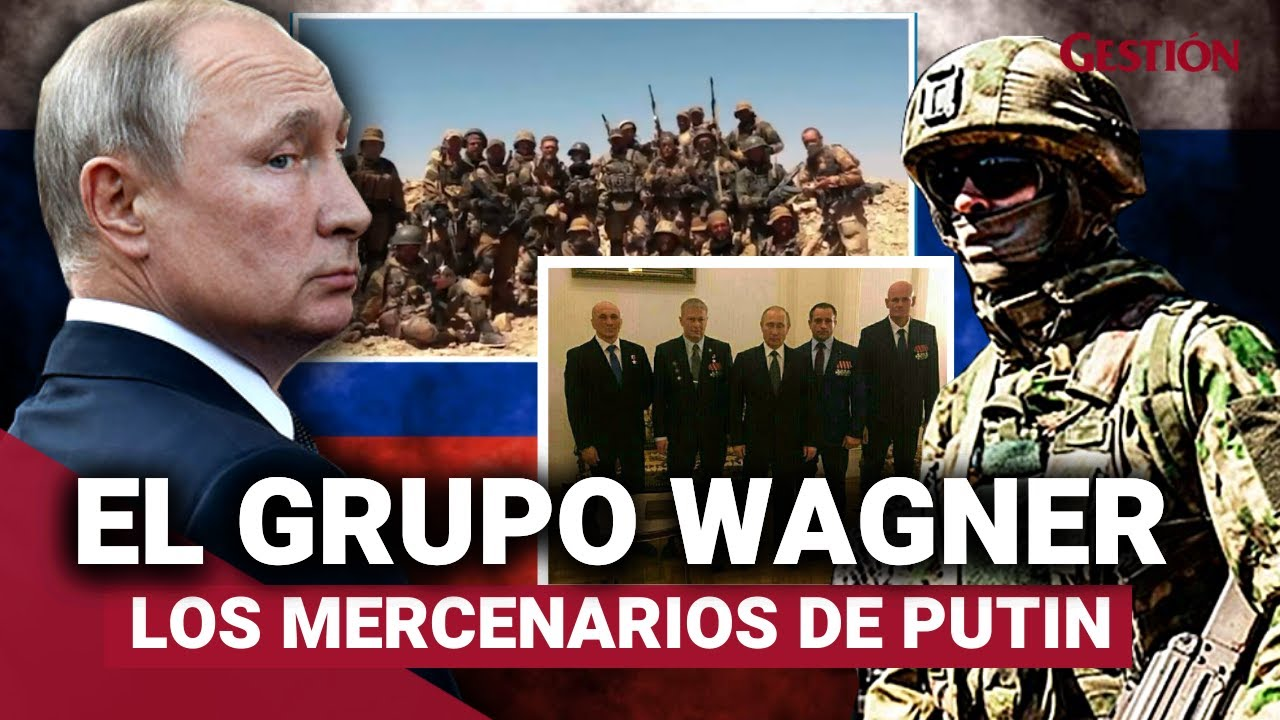
The mercenary and rapacious Wagner Group.

A minor issue arises, but of great importance due to the disagreements it creates in Moscow and with the troops in the campaign. It is the growing presence of the Wagner Group as a Russian fire extinguisher in the war in Ukraine.

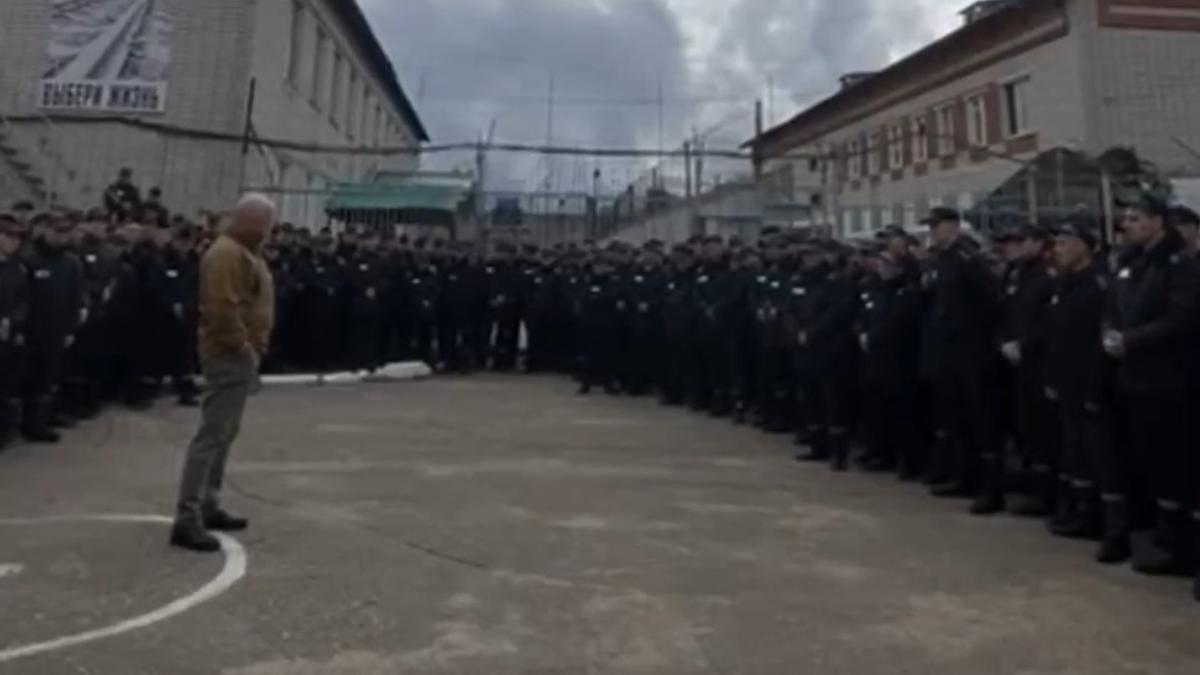
WAGNER RECRUITS RUSSIAN CONVICTS.

It includes convicted criminals, Syrian and Libyan mercenaries «among other elements of bad living» and Russian volunteers. In general, they enjoy disparate salaries, depending on their experience, origin and life path; a convict is basically paid with his freedom, more or less garnished with a clean record.

Their boss is Prigozhin, a Russian plutocrat and Putin henchman. This man is in conflict with part of the Kremlin and with senior military leaders over the permanence of his «private mercenary armed group» in the Russian ranks in the campaign.

The implicit tolerance of the Russian military commands in Ukraine with the men of the Wagner Group generates enormous discomfort among the officers, non-commissioned officers and soldiers stationed there. And it greatly lowers their combat morale and their «esprit de corps«.

If Gerasimov comes with full powers as commander of the campaign and considers the previous arguments, in relation to the motivation and combative disposition of his Russian regular forces, he has to recompose the situation of the forces, in relation to the presence of the Wagner Group in the Russian ranks.

Unity of Action and Concentration of Efforts in the Campaign.

Another of the capital problems that Gerasimov will have to solve is the strategic and operational Integration of all the active Fronts of the Russian forces in presence.

To establish a strategic «Superior Effort Unit» that is coordinated, proportional and synergistic. To optimize in «effective times«, according to the «superior universal saving means» principle and the «military principle of the Objective», the distribution and coordinated use over time of the human and material capacities assigned to the different Fronts.

Thus, the Russians have several Fronts with different importance and presenting different opportunities.

The Kiev Northern Front is inactive. Lukashenko is Putin‘s due ally and with his bravado and maneuvers he causes uncertainty in Kiev. It offers an opportunity to drain mobile Ukrainian troops, to fix and protect the Front from possible Russian rapid raids.

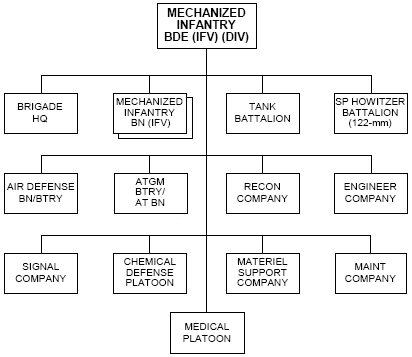
Here the presence in Belarus of a mechanized Russian “task force” would suffice. Counting on tanks and infantry combat and transport vehicles, with support from artillery, engineers, defense against aircraft and ground support aviation and its escort. And integrating a couple of divisions. That moved around the south of Belarus, prowling.

The Crimean Front is active towards Kherson, Mariupol and Zaporiya and creates uncertainty towards Odessa. It allows the defense of the 4 territories annexed by Putin.

The Donbass Front, in southeastern Ukraine, is active in the oblasts or provinces of Lugansk, to the north, along the border with Russia, and Donetz, to the south. The Northeast Front, towards Kharkov is in hibernation. Both hold promise in theory in this new phase of the war.

The joint and coordinated action from both Russian Fronts, of «breaking shock forces» of the Ukrainian Tactical defense. Followed, after the irruption, by «armored mobile groups» with air support, advancing in the Ukrainian operational rear towards a town or small area. Forming a wide and double enveloping movement around the enemy. It can create a “pocket” of it or, at least, a serious threat of cutting off communications for the most active Ukrainian forces, and therefore equipped with heavy equipment, deployed in the east of the country. Russia has more than enough regular mobile forces for this.

The Ukrainian Counterattack.

The Ukrainians can counterattack by employing armored forces with sufficient punch, such as the more modern Main Battle Tanks. The “heavy” tanks that Zelensky claims from the US and Europe now. The Challengers (with their Chobham armor); Leopards 2 A5, of German engineering; Leclercs, the first type built of this new generation of tanks and the Americans Abrams.

Advancing rapidly from the depth of the Ukrainian deployment, on one flank of the Russian advancing points. Let’s remember that this territory is favorable ground for armored vehicles.

For this, Ukraine will need to have several battalions of such tanks. Distributed by their most important concentrations, each with about 50 tanks. Distributing or employing it by isolated companies is to waste its special and unique off-road forward speed, shock and firepower, protected by effective armor. Which is completely decisive in modern combat.

In all this theoretical filigree of maneuvers and combats, the most capable, equipped, motivated and prepared will win.

The denatured current Russian air front.

The goal of the current Russian air front is the weakening of Ukrainian morale. Through the successive attack on civilian facilities (energy, water and communications) and urban centers of some importance in Ukraine.

It should be noted that this rather criminal objective does not target the enemy military forces, but their unarmed rearguard populations. For more INRI, it began to be used shamelessly when Putin and his Kremlin bosses and henchmen realized that his “special military action” in Ukraine was a “bluff”. And that the Ukraine was a tough nut to crack for the Russian forces employed in it.

MASTER SUN.

Almost 2,500 years ago, Master Sun (Sun Tzu), in the Warring States Era, already warned that «when the general is already appointed by the sovereign, he should not interfere in his affairs» and «when the courtiers and ministers interfere in his command, they bring misfortune to the Kingdom”.

In addition, this objective has already been used in other cases and with zero effectiveness, by the way.

Japan was mercilessly bombarded by the US, when it had already managed to occupy the Japanese islands (e.g., Okinawa) close enough to insular Japan. The Japanese were already preparing their civilian population for a Numantine resistance to the invader. Creating an immense natural fortress on its islands, where each one was a fortified redoubt of it.

They were the two atomic bombs of Hiroshima and Nagasaki, which represented an «ascent to the upper limits» in the fight against civilian rearguards. Because they were much more than a very large cannon shot. The ones that forced Japan to surrender unconditionally to the Americans. Because they threatened (although they didn’t have any more artifacts at the time), to destroy the essence and Japanese national identity.

In general, the use of the «indiscriminate bombardment of the civilian rearguards», what it achieves is to galvanize them around their government and their armed forces. Because they perceive from the enemy a demonic, fierce hatred towards them, which would seek the destruction of their identity, culture and idiosyncrasy.

Modernly, such bombing type was used by the US in North Vietnam. They left South Vietnam in 1973 and in 1975 the communist forces occupied it, almost without resistance.

Russia’s Air Support to its Ground Forces.

The Russian air front in Ukraine must be directed against enemy troop concentrations (reserves, attack preparations, marching forces), their ground communications and logistics network, command posts and communications centers, attack points of their forces, artillery and rocket and drones launch positions.

FINAL.

Brief Monetary Theory for Intelligent Students and Investors.

The Insane Plague of the virtual Coins or Bitcoins.

The principal intrinsic characteristic of the bitcoins is that they lack the support from real and tangible values or assets. As are the gold and the silver, precious and scanty metals, which were endorsing the value of the former national notes. As are the assets of the companies, which give his essential value, not that of market, which is a controllable speculation, to his shares and bonds and debts. As are the current money, which possess the support and the financial and juridical actions of the Central, national or supranational, Banks, since is the case of the Euro, to endorse his value and guarantee his intrinsic security, against the excessive covetous actions of the international speculators without principles.

Resultado de imagen de Jesus and the Tiberius denarius A Tiberius Denarius. The payment to the Caesar.

The Properties of the real Money.

There are some essential properties of the money, which last in him from the beginning of his existence as «intermediary in the exchange of goods» of the Humanity. The money is a deposit of value and this quality stems from his previously mentioned property. All the economic agents did accept it as «complete instrument» in the exchange of goods and services. Because his value was remaining reasonably in the time and there was no loss or wastage in his possession, while was acquired the final «wished good«. The money is also, as corollary, the unit of the economic value, since all the goods and services cost a multiple or a submultiple of the monetary unit. The money is, with it, a sure and trustworthy mean of payment. And, as his corollary, is a standard of deferred payments or debts liberating between debtors or recipients of the money of others, for his use in an agreable time, and the private or professional borrowers.

Resultado de imagen de secure money  MODERN MONEY MOVEMENTS.

All this does that the hard cash, should have a solid and resistant nature, in order that it does not affect the durability of his value in the reasonable time. But, also, the money already overcame long ago the barrier of the material disadvantages of his guard, coming and goings and concentration for great payments. Being based on the confidence of all on his already mentioned properties and using the modern digital and telematic means, the money has transformed his physical expression towards the countable notes with infinity forms. Allowing almost instantaneous transactions in the time and at any distance in the world.

The corrupt and spurious money.

This does not happen with the so called fake or virtual or ethereal money, since they are essentially speculative or of fortune values. Designed precisely, to facilitate this function of not productive and of very high investment risk, to fluctuate in not known time periods. The nature of fleeting electromagnetic beats that have this money, without seizable physical supports, allows them the highest rotation speeds of his transactions, which also favor his behavior of virtual, speculative, desirable and in high degree attainable values.

The extension and the operations of this speculative and degraded money feed and promote by the greed of his possible holders. The greed is an untid passion, which looks for the possession and hoarding all kinds of desirable goods for the person that suffers it. And this is independent from his real need and usefulness for the subject. In turn, the greed is supported and nourished by the vanity of the subject, which is another untid passion. This character of both concerns more or less seriously the soul powers of the, specially the understanding and the will. This way, is being created a perverse correlation, which is of difficult resolution.

Resultado de imagen de tulips bubble Bitcoins fever could eclipse the Tulip Mania. Just wait enough.

We have an example of these speculative values, in the so called Bubble of the Tulips developed in the first half of the 17th century.

Far from the desolations and brutalities of the first Great European War, the so called the Thirty Years War (1618-1648), Holland lived at the time an epoch of growth and commercial opening. And it placed as one of the great European powers. In this period of wealth, the Dutch leader classes found in the tulips an object of ostentation and collection. The tulip is an original flower of Turkey, which form remembers the great turban of the Ottoman sultans. In 1593, the botanist Carolus Clusius introduced in Holland the first tulips. The noble classes collected them and they turned into a wealth symbol.

Though for being flowers his negotiation was in summer, the Dutches designed, to prolong it, a kind of futures market for the tulips. The producers offered to deliver a given bulb in the epoch in which it was blooming and the buyers acquired its delivery right. This turned into a speculation that was autofeeding. Charles Mackay in his book «Multitudinous Deliriums: the obsession of the tulip and other maddened markets» wrote that in 1635 40 bulbs were sold for 100 thousand florins, when the annual salary of a craftsman was 200 florins.

Little by little, the market attracted the popular classes. The futures market and the new and numerous small investors finished shooting up the tulips’ prices. Then, the simple possession of the tulip was replaced by the purchase and sale rights market. And, sometimes, without getting yet the acquired bulb, already it was sold with a juicy added profitability.

Resultado de imagen de tulips bubble A chart of the Tulips’ Prices.

But, being a product conditioned by the effects of the climatological conditions, and when the crops of 1637 were poor, the speculative financial tensions began. The sales of that spring were not good. And, the most experts started distrusting the guarantees that had been given to acquire tulips. At a given time, it was accepted that their price was very excessive and the orders of sale happened. The commercial agreements could not be respected and at a breach of contract followed other one. In the fall of the supposedly real value, remained caught thousands of small savers. That financial economic crisis struck hard the Dutch economy. And it generated a period of deflation, low wages, familiar ruins and business closing.

The Kindness Therapy of the confident Money for a broken Economy.

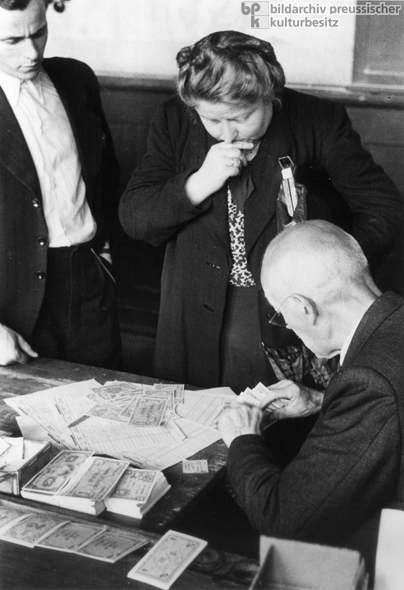
In 1948, after the World War II, the awaited monetary reform was realized in the West Germany. The measure, both simple and important, consisted in reducing the volume of the money in circulation. This way, after the inflation of last years, the old reichsmarks turned into the new deutschmarks, in the proportion of ten of the first ones for one of the new ones. Both the producers and the merchants were waiting for this measure, which facilitate and guarantee his operations of production, purchase and sale.

Soon, jointed this with the German discipline and the laboriousness, the shops began to fill with articles and the workers already were possessing sure and admitted payment means. Little by little, they were leaving the prices controls and the rationing, artificial measures destined to limit the inflation and to distribute the few available goods, with State controled, imperfect and inflexible measures.

Resultado de imagen de West Germany money reform  WEST GERMAN CURRENCY REFORM (JUNE, 20, 1948).

And, the economic cycle that does that the people react in the managing of the money, against his more adverse experience of depreciation and inflation, appeared also in the West Germany. And this event, together with his horrifying experience of 1923, with the retermarks of the Republic of Weimar, are the origin of the determination of Germany in having always a firm currency, the mark or the Euro, that could not be devoured by the inflation and that allows the healthy and sustained economic development.

An example of an unsuccessful and ruinous money for his last holders and all the Nation.

The Scot John Law came to France in 1716. His central idea was to create a bank that could issue notes to his borrowers, with the guarantee of the rustic properties of the country. This simple idea is in the base of later numerous forms of swindles to covetous and not much intelligent investors. His personal skills allowed him to know the Duke of Orleans, the Regent of the Kingdom.

In this epoch, the financial situation of France was disastrous. The expenses of the kingdom did duplicate the income of the Treasure, which arks were empty. And the collectors of taxes and his collaborators were looking rather for his own benefit. A decree of May 2, 1716, granted to Law the right to found a bank with a capital equivalent to 250 thousand sterlings pounds. The Bank could issue notes or bonds, which it dealed in the shape of «lendings to the State«. Which began to use them for his multiple and unavoidable payments, with public full value and liberation character.

Resultado de imagen de Law's banque royal NOTE OF THE BANQUE ROYAL, SUPPORTED WITH SILVER.

Since France had been reducing the weight of the precious metal in his coins, Law’s notes were almost like a guarantee against the embezzlement and the prevarication of the Administration of the Kingdom. And, this «acceptable money» in a capable latent economy produced great and unexpected benefits with the extension of the transactions for the whole economic body of the country. And Law’s bank turned in the «Banque Royal» of the country.

The Regent of the Kingdom, full of pleasure, proposed an additional emission of Law’s notes. And Law thought of developing his original idea: to create a «Company» to exploit and bring to France the great quantities of gold, which was supposed that existed in the subsoil of Louisiana; and to benefit also from the impulse that would receive the trade. At the beginning of 1719, the new «Company of the Indies» obtained commercial monopolies in the territories of French influence in the India, China and the South seas. And then received that of the tobacco, the collection of taxes and the right to coin metallic currency.

The response of the potentials investors was disproportionate and unexpected in all the aspects. This way, the Stock Exchange of the titles of the Company had to move successively to a bigger place. And the value of the contiguous areas to them shot up, since the people wanted to be close to the operations places. The títles rose fabulously of price. Persons who invested initially a few thousands, were within a few weeks owners of millions. It seems to be that the term millionaire arose in France in this epoch. And the Company was issuing more shares, at higher prices, but lower than the market, throughout this year.

Resultado de imagen de john law  The honorable John Law.

Meanwhile, Law was object of the major gratefulnesses and distinctions. He was ennobled with the dukedom of Arkansas and named Financial Controller of France at January 5, 1719. The Scot, even, frenchified his surname with the most euphonic of Lass. The Banque Royal, at the same time, was increasing his lendings and, therefore, the notes with which it was doing them. At the end of 1719, there were around 1200 million French pounds of these notes circulating in the financial channels of the French economy. And, what in a beginning was a benediction, nobody thought that it could turn in a mortal embarrassment. And the financial engineering of the epoch began to work.

It was supposed that the sale of shares of the Banque generated own resources, destined for the exploitation of the idle lands of Louisiana. But, thanks to another agreement with the duke of Orleans, this fresh capital was destined to give more lendings to pay the expenses of the French government. Only the interests earned by them, could be destined to the golden extraction and this one would form part of the hard reserves of the Banque. All this generated a whirlwind of cycles of dealing of lendings to the State, emission of notes by the Banque Royal and purchase of his shares, which was selffostering and uniformly hastening «ad infinitum». Or not …?

At the beginning of 1720, the prince of Conti, irritated because he could not acquire a share package at the price that he considered suitable, sent to the Royal Banque a great quantity of notes, to be changed in real money. It is said that 3 carts were needed to transport them. Law appealed to the Regent, who ordered the prince to return a considerable part of the gold got for his notes. The exploitation of the resources of Louisiana failed, the mines were conspicuous by its absence and the whole financial farce swindler sank. An increasing number of persons claimed daily at the Banque for his hard cash. One day of July, 1720, 15 persons died in the riot formed in front of it.

The Regent concealed Law, to save his life and made him go out of the country. In France remained missing fortunes, a great deflation, collapsed prices, diminishing business, an increasing unemployment and a lasting fear against all the banks.

THE COMBAT OF THE SMALL MILITARY UNITS.

Introduction.

Each small military unit, each «action unit» is a sub unit that is capable of carrying out a function in the superior unit to which it belongs or gets support. From its tactical integration will arise bigger units of action, capable of actuating in larger » fields of action».

The units of action can be of command, combat (of fire, of shock and mixed), organizational (H. Q. sections), logistics, communications and of intelligence (exploration, intelligence and counterintelligence and propaganda and psychological war). The smallest of combat would be the squad with its fire support (light machine gun and servants) and its 2 or 3 teams, capable of maneuvering or defending a firing line.

It keeps them united and makes possible the fulfillment of its functions, its interest (esteem, self esteem and shared aim of the unit, opposite to the wear and the certain or apparent danger, but assumed as such), the full deployment (that provides an organizational structure and that feeds its functions, to guarantee the union and the action), the command (that offers guide, cohesion, example and correct command sense) and the situation (that is friendly, neutral or threatening, in increasing order of dilution of the union and loss of the efficiency). These originate in turn the deployments and the combats and the maneuvers, which are the «form» decided by the command to apply the capacity of combat and a “tempo”, pace or speed of action, thanks to the freedom of action that is possessed; those offer, together with the evolution of the situation, the opportunities and the dangers.

FIRE SUPPORT BASE WITH 105 MM. HOWTIZERS.

It appreciates a rich multiplicity of interactions between the subunits, on the basis of its functions and the dependence between them, in relation with its integration in the unit, the maintenance of its cohesion and the fulfillment of its superior function.

The deployments make possible the success or the failure; they also guarantees the order against the environment chaos or negative interactions, always unpredictable and unproductive; the situation gives intrinsically to the unit the courage or the cowardice; the command and the interest drive the positive or effective action of the unit, in order to its cohesion and its function or aim in the all set.

The Combined Arms Performance Process. The Control Means.

The units of action face the enemy using a combined arms system. They go to the enemy keeping a direction (maneuver and shock) and with a fire support. And though it could be a unit as small as the squad, with its shooters or fusiliers and of support teams, are specializing subunits in the combined arms concept. Sometimes the van men must do something strange to the Americans, but very effective advancing to the contact or passing the flank an enemy group or position, crawling.

REACTIVE ARTILLERY IN ACTION.

They try to reach the effective combat distance, creating a favorable interface, a shooting enfilade or a position for grazing fire or an effective assault distance, without losing its combat capacity. For example, by fixation by the enemy fire, by important losses or what affects its cohesion or the command, and by wear). And protected by the natural concealment or artificial one (fogs, covering fire). They work quietly and unseen in the micro ground without limitation of time up to the effective distance. They can use hand grenades to disguise their action on intermediate obstacles (sentries, etc.), that appears as mortar bombs.

The supposed continuous line of the front is crumbled. There arise a multitude of unexpected new internal fronts, possible favorable “interfaces of action” for us. It is not an infiltration, because the front is diffuse (approximately 0,15 man/m) and emptiness (some 4.000 m2/man). But of the active creation of «action fields» adapted in successive stages of action, for the employment of the unit in favorable interfaces over the enemy. The characteristics of performance are the coordination and/or the convergent effort of the different weapons in «fields of action» where they act. That are different and can be superpose, as they are shooters, light and middle mortars, machine guns, grenade-launchers, direct fire cannons, etc. From our appearance in effective force, where less they wish us and without having being detected, the erroneously expressive concept that «we» «infiltrate arises. But that is a mere spatial consequence of the real operational concept followed.

Technologically a division of significance exists between the support or the firing base and the attack or the offensive advance, linked by its cooperation. The support weapons are the protectors, those of greater effective range. The offensive weapons are those of smaller relative range in the set. Sequential and practically, thus, the cannon (direct or indirect heavy fire) protects the machine gun, the grenade launcher, the medium or light mortar. And these three protect and impel the shooters, when their action is or is already going to be evident.

Evolution of the Actions in his Sector. The Retroinformation of the Commands.

As consequence of the interfaces of action with the enemy, there arise in the tactical zone multiple actions of the action units. With them, the information feedback to the command, tends to enlarge to saturation, to bunch in all kinds of communications links and to affect the functional interrelationships of the unit. So, hindering its synergy, and demanding the reinforcement and/or the decision of the command, if he has not delegated sufficiently or is not monitoring the situation changes.

LAV’s ATTACKED WITHOUT INFANTRY AND ARTILLERY SUPPORT, THROUGH A VERY NARROW LANE, A BRIDGE…

This «undue plethora» is a structural generator of rubbing, a squandering of efforts and means. And it is the measurement of the trend to the loss of the cohesion, of the principal sense and the goal, which suffers a tactical combined arms unit.

The key to manage this «undue plethora», containing it reasonably, resides that everyone must observe, control and drive the necessary for the fulfillment of its mission, below its level in the hierarchy. For it the commander must share his intention and aims (mission type orders), establish a gravity center of his combined effort in every situation and guarantee the cooperation between and the support to his units. All this relying on the operations order and the updated intelligence received.

As parts of a complex system (hierarchy, specialization and aims and intentions), the units of action can be all autonomous (mission type orders, gravity center, different or shared operational sectors) and all specialized (engineers, antitank, anti-aircraft, exploration, chemistry, etc.) as is needed. To be able to fulfill, this way, with flexibility, rapidity and efficiency its functions in the interfaces of action with the enemy. It kept with all this, the structural hierarchy (integration in a major unit and its support) and functional (in the area of the intention and on support of this one).

The effective performance of the units of action resides in its aptitude to actuate flexible and semi independently from the section or platoon level in fulfilling the received mission. For it, they also will have to know and consider the capacities and needs of other weapon and supports. And acting the men looking for themselves and for other companions in the unit. Its officers and NCO must be capable of taking and drive decisions based on the mission and on the evolution of the situation.

Evidently, the desideratum is to work this way. And this one must be the trend to continue in the selection, formation, training and utilization of the men and the units. In the practice. the “degree of general efficiency” obtained, will be determined by the idiosyncrasy of a nation, the character more or less gregarious or independent of its peoples, its military doctrine and tradition, the defense budgets, the national moral, the national politics and the international situation, the integration of institutions and national organizations in the international sphere, etc.

An example attack of a combined arms unit.

Lets see an example. Against an infantry position more or less prepared, with advanced antitank means, a typical defensive zone, we can use in the breakthrough or in its destruction, if we can not pass outflanking it, the dismounted infantry followed in covered bounds by tanks for the protection and the direct fire support of it.

The antitank defender will look for a punctual, relatively big and protected target, from covered positions preferably or, at least, well camouflaged and flanking, and will act in batteries. With the pieces dispersed in order that the same enemy heavy fire can not incapacitate them. The infantry heavy weapons (machine guns in tripods) neutralize, «sweeping and searching», a more or less narrow zone of the front, occupied by a dispersed, small and smooth target, an infantry platoon.

The attacking tanks will beat with H.E. and H.E.S.H. shells those infantry strong positions. And the infantry squads will attack with its light machine guns the servants of the antitank pieces, hindering to acquire a punctual target. All this destruction and neutralization labor is spreading, once achieved the irruption, as a worm movements, in the depth of the tactical zone of the assault sector of the combined arms unit. Other parts of the enemy position that could collaborate in the defense rejection are blocked up by smoke and neutralized by indirect heavy fire.

GOING OUT TO CLOSE FIGHTING.

Besides, the artillery and aviation advanced observers will be defining to these support weapon the new targets that the own assault is discovering in the depth and in the flanks (combat exploration) in the advance sector. The criterion of the gravity center of the fire of support will be neutralize, at least, all the targets that are opposed to the advance towards the enemy position, to the irruption and to the struggle inside the position of defense in the assigned sector. Facilitating this way the direct fire and the shock of the land attackers. And that, by means of concentrated and punctual blows of its fire.

With it, the effective action in the given environment, «interfaces of action» essential characteristic, are optimized at the level of the tactical groups of action or combined arms systems, whose complementariness we have stood out.

In broken, very wavy, wooded or urbanized (housings and factories) grounds, not necessarily mountainous, that have scanty “sight control” and with abundant “relative concealing heights”, the “interfaces of action” reduce its sector.

The element of effective action continues being the combined arms system suitable sized. The action is effected by companies or reinforced interarms platoons, with the heavy fire support provided even by the battalion (medium and heavy mortars). Except in the most flat areas and of scanty obstructions to sight, the transitability, which limits physically the possible interfaces of action, prevents the fight using concentrated means beyond the company. The battalion role will be of reinforcing the efforts of their companies and canalizing the supports.

Always are critical in the land action the existing rivers, streams and channels, especially the more or less ones perpendicular to the front. The blockade of these waters flows affects enormously the tempo, the total speed of the operation, for the difficulty of the more or less sloping or obstructed area that surrounds them (forests, gullies, constructions, not reinforced fords). The advance slows down or the means have to be dispersed in the available parallel routes, forcing to enter other difficult bordering areas.

General Plans and Forecasts of the Command.

The contingencies plan of the units must include overcoming essentially four types of situations not foreseen, that intervene in the fulfillment of the mission and that can manage to compromise it.

These would be:

a) Possible direct action of the enemy, in use of the initiative or claiming recover it. It might be an interdiction bombardment, a counterattack. The solution is to tactically neutralize its action, without compromising the mission.

b) Possible encounter with the enemy. It would be a theme of patrols and sentries, advanced security forces and advanced detachments and reconnaissance patrols. It is necessary to submit or push back them and change positions rapidly and even direction temporarily, to not compromise the mission.

c) Possible unforeseen obstacle. They would be a ditch, a slope of more difficult soil, the blowing-up of a bridge, a flood, a storm, which affect the transitability of the area. It would be a matter of overcoming it as rapidly as possible, keeping the security and extending more yet the reconnaissance.

d) Possible action defensive/passive of the enemy. These are the cases of enter an ambush, a minefield, a reinforced cut covered by fire, the rejection fires of a defense position, an antitank obstacle. Is necessary to overcome it as soon as possible, as the natural obstacle case, avoiding besides to be canalized by the enemy in a direction he wished, favorable to a counterattack or at zone beaten by the artillery or by convergent fires.

In general lines, including in the commander plan, must always be foreseen:

1) To overcome or to repel the enemy and/or the obstacle, which hinder and which will present without being able to be foreseen, avoiding facilitate own information to the enemy.

2) Lost or detached means to overcome, to neutralize or to repulse are means deprived to the fulfillment of the mission. The surviving enemy can facilitate compromising information, which will be late a term in to be an effective intelligence.

3) It is necessary to continue the execution of the mission, with the necessary means to fulfill it. It is a multiplier factor of the efficiency, after the commotion and the incident losses, to keep a high execution «momentum»: the product of its “combat capacity” by its average movement speed in a period, at a given direction and sense.

The example of the preparation and the action of 3er. American Army of the general Patton, counter-attacking the German penetration in the Ardennes, is significant of these difficulties. Its «incident» was a sudden change of mission and of direction and sense of performance and the possibilities of their «execution momentum».

All this is not improvised. It results in the practice only as fruit of the frequent training and the organization work and the coordination of the H.Q. and all the commands and me. We shall remember the sayings, «it is actuated as it is trained» and «the man is an habit animal».

The Elite Military Units.

These units receive a more complete and effective training in the modern times. That is applicable to a personnel that clearly enjoys the exercise of his profession. And not only it enlists to fulfill a civic duty, to collaborate with the companions (up to the level of battalion), though the immediate ones are those of the piece or squad, and to come back home. In general, they act rapidly and hard, even inconsiderately, against his aim.

Resultado de imagen de ranger de texas A TIPICAL TEXAS RANGER OF THE XIX CENTURY.

It is a question of a military closed «system», that it is vulnerable to the encircle and the ambush and whose limited means are only the assigned for the mission. So, it is difficult to receive reinforcements, including when they operate in the surroundings of the own “supporting mass” or great units. The intelligence for the mission must be elaborated from confirmed, constant, sufficient and updated informations. Since she will protect them from the surprises and the setbacks in destination, which are the «critical difficulty» that they can find and the major danger for all men.

His combat experience has advised them to never surrender the weapons and to always continue the effort, the fight. What has saved them from more than one failure, since the enemy was surrendering before they: for not paying the high cost of conquering them. They largely accept the discipline as a necessary quality for the cohesion and efficiency of his unit. Here, more that in other branches, the commands have to be authentic leaders, directing with the example. And of proven formation, in order that his men admit that his «life insurance» in the missions is the fulfillment of the orders of his commands and with the flexibility degree that grants the order for the mission.

On the Personality of the Military Command.

The personality of the command is shaped by a series of personal and mental qualities that, outlined and composed by the specific education, voluntary study and training and employment, are going to produce a command capable of knowing, decide and drive the actions most adapted in the different levels of the military activity.

The correct sense crowns, perfects, governs, directs and stimulates the activity of all the other operative systems of maneuver, of all the organs of the military activity towards the attainment of the aims. And it does it in the most suitable possible way, according to its means and the military concrete situation.

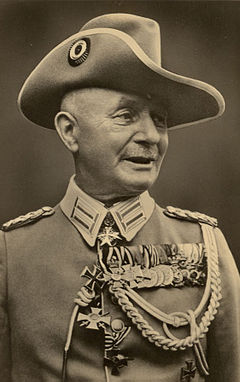
GENERAL PAUL EMIL VON LETTOW-VORBECK.

The wisdom is the first quality to get. The wisdom is an habit for which we judge straightly of the military and human things, under a special instinct, which makes us knowing and savoring them with certain connaturality. Here wisdom means simultaneously to know and savor.

The wisdom includes the military understanding, which is a penetrating and deep intuition of the military things in the shape of “apprehension”, that is to say, without expressing judgments or disquisition on them. The intuition is a form of direct knowledge, which is characterized by its immediacy and contemporaneousness on the topic which is. To the wisdom are opposed the stupidity or foolishness, not to know what is possible and due to know, as opposite things, and the fatuity, as the pure denial of it.

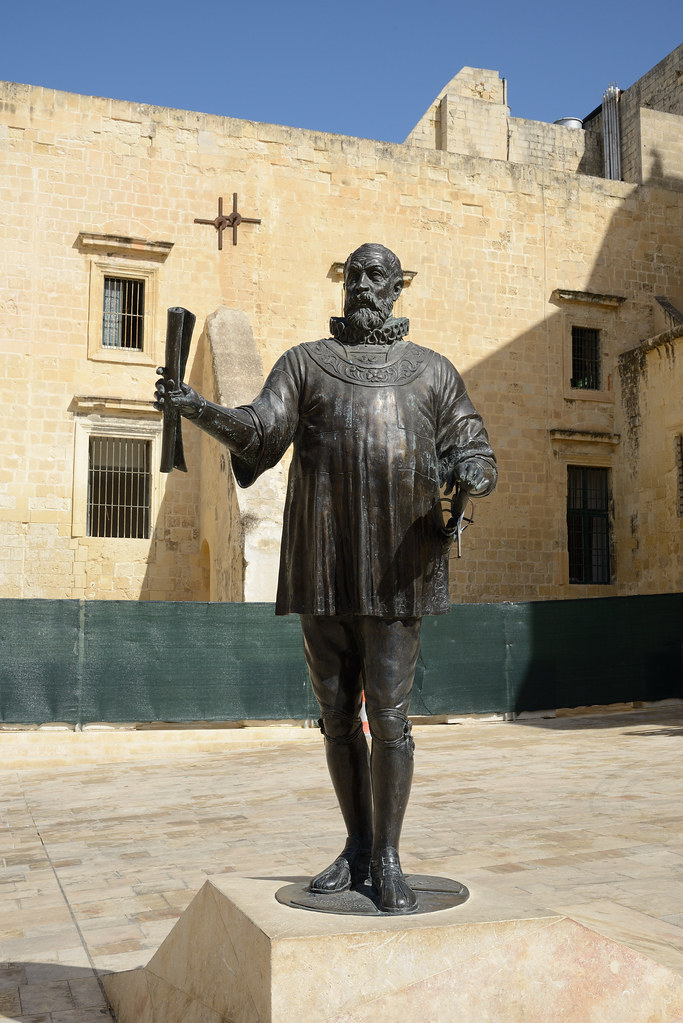
  GRAND MASTER JEAN PARISOT DE LA VALLETTE, ORDER OF ST. JOHN, MALTA.

The serenity is another quality. The serenity allows the command to keep calm, without physical or moral confusion that affects him, though the tension and the problems are present and pressing. The serenity protects and keeps lucid the reflexes and power mental, where the wisdom rests.

Two of the gravest and ridiculous failures in which the command can fall down is the pride and the vanity.

Pride is the oneself full satisfaction.

GENERAL DANIEL MORGAN.

The vanity is to believe that we are deserving objects of the others admiration. The conceited is like an “aestilite” (an ascetic who lives upon a column, solitary and looking from upon), which is satisfied thinking about the feelings he believes is waking up in others. Any sign of approval that receives, serves him as reaffirmation in his idea.

In others articles in this “blog” you could see situations that exemplify the useful thing that is to have a specially haughty or conceited enemy.

The humility, adjusting in a difficult balance, to the real and relative value of oneself, is the best antidote for these possible “mental vulnerabilities” of the chief. The humility includes the moderation. We must remember that the false humility is an allotropic form of the pride.

GENERAL HERMANN BALCK.

The moral courage, as courage and spiritual entirety, which allows him to offset the uncertainty, the weariness, the effort and the frustration or difference between the plans and the means and the successive realities of the evolving situation, is another characteristic of the “correct sense” of the command. And not only to win his demons, in such a way that his serenity does not weaken. But to stimulate also the others, so that they overcome theirs own apprehensions and weaknesses in the trials in march. Which is also converted into an effective factor of the leadership capacity. Which supposes to connecting, motivating and direct from mental qualities, his group and not only from the authority of his ranking.

Another factor is the empathy as affective, not necessarily emotional, participation in the personal needs. In this bridging, the command will find a personal human enrichment. That will be another more resort to manage to fill with enthusiasm his men. The enthusiasm is the human energy capable of conquering the entropy of the weariness, the fall of the moral, the lack of comfort, the fears and the apathy in the important and decisive moments of the military activity.

JAN ZIZKA.

The will is the power of the spirit. It is rooted in the moral courage, it informs from the wisdom and interacts with the serenity, feeding her and resting on her. The will allows the command to overcome the demons of the uncertainty, the fears, the effort and the weariness, the lack of comfort and the frustrations. The will is thrown towards the opportunities, appreciated by the wisdom and decided by the moral courage, which removes the tactical and operative doubts.

The discipline and the will are rooted in the personal education, through the fulfillment of the duty towards the society, the military institution and the commanded men. The discipline nourishes the moderation and the humility of the command, giving them a human and militant sense, but removed from mystical connotations.

CHARLES FLANDREAU.

The institutional authority comes from the delegation received of the superior command. It gets about itself to fulfill the ordinances and the aims that are assigned. But the personal conduct and the professional capacity of the command generate his prestige and his example among the men. Who give to the received authority, his personal and concrete quality.

The military education is the control of the trade. Its knowledge is giving by the study in schools and academies and in its permanent update through the later readings. Its application is in the doctrine and the regulations. The mastery comes from the application of the knowledge in the games of war or simulations, in the seminars of discussion and spreading, in the maneuvers and fields exercises and in the real situations which he has to face. We remember that the military specific trade tends to not practice in the life…

They are not here all those who are…