The Mongols Armies.
The Mongol Army’s cavalry was divided into light and heavy cavalry.
Their most distinctive weapon, used by all cavalry, was the S-shaped composite bow, which, properly drawn, could launch an arrow over 300 meters away. Its length made it useful for shooting from a mount.
The Mongols were herders, and their occupation gave them a lot of free time. This allowed them to amuse themselves by shooting the composite bow, thereby achieving great skill in its shooting and use and, very importantly, maintaining it over time.
Light cavalry was intended to harass the enemy in formation, send patrols ahead of their main body to gather intelligence, and pursue and finish off the defeated enemy as they fled.
Heavy cavalry struck the enemy in the clash; care was taken to ensure that the enemy was tired, dispersed, or in the minority.
The Mongols did not have a sufficient siege formation. They defeated the entrenched enemy with lures and tricks. And, by offering them a much-desired advantage, they trapped them.
Development.
In 1241, some 100,000 Mongols crossed the Polish-Ukrainian border to attack Hungary. A detachment of 20,000 men, two Mongol tumans or divisions, under the command of Princes Baidar and Kadan, will be tasked with ensuring that the Hungarians receive no reinforcements from Poland, Germany, or Bohemia.
To this end, they defeat the concentrations of forces from those countries at Chmielnik, about 18 km from Krakow. They lure the enemy into pursuit without prior combat, into an ambush, appearing to the enemy as a raiding party retreating to its base.
And, at Liegnitz, about 60 km west of Breslau, they employ a mangudai to deceive them. It consisted that a Mongol army «corps,» inferior to the enemy, seriously engaging in the fight with them. Its size was large enough to make the Mongol effort considered significant. This would mentally lure the enemy away from any other thoughts or possibilities. After a fierce battle, the sheer weight of the enemy forced the Mongol corps to retreat.

What had been a tactical retreat, never truly disorderly, was mistaken by its enemies as an exploitable defeat. Its complete and permanent ignorance of the Mongol enemy left it unaware of anything. And its desire for victory, heightened by the genuine effort exerted in the initial engagement, prevented it from seeing beyond its reach.
The relentless, full-throttle pursuit eventually dispersed the tight, solid formations of the European nobles. At one point during the pursuit, always far from the waiting enemy forces, the bulk of the Mongol heavy cavalry emerged, hidden, fresh, and launched into the clash. It ultimately broke up the disjointed cavalry groups into which the European pursuers had dispersed.
After a genuine hunt, the European forces remaining in the initial positions of the battle either dispersed as well or were in turn attacked by the entire Mongol force.
By then, in less than a month of operations, 20,000 Mongols (at the outset) had advanced some 650 km into enemy territory and won two decisive battles.
Poland was battered and shaken, and the Germans west of the Oder River were retreating and preparing to defend their kingdoms. The Bohemians, still intact, were some 400 km from the first Hungarian defensive positions on the Danube; therefore, their army was operationally ineffective in achieving the resolution against the Mongol attack on Hungary.
To ascertain the Germans’ «intent,» the Mongols staged a demonstration westward into Germany. King Wenceslas pursued them. At a certain point, the two tumans (-) split into small, elusive detachments. And, forming a cloud almost invisible to the enemy, they slipped past both sides of the Bohemian army and retreated eastward.

In their retreat to join the main Mongol army (80,000 men), commanded by Subudai Bahadur, the Khan’s deputy, the Mongols crossed Moravia, ravaging its villages, warehouses, and fields. They thus created a vast desert wasteland, which would further protect Subudai‘s right flank by rendering those Moravian lands incapable of sustaining a passing army for any length of time.
The remnants of Princes Baidar and Kadan‘s forces managed to join Subudai‘s forces and continue to participate in his campaign.
General Subudai had devised and presented the invasion and attack plan to the Khan and his generals, and had been placed in command of the forces to carry it out.
Subudai concentrated his army in three marching groups. Each would enter Hungary by a different route, through the passes and valleys of the Carpathian Mountains. This deployment provided the Mongols with protection from enemy surprises and gave them an initial deployment, preparatory to the maneuvers of their three mobile corps. The Hungarians, for their part, did not dare attack any of them, for fear of the other corps advancing on their operational rear or capturing some of their cities.
On April 3, Subudai formed his three mobile attack columns opposite Pest, on the east bank of the Danube. There stood King Béla of Hungary with his army of 100,000 men. Across the river, linked by bridges, lay Buda.
Having also deployed a tuman to Transylvania to ensure that the Christians did not receive reinforcements from Romania, the Mongols now numbered about 70,000 (plus) men. And the more time Subudai took in his calculations, decisions, and preparations, the more time other European rulers would have to make up their minds and come to support king Béla.
The Mongol general applied one of his combat stratagems on a strategic scale: his army retreated east. Using «reasoning,» the Hungarian commanders assumed that the Mongols did not dare to fight against their more powerful army. And, spurred on by their inaction in the face of the unhindered advance of the three Mongol columns, they demanded the King Bela to begin their pursuit. The Hungarians did not appreciate that Subudai was luring them away, from the protection of the Danube and the support of detachments and corps of the Hungarian army.

King Béla, commanding the vast majority of his army, led the pursuit against the Mongols. The Mongol retreat was deliberately slow. It took them six days to reach the Sakho River, about 160 km northeast of Buda and Pest.
West of the river and on the plain opposite Mohi, the main town in the area, Prince Batu and Sabudai decided to confront their «pursuers.» On April 9, the Mongols crossed a wide gorge, advanced through a heath, crossed a Stone Bridge, and continued some 16 km to the thickets west of the Tokay hills and vineyards. There, they had numerous places to camouflage and hide.

The Hungarian army, pursuing them head-on, encamped in the heath, arranging their wagons in a circle, where they set up their tents, equipment, and horses. To the right of the temporary camp were the swamps along the banks of the Tisza River, to their front lay the Sakho Heath, and to their left were forests and small hills.
At dawn on Wednesday, April 10, 1241, Batu and around 40,000 men advanced toward the stone bridge from its eastern side. The Hungarians defended it vigorously, until they were forced to retreat due to the «fire bombs» launched by the Mongol catapults, as they were on a very narrow front.
We are now seeing, quite clearly, how the opposing rivals are assuming the roles of winner and loser. And that this situation continues until the very end. These are some of the «signs» that announce and precede the final results of the war dialectic.
The Mongols crossed to the western side of the Sakh, but for more than two hours, they were terribly pressed by the Hungarian charges, and only the fire of their archers allowed them to briefly reestablish their defensive line. Little by little, the Hungarian army deployed to eliminate the Mongol bridgehead over the Sakh.
Suddenly, General Subodai, who had also crossed to the western side via a makeshift bridge built downstream of the Sakh, while the Hungarians were distracted by the threat of the Mongol bridgehead, appeared with around 30,000 Mongols in the Hungarian rearguard.
Beaten and stunned, but with the courage and experience to avoid panic, the Hungarians retreated in good order to their nearby camp.
(To be Continued)


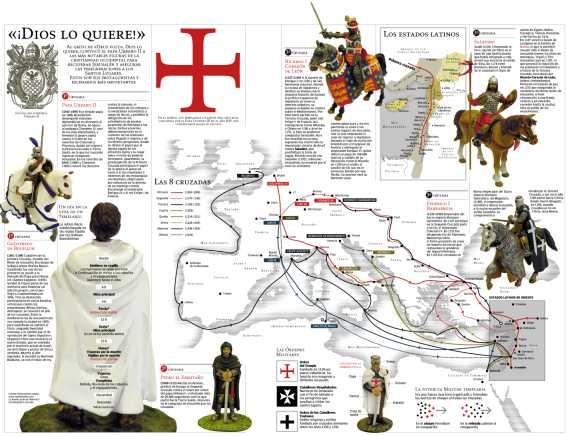
 THE SHIELD OF THE USSR.

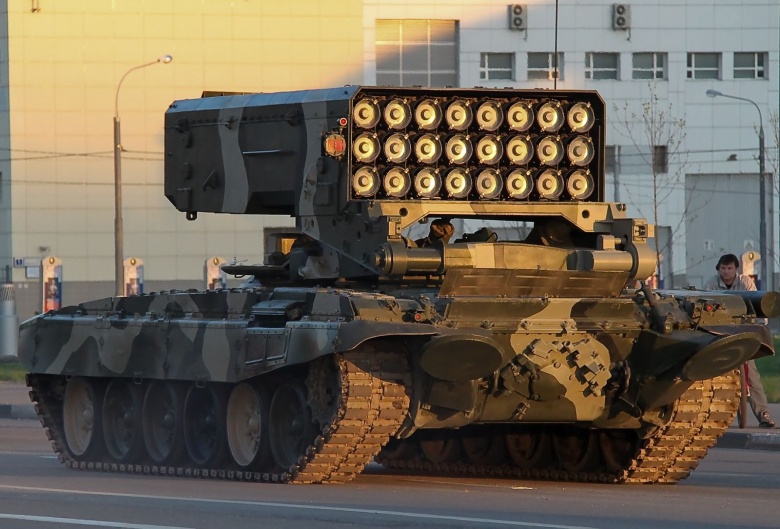 RUSSIAN REACTIVE ARTILLERY IN SYRIA
 GOVERNMENT CARPET BOMBING IN SYRIA.
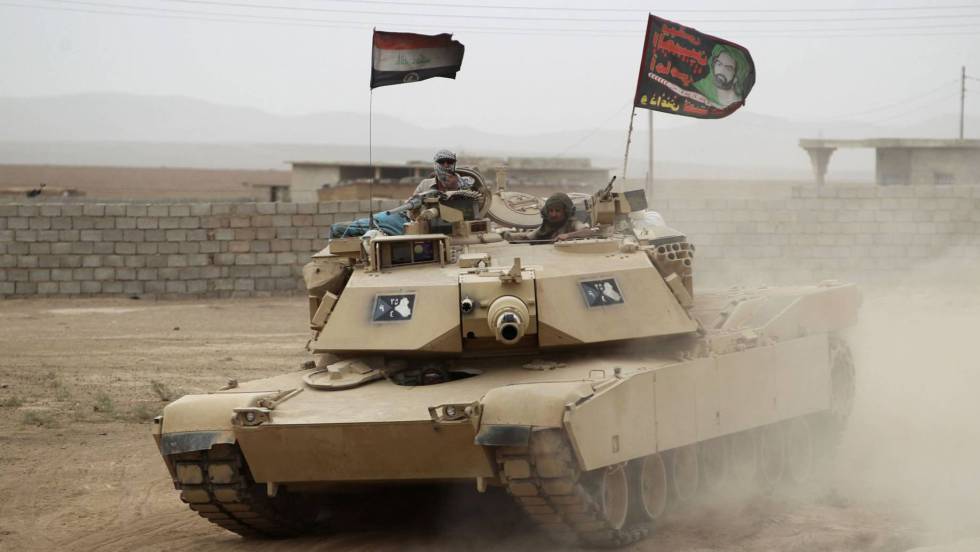 IRAQI TANK WITH SHIA BANNER…
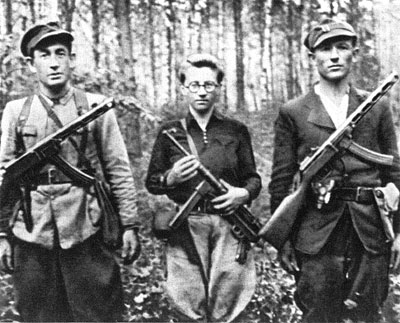 RUSSIAN PARTISANS.
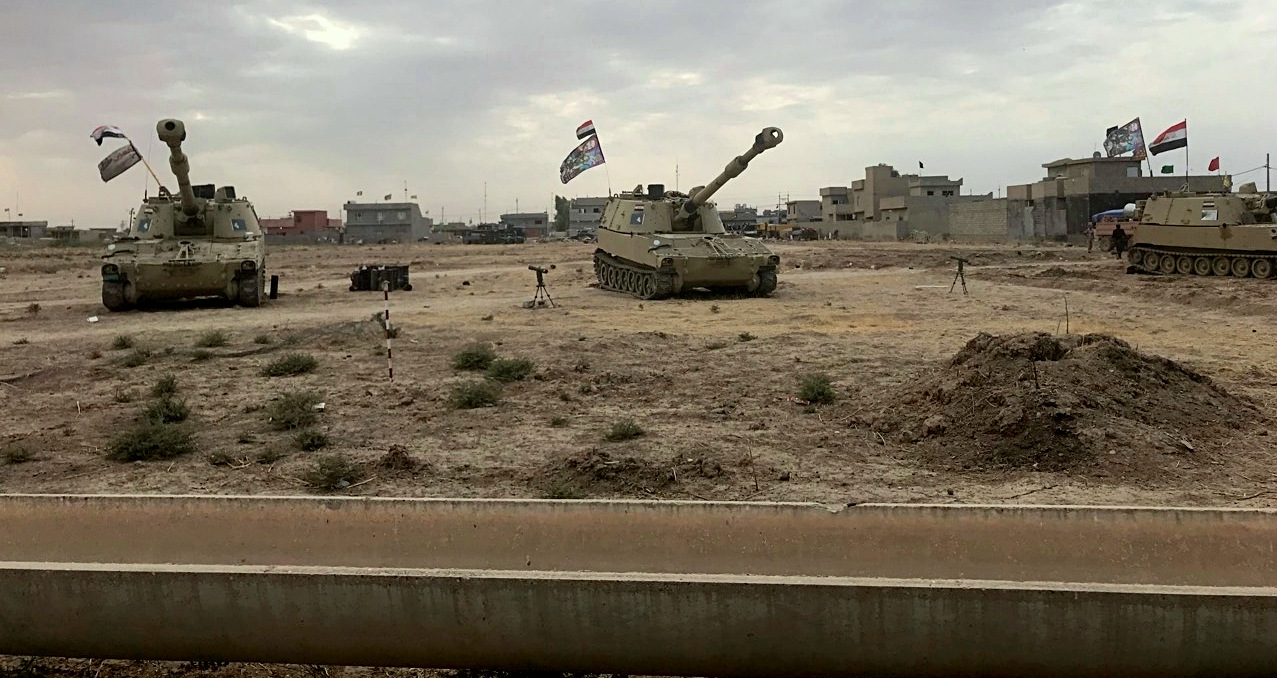 IRAQI SHIA MECHANIZED ARTILLERY AGAINST ISIS
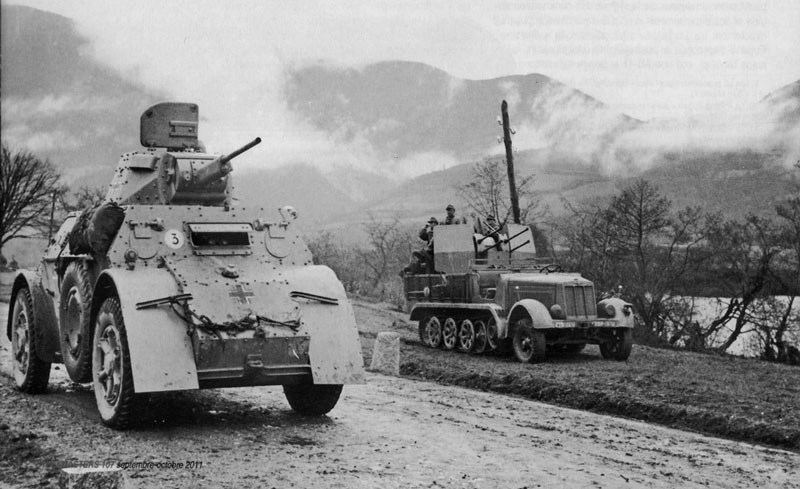 LIGHT ARMORED VEHICLES GIVING SUPPORT TO AN ANTIPARTISAN OPERATION IN RUSSIA.
 URBAN GUERRILLA WARFARE IN KIEV.
 POLICE PROTECTION OF THE DUOMO PIACE, MILAN. ¿WHICH IS THEIR «TARGET»?
 TURKISH WOMEN. ¿EUROPEAN OR ARABS?
 EDUCATION OR BRAINWASHING PLACES?
 SEE HIS LOOK. HE WANTS TO KISS YOU…