THE WAR AGAINST THE ISLAMIC TERRORISTS. Second Part.

(CONTINUATION)


Operational Characteristics of the Attacks with Elite Ground Forces.

Units and small units that attack with limited aims (a deep incursion, the temporal capture of a critical position, an ambush) constitute a military closed «system». This condition imposes specific characteristics on the “interfaces of action” with the enemy, which are sometimes different to those of great units, especially in the theme of available means and the time of action.

Attacks with limited aims have been operationally used along large fronts. Where the enemy’s defense lacked depth and enough reserves and was looking to minimize own wear and make use of the multiplier effect of the set’s efforts. This occurred with notable success when the forces of the 9th German infantry Army of General Model sought to reform and consolidate its fronts in the Sychevka’s southwest zone between January and April of 1942.

The definitive characteristic of his use, adapted in these tasks, is that is used with criterion unity, by a kept and «concentric» in the result of his impulses “operational gravity center”. So that the limited efforts do not vanish in reconnaissance in force actions, in not suitable or out of opportunity sectors. It is to say, usiing unduly.

The field of action is the secret for applying freedom of action. By extending or decreasing the field of action, or by changing the field of action on the enemy, one can keep or recover the necessary freedom of action to act favorably and not simply reacting to the enemy.

«Field of action» is any «spatial-temporary-circumstantial» situation that allows for the suitable employment of an Army’s means and capacities in accordance or as part of that army’s intention. The field of action is formed by one or several «interfaces of action«, which are the very small sectors where direct contact occurs between the small units of action of each rival. Examples are when a deployed platoon attacks an enemy section, when a tank attacks infantry heavy weapons, when a section attacks by firing on an enemy’s strong position, when an engineering section opens a path in a minefield, etc.

The task is to find an optimal way in which, through successive «periods of action» applied in «fields or interfaces of action», one can gain the relative freedom of action to act and to carry out «quantum» or elementary units of the general intention. In addition, a general action can be divided into numerous partial actions to achieve in stages, momentary or minor «periods of action»; acting this way in the same «field», divided in minor interfaces of action.

Interaction in stages and situations suitable to advance one’s military means guided by the superior intention or orders is the general mechanism for applying, recovering and maintaining freedom of action in one’s favor.

A characteristic of the freedom of action is that is interactive with the enemy in the «interface of action» and is played out in fields of action that chosen by or imposed on an army. Passiveness means that freedom of action is not taken advantage of through lack of initiative. Thus, freedom of action can also have a result opposite to its intention and this can happen regardless of the type of fight engaged in, whether it is offensive or defensive.

The units had to gain combat superiority over the enemy, since obtaining a local and temporary supremacy would allow them to achieve their aims.

Essential to the mission’s conception are intelligence and simplicity. Essential to its preparation are security and training. The characteristics of the mission in action are surprise, tempo and the commitment of all the mission participants.

Simplicity allows the force to concentrate on a few related aims, using a limited number of men and means in the military closed system. If new tactics or different technologies are used, both the simplicity of the mission’s conception and the surprise of its execution will be enhanced.

On September 12, 1943, the captain of the S. S. Otto Skorzeny carried out the rescue of the Duce from his prison in the high mountain hotel Great Sasso located in the Apennines. Gliders were used to assault the position, fighting against the difficult cold draughts (these produced a delay in the arrival, as they landed at midday) and scarce sites for landing. That such a difficult assault would be attempted, higly surprised the on duty «carabinieri». The attackers took advantage of this by gaining access to the principal building while. At the same time, an acquaintance general of the «carabinieri» friendly landed with Skorzeny. Combat supremacy was rapidly achieved.

Intelligence supposes complete, up-to-date and timely knowledge of the circumstances and characteristics of the mission. Here, with so limited employing means, intelligence is facilitated by different agencies and units that intervene with the mission, even those at the level of the state. Specially the CIA, the National Security Agency or NSA, the Central Security Service or CSS, that links with the NSA, and the FBI.

Security refers principally to the stages of planning, preparation, training and, if appropriate, stage of transport or insertion. It has active and passive aspects. Giving off misleading information and concealing the force’s real intentions up until the stage of action on the objective. Each person must only know what is necessary for his actuation.

Training must be generic for actions and tactics and specific for those actions required for the mission. Independently of this, training is necessary to achieve coordinated actions among units taking part simultaneously in some part of the mission. A general rehearsal of the mission is also necessary, including its planning duration and margins for mistakes. It is also good to include some variant that represents a mistake, an unforeseen event or a loss of combat or movement capacity. And that the men train in correcting them or, at least, in neutralizing them with his effort. For example, a part of the helicopters is knocked down or lands at major distance of the foreseen in the theoretical disembarkation zone.

The final «training area» must be similar in general characteristics to the «target area». And it must be placed at safe of detections and filtrations of information (security), which onlookers and interested persons can catch. The independent variable of «time» introduces sometimes unexpected and not always welcome effects. For example, a vehicle presents problems after a number of hours of hard use, that was not foreseen in tests of «at scale» time.

Surprise supposes attacking an enemy (even if arranged in prepared defense) at a point or flank that is neglected by him at the moment, giving the attacker a favorable «interface of action» on him. It must suppose a “tactical innovation”. Though it could also contain technical differential or new elements. Examples of such “innovations” in the past are hollow load bullets or charges and flame-throwers.

The surprise is the sufficient and necessary multiplier of the combat capacity of the «small incursion force». That will allow him to compensate the scanty military resources that it has on the area. To it joins his inconsiderate and carefully applied with rapidity employment. To provoke an overwhelming effect on the enemy, achieving the temporary local superiority. As being an «isolated military system», the incursion force of will receive neither reinforcements, nor supplies. For its part, the time is not neutral, here is an enemy: because there is not more operation time. From his depletion, the unit will confront the pursuit and his annihilation…

Speed consists in firmnessly acting, ahead of the enemy, in the successive elementary «cycles of action» that define a performance or process. It also presupposes acting with opportunities and with pace (adapted speed, relative to the enemy). Remember that an action cycle includes a phase of observation, a phase of determining the situation, the decision phase and the accomplishment phase. If one’s speed is greater than that of the enemy, his actions will be in response to situations that have already just passed.

Speed also implies rapidly reaching a situation of active supremacy in combat capacity. The enemy’s reaction speed is initially very slow as he is in a stupor, trying to verify what is happening. This means his phase of determining the situation will be lengthened. Deceptive action in these moments will lengthen the time that passes and fog the determination of the situation. Ways of doing this include utilizing some of the enemy’s uniforms, equipment or language by certain parts or subunits involved in the action. Once supremacy over the enemy is attained, it must always be kept. As scanty resources make its recovery very difficult. Once supremacy in combat capacity is reached, the probability of a mission’s success increases exponentially and the vulnerabilities of one’s forces are dramatically diminished.

The commitment of men and officers and their selection qualities, lend moral and physical courage to the actions they undertake. This is necessary to overcome uncertainty, stress, mistakes, diversions, enemy actions, and to take advantage of the always fleeting opportunities. Commitment supposes full knowledge of the mission and the full, voluntary and enthusiastic support of all participants.

Execution is carried out by establishing at the level of the regiment, battalion or company a center of gravity for the common effort, which harmonizes and consolidates the «missions» of its subunits.

THE END.

THE NATO’S RAPID REACTION FORCES.

George Bush’s strategic national doctrine established after the suicidal assaults of al-Qaeda in New York at 11 of September of 2001, that the «asymmetrical wars or of IVth generation» (irregulars and with low level of military means used) with the participation of the USA, would be supported overseas and without formal declaration of war. And that they were also necessary, to remove from the American territories and those of his allies, the threats of the “foreign fundamentalist terrorism” of any origin, religion or ideology. It justified the ill-fated post war occupations of Iraq and Afghanistan. But, with a blowing up fiscal and exterior deficits and with a democratic renewed Administration, it is necessary for the USA to save in military resources.

The Strategic National Doctrine of the Americans democrats.

The new political philosophy is to dedicate now those recovered resources «to build a nation here, at home». This way, the USA lowered qualitatively the bar of the exterior terror, putting during the first mandate of president Obama, at al-Qaeda as almost the only one immediate “not national violent enemy”. This salafist internationalist terrorist «network», without own territory, with her operational chiefs known, fled and not wished as guests in any normal country, is a more attainable, adaptable and manageable target for his «rapid punctual incursion» forces and means. This new “strategic national doctrine” justifies the increase of the use of the Unmanned Aerial Vehicles (not driven planes for exploration and recognition and of bombardment), spy satellites, own or local agents placed in the hostile territory, assaults by elite operational units and by small expeditionary forces and of Marine’s amphibious assault, these transported in «command and transport ships» of strategic projection with his naval escort. The deployments of dozens of thousands of military men and with his luggage and equipment for several years in an operations theater, are rejected indefinitely by the new «doctrine» of the «diminishing defense».

This doctrine spreads and concerns, through the NATO, the strategic aims of his allies and the assigned and specific means to reach them. The training with IT programs is an example of the new practices in military training. Instead of moving soldiers by the Boot Camps or the vehicles in the maneuvers polygons of the mechanized or motorized units, the NATO is developing new “online artifices” to instruct their military personnel. And, though it could not be the norm of formation or training, the project is illustrative that the Alliance adapts to the new times of «financial global restrictions» for the Armies. In this scene of diminishing resources and threats still slightly valued or made concrete, the Defense Secretaries of the NATO, assembled at the end of February, 2013 in Brussels, decided to adopt some voluntary remedies. «It is a question of seeing if our nations resign their responsibilities because of the budgetary restrictions or if we demonstrate creativity and innovation and develop the necessary aptitudes to confront the threats in joint form», said Leon Panetta, American Secretary of Defense.

An Allied highly mobile «task force» for urgent missions.

The NATO will create shortly time a «sui generis» rapid reaction force (30 years ago were calling her of «rapid deployment»), that will form 13.000 cavalry and mechanized infantry soldiers, reinforced with artillery and engineers. It will be destined to be deployed in zones of conflict that are sensitive for their «global interests». Forget the Congo, Yemen, Somalia or Syria, which are not or are insufficiently interesting. This «great unit» will be formed by the Armies of the allied countries, who will incorporate into her their brigade or regiment type forces in a rotating form and for a minimal period of six months in duty tours. The experts of the Organization will design a “training plan” for them, which will last until 2020, until all the suitable units for these tasks have taken part in it.

«My call to the Allied Governments is that they stop the expenditure cuts (in Defense), that use better their resources (that already assigned) and, once the economy recovers, they begin to invest (in Defense) again. If the cuts continue, they will have a negative impact in our aptitude to provide defense and protection to our population», warned the secretary general of the NATO, Anders Fogh Rasmussen, at the beginning of the mentioned meeting. The most drastic reduction in topics of Defense corresponds to Greece, which in 2011 diminished a 25 % his military expense, after having reduced it in 20 % in 2010. So, in 2012 his Defense’s budget was only 60 % of that of 2009. There are other four minor countries, which also have done substantial cuts in military systems, men and re equipments for the Defense: Slovenia, Bulgaria, Czech Republic and Slovakia. Below them, though also with reductions of two digits percent, is Spain, which military expense fell 11 % in 2011, after two years of very significant reductions. In general, almost all the countries save in their Armies, included the United States, which realizes the major military expense attributed in the world (4,8% of his GDP). The Chinese items, proceeding from a collectivized and directed centralized economy, are not homogeneous or comparable to ours, because many usable chapters by the Chinese Popular Liberation Army can be included in books as expenses or investments of other Chinese departments and services. But the total falls of the resources at the level of the Alliance get damped enough, thanks to exceptions as the German, who has increased the expenses in Defense in the years of this economic world crisis.

His uses, operational limitations and abuses.

The operative employment of the rapid reaction multinational forces will be as airborne or of disembarkation «detachments», supported by the tactical aviation and the national allied warships. Their action would be over «limited goals» and placed in not extensive areas and looking for an operative projection, not only tactical. Her employment would have to be in a relatively short time, due to the limitations in her combat and logistics capacities. A joint utilization of this “division (-) of combined arms” would allow to attack only one or two hostile brigades, which were isolated from their operational rears and / or deployed in areas of difficult access («bad ongoing» ground) by land. Reciprocally, his defense capacity and «resistance» are limited. Nothing of trying to appease (they also call it «to «stabilize») something similar to a «Gaza strip». That is the wasp’s nest of an network of irregular «units» of motivated and trained terrorists. Deployed in reinforced defense positions echeloned in depth. And using an unfavorable ground (a urbanized one) for the armored and / or motorized enemies means. That would be the principal resources and capacities of combat and of movement of this » special division light » (better to use the And using an unfavorable area for the armored means (not necessarily they have to be the heaviest cars of the Allies) and / or become mobile enemies. That would be the principal resources and combat and of movement capacities this light «special division» (is better to use the English meaning, in order that he does not resemble the light infantry).

The headquarters of these multinational forces, destined to act in «located conflicts», that concern the security or the interests of the Allies, will be probably in Belgium. Some great American units, which subunits might take part in his composition by turns, are the 24ª motorized division and the Marine¡s divisions. The small elite units of the Rangers, the SEAL or the battalions and the engineers’ companies, would remain detached in tactical subordination to the brigades or regiments of the Rapid Force, realizing their specific tasks in the missions and complementing those of them. The forces of rapid reaction will be able to protect an oil installation or a port and even to help to suppress riots. But they will not be able to face an insurrection or a generalized assault against a friend country. Their detachments will be always highly vulnerable to the encircle and the harassment. Their operational possibilities only might increase qualitatively if their missions are coordinated with those of a ground army which operates in the tactical or operational surroundings.

Politically, the offensive action of the rapid reaction division forces, on having lacked rooting in the peoples of his operations zones and of continuity his military intervention, will turn out to look more brutal and arbitrary. And it will be more alike a police action than a military orthodox operation. It is sure, in addition, that the neutral or hostile governments to the West in the geostrategic regions where she acts, will reject the right that the NATO has assumed, to act as gendarmes of his “partial interests” in a zones so distant from their national territories. This way, from a hypothetical military, problematic and excessively punctual and short action, the NATO appears directly as guardians of his own «new order», in an epoch of international soft and lightened action ways. Where to use the «big stick», as convincing argument for the decision and when the politics and the diplomacy have failed in obtaining a reasonable solution, it is very frowned upon by all the delicate stomaches.

THE WAR AGAINST THE ISLAMIC TERRORISTS.

The global war against the organized terrorism, proclaimed by the president Bush after September 11, 2001, has gone flat. And with it, the military strategy of attacking the many-colored islamist jihadism, always threatening, in his nests and in his infected areas. Without existed for them neither bases, nor sure refuges in the world. Seeking to suffocate this certain, threatening, watched and already long-suffering danger. And to remove it from home, from the territory of the USA. Mr. Obama qualitatively and substantially cut down in 2011, the antiterrorist aims in the exterior American politics.

The new National Strategy of the USA.

For it, the Stategic Plan establishes aims more political than military in the Islamic Central Asia. «This one has been a difficult decade for our country. (Now) we can be glad to know that the pressure of the war is yielding». Is admitted that the Americans are not capable of «leave a perfect Afghanistan». Neither the western democracy is perfect. But it is comparatively the least unjust of the political known systems. And, due regulated by the play of the public powers and the honesty of his agents, it was the one that allowed the advent of the middle, numerous, polite, laborious and progressive classes. This way, they bet for the political negotiation with the moderate Taliban, to lower the activity of the armed groups. Bringing over the possibilities of peace and reconciliation in Afghanistan. But the major premise fails. The moderate Taliban do not exist. This name is disgusting to the logic. Since it is a contradiction in the used terms. Like the «negative growth», of which some politicians speak to us. The Taliban apply rigorously the sharia. That are the civil laws and penal social derivatives of the literal and rigid application of the Koran and Sunna or tradition, in the profane matters. And they impose it by the force. And with a foreign yielding enemy, without firm convictions, with internal contradictions; why the Taliban are going to negotiate, having the victory already smelling them as the aromatic flowers of Allah’s garden?

Obama proclaims, with fiscal and exterior deficits running away, the need to save in military resources. To dedicate them «to constructing a nation here, at home». This way, he qualitatively lowers the strip of the exterior terror. Putting the Base (al-Qaeda) and the IS as the violent not national enemies of the USA. The salafista internationalist terrorists with his known, fled and not wished as guests in a normal country, operational chiefs, is a more attainable and manageable aim for the schemes, the budgets and the aspirations of the «diminishing American defense». And it stays within range of the actions: of the CIA and of the Pentagon’s flaming spies; of the not crewed airplanes (Unmanned Aerial Vehicles) of reconnaissance and atack; of the military punctual actions of the elite forces of the Pentagon; of the assaults of small expeditionary forces and/or of amphibious assault of the Marines, transported in «control and/or transport warships» with his naval escort; of the penetration of the terrorist groups or, at least, the approximation, the observation and the information, by local related elements, paid by the espionage of the USA. The deployments of tens of thousands of American soldiers and their complex equipment and specific supply for several years in a theatre of operations, are indefinitely rejected by the new «doctrine». The American people infected with the adherent and complex economic crisis, with the lack of political effective control, with the costs of the wars against the terror (it speaks about 1,6 $ trillions – not thousand millions – spent till now in Iraq and Afghanistan and around $60 million per month en the deployment of Libia, without taling part in offensive actions), is tired of the exterior actions and constantly reflects it in the surveys. As in the old times, in other national crises, a country that is almost a continent, partially withdraws towards himself.

The Need of a new formal and international “Legal Setting».

The laws give juridical character and institutionalizing for what the needs, the customs and, finally, the social norms have been looking and establishing in the evolution of the societies. There does not exist in the History an example similar to the operational, legal and institutional picture that that pose the USA and the islamist violent rebels in their antagonistic armed dialectic by the whole global world. Therefore, almost all the laws of the countries where develop episodes of this war, the international laws in use and the social existing norms, lack practical meaning and aptitude to establish an operational sufficient frame for this warlike conflict. Both great conflicting rivals use more or less freely the whole world bullring, included the space, as local «fields of action» to realize all kinds of operations against his enemy, his allies and his means and properties.

The real terms of application of this violent dialectics are changed, are new or different: total internationalization of the warlike scene. Will mention some of the significant or more known: the borders and the operations strips or sectors are diluted or are not significant in these. The operations precede and mark the combats or small battles. Violent, dispersed, slightly decisive, unexpected, discontinuous in the time actions; which obtain their transcendence by accumulation, not by successive or simultaneous concatenation. There take place large movements of units or small units in very short time. Great concentrated and rapid firepower capacity used by the rivals: the explosive vehicles manage to have the demolition capacity of a “smash block bomb”. The employment of these small units, which do not constitute a «useful target», protects them from the enemy heavy support fire. The digital capacities of the wireless communications and of the treatment and custody of the information are a new weapon in the fighting field for the sensitive information. This has taken the enemy to the employment of old means, which were put away: couriers, manuscript or typewritten reports, heads of local reports, which successively deliver the orders, etc. Qualitative increase of the importance of the dissimulation, concealment, disguise, mishap and enemy disinformation capacities.

This demands the creation of a new legal and normative frame, which gathers and regulates the new warlike conditions that are appearing, they are maturing and are developing since several decades. And everything, having a sufficient vision of future, in order that the evolution of the rivals and of the circumstances and the events do not invalidate the legal and moral means, at not much time of being defined and accepting by a majority of countries and persons. Because, the agents and the units and the reconnaissance means cross and will constantly cross the space and/or the territory of the rivals and of numerous foreign countries in their conflict. Because, the enraged contenders will continue skipping the borders, to realize their harassment punctual actions. They are of harassment because they suppose the destruction and/or the punctual abduction of persons and/or units. Without with them the operational capacity is significantly altered in the theatre or area.

The Use of Drones in the War against the Islamic Terrorists.

The drones are used in the irregular war in reconnaissance tasks and follow-up and in assault actions against small targets. The US Air Force of the Pentagon has more than 1300 pilots of drones, being employed at 13 air bases of the USA. And calculates that at end of 2015, will have around 2000 pilots of drones. Already she is training more pilots for remote-controlled planes that for the conventional flights: around 350 in 2011. From 2012 the formation is specific for them: the pilots only pass 40 hours on board of a Cessna, without flying in fighters, to pass to learn to direct a drone. The equipment in the air base for the guide and control of the drones is very simple and highly elaborated: the control or helm of the drones, several television screens, surrounded with numerous auxiliar visual indicators and controls and a pedal. Everything arranged in pairs in front to both ergonomic chairs of the pilots. The drones have cameras that transmit in live time their sights to his pilots. A deliberate observation precedes an assault. The pilot of the drone and the camera controller of the, which form a «killer team», observe to his «designated aim» during long time, verifying his environment and his activities. The assault would be realized when, for example, the possibility of not wished human hurts («collateral damages») was minimal. The plane is capable of, once caught and authorized by the pilots an aim to beating, initiating by itself the assault, but this function has never allowed it.

The reconnaissance of the enemy and his exact location, both units and commands and local chiefs, and the recognition of the operations area is an old dream of the commands of all the times, to free themselves of part of their dreads and uncertainties. Because the modern maneuvers, even at the close distances, are changeable and plastic for the rivals commands. If we add the possibility of a constant follow-up of that one, this is “honey on small leaves of cereal”. In these tasks, the capacities of the drones allow his deep insertion in the enemy territory, without any danger for the reconnaissance specialized own forces and a clear, fluid and effective transmission of the results that they catch. It might say that they are a weapon designed with fortune to fulfill the opportune missions, if his employment is reasonable, controlled and shown restraint.

Because, the use of «not crewed planes» in reconnaissance missions of the enemy, raises a problem of difficult solution for the Americans Intelligence agencies and the Pentagon. Is thought that only the CIA can be receiving daily near 2000 photographies and 2000 hours of recordings of video from his spìes «drones». And all this nonsense informative, this undue plethora of images, only can drive to the clogging of the transmission, processing and valuation channels of the information. And to the tedium and disorientation of the intermediate commands. All this, though are used powerful computers and «key images and signs» to discriminate them in the process of selection. This result only can drive to a few routine and shallow analyses in «importance content» and to a profusion of non asked reports.

That they would be late years in turning in real intelligence, because here it is necessary to think for it. That one is the confirmed and valued information for the different operational and strategic controls. That clear and sufficiently orientates them of a situation, of his probable evolutions and changes and of the own possibilities of action, in agreement with the military strategy and the operational one or the received mission. With the abuse, already it is not a question of «obtain relevant and sufficient information». But the information that is obtained is overflowing, relarge and indigestible. And it is an information that poisons and disorients all. The essential and decisive criterion, is that the efforts go to the sectors and the most sensitive and important aims of the complicated process of the massive espionage. Which allows to discriminate the gathered information with unit of criterion and respecting the Universal war principle of the saving of the means. And that, continuing proven and effective alogaritms, other aims and neutral topics are chosen and sift with a given periodicity.

The destructive capacity of the explosive charges that carry the not driven assault plane is limited in his number and in his total power. The essential characteristic of his use is that is destined to limited goals, well in his size (a small number of not very spread enemies) or in his protection (not fortified targets). Nevertheless, they are useful to beat combat armoured vehicles, included the main battle tanks, with his hollow load missiles, which attack them in their vulnerable parts or zones (tracks, roofs).

(TO BE CONTINUED)

LA GUERRA CONTRA LOS TERRORISTAS ISLAMISTAS.

La guerra global contra el terrorismo organizado, proclamada por el presidente Bush tras el 11 de septiembre de 2001, se ha desinflado. Y con ello, la estrategia militar de combatir el variopinto yihadismo islamista en sus nidos y en sus focos infestados, siempre amenazantes. Sin que existieran para aquél, ni bases, ni refugios seguros en el mundo. Buscando sofocar ese peligro cierto, acechante, velado y ya sufrido. Y alejarlo de casa, del territorio de los USA. Mr. Obama bajó cualitativa y sustancialmente en 2011 los objetivos antiterroristas en la política exterior estadounidense.

La nueva Estrategia Nacional de los EEUU.

Para ello, el plan estatégico fija unos objetivos más políticos que militares en el Asia Central islámica. “Esta ha sido una década difícil para nuestro país. (Ahora) podemos alegrarnos de saber que la presión de la guerra está cediendo”. Se admite que (los estadounidenses no son capaces de “dejar un Afganistán perfecto”. Tampoco la democracia occidental es perfecta. Pero es comparativamente el menos injusto de los sistemas políticos conocidos. Y, debidamente regulado por el juego de los poderes públicos y la probidad de sus agentes, fue el que permitió el advenimiento de las clases medias, numerosas, educadas, laboriosas y progresistas. Así, apuestan por la negociación política con los talibanes moderados, para bajar la actividad de los grupos armados. Acercando las posibilidades de paz y de reconciliación en Afganistán. Pero la premisa mayor falla. No existen los talibanes moderados. Esta denominación repugna a la lógica. Ya que es una contradicción en los términos empleados. Igual que el “crecimiento negativo”, del que nos hablan algunos políticos. Los talibanes aplican rigurosamente la sharia. Que son las leyes civiles y penales sociales derivadas de la aplicación literal y rígida del Corán, en los asuntos profanos. Y la imponen por la fuerza. Y con un enemigo extranjero claudicante, sin convicciones firmes, con contradicciones internas, ¿para qué van a negociar los talibanes, teniendo el triunfo ya oliéndoles como las aromáticas flores del jardín de Allah?

Proclama Obama, con unos deficits fiscal y exterior desbocados, la necesidad de ahorrar en recursos militares, para dedicarlos “a construir una nación aquí, en casa”. Así, baja cualitativamente el listón del terror exterior, poniendo a la Red (al-Qaida) como único enemigo violento no nacional de los EEUU. La “red” terrorista salafista internacionalista, sin territorio propio, con sus jefes operativos conocidos, huidos y no deseados como huéspedes en ningún país normal, es un objetivo más asequible y manejable para los esquemas, los presupuestos y las aspiraciones de la “defensa menguante estadounidense”. Y queda al alcance de las acciones de la CIA y de los flamantes espías del Pentágono, de los aparatos aéreos no tripulados (Unmanned Aerial Vehicles) de exploración y ataque puntual, de las acciones militares puntuales de las fuerzas de élite del Pentágono, de los ataques de pequeñas fuerzas expedicionarias y/o de asalto anfibio de los Marines, transportadas en “buques de mando y/o de transporte” con su escolta naval, de la penetración de los grupos terroristas o, al menos, el acercamiento, la observación y la información, por elementos locales afines, a sueldo del espionaje de los EEUU. Los despliegues de decenas de miles de militares y su complejo equipamiento y abastecimiento específicos durante varios años en un teatro de operaciones, son descartados indefinidamente por la nueva “doctrina”. El pueblo estadounidense, plagado con la adherente y compleja crisis económica, con la falta de mando político eficaz, con los costes de las guerras contra el terror (se habla de $1,6 billones -no millardos- gastados hasta ahora en Irak y Afganistán y unos $60 millones al mes en el despliegue de Libia, sin participar en acciones ofensivas), está cansado de las acciones exteriores y lo refleja continuamente en las encuestas. Como en los viejos tiempos, en otras crisis nacionales, un país que es casi un continente, se repliega parcialmente hacia él mismo.

Necesidad de un nuevo “Marco Legal” formal e internacional.

Las leyes dan carácter jurídico e institucionalizando lo que las necesidades, las costumbres y, por fin, las normas sociales han ido buscando y estableciendo en la evolución de las sociedades. No existe en la Historia un ejemplo similar al cuadro operativo, legal e institucional que que se plantean los EEUU y los rebeldes islamistas violentos en su dialéctica antagónica armada por todo un mundo global o unitario. Por lo tanto, casi todas las leyes de los países donde se desarrollen episodios de esa guerra, las leyes internacionales en boga y las normas sociales existentes, carecen de significado práctico y de capacidad para establecer un marco operativo suficiente para este conflicto bélico. Los dos grandes rivales enfrentados utilizan más o menos libremente toda la arena mundial, incluido el espacio, como “campos de acción” locales para realizar toda clase de operaciones contra su enemigo, sus aliados y sus medios y propiedades.

Los términos reales de aplicación de esa dialéctica violenta están cambiados, son nuevos o diferentes: internacionalización total del escenario bélico. Citaremos algunos de los significativos o más conocidos: las fronteras y las fajas o sectores de operaciones están diluidas o no son significativas en éstas; las operaciones preceden y marcan los combates o pequeñas batallas; acciones violentas dispersas, poco decisivas, inesperadas, discontinuas en el tiempo, que consiguen su trascendencia por acumulación, no por concatenación sucesiva o simultánea; se producen grandes movimientos de unidades o pequeñas unidades en muy corto tiempo; gran capacidad concentrada y rápida del poder de fuego empleado por los rivales, los vehículos bomba llegan a tener la capacidad de demolición de una bomba revienta manzanas; el empleo de esas unidades pequeñas, que no constituyen un “blanco útil”, les protege del fuego enemigo pesado de apoyo; las capacidades digitales sobradas de las comunicaciones inalámbricas y del tratamiento y custodia de la información son un arma nueva en el campo de la lucha por la información sensible; esto ha llevado al enemigo al empleo de viejos medios, que estaban arrinconados: estafetas, partes manuscritos o escritos a máquina, cabeceras de partes locales, que se entregan sucesivamente los encargos, etc.; aumento cualitativo de la importancia de la capacidad de disimulo, encubrimiento, disfraz, ocultamiento, despiste y desinformación del enemigo.

Esto exige la creación de un nuevo marco legal y normativo, que recoja y regule las nuevas condiciones bélicas que están apareciendo, van madurando y se están desarrollando desde hace varios lustros. Y todo, teniendo una suficiente visión de futuro para que la evolución de los rivales y de las circunstancias y los acontecimientos no invaliden los medios legales y morales a poco de ser definidos y aceptados por una mayoría de países y personas. Porque, los agentes y las unidades y los medios de exploración cruzan y cruzarán constantemente el espacio y/o el territorio de los rivales y de numerosos países ajenos a su conflicto. Porque, los contendientes enrabietados seguirán saltándose las fronteras para realizar sus acciones puntuales de hostigamiento. Son de hostigamiento porque suponen la destrucción y/o la abducción puntual de unidades y/o personas, sin que con ellas se altere significativamente la capacidad operativa en el teatro o área.

Los Aviones no Tripulados en la Guerra contra los Terroristas.

Los drones son empleados en la guerra irregular en tareas de exploración y seguimiento y en acciones de ataque contra objetivos pequeños. La US Air Force del Pentágono cuenta con más de 1300 pilotos de drones, trabajando en 13 bases aéreas de los EEUU. Y calcula que para 2015, tendrá unos 2000 pilotos de drones. Ya está entrenando más pilotos para aviones sin piloto que para los vuelos convencionales: unos 350 en 2011. Desde 2012 la formación es específica para ellos: los pilotos sólo pasan 40 horas a bordo de un Cessna, sin volar en cazas, para pasar a aprender a dirigir un drone. El equipo en la base aérea para el guiado y mando de los drones es muy simple y altamente elaborado: el mando o timón de los drones, varias pantallas de televisión, rodeadas de numerosos indicadores visuales y controles auxiliares y un pedal, todo dispuesto por parejas frente a las dos sillas ergonómicas de los pilotos. Los drones llevan cámaras que transmiten sus vistas en directo a sus pilotos. Una deliberada observación precede a un ataque. El piloto del drone y el controlador de la cámara, que forman un “killer team”, observan a su “objetivo designado” durante bastante tiempo, comprobando su entorno y sus actividades. El ataque se realizaría cuando, por ejemplo, la posibilidad de daños humanos no deseados (los “collateral damages”) fuese mínima. El avión es capaz de, una vez captado y autorizado por los pilotos un objetivo a batir, iniciar por su cuenta el ataque, pero esta función no se le ha permitido nunca.

La exploración del enemigo y su localización exacta, tanto unidades como jefes y jefecillos locales, y el reconocimiento del terreno de operaciones es un viejo sueño de los mandos de todos los tiempos, para librarse de parte de sus temores e incertidumbres. Porque las maniobras modernas, incluso a las distancias cercanas y próximas, son cambiantes y plásticas para los mandos rivales. Si le añadimos la posibilidad de un seguimiento continuo de aquél, esto es miel sobre hojuelas de cereal. En estas tareas, las capacidades de los drones permiten su inserción profunda en el territorio enemigo, sin peligro de ninguna clase para las fuerzas de exploración especializadas propias y una transmisión clara, fluida y eficaz de los resultados que captan. Se podría decir que son un arma diseñada con fortuna para cumplir las misiones oportunas, si su empleo es razonable, controlado y comedido.

Porque, el uso de “aviones no tripulados” en misiones de exploración del enemigo plantea en sí mismo un problema de difícil solución para las agencias de Inteligencia y el Pentágono estadounidenses. Se estima que sólo la CIA puede estar recibiendo cerca de 2000 fotografías y de 2000 horas de grabaciones de vídeo diarias de sus “drones” espías. Y toda esta farfolla informativa, esta plétora indebida de imágenes, sólo pueden conducir al atasco de los canales de transmisión, procesamiento y valoración de esa información. Y al hastío y la desorientación de los mandos intermedios. Todo ello, aunque se empleen ordenadores potentes e “imágenes y signos claves” para discriminarlas en el proceso de selección. Este resultado sólo puede conducir a unos análisis rutinarios y someros en “contenido con enjundia” y a una profusión de informes.

Que se tardarían años en convertir en verdadera inteligencia, porque aquí hay que pensar para ello. Aquélla es la información contrastada y valorada para los diferentes mandos operativos y estratégicos. Que les oriente clara y suficientemente de una situación, de sus probables evoluciones y cambios y de las posibilidades propias de actuación, de acuerdo con la estrategia militar y la operativa o la misión recibida. Con el abuso ya no se trata de “obtener información relevante y suficiente”. Sino que la información que se obtiene es desbordante, recrecida e indigerible. Y es una información que intoxica y desorienta a todos. El criterio esencial y decisivo, que permite discriminar la información recolectada con unidad de criterio y respetando el principio universal del ahorro de los medios, es que los esfuerzos se dirijan a los sectores y objetivos más sensibles e importantes del complicado proceso del espionaje masivo. Y que, siguiendo alogaritmos probados y eficaces, se elijan y criben con una periodicidad dada los otros objetivos y temas neutros.

La capacidad destructiva de las cargas explosivas que portan las aeronaves de ataque no tripuladas es limitada en su número y en su potencia total. La característica esencial de su uso es que está destinada a objetivos limitados, bien en su tamaño (un pequeño número de enemigos no muy desparramados) o en su protección (blancos no fortificados); sin embargo, son útiles para batir vehículos de combate blindados (VCB), incluidos los main battle tanks, con sus cohetes de carga hueca, que los atacan en sus partes más vulnerables. Los principales Unmanned Aerial Vehicles son el Predator y el Reaper. Y cuestan más de $13 millones de dólares por unidad. El Pentágono cuenta con unos 19000 para las tareas de espionaje y combate. La CIA dispone de su propia flota, con los datos de su número, clase y activación reservados. Los drones los fabrica la empresa General Atomics. Su arma más devastadora son los misiles AGM-114 Hellfire II (algo así como el “Fuego del Infierno” potenciado, concentrado y mejorado), de la Lockheed Martin. En octubre de 2012, los EEUU encargaron 24000 misiles para su uso y la venta a países aliados autorizados. Existen las variantes de carga hueca anticarro (HEAT), antipersonal o HE (con diversos tipos de explosión y fragmentación, reforzada o no) y de autoguiado (“fire and forget”). Cada uno pesa unos 47 Kgs., con el 20% de carga útil explosiva (warhead), es guiado por láser con diversas técnicas y tiene un alcance de hasta 8 Kms. El efecto de una salva de varios de ellos sobre una manzana de casas de adobe o de mampostería es demoledor. Pero garantiza la eliminación del blanco humano seleccionado y de sus “oficiales de escolta”.

El Uso de las Fuerzas de Incursión contra Objetivos limitados. Ejemplos.

Los Estados Unidos realizaron el primer fin de semana de octubre dos ataques sucesivos, casi simultáneos, empleando fuerzas de élite (Navy SEALS y Delta Force) para capturar a terroristas islamistas ubicados en Libia y en Somalia. “Nunca es demasiado tarde”, dijo el domingo día 6 John Kerry, secretario de Estado de los EEUU, en Indonesia, donde participó en la cumbre de la Alianza estratégica de los países del Asia y Pacífico (ASEAN). Al Qaida “puede correr, pero no se puede esconder” (de nosotros), apostilló orgulloso a sus oyentes.

El asalto de los Delta Force en Trípoli, realizado con el apoyo del FBI y la CIA, permitió la captura de Nazih al Ragye, de 49 años, buscado por los EEUU como el cerebro de los atentados con bombas contra las embajadas de los EEUU en Kenia y Tanzania. Estos ataques salvajes, realizados en 1998, produjeron 224 muertos e hirieron a un número no precisado de personas, demoliendo con ellos edificios modernos enteros. Su orden judicial de caza y captura data de entonces y se ofrecían 5 millones de dólares por su captura “vivo o muerto”. El jefe terrorista era conocido por el seudónimo de Abu Anas al-Libi, que, en la jerga primitiva y rural de estos elementos, quiere decir solamente “Padre de Anas y libio”. Vamos, como nuestros “el hijo de la parida o “Ricardo, el de Carmelina”. El tipo fue apresado por el destacamento de los Delta Force en las calles de Trípoli, cuando regresaba a su casa tras el rezo principal (con sermón incluido) de la mañana del viernes, siendo inmovilizado rápidamente, sin poder llegar a defenderse.

Por otra parte, un comando de los SEALS, llegó a la costa de Somalía en lanchas rápidas hacia el amanecer del día 5. Su misión era asaltar el reducto del puerto de Barawe, al sur de Mogadiscio, y capturar a un jefe de la milicia islamista somalí Al Shabab, asociada de al Qaida en el África Oriental. Ella reivindicó el ataque contra un centro comercial de Nairobi, capital de la fronteriza Kenia, realizado en agosto pasado por un comando suicida de Al Shabab (un pelotón reducido) entrenado militarmente y que se saldó con más de 60 muertos. El nombre del terrorista buscado no se ha hecho público, pero se supone que se trataba de Mujtar Abu Zubeyr, conocido como Ahmed Godane. Según una fuente oficial estadounidense el objetivo habría logrado escapar, pero otras fuentes aseguran que habría muerto en el ataque. Durante la misión, los Navy Seal sostuvieron un intenso tiroteo durante más de una hora con los islamistas, que sufrieron varias bajas. A su vez, ningún militar estadounidense resultó herido o muerto en ella.

Según el teniente coronel Rick Francona, consultado por la emisora estadounidense CNN, cada misión se podía haber desarrollado “independientemente de la otra”. “Pero el hecho de que se hayan producido las dos (así) pone de evidencia que los EEUU, no importa lo que se tarde, no ceja en sus objetivos”. La Casa Blanca dejó también saber, a través del secretario Kerry, que el presidente estaba “satisfecho con los resultados” de ambos asaltos. Recordemos que, cuando la intervención aérea de los EEUU en Libia en marzo de 2011, Obama prometió que en ningún momento habría soldados estadounidenses sobre el terreno en aquel país. Por ello, la decisión del presidente de dar luz verde a las misiones de grupos de comandos con objetivos limitados en Libia y en Somalía, afrontaba unos riesgos políticos claros. Según fuentes oficiales estadounidenses, los gobiernos de los países implicados fueron informados de las respectivas operaciones, siquiera a posteriori. Aunque los libios protestaron por su ejecución, quizás para justificar que al-Libi se pasease por Trípoli durante meses, sin que fuese molestado o capturado por las autoridades locales.

(Continuará)

THE PERSECUTIONS TO THE MODERN CHRISTIANS.

There is taking place in the last months a real «planetary conjunction». It is about the «temporary coincidence» of a bloody and fierce pursuit of the Christians, whose «green outbreaks» are in the Arabic Islamic countries. That is coincidental with the solvent, quiet and cunning action of the European «trendies», against the virtues of the European societies. Both actions are surely a «cosmic part» of the so called » mysterium iniquitatis» or agree to the Darkness.

The Agony of the Christianity in the Frame of the Human rights habitually recognized.

The UNO is considered by many a bureaucratized and crystallized multinational organism. And it turns out to be already arthritic and almost ineffective in the steps and resolution of the most serious international problems, specially the conflicts. But his «Universal Declaration of Human Rights», approved on December 10, 1948 by his General Assembly, is still the paradigm and the principal reference of the civil, political, social, cultural and economic rights of all the men. The following are the articles most distinguished from that, relating to the topic that occupies us:

Article 2. Every person has all the rights and freedoms proclaimed in this Declaration, without distinction of race, color, sex, language, religion, political opinion or of any other nature, national or social origin, economic position, birth or any other condition…

Article 7. All the people are equal in the eyes of the law and have, without distinction, right to equal protection of the law. They all have right to equal protection against all discrimination that infringes this Declaration and against any provocation to such discrimination.

Article 12. Nobody will be an object of arbitrary interferences in his private life, his family, his domicile or his correspondence, neither assaults to his honor or to his reputation. Every person has right to the protection of the law against such interferences or assaults.

Article 18. Every person has right to the freedom of thought, of conscience and of religion. This right includes the freedom of changing religion or belief, as well as the freedom of demonstrating his religion or his belief, individual and collectivly, so much publicly as privately, for its education, the practice, the worship and the observance.

Article 19. Every individual has right to the freedom of opinion and of expression; this right includes of not being bothered because of his opinions, of investigating and receiving information and opinions, and of spreading them, without limitation of borders, by any way of expression.

Article 28. Every person has right to which there is established a social and international order in which the rights and freedoms proclaimed in this Declaration become fullly effective.

The «Enemies» of the Christian Churches. Ideological, political and moral Reasons for their «Permanent Pursuit».

The most certain and zealous enemies, along the History, of the ideas and the religions have always been the political or politician religious closed and despotic systems, the Messianic totalitarianims and the absolutist and exclusive States. In all of them we can see the same identity characteristic: the inflexibility and the immanence of his «statutory ideology». And it happens independently of that agrees with another religion. Or that it does in a social, political, economic and Messianic doctrine. That offers an «empire of domain» for thousand years, which scarcely lasts a decade. Or the appearance of the «new social man», at the cost of the sacrifice violently imposed on 200 previous generations (this was the estimate of “the Great Steersman”), and that crumbles in little more than four decades.

THE FUHRER ADOLF.

THE GREAT STEERSMAN, AS A MORTAL DEITY…

Or, more vulgarly, that it is the expression of the personal power or of clan of a governing minority (not a real social elite) compelling monopolizer, wilted and exclusivist. And in the practice, these «dictatorial societies» have a «lack», that will end taking them to his social sterility and to his vital ruin. And it is his total lack of a «sociological empathy» towards the stranger, the opposite one, the nearby neighbor, «other one». From which his religion, his political system or his political intention guide, abruptly separates them. And that works and operates in opposition to the desires and realities of the persons who live in these closed societies.

The Christians would be «less” pursuit by some of his State or particular enemies, if his labor was coming down to giving «worship to his God» and to slightly or null proselytism. But, apart from the preaching of «Good New» or Gospel to the men, the mission of the Churches includes to treat the «ethical foundations of the temporary order». And to give and to orientate their faithful and the men, on «the morality in the actions and temporary situations», private and public. This way, when the bishops or priests and even the faithful are quiet before an objective and serious immorality for reasons of «opportunism, education or relativism seudopolitic», they are incurring what, in Apocalyptic words, would be «the fornication with the kings of the land». This ideological oppression, with which it is tried to restrict «politicly and softly» the Christian doctrine, is summarized very well in a joke of the 60s, referred to the catholic Church and using an encyclical of Juan XXIII: “Mater, yes, Magistra, no”.

The virtues as identity and defense of the human societies.

It is now a question of something that affects and attacks a human virtue. The virtues are the kindness and reference qualities, hihgly regarded and permanently valued by the societies and human groups.

The virtues are very resistant and lasting in the time. The values, on the other hand, are the kindness and human qualities, temporary and/or local estimated by some societies and human groups. And they are so, principally, due to his idiosyncrasy, the living conditions and the pressures received from the exterior. These cultural and social values are evolving with the contingencies, the displacements and the fortunes of the human societies.

Inside our extensive Western Culture, which reaches to all the continents of the West and, in minor measure, to Asia, the identity virtues are provided by the different Christian churches and by Cicero’s speeches and Plato’s Dialogs. One of these essential virtues is the respect and the worship to the divinity. As recognition and worship to the Necessary Being who creates us, supports us and, in some cases, helps us. This makes concrete, according to the education, the culture and the social environment.

The armed Pursuit to the Christians in the Arabic Countries.

There are given in the last months diverse cases of violent pursuit to the Christians, in countries where the Moslem religion predominates. They are the lands of “dar-al-Islam”, where the Umma or Moslem universal community politically dominates. But some not Muslims who live in dar-al-Islam have a «protection agreement» with her. To this the Jews and the Christians have theoretical right, as peoples mentioned in the Koran. And that hold some of the Books also considered prophetic by the Islam.

In Iraq, al-Qaeda attacked the Christians, as part of his strategy of crushing the Iraqi civil society. Generating the hatred between the different religious, ethnic and social classes. And facing them violently between themselves. The victims here were the Syriacs and Caldeums Iraqi Catholics. Whose number is today less than 1/3 of those who existed in the epoch of the defamed Sadam Hussein al-Tikriti. Neither the former prime minister, Nuri al-Maliki helped to smooth the things. In effect, he carried out a Islamization campaign in Baghdad. And his targets were the masculine scattering places, where alcohol is sold, the jeweler’s shops and the bagdadies Christians.
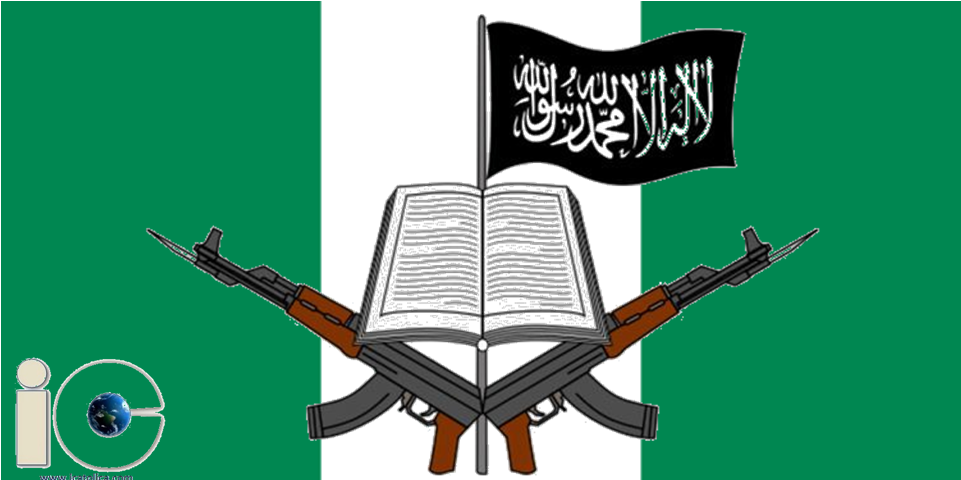
BOKO HARAM

Since the Sharia was implanted in 1999, as consolidation of the Moslem power, in 12 northern States of the federal Nigeria, the dead men in the ethnical religious fights that struck, were more than 15 thousand persons. Only in March, 2010, the (Moslem) ranchers of the fulani etnia realized diverse assaults against the Christian farmers, who caused approximately 500 dead men. In eve of the Christmas of 2010, one new radical violent Islamic fundamentalist group, autocalled Jama atu Ahlu «SUNNA» Lidda Awati Wal «YIHAD» realized a simultaneous multiple assault in a Christian neighborhood of Jos’s city. They did explosion 9 or 10 devices in his streets and the market, looking for the persons’ major concentrations, causing near 90 dead and 190 injured Christians.

In Pakistan, the local groups of Tehkrit-e-Taliban Pakistan and related, attack the Christian churches and the faithfuls whom they can accuse of some verbal slip or of an improper conduct. Those are established at the west of the Indus, from Quetta, in the Pakistani Baluchistan, up to the north of the valley of the Swat. They connect with the independence Muslims of the Indian Kashmir, which assumed the terrorist assaults in Bombay. In Egypt, the Coptic Christians are usually squeezed by the republican oligarch regime. And now after the military revolution of Marschal Abdel Fattah al-Sissi against the Moslem Brothers, their social situation is lastly more deteriorated. This way, for example, it is denies to them the right to substitute or repair his worship places. This has provoked some Christian local revolts.
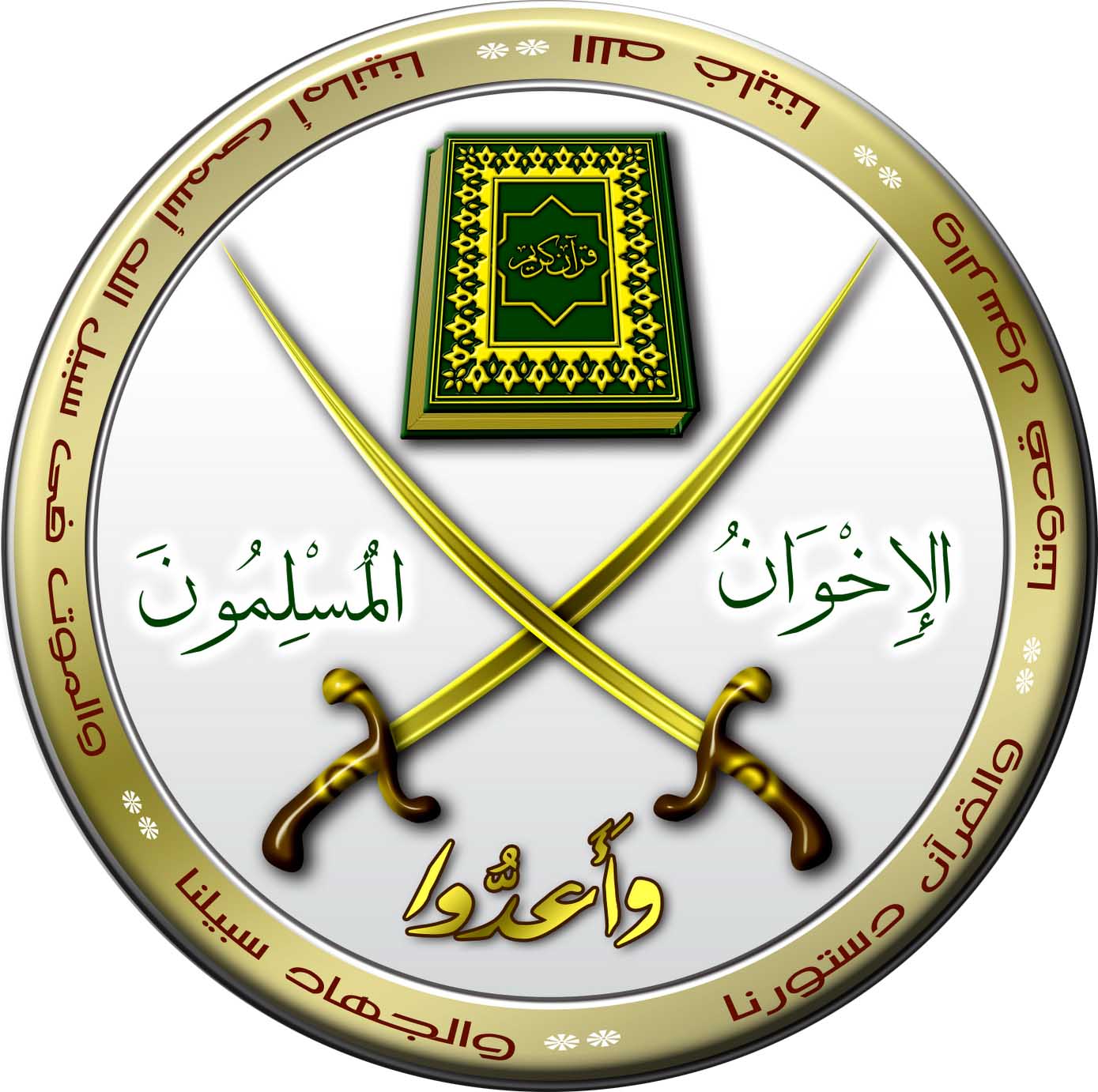
MOSLEM BROTHERS’ COAT OF ARMS

Everything with the consent of the omnipresent and theoretically illegal Moslem Brothers. This is one of the veteran organizations in the Arabic expansion of the politicallly active violent Islamism. Whose principal original ideologists ended hung by the Egyptian authorities of the epoch. In the Upper Egypt numerous Coptic churches can be visited. The Christians came to Egypt several centuries before the appearance of the Islam. Their churches are frecuently being surrounded with palisades or with protective fences. But a church is a place of popular reception and encounter.

And, finally, let’s speak about the sealed off and infected case of the Sudan. Where the northern Arabs want to impose the Islam by the force over the black tribes of the west (Darfur) and of the south. These are of Christian or animistic religions (natives primitive, in constant setback). This religious and ideological oppression is anchored in the secular mentality of slave-trading of the Arabs at the north of Khartoum. That already had from before the times of the Khedive or «viceroy» in Cairo of the Sublime Door. The succesor and nominal owner of the Arabic Caliphate. This was complicated and established in the last decades, with the fight for the rich oilfields and miners deposits of the south and the west of Sudan.

These natural resources, exploited in collaboration with the Chinese (certainly, the new Economic imperialists of the developing countries), would guarantee the viability of a of the free and independent South Sudan. That was initially stimulated and directed by the Popular Movement for the Liberation of the Sudan. Whose military wing (and more known by the public) is his Sudan People Liberation Army. The movement was born in 1983 as popular, religious and of classes reaction to Yafar al-Numeri’s attempt of imposing «manu militari» the Sharia and the Islamization (a “legal”, but illegitimate and reactionary religiousness), in the south of the country.

As in all the civil, concealed and irregular wars, the figures of the «volunteers» appear here, next to the government. As usual, having scanty military orthodox formation and an enormous zeal. On having been newcomers or upstarts, to demonstrate his loyalty and his usefulness to the governmental owner. The nomadic Arabs of Darfur and the frontier Chad form the Janjaweed militias, of light irregular cavalry. Khartoum franchises them in order that they terrify, disperse and decimate the settlers of Darfur. In the bordering lands with Kenya, the Muslims use a combination of Arabic militias (of the etnia misseriya) and renegade (or converted, as look) blacks. To terrify, scourge and displace the black settlers from their lands. In some cases, these «patriots» are supported by the regular aviation and the artillery of Khartoum.

Finally, let’s indicate that a Great Perpetrator of these violations, the president of the North Sudan Omar Hassan Ahmed al-Bashir, of 70 years, is processed as person in charge of these violations, for “genocide and war crimes” by the Penal International Court of The Hague. Nevertheless, this pajarraco defies the international arrest warrant against him. And since its emission he have went to Egypt, Qatar, Lybia, Saudi Arabia, Eritrea (50 Moslem %), Chad, all countries of Islamic religion.

THE GREAT PERPETRATOR…

Finally, to remember that we have already published numerous articles about the wars that devastate the geopolitical zone of the Asia of the Southwest and the fraticide fights between sunnis (93 % of Muslims) and shiies (7 % of Muslims) in her, looking for the prevalence in the Islam. We suggest to our nice readers, who should wish know with more actuality and extension the rage means committed against the Christians and other minorities by the salafist islamists, to reread these articles.

The juridical religious Pursuit of the Christians in the Islamic Countries.

In major or minor intensity and inflexibility, according to the cases, the sharia establishes nowadays against the Christians:

Death sentence against the blasphemers (to offend, according to his criterion, Allah, the Islam, the Khoran, the Prophet) and to the converted from the Islam (for his apostasy).

Burning and demolition of the temples and closing of Christian schools, hospitals and orphanages.

Prohibition of entry to the country, expulsion and inclusive death sentence to the Christian missionaries.

Prison for carrying Christian symbols. Prohibition of meeting to pray or to celebrate the Holy Mass, even in the homes.

Compulsory conversion to the Islam.

Nigeria, Sudan, Pakistan, Afghanistan, Qatar, Bahrain, Kuwai, Malaysia, Indonesia, Syria, apart from Saudi Arabia and Iran, are the countries where the sharia is more or less established.

In these countries, the not Moslem communities in general pay taxes, for not being harassed by the Muslims and living in peace under his protection. These taxes are the “administrative link” between the «protected» unfaithful persons and dar al- Islam.

But, any «doctor» of the Islam can teach that a collective duty of the Umma or believers’ community is the spread of the faith. That is realized imposing and not catechizing her (or «preaching the catechism» or text of the doctrine). Carrying out with it the consolidation and the extension of dar-al-Islam, the lands submitted to the Koran, the sunna and the sharia or civil and penal laws based on them.

Consequently, in agreement with his doctrine, when expires an «agreement of protection», the Moslem authority only can accept that it is renewed, if the amount of the taxes is increased or if in the new contract is stipulated the transfer to the Islam of more lands or cities, additional to the before yielded by the dimmíes (the Jews and Christians, the peoples also mentioned in the Koran and that hold part of Allah’s revelation). Also they use the legal principle that if some member of the «protected» community damages a Muslim, all his collectivity loses the “protection right”.

How do Moslem Authorities react to these local Violations?

Well, they look to other side. As if the Christians did not have acquired rights, according to his religion. As if in Europe we were pursuiting and condemning death, to the jail and to the confiscation of goods, to the millions of Muslims who live and prosper here, taking refuge in the kindness of the State of the well-being. The majority of the Muslims takes distance from the aggressions for opportunism, to protect the Islam, worried by the increasing rejection that it suffers in West.

His spokesmen affirm that the Islam is peace and tolerance. But this is not totally true. Not with the attempts of the jihadists that we suffer in name of the Islam, not with the extensive pursuit, in many countries, which the Christians suffer. This contrasts with his attitude of directed, noisy and bad-tempered protest, always threatening, when, for example, a few Mohammed’s cartoons, publish in territories outside the Sharia, in another physical and cultural continent. That, according to their strict and inappealable criterion, are offensive for themselves, acting as judge and part. And it turns out that, out of his countries, the Sharia lacks legal or religious jurisdiction. It is not any more than wet paper. Another thing is that they “accept” this. And say so to the persons that understand very little about the Islam.

YOU WILL BE A SON FOR HIM (ALI JAMENEI) AND HE WILL BE A FATHER FOR YOU (GENERAL QASSEM SULEIMANI, IRAN’S REVOLUTIONARY GUARD

The radical contemporary Islamics (Moslem Brothers, al-Qaeda and his regional exemptions, the Taliban cis and trans over the Durand frontier line between Afghanistan and Pakistan, the Islamic Republic of Iran and his henchmen fellow soldiers of Hamas and Hezbollah, the Islamic State of Iraq and Levant, Boco Haram, the al-Shabad militias, etc.) see in the Western Civilization, the worst enemy of their ideas and plans.

Because our civilization is founded on the reason, the scientific and philosophical knowledge, the freedom, the rights and the Christan faiths. Because by these clear advantages, we can conquer his despotism and his radicality; the discrimination of the women for mundane very old reasons, in which the religion and the protection of them are the theoretical excuse; the rejection of the scientific assumptions of progress and culture, on having had retired as Islamic orthodox method of study, the ichtihad or analogical common sense reasoning, from the 11th century.

Finally, in the Christianity, the believer perceives his God as a Father and a nearby, just and rewarder Saviour, with the arms receiving in Mercy. However the Newests are not preached very much nowadays, to not alarm the «trendies». In the Islam, God is separated from the man by a natural insurmountable abyss and is just and rewarder with him. But it is more feared by his justice and separation, that considered as intimate and nutritious Father.

And, how reacts the many-colored European trendy ectoplasm?

This one is generally of central control «ideology» (because they want to direct us, up to the minimal social and personal details, as if we were immature), despotic (because his postulates are not debatable by others), imperious (because his method is the imposition, not the conviction) and, today, shamefully socialist. It is shamefully socialist, because his “dream of sofa, coffee and scholarship or prebend” was to recreate a “paradise of the proletariat». That would have more or less «oasis and houris», according to his cases, in his lands. Though none went to live in the USSR or another socialist countries, to be employed at them, already at the time.

And this dream turned into nightmare, of difficult, agonizing and hasty awakening, with the fall of the Socialist States through all the Eastern Europe. And the discovery by all the rest, that to the «new social man» of these countries, the «cause of the proletariat» nothing, nothing motivated him. The technological armament career that imposed the USA in the decade of the 80, absorbed the best resources of the USSR. And it shrivelled up her to the entrails. Following a national strategy of wear, without direct threats, or melodramatic maneuvers. Some “not principal” members of the «nomenklatura» later admitted that «we did not have anything to eat» then. And the Red Empire, empty of contents, messages and illusions, social and economically implosioned. And the Soviet Army formerly feared by the Western Europe (the classic NATO), remained turned for many years into a «paper tiger».

So, the proper thing of the «trendies» (or peoples of ideas with few theoretical or ethical conditions) it is also here to kept silent before the violations to the Christians, away the sure borders of the great Europe, from the Atlantic Ocean to the Urals. It also takes place here a social paradoxical, but not unusual phenomenon: the islamist feverish militants and the decadent «trendies», though placed in two social antagonistic and irreconcilable ends, have the same operational intention:

The destruction of the European society, as it is still built-up, on the foundations of the Classic and Christian virtues. And his substitution by an amorphous society, without coherent, protective and stimulant virtues, satisfied, mangery and worker. Where the immediate material desires, which before we were calling «caprices», for its inconstancy and superfluousness, are looked for as small indispensable goals. Because they are the consoling of the lives lacking vital transcendency and substance.

THE MANEUVER WARFARE. THE CONCEPT OF THE MODERN AIRLAND BATTLE.

AN INTERPRETATION BY FIELDMARSCHAL ERICH VON MANSTEIN.


A little known example illustrates the omnipresent transcendence of logistics and the line of communication (more or less branched out) in operations and their final results. Between January 29 and mid-March 1943, the Soviets developed an operation called Donbass at the southwest of the Donetz. This operation forms part of what the Germans called the battle of the Donetz. And was Marschal von Manstein’s last strategic success. Which wasted by Hitler in Kursk.


General Nikolai Fiodorovich Vatutin, commander of the Southwest Front, created a mobile corp (under the command of general Markian Mijailovich Popov) in the Soviet Front, to exploit the break its armies had achieved at the south-east of Kharkov. The Corp was like an Army of tanks (the Soviets had five Armies of tanks in their battle order). It was integrated by 4 tanks Corps of limited capacity (3rd, 10th, 18th and 4th of the Guard), each of which was reinforced by an infantry mobile division (in trucks). For support it had the mobile Front reserve, the tanks Corps (full up) 25th and 1st of the Guard. These reserves would, at the beginning of February, pursue a exploitation direction different from that of the Popov Group. Assimilating those tactical subordination divisions into the mechanized Corps, thus making them stronger in men and heavy equipment, was hoped to compensate for the specific lack of infantry and artillery of the Soviet tanks Corps.

GENERAL VATUTIN.

Popov Group initially crossed the Donetz from a southwest direction. Its 4th Guard tanks Corp reached Krasnoarmeiskaia on the morning of February 12, after a night march of 60 kilometers from Kramatorsk. During this march, the Corp used one of its tanks brigades, the 14ª of the Guard, as anadvanced detachment”, to eliminate the tactical rubbing” in its advance sector and thus maximize its speed of advance.

GENERAL POPOV.

On February 15, General Vatutin employed his two reserve Corps in the Pavlograd-Zaporozhe direction, towards the mouth of the river Dnepr on the Black Sea. Zaporozhe was the Headquarters for the Don German Group of Armies (this Group had been called South until February 1, 1943) and the 4th Air Fleet (led by Marshal Von Manstein and General Von Richtofen, respectively) which were located in the low Dnepr.

The efforts of the Russians were aimed at trying to reach the coast and to cut the Germansland communications. But the Russians also stubbornly insisted on boasting. Their supporting forces (the rest of the Armies of the southwest Front, especially the 6th infantry and 1st infantry of the Guard) were not defending the advance sectors of their mobile forces. And these forces, advancing as fast as they could toward their ideal operational-strategic aim, stretched their communications lines to the maximum. And made them increasingly vulnerable by extending its length and, thus, the coverage required by antitank and anti-aircraft weapons supported with infantry.

The Soviets acted as if the speed of reaching the objective could, by itself, unhinge the German deployment, by cutting it off from its general Order of Battle and lines of communications towards the West. In reality, they were not given full credit to their enemys maneuver capacity, his ability to create and improvise resources and his still relatively powerful combat capacities, especially among his mobile and crack forces, in the operational zone.

THE SUPREME SOVIET COMMANDER.

Yet much of the pressure for a rapid advance came from Stalin. Probably through the Stavka, Stalin incited Vatutin to spur on Popov and the other mobile corps. Ultimately, this led to Stalins disenchantment (to the point of leading him to request a peace through Swedish diplomats) when the planned operations concluded. See Gerhard L. Weinburg. A World at Arms. Cambridge, 1944.

For their part, the Germans had difficulties in containing the Soviets winter offensive concentrated at the south of Belgorod. In the operational strategic zone of the Don Group of Armies, the Soviet forces overcame the Germans at a proportion of 8 to 1, whereas, in the case of the German Center and North Groups of Armies, that ratio was only 4 to 1.

Von Manstein maintained a front that was 750 kilometers long with 30 divisions. This left him vulnerable to envelopment on the north flank, in a maneuver that could reverse his front or turn his forces back in his operational or strategic rear. Or his forces could be broken through by a forceful action in any zone and he would be left without sufficient available mobile forces to launch an operational strategic counterattack. It was necessary to readjust the front, anchoring it on natural obstacles; and to push back the Soviet offensives toward Kiev (north flank) and the Black Sea or the Azov Sea, creating for it the necessary mobile reserves. Hitler, probably affected by the fall of 6th Army at the end of January in Stalingrad, compromised with Manstein’s requests to yield land in order to gain safety and mobility.

IN THE COVER OF «TIME» NEWSMAGAZINE…

Thus, during the first fortnight of February, the Hollidt Army moved back from the low Donetz, following the Rostov and Tangarov route and dug in again along the river Mius, approximately 80 kilometers to the west of Rostov. The 48 panzer Corps that were in action at the east of Rostov, moved to the north of Stalino, to join the 4th panzer Army of General Hoth and to form part of the mobile counterattack force.

In the middle of February, despite Hitler’s orders to resist at any price, the SS Army Kempf (formerly Lanz) evacuated Kharkov, when its north flank was enveloped by the Soviets from the direction of Belgorod. Meanwhile, the 4th panzer Army was moving back from the low Don toward positions to Stalino’s northwest. This was a difficult march of more than fifteen days over poor road conditions and railroad connections and lines. For its part, the 1st panzer Army, formerly part of the A Group of Armies in the Caucasus, could have moved back through Rostov, thanks 4th panzer Army hold on the front in the low Donetz area. And was taking positions in a front from north-east of Stalino up to the north of the Mius river.

THE GERMAN FIELDMARSCHAL’S COMMAND BATON.

With these maneuvers the Germans left the projecting in their front formed by the Don and Donetz rivers, readjusted their defensive front and managed to create an important operational maneuver force, formed by all three mentioned armies. It is important to emphasize that the Germans were not reacting to the Russians; they were adapting to the general conditions and the forces relations existing, with the expectation that they would act positively when the opportunity arose. This is probably the secret behind their operational blow (like a scythe blow) and the operational and strategicstunning waves” that they were to unleash on the Soviet Armies, which reached the enemys Supreme Commander.

On February 22, the two armored Corps (48 at the right side and the SS panzer at the left side) of the 4th panzer Army of Hoth initiated an offensive movement in the northwest direction on the communications lines of Popov Group and both independent Soviet tanks Corps of the southwest Front.

The terrain was highly favorable for using armored vehicles. Its surface was slightly wavy, allowing for extensive sight control. The narrow creeks that interlaced it were frozen.

Simultaneously there was a convergent attack by the SS Army Kempf from the west, completing the operation of the other five panzer divisions (reduced). This Army also had to prevent the advance on the Dnepr of forces from other Soviet Fronts, either around Krasnograd and Dnepropetrovsk or around Poltava and Kremenchug. This soviet attack, that was aimed at Kiev, was of a larger scope and, therefore, had scantier prospects for success before the spring thaw. The army SS Kempf had limited capacity to reject it.

It is worth emphasizing that, at the time, the 4th Air Fleet of General Richtofen enjoyed air supremacy over the operations zone and his aircraft could support the objective of cutting the enemys communications with up to 1,000 daily sorties.

THE FÜHRER ADOLF VISITS HIM IN ZAPOROZHE, TO CALM DOWN.

The Russian armored vehicles and truck columns were moving back toward the north and north-east at a distance of between 15 and 20 kilometers from the Germans, making them prey to the German divisional and army Corps artillery and aviation.

It was not a question of thesurrounded bag”-style operations that the Germans had carried out in 1941. The area being covered was larger, the German combat capacity (mainly based on infantry forces with artillery and antitank weapons) was scanty and the Soviet forces were elite mobile units with great fire and shock capacities. And knew the danger presented by the loss of its logistical support, at least their commands.

On February 23 both armored army Corps (the SS and 48th) of the 4th panzer Army were converging on Pavlograd. They cut the communications line of the Popov group, which was situated around Grishino, and of the 25th and 1st of the Guard tanks Corps (the mobile reserve of the Southwest Front) which were already approaching Zaporozhe, although not yet in full force. Likewise, the Germans severely struck the 6th infantry Army (at the west of Isyum), following the Front’s mobile reserve, and the 1st infantry Guard Army, which was behind the Popov group, before they cross the Donetz, moving back to their rearguard.

This temporarily liquidated the combat capacity of the Southwest front (General Vatutin). Unless that front focused on reorganizing and re-equipping itself and covering its casualties. And also tried to revive its combat morale by encouraging cohesion and retraining its units and small units.

(TO BE CONTINUED)


LA GUERRA DE MANIOBRAS. EL CONCEPTO DE LA BATALLA AÉREO TERRESTRE MODERNA.

UNA INTERPRETACIÓN DEL MARISCAL ERICH VON MANSTEIN.


Un ejemplo poco conocido de la trascendencia omnipresente de la logística y de su línea de comunicación (más o menos ramificada) en las operaciones y muy importante por sus resultados finales, es la operación denominada DONBASS (la gran zona operativa) por los soviéticos, desarrollada entre el 29 de enero y mediados de marzo de 1943, al sudoeste del río Donetz. Ella forma parte de lo que los alemanes llamaron la batalla del DONETZ: el último éxito estratégico de Von Manstein, que fue malogrado por Hitler en Kursk.

El general Vatutin, jefe del frente del sudoeste, creó un cuerpo móvil a nivel de frente soviético (el grupo quedaba a las órdenes del general Markian Popov) para la explotación de la ruptura conseguida por los soviéticos al sudeste de Kharkov. En medios era como un ejército de tanques (los soviéticos tenían entonces cinco ejércitos de tanques en el orden de batalla de sus fuerzas terrestres). Lo integraban 4 cuerpos de tanques de capacidad reducida (el 3º, el 10º, el 18º y el 4º de la Guardia), cada uno reforzado por una división motorizada (sobre camiones) de infantes. En su apoyo estaba la reserva móvil del frente, los cuerpos de tanques (al completo) 25º y 1º de la Guardia. Reserva que luego seguiría a primeros de febrero una dirección de explotación diferente a la del grupo Popov. Aquellas subordinaciones tácticas pretendían compensar la falta de infantería y de artillería específica de los cuerpos de tanques, intentando asimilarlos a los cuerpos mecanizados, mucho más fuertes en hombres y equipo pesado y que resistían mucho mejor los contraataques alemanes.

GENERAL NIKOLAI VATUTIN.

El grupo Popov cruzó inicialmente el Donetz en dirección sudoeste. Su 4º Cuerpo de tanques de la Guardia alcanzó en la mañana del 12 de febrero la localidad de Krasnoarmeiskaia, tras una marcha nocturna de 60 Km. desde Kramatorsk. En esta marcha, el cuerpo utilizó a una de sus brigadas de tanques, la 14ª de la Guardia, como destacamento avanzado, para eliminar el rozamiento táctico en su sector de avance. Y así poder avanzar el 4º Cuerpo a la máxima velocidad operativa.

GENERAL MARKIAN MIKHAYLOVICH POPOV.

El 15 de febrero el general Vatutin empeñó sus dos cuerpos de reserva en la dirección Pavlograd-Zaporozhe, hacia la desembocadura del río Dnieper en el Mar Negro. Zaporozhe era el cuartel general del Grupo de Ejércitos Don (antes Sur, hasta primeros de febrero de 1943) y de la 4ª Flota Aérea alemanes (mariscal Manstein y general von Richtofen, respectivamente) y se localizaba en el bajo Dnieper.

Con todos estos esfuerzos los rusos buscaban, alcanzando la costa, cortar las comunicaciones terrestres de todo el Grupo de Ejércitos alemán citado.

Pero realmente estaban faroleando torpemente. Sus fuerzas de apoyo (el resto de los ejércitos del Frente del Sudoeste, especialmente el 6º de infantería y el 1º de infantería de la Guardia) no defendían los sectores de avance de sus fuerzas móviles. Y éstas avanzaban todo lo que podían hacia su soñado objetivo operativo-estratégico. Estirando así sus líneas de comunicaciones al máximo. Y volviéndolas más y más vulnerables por su longitud y su desprotección, especialmente antitanque y antiaérea, a un contraataque alemán.

Los soviéticos actuaban como si la velocidad de recorrido y el punto alcanzado, sin más, pudiesen “per se” desencajar el despliegue del Grupo de Ejércitos Don, cercenándolo del orden de batalla de la Wehrmacht y de sus líneas de comunicaciones hacia el oeste. Realmente menospreciaban temerariamente a su enemigo, con sus recursos de capacidad de maniobra, de creación y de improvisación y sus aún relativamente poderosas capacidades de combate, especialmente móviles y veteranas, en la zona operativa teóricamente amenazada.

EL COMANDANTE SUPREMO.

Y el mismo Stalin creía esto. Y probablemente, a través de la Stavka (Estado Mayor General soviético), era quien incitaba a Vatutin a espolear a Popov y a los otros cuerpos móviles independientes. Y de ahí su desencanto, hasta el punto de llevarle a solicitar una paz, que aún era interesante para ambos contendientes, a través de diplomáticos suecos, cuando surgió el desenlace de las operaciones planteadas por ambos rivales. Véase Gerhard L. Weinburg. A World al Arms. Cambridge, 1944.

Los alemanes por su parte pasaban serios apuros para contener la ofensiva de invierno soviética, concentrada al sur de Belgorod. En la zona estratégico-operativa del Grupo de Ejércitos Don las fuerzas soviéticas superaban a las alemanas en la proporción de 8 a 1, mientras que en caso de los Grupos de Ejército alemanes Centro y Norte dicha relación bajaba a 4 y 1.

Von Manstein mantenía un frente de 750 Km con 30 divisiones. Esto hacía que pudiese ser envuelto por el flanco norte, en una maniobra de frentes invertidos contra su retaguardia operativa o estratégica. O roto por una acción contundente en cualquier zona, sin que existiesen suficientes fuerzas móviles disponibles en esos momentos para un contraataque estratégico-operativo. Era necesario reajustar el frente, apoyándose en obstáculos naturales, y rechazar las ofensivas soviéticas en dirección a Kiev (en su flanco norte) y en dirección al Mar Negro o al de Azov, creando para ello las reservas móviles necesarias. Hitler, probablemente afectado por la caída a fines de enero del 6º ejército en Stalingrado, transigió en contra de su costumbre e ideas, con las solicitudes de Manstein de ceder terreno para ganar seguridad y movilidad.

EN LA PORTADA DE LA REVISTA ESTADOUNIDENSE «TIMES».

Así, en la primera quincena de febrero el ejército Hollidt retrocedió combatiendo del bajo Donetz, siguiendo la ruta Rostov y Tangarov y se hizo fuerte a lo largo del río Mius, a unos 80 Kms al oeste de Rostov. El 48 Cuerpo de Ejército panzer, que actuaba al este de Rostov, se trasladó al norte de Stalino para integrarse en el 4º Ejército panzer del general Hoth, como parte de la fuerza móvil de contraataque.

A mediados de febrero, a pesar de las órdenes de resistir a toda costa de Hitler, el ejército SS Kempf (antes Lanz) evacuó Kharkov, cuando su flanco norte era envuelto por los soviéticos desde la dirección Belgorod. Mientras, el 4º Ejército panzer retrocedía desde el bajo Don hacia posiciones al noroeste de Stalino, en una difícil marcha de más de quince días, considerando el estado de las carreteras y vías férreas disponibles. Por su parte, el 1er. Ejército panzer, antes parte del Grupo de Ejércitos A, que había podido retroceder vía Rostov desde el Cáucaso, gracias al sostenimiento del frente en el bajo Donetz, tomaba posiciones en un frente que discurría desde el noreste de Stalino hasta el norte del río Mius.

EL BASTÓN DE MANDO DE MARISCAL DE CAMPO DEL III RIECH.

Con estas maniobras los alemanes abandonaban el saliente en su frente formado por los ríos Don y Donetz, reajustando su frente defensivo y logrando crear una importante fuerza de maniobra operativa, formada por los tres Ejércitos citados. Es extraordinariamente importante destacar que los alemanes no “reaccionaban” ante los rusos, sino que estaban adaptándose a las condiciones generales y correlaciones de fuerzas de la situación. Y esperando actuar positivamente, cuando surgiera su oportunidad. Éste es quizás el secreto que subyace en su golpe operativo y en las ondas de conmoción operativas y estratégicas que van a desencadenar sobre los Ejércitos soviéticos y que alcanzarán al propio Comandante Supremo enemigo.

El 22 de febrero los dos Cuerpos de Ejército blindados (el 48º, a la derecha y el panzer de las SS, a la izquierda) del 4º Ejército panzer de Hoth, iniciaron un movimiento ofensivo en dirección noroeste, contra las líneas de comunicaciones del grupo Popov y de los dos cuerpos de tanques soviéticos independientes del Frente del Sudoeste del general Vatutin. El terreno era muy favorable para el empleo de blindados. Poseía un buen firme, era ligeramente ondulado y permitía un extenso dominio de la vista. Los estrechos arroyos que lo entrecruzaban estaban aún helados.

Simultáneamente atacó convergentemente una parte del Ejército SS Kempf desde el oeste, completando la operación de las otras cinco divisiones panzer (reducidas). Dicho Ejército debía también impedir el avance sobre el Dnieper de fuerzas de otros frentes soviéticos, bien en dirección a Krasnograd y Dnepropetrovsk o bien en dirección a Poltava y Kremenchug. Este posible ataque soviético, con objetivo en Kiev, era de mucho más alcance y, por tanto, de escasas posibilidades de éxito antes del deshielo de primavera. El Ejército SS Kempf tenía una capacidad limitada de rechazo para oponérsele.

Es de destacar que la 4ª flota aérea del general Richtofen gozaba de supremacía aérea en esos momentos sobre la zona de operaciones y que sus aparatos pudieron apoyar la operación de corte de comunicaciones enemigas con hasta 1000 salidas diarias.

EL FÜHRER ADOLFO LE VISITA EN ZAPOROZHE, PARA CALMARSE…

Las columnas rusas de blindados y de camiones retirándose hacia el norte y el nordeste eran visibles a distancias entre 15 y 20 Km. de los alemanes, siendo presas de las artillerías divisionarias y de cuerpos de ejército y de la aviación alemanas.

No se trataba ya de un embolsamiento del estilo al que los alemanes habían realizado en 1941. El terreno a cubrir era mucho mayor, la capacidad de combate alemana (en su mayoría eran fuerzas de infantería apoyadas por artillería y antitanques) era escasísima y las fuerzas soviéticas eran unidades móviles de élite, con gran capacidad de fuego y de choque, que conocían el peligro de la pérdida de su apoyo logístico, al menos los jefes de las unidades operativas.

El 23 de febrero los 2 Cuerpos de Ejército acorazados (el SS y el 48º) del 4º Ejército panzer convergían en Pavlograd. Cortaban así las comunicaciones del grupo Popov, que se hallaba en torno a Grishino, y de los cuerpos de tanques 25 y 1 de la guardia (la reserva móvil del frente del suroeste), que se acercaba ya a Zaporozhe, aunque aún no en suficiente fuerza. Asimismo, golpeaban severamente al 6º Ejército de infantería (al oeste de Isyum), tras la reserva móvil citada, y al 1º de infantería de la Guardia, tras el grupo Popov, antes de que pudiesen cruzar el Donetz, retrocediendo hacia su retaguardia

Con ello la capacidad de combate del Frente del Sudoeste (general Vatutin) quedaba temporalmente liquidada, hasta que fuese reorganizado, reequipado y cubiertas las bajas. Y se rehabilitase su moral de combate mediante las medidas de cohesión y reentrenamiento de unidades y pequeñas unidades.

(CONTINUARÁ)

THE COMBAT OF THE SMALL MILITARY UNITS.

Introduction.

Each small military unit, each «action unit» is a sub unit that is capable of carrying out a function in the superior unit to which it belongs or gets support. From its tactical integration will arise bigger units of action, capable of actuating in larger » fields of action».

The units of action can be of command, combat (of fire, of shock and mixed), organizational (H. Q. sections), logistics, communications and of intelligence (exploration, intelligence and counterintelligence and propaganda and psychological war). The smallest of combat would be the squad with its fire support (light machine gun and servants) and its 2 or 3 teams, capable of maneuvering or defending a firing line.

It keeps them united and makes possible the fulfillment of its functions, its interest (esteem, self esteem and shared aim of the unit, opposite to the wear and the certain or apparent danger, but assumed as such), the full deployment (that provides an organizational structure and that feeds its functions, to guarantee the union and the action), the command (that offers guide, cohesion, example and correct command sense) and the situation (that is friendly, neutral or threatening, in increasing order of dilution of the union and loss of the efficiency). These originate in turn the deployments and the combats and the maneuvers, which are the «form» decided by the command to apply the capacity of combat and a “tempo”, pace or speed of action, thanks to the freedom of action that is possessed; those offer, together with the evolution of the situation, the opportunities and the dangers.

FIRE SUPPORT BASE WITH 105 MM. HOWTIZERS.

It appreciates a rich multiplicity of interactions between the subunits, on the basis of its functions and the dependence between them, in relation with its integration in the unit, the maintenance of its cohesion and the fulfillment of its superior function.

The deployments make possible the success or the failure; they also guarantees the order against the environment chaos or negative interactions, always unpredictable and unproductive; the situation gives intrinsically to the unit the courage or the cowardice; the command and the interest drive the positive or effective action of the unit, in order to its cohesion and its function or aim in the all set.

The Combined Arms Performance Process. The Control Means.

The units of action face the enemy using a combined arms system. They go to the enemy keeping a direction (maneuver and shock) and with a fire support. And though it could be a unit as small as the squad, with its shooters or fusiliers and of support teams, are specializing subunits in the combined arms concept. Sometimes the van men must do something strange to the Americans, but very effective advancing to the contact or passing the flank an enemy group or position, crawling.

REACTIVE ARTILLERY IN ACTION.

They try to reach the effective combat distance, creating a favorable interface, a shooting enfilade or a position for grazing fire or an effective assault distance, without losing its combat capacity. For example, by fixation by the enemy fire, by important losses or what affects its cohesion or the command, and by wear). And protected by the natural concealment or artificial one (fogs, covering fire). They work quietly and unseen in the micro ground without limitation of time up to the effective distance. They can use hand grenades to disguise their action on intermediate obstacles (sentries, etc.), that appears as mortar bombs.

The supposed continuous line of the front is crumbled. There arise a multitude of unexpected new internal fronts, possible favorable “interfaces of action” for us. It is not an infiltration, because the front is diffuse (approximately 0,15 man/m) and emptiness (some 4.000 m2/man). But of the active creation of «action fields» adapted in successive stages of action, for the employment of the unit in favorable interfaces over the enemy. The characteristics of performance are the coordination and/or the convergent effort of the different weapons in «fields of action» where they act. That are different and can be superpose, as they are shooters, light and middle mortars, machine guns, grenade-launchers, direct fire cannons, etc. From our appearance in effective force, where less they wish us and without having being detected, the erroneously expressive concept that «we» «infiltrate arises. But that is a mere spatial consequence of the real operational concept followed.

Technologically a division of significance exists between the support or the firing base and the attack or the offensive advance, linked by its cooperation. The support weapons are the protectors, those of greater effective range. The offensive weapons are those of smaller relative range in the set. Sequential and practically, thus, the cannon (direct or indirect heavy fire) protects the machine gun, the grenade launcher, the medium or light mortar. And these three protect and impel the shooters, when their action is or is already going to be evident.

Evolution of the Actions in his Sector. The Retroinformation of the Commands.

As consequence of the interfaces of action with the enemy, there arise in the tactical zone multiple actions of the action units. With them, the information feedback to the command, tends to enlarge to saturation, to bunch in all kinds of communications links and to affect the functional interrelationships of the unit. So, hindering its synergy, and demanding the reinforcement and/or the decision of the command, if he has not delegated sufficiently or is not monitoring the situation changes.

LAV’s ATTACKED WITHOUT INFANTRY AND ARTILLERY SUPPORT, THROUGH A VERY NARROW LANE, A BRIDGE…

This «undue plethora» is a structural generator of rubbing, a squandering of efforts and means. And it is the measurement of the trend to the loss of the cohesion, of the principal sense and the goal, which suffers a tactical combined arms unit.

The key to manage this «undue plethora», containing it reasonably, resides that everyone must observe, control and drive the necessary for the fulfillment of its mission, below its level in the hierarchy. For it the commander must share his intention and aims (mission type orders), establish a gravity center of his combined effort in every situation and guarantee the cooperation between and the support to his units. All this relying on the operations order and the updated intelligence received.

As parts of a complex system (hierarchy, specialization and aims and intentions), the units of action can be all autonomous (mission type orders, gravity center, different or shared operational sectors) and all specialized (engineers, antitank, anti-aircraft, exploration, chemistry, etc.) as is needed. To be able to fulfill, this way, with flexibility, rapidity and efficiency its functions in the interfaces of action with the enemy. It kept with all this, the structural hierarchy (integration in a major unit and its support) and functional (in the area of the intention and on support of this one).

The effective performance of the units of action resides in its aptitude to actuate flexible and semi independently from the section or platoon level in fulfilling the received mission. For it, they also will have to know and consider the capacities and needs of other weapon and supports. And acting the men looking for themselves and for other companions in the unit. Its officers and NCO must be capable of taking and drive decisions based on the mission and on the evolution of the situation.

Evidently, the desideratum is to work this way. And this one must be the trend to continue in the selection, formation, training and utilization of the men and the units. In the practice. the “degree of general efficiency” obtained, will be determined by the idiosyncrasy of a nation, the character more or less gregarious or independent of its peoples, its military doctrine and tradition, the defense budgets, the national moral, the national politics and the international situation, the integration of institutions and national organizations in the international sphere, etc.

An example attack of a combined arms unit.

Lets see an example. Against an infantry position more or less prepared, with advanced antitank means, a typical defensive zone, we can use in the breakthrough or in its destruction, if we can not pass outflanking it, the dismounted infantry followed in covered bounds by tanks for the protection and the direct fire support of it.

The antitank defender will look for a punctual, relatively big and protected target, from covered positions preferably or, at least, well camouflaged and flanking, and will act in batteries. With the pieces dispersed in order that the same enemy heavy fire can not incapacitate them. The infantry heavy weapons (machine guns in tripods) neutralize, «sweeping and searching», a more or less narrow zone of the front, occupied by a dispersed, small and smooth target, an infantry platoon.

The attacking tanks will beat with H.E. and H.E.S.H. shells those infantry strong positions. And the infantry squads will attack with its light machine guns the servants of the antitank pieces, hindering to acquire a punctual target. All this destruction and neutralization labor is spreading, once achieved the irruption, as a worm movements, in the depth of the tactical zone of the assault sector of the combined arms unit. Other parts of the enemy position that could collaborate in the defense rejection are blocked up by smoke and neutralized by indirect heavy fire.

GOING OUT TO CLOSE FIGHTING.

Besides, the artillery and aviation advanced observers will be defining to these support weapon the new targets that the own assault is discovering in the depth and in the flanks (combat exploration) in the advance sector. The criterion of the gravity center of the fire of support will be neutralize, at least, all the targets that are opposed to the advance towards the enemy position, to the irruption and to the struggle inside the position of defense in the assigned sector. Facilitating this way the direct fire and the shock of the land attackers. And that, by means of concentrated and punctual blows of its fire.

With it, the effective action in the given environment, «interfaces of action» essential characteristic, are optimized at the level of the tactical groups of action or combined arms systems, whose complementariness we have stood out.

In broken, very wavy, wooded or urbanized (housings and factories) grounds, not necessarily mountainous, that have scanty “sight control” and with abundant “relative concealing heights”, the “interfaces of action” reduce its sector.

The element of effective action continues being the combined arms system suitable sized. The action is effected by companies or reinforced interarms platoons, with the heavy fire support provided even by the battalion (medium and heavy mortars). Except in the most flat areas and of scanty obstructions to sight, the transitability, which limits physically the possible interfaces of action, prevents the fight using concentrated means beyond the company. The battalion role will be of reinforcing the efforts of their companies and canalizing the supports.

Always are critical in the land action the existing rivers, streams and channels, especially the more or less ones perpendicular to the front. The blockade of these waters flows affects enormously the tempo, the total speed of the operation, for the difficulty of the more or less sloping or obstructed area that surrounds them (forests, gullies, constructions, not reinforced fords). The advance slows down or the means have to be dispersed in the available parallel routes, forcing to enter other difficult bordering areas.

General Plans and Forecasts of the Command.

The contingencies plan of the units must include overcoming essentially four types of situations not foreseen, that intervene in the fulfillment of the mission and that can manage to compromise it.

These would be:

a) Possible direct action of the enemy, in use of the initiative or claiming recover it. It might be an interdiction bombardment, a counterattack. The solution is to tactically neutralize its action, without compromising the mission.

b) Possible encounter with the enemy. It would be a theme of patrols and sentries, advanced security forces and advanced detachments and reconnaissance patrols. It is necessary to submit or push back them and change positions rapidly and even direction temporarily, to not compromise the mission.

c) Possible unforeseen obstacle. They would be a ditch, a slope of more difficult soil, the blowing-up of a bridge, a flood, a storm, which affect the transitability of the area. It would be a matter of overcoming it as rapidly as possible, keeping the security and extending more yet the reconnaissance.

d) Possible action defensive/passive of the enemy. These are the cases of enter an ambush, a minefield, a reinforced cut covered by fire, the rejection fires of a defense position, an antitank obstacle. Is necessary to overcome it as soon as possible, as the natural obstacle case, avoiding besides to be canalized by the enemy in a direction he wished, favorable to a counterattack or at zone beaten by the artillery or by convergent fires.

In general lines, including in the commander plan, must always be foreseen:

1) To overcome or to repel the enemy and/or the obstacle, which hinder and which will present without being able to be foreseen, avoiding facilitate own information to the enemy.

2) Lost or detached means to overcome, to neutralize or to repulse are means deprived to the fulfillment of the mission. The surviving enemy can facilitate compromising information, which will be late a term in to be an effective intelligence.

3) It is necessary to continue the execution of the mission, with the necessary means to fulfill it. It is a multiplier factor of the efficiency, after the commotion and the incident losses, to keep a high execution «momentum»: the product of its “combat capacity” by its average movement speed in a period, at a given direction and sense.

The example of the preparation and the action of 3er. American Army of the general Patton, counter-attacking the German penetration in the Ardennes, is significant of these difficulties. Its «incident» was a sudden change of mission and of direction and sense of performance and the possibilities of their «execution momentum».

All this is not improvised. It results in the practice only as fruit of the frequent training and the organization work and the coordination of the H.Q. and all the commands and me. We shall remember the sayings, «it is actuated as it is trained» and «the man is an habit animal».

The Elite Military Units.

These units receive a more complete and effective training in the modern times. That is applicable to a personnel that clearly enjoys the exercise of his profession. And not only it enlists to fulfill a civic duty, to collaborate with the companions (up to the level of battalion), though the immediate ones are those of the piece or squad, and to come back home. In general, they act rapidly and hard, even inconsiderately, against his aim.

Resultado de imagen de ranger de texas A TIPICAL TEXAS RANGER OF THE XIX CENTURY.

It is a question of a military closed «system», that it is vulnerable to the encircle and the ambush and whose limited means are only the assigned for the mission. So, it is difficult to receive reinforcements, including when they operate in the surroundings of the own “supporting mass” or great units. The intelligence for the mission must be elaborated from confirmed, constant, sufficient and updated informations. Since she will protect them from the surprises and the setbacks in destination, which are the «critical difficulty» that they can find and the major danger for all men.

His combat experience has advised them to never surrender the weapons and to always continue the effort, the fight. What has saved them from more than one failure, since the enemy was surrendering before they: for not paying the high cost of conquering them. They largely accept the discipline as a necessary quality for the cohesion and efficiency of his unit. Here, more that in other branches, the commands have to be authentic leaders, directing with the example. And of proven formation, in order that his men admit that his «life insurance» in the missions is the fulfillment of the orders of his commands and with the flexibility degree that grants the order for the mission.

EL COMBATE DE LAS PEQUEÑAS UNIDADES MILITARES.

Introducción.

Cada pequeña unidad militar, cada “unidad de acción” es una subunidad que es capaz de realizar una función en la unidad superior a la que pertenece o apoya. De su integración táctica con otras, surgirán unidades de acción mayores, capaces de actuar en “campos de acción” mayores y de importancia y trascendencia superiores.

Las unidades de acción pueden ser de mando, de combate (de fuego, de choque y mixtas), organizativas (secciones del EE. MM.), sustentadoras (logísticas), de comunicaciones y de inteligencia (de exploración, de inteligencia y de contrainteligencia y propaganda y guerra sicológica). Las más pequeñas de combate serían el apoyo de fuego de pelotón (ametralladora ligera y servidores) y las 2 o 3 escuadras de aquél, capaces de maniobrar o de mantener una línea de fuego, para ganar el tiroteo en el combate.

Las mantiene unidas y posibilita el cumplimiento de sus funciones, su interés (estima, autoestima y objetivo compartido de la unidad, frente al desgaste y al peligro cierto o aparente, pero asumido como tal), el dispositivo (que provee de una estructura organizativa y que alimenta sus funciones, para garantizar la unión y la acción), el mando (que brinda guía, cohesión, ejemplo y sentido) y la situación (que es acogedora, neutral o amenazante, en orden creciente de dilución de la unión y de pérdida de la eficacia). Éstas originan a su vez los despliegues y los combates y las maniobras, que son la “forma” decidida por el mando para aplicar la capacidad de combate y un tempo o velocidad de acción, gracias a la libertad de acción que se posee; aquéllos brindan, junto con la evolución de la situación, las oportunidades y los peligros.

BASE DE APOYO DE FUEGO CON OBUSES DE 105 MM.

Se aprecia una rica multiplicidad de interacciones entre las subunidades, en base a sus funciones y a la dependencia entre ellas, en relación con su integración en la unidad, el mantenimiento de la cohesión de ésta y el cumplimiento de su función superior.

Los despliegues posibilitan el éxito o e fracaso; el dispositivo garantiza el orden frente al caos del medio o a interacciones negativas, siempre impredecibles e improductivas; la situación da intrínsecamente a la unidad el valor o la cobardía; el mando y el interés impulsan la acción positiva o eficaz de la unidad, en orden a su cohesión y a su función u objetivo en el conjunto.

Proceso de la Actuación combinada. Medios de Control.

Las unidades de acción se enfrentan al enemigo empleando un sistema interarmas o de armas combinadas. Se dirigen al enemigo manteniendo una dirección (maniobra y choque) y con un apoyo de fuego. Y ello aunque se trate de una unidad tan pequeña como el pelotón, con sus escuadras de tiradores o fusileros y de apoyo, como subunidades especializadas en el concepto interarmas.

ARTILLERÍA REACTIVA.

Procuran alcanzar la distancia eficaz de combate, creando una interfase favorable, una enfilada de tiro o una posición de fuego rasante o una distancia de asalto, sin perder su capacidad de combate. Empleando, por ejemplo, la fijación del enemigo el fuego ametrallador, sus pérdidas importantes o que afecten a su cohesión o al mando, y por desgaste. Y protegidos por el ocultamiento natural (transitabilidad favorable) o artificial (nieblas, fuego neutralizador).

La supuesta línea continua del frente es desmenuzada. Surgen una multitud de inesperados nuevos frentes “internos”, posibles interfases de acción favorables para nosotros. No se trata de una infiltración, porque el frente moderno es difuso (unos 0,15 hombres/m.) y vacío (unos 4.000m2/hombre), sino de la creación activa de “campos de acción” adecuados en sucesivas etapas de acción, para el empleo de la unidad en interfases favorables sobre el enemigo. Las características de actuación son la coordinación y/o el esfuerzo convergente de las distintas armas en los “campos de acción” donde actúan. Que son diferentes y pueden estar superpuestos, según se trate de tiradores, morteros ligeros y medios, ametralladoras, lanzagranadas, cañones de tiro directo, etc. De nuestra aparición en fuerza eficaz, donde menos nos desean y sin haber sido detectados, surge el concepto erróneamente expresivo de que nos “infiltramos”. Que es realmente una mera consecuencia espacial del verdadero concepto operativo seguido.

Evolución de las Actuaciones en su Sector. La Retro información a los Mandos.

Como consecuencia de las interfases de acción con el enemigo, van surgiendo en la zona táctica las múltiples actuaciones de las unidades de acción. Con ellas se tiende a saturar la retroinformación debida al mando, a arracimarse en las vías de comunicación de todo tipo y a afectar las interrelaciones funcionales de la unidad. A estorbar, así, su sinergia, y a demandar el refuerzo y/o la decisión del jefe, si éste no ha delegado suficientemente o no se mantiene observando los cambios de la situación.

LOS LAV’s ATACARON SIN APOYO ALGUNO EN UN ESTRECHO SECTOR, UN PUENTE.

Esta “plétora indebida” informativa es estructuralmente una generadora de rozamiento, una dilapidadora de esfuerzos y medios y es la medida de la tendencia a la pérdida de la cohesión, del sentido principal y del objetivo, que sufre una unidad táctica interarmas.

La clave para gestionar esta “plétora indebida”, conteniéndola razonablemente, reside en que cada cual debe observar, controlar e impulsar lo necesario para el cumplimiento de su misión, por debajo de su nivel en la jerarquía. Para ello el jefe debe compartir su intención y objetivos (órdenes tipo misión), establecer un centro de gravedad de su esfuerzo combinado en cada situación y garantizar la cooperación y el apoyo a sus unidades. Todo ello contando con la orden de operaciones y con la inteligencia actualizada recibidas.

Como partes de un sistema complejo (jerarquía, especialización y objetivos e intenciones), las unidades de acción pueden ser todo lo autónomas (órdenes tipo misión, centro de gravedad, sectores diferentes o compartidos con refuerzos) y todo lo especializadas (ingenieros, antitanques, antiaéreos, exploración, química, etc.) que se necesite. Para poder así cumplir con flexibilidad, rapidez y eficacia sus funciones en las interfases de acción con el enemigo. Se mantiene con todo ello la jerarquía estructural (integración y de soporte en una unidad mayor) y funcional (en el ámbito de la intención y de apoyo en ésta).

La actuación eficaz de las unidades de acción reside en su capacidad de actuar flexible y semi independientemente a partir del nivel de escuadra o sección (section o plattoon anglo-sajones) en el cómo cumplir la misión recibida. Para ello también deberán conocer y consi-derar las capacidades y necesidades de las otras armas y apoyos. Y actuar los hombres velando por sí mismos y por los demás compañeros de la unidad. Sus jefes deben ser capaces de tomar e impulsar decisiones, basadas en la misión y en la evolución de la situación.

Evidentemente, el desideratum es trabajar así. Y ésta debe ser la tendencia a seguir en la selección, formación, entrenamiento y utilización de los hombres y las unidades.

En la práctica el grado de eficacia general conseguida, estará condicionado por la idio-sincracia de una nación, el carácter más o menos gregario o independiente de sus gentes, su doctrina y tradición militares, los presupuestos de defensa, la moral nacional, la situación política nacional e internacional, la integración de instituciones y organismos nacionales en el ámbito internacional o internacional, etc.

El ataque de una unidad de armas combinadas.

Veamos un ejemplo. Frente a una posición de infantería más o menos preparada, con medios antitanques adelantados, una típica zona defensiva, podemos emplear en la ruptura o en su destrucción, si no es franqueable, a la infantería desmontada, seguida por saltos cubiertos por los tanques para la protección y el apoyo de fuego directo de ella.

El antitanque defensor buscará un blanco puntual, relativamente grande y protegido, preferiblemente desde posiciones cubiertas o, al menos, bien camufladas y enfiladas. Y actuará por baterías, con las piezas dispersas para que un mismo fuego pesado no los incapacite. Las armas pesadas de infantería (ametralladoras en trípodes) neutralizan, “barriendo y buscando”, una zona más o menos estrecha del frente, ocupada por un blanco disperso, pequeño y blando, una sección de tiradores enemiga.

Los tanques atacantes batirán con proyectiles H.E. y H.E.S.H. las posiciones pesadas de infantería y las escuadras de la infantería atacarán con sus ametralladoras ligeras a los servidores de las piezas antitanques, estorbándoles adquirir un blanco puntual con tiro filante. Toda esta labor de destrucción y neutralización se va extendiendo, una vez lograda la irrupción, como los movimientos de una oruga, en la profundidad de la zona táctica del sector de ataque de la unidad interarmas propia. Otras partes de la posición enemiga que pudiesen colaborar en el rechazo son cegadas por el humo y/o neutralizadas por el fuego indirecto.

DESCIENDEN PARA COMBATIR A LAS DISTANCIAS CORTAS.

Además, los observadores de artillería y de aviación adelantados irán definiendo a estas armas de apoyo los nuevos objetivos que el propio ataque vaya descubriendo en la profundidad y en los flancos (exploración de combate) en el sector de avance. El criterio del centro de gravedad del fuego de apoyo será el de, al menos, neutralizar todos los objetivos que se opongan al avance hacia la posición enemiga, a la irrupción y a la lucha en el interior de la posición de defensa en el sector asignado. Facilitando así el fuego directo y el choque de los atacantes terrestres. Y ello, mediante golpes concentrados y puntuales de su fuego pesado.

Con ello, la acción efectiva en el medio dado, característica esencial de las “interfases de acción”, se optimizan al nivel de los grupos de acción tácticos o pequeños sistemas interarmas, cuya complementariedad hemos resaltado.

En terrenos de tipo quebrado, muy ondulado, boscoso o urbanizado (viviendas y fábricas), no necesariamente montañosos, de escaso dominio por la vista y con abundantes alturas ocultantes relativas, las interfases de acción reducen el ancho de su sector. El elemento de acción eficaz sigue siendo el sistema interarmas dimensionado adecuadamente. La acción se realiza por compañías, secciones o pelotones reforzados interarmas, con el apoyo de fuego pesado, incluso proporcionado por el batallón (morteros). Salvo en los trozos más llanos y de escasas obstrucciones a la vista, la transitabilidad, que limita físicamente las interfases de acción posibles, impide la lucha empleando medios concentrados más allá de la compañía. El papel del batallón será el de reforzar los esfuerzos y canalizar los apoyos en los sectores o calles asignados a las compañías.

En estos casos son críticas en la acción las vías terrestres de comunicación existentes, sobre todo las más o menos perpendiculares al frente. El bloqueo de dichas vías afecta enormemente al tempo, a la velocidad total de la operación, por la dificultad del terreno más o menos pendiente u obstruido que las rodea (bosques, quebradas, construcciones, vados no reforzados). El avance se ralentiza o se tiene que dispersar por las rutas disponibles paralelamente a las afectadas, obligando a entrar en otros terrenos difíciles limítrofes.

Planes y Previsiones generales del Mando.

El plan de contingencias de las unidades debe contemplar esencialmente el superar cuatro tipos de situaciones no previstas, que se interponen en el cumplimiento de la misión y que pueden llegar a comprometerla. Éstas serían:

a) Posible acción directa del enemigo, en uso de la iniciativa o pretendiendo recuperarla. Podría ser un bombardeo de interdicción, un contraataque. La solución es neutralizar tácticamente su acción, sin comprometer la misión.

b) Posible encuentro con el enemigo. Se trataría de patrullas y centinelas, de avanzadas de combate y destacamentos avanzados y patrullas de exploración. Es necesario someterlos o rechazarlos y cambiar rápidamente de posiciones e incluso de dirección temporalmente, para no comprometer la misión.

c) Posible obstáculo imprevisto. Serían una zanja, una pendiente de suelo más difícil, la voladura de un puente, una riada, una tormenta, que afecten la transitabilidad del terreno. Se trataría de superarlo lo más rápidamente posible, manteniendo la seguridad y aún extendiendo la exploración.

d) Posible acción defensiva/pasiva del enemigo. Son los casos de entrar en una emboscada, en un campo de minas, en una cortadura reforzada defendida por el fuego, en los fuegos de rechazo de una posición de defensa, en un obstáculo antitanque. Se debe superar lo más pronto posible, como el obstáculo natural. Evitando además ser canalizado por el enemigo en una dirección deseada por él, como alternativa, que sería favorable a un contrataque o a una zona batida por la artillería o de fuegos convergentes.

En líneas generales, dentro del plan del jefe, debe estar previsto siempre:

1) El superar o repeler al enemigo y/o al obstáculo, que estorben y que se presentarán sin poder ser previstos, evitando facilitar información propia al enemigo.

2) Medios perdidos o destacados para superar, neutralizar o repeler son medios privados al cumplimiento de la misión. El enemigo preso puede facilitar información comprometedora, que tardará un plazo en ser inteligencia eficaz.

3) Es necesario continuar la ejecución de la misión, con los medios necesarios para cumplirla. Es un factor multiplicador de la eficacia, tras el revuelo y las pérdidas del incidente, el mantener un alto “momento” de ejecución: Es el producto de la “capacidad de combate” por su velocidad media de movimiento en un período, con una dirección y un sentido dados.

El ejemplo de la preparación y la actuación del 3er. Ejército norteamericano del general Patton contraatacando la penetración alemana en las Ardenas, es significativo de las dificultades (su “incidente” fue un cambio súbito de misión y de dirección y sentido de actuación) y de las posibilidades de ese “momento” de ejecución.

Todo esto no se improvisa. Resulta en la práctica solamente como fruto del entrenamiento frecuente y del trabajo de organización y de coordinación del EE.MM. y de todos los mandos. Recordemos los dichos, “se actúa como se entrena” y “el hombre es un animal de costumbres”.

Las Unidades de Élite.

Estas unidades reciben un entrenamiento más completo y eficaz en los tiempos modernos. Que es aplicable a un personal que claramente disfruta con el ejercicio de su profesión. Y no sólo se alista para cumplir un deber cívico, colaborar con los conmilitones (hasta el nivel de batallón), aunque los inmediatos son los compañeros de pieza o de pelotón, y volver a casa. En general, actúan rápido y fuerte, incluso desconsideradamente, contra su objetivo.

Resultado de imagen de texas rangers EL TEXAS RANGER WILLIAM WALLACE «Bigfoot».

Se trata de un “sistema” militar cerrado, que es vulnerable al cerco y la emboscada y cuyos medios limitados son sólo los asignados para la misión. Les es difícil recibir refuerzos, aunque operen en las cercanías del grueso propio o de grandes unidades. La inteligencia para la misión debe elaborarse a partir de informaciones contrastadas, continuas, suficientes y actualizadas. Ya que ella les protegerá de las sorpresas y los contratiempos en destino, que son la “dificultad crítica” que pueden encontrar y el mayor peligro para todos.

Su experiencia de combate les ha aconsejado no rendir nunca las armas y continuar siempre el esfuerzo, la lucha. Lo que les ha salvado de más de un fracaso, ya que el enemigo cedía antes que ellos. Por no pagar el elevado coste de vencerlos. La disciplina la aceptan en gran parte como una cualidad necesaria para la cohesión y eficacia de su unidad. Aquí, más que en otras armas o ramas, los jefes tienen que ser auténticos líderes, dirigiendo con el ejemplo. Y de formación probada, para que sus hombres reconozcan que su “seguro de vida” es el cumplimiento de las órdenes de sus mandos conductores y con el grado de flexibilidad que conceda la orden para la misión.

THE NATIONAL STRATEGY OF RUSSIA.

The first national foreign aim of Russian is to promote the «multipolarity in the world structure» of the great powers and his allies. Looking that does not exist a world hegemonic power as the USA, which hinders her in the extension of her influence and power from his «Euro-Asian center». For it, she will create alliances and will establish agreements and treaties with third parties in detriment or in substitution of that hegemonic power. And she will be a «intransigent obstructionist actor» in all the actions that this unilaterally promotes in the international forums (UNO, Atomic International Energy Agency).

 NOTHING CALMING…

Another great strategic preference of Moscow is to extend his influence and to enlarge the economic and diplomatic bonds with the nations in development, specially those who have «natural resources and primary crops», that are necessary for the manufacturing production, the feeding and the general development of the nations. She has taken them and will take them even far, beyond of her geographical borders of political influence or military strategic.

The loss of her «controlled allies» in the Warsaw Pact and the COMECON, after the cold war, only leave Russia to geographically look for «new influences» towards the Central Asia, from Syria to the India and Vietnam. Turkey is a proverbial enemy of the Russians. In Afghanistan they could never have situated. Which is social political constant for other powers that have tried it in other moments. Also the Russians try to win and to keep in his «political and commercial sphere» the new Central Asiatic Islamic Turkoman republics and to the ex-Soviets Slavonic republics, these with almost none possibilities.

In the Turkestán Oriental, one finds a rosary of former Soviet socialist republics of approximately 2 thousand Kms of length, which reaches up to the oriental shore of the Caspian Sea. They are, from east to west, Kazajistan, Kirguistan, Tadzikistan, Uzbekistan and Turkmenistan. That form a set of several ethnics, gathered in the names of them, but simultaneously extended over several countries. That are of Turkoman origin, from the central steppes of Asia, and agglutinated also by their belonging to the sunni Islam. These Turkoman Muslims are potentials allieds of Russia, in all that this puts a bit of dedication and neatness to attract and to attend them. And, till now, the Customs Union created by Russia includes only the White Russia or Byelorussia and Kazajistan. In addition, Russia has signed military agreements with Byelorussia, Armenia, Kazajistan, Kirguistan and Tajikistan. Established in the frame of the Collective Security Treaty Organization (CSTO). And that guarantee to these countries at the East of Europe and in the Central Asia a defense against external or internal aggressions. And they offer to Russia an extension of her international influence.

PRESIDENTS OF RUSSIA, BIELORRUSIA, KAZAJISTAN, KIRGUISTAN, UZBEKISTAN, ARMENIA AND TAJIKISTAN ASSEMBLED FOR ANTITERRORIST COOPERATION .

If Russia thinks that there are at stake her national interests or her national pride, it proves to be stuck-up and deigns and, even, aggressive. One of the neurotic tics of the exterior politics of Moscow is the dismemberment of the Soviet empire 25 years ago. That many attribute, not to her implosion, for lack of resources and economic expired structures, and of social motivation. But to international abuses, which benefited of her relating to the moment weakness.

When the Russians meet strategic international problems, they demonstrate more freedom of action, initiative, creativity and flexibility in his offers and actions. Russia uses the whole set of means and capacities of a modern State to go forward, to tease, to complicate and to deactivate the actions and the resources used by the West. This way, Russia uses the propaganda of State, employing: a great profusion of audio-visual communications, which we do not know in Spain; immediate refutations of the rivals’ arguments; employment of credible arguments to deny her relation with the observable facts; sending of humanitarian help in great and showy caravans to the zones in conflict. The diplomacy, where there faces John Kerry, a provisional struck politician, with Serguei Lavrov’s extensive career, and keeping meetings and visits with western chief executive agents and of the regional involved countries; doing declarations and agreements, which ended suspended, protested or broken; realizing attempts of bribe to European politicians of second level. The economy, as in the cases of China and of Spanish America. And answering to the western sanctions for her militar actions in Ukraine with measured suspensions and charges of her European imports, which are afraid by the Europe of the merchants. Military, sending: «paramilitary voluntary» forces; regular forces and military modern equipments, sometimes accompanied by the experts in their using or for their training; delivering weapon and military material to hier sponsored; and realizing «diffuse violations» of the air space of the countries at the west of her European border, more concretely in the Baltic sea and his coastal countries.

KERRY AND LAVROV.

Not they all are goodness and advantages in a super presidential regime. The concentrated and decisive power has to be administered in small doses, not to abuse, neither to damage, nor to fall down in the temptation of looking for his indefinite continuity. The despotism (that arises from the rotten conviction of the commands that «they» have «saved» a «his» mother land), the corruption and the clientelism, spread over the power circles and his boundaries, become manifest and customary in the society. The political and ideological opposition, with his critiques, parliamentary actions and street protests, can become almost unbearable. For whom are centered in planning, deciding and executing in altars of the people, but not with the people. The jail and the properties confiscation are reprisals used in all the times, which its origin gets lost in the night of the times, in the prehistory. Used against the dissidents, uncontrollable and disobedient and for all the potential (imagined or not) and real enemies of the regime.

In her relations with the West, Russia distinguishes two great «geopolitical spaces»: the USA and the European Union. The USA is the great rival, but not yet enemy. With that she tries to compete and whom she tries to erode in all the occasions to which she can reach. Russia follows the politic strategic theory of the multipolar world. That would possess several great «radiant centers» of influence and control. Where there would no be hegemonic global powers, which they could control and/or dominate more or less, according to their interests. This global strategy is well see by all the continental and, yet, regional powers, that possess sufficient capacities and international aspirations of projection and ascendancy.

Before the united Europe, Russia is seen herself as an equal. The first one exceeds her in demography and in economic capacity. And Russia has to her favor an AAFF, even the Branch of Strategic Missiles, sufficient and with only one Command. That are supported by her economy and diplomacy. Since she possesses a political, enough monolithic or integrated leadership. That, before a confrontation or an arisen opportunity, can operate with more major forcefulness and rapidity that the endogamic and paralyzed bureaucracy of the Union Europe. And opposite to the great geopolitical region of the Eastern Europe, formed by her former allied in the Warsaw Pact and the Comecom (the former economic communist union based in the specialization in national activities), has to act with a strategy of successive actions or of the artichoke. Because an excess of «pressure» over them, only would achieve that they agglutinate between them more; and link themselves more economic and militarily to the western nations…

But, also Russia uses the more or less veiled interference in the internal matters of her rivals. Seeking to create social problems and centrifugal trends, still heart-breaking, in their social fabric. Taking advantage for it of the freedom of expression, which is one of the values of the western civilization. This way, Russia acts against Europe supporting the most promising solvent movements. Some are populist and antisystem, which operate against the shared values and beliefs, which shape and form the western civilization. Others are nationalists and sovereignists, that fight against Europa’s multinational integration and his construction. This way, in Germany Police has materialized an «alliance» between the Youths of the Party Alternative for Germany (AfD) with the Young Guard of Russia. The man of connection between Moscow and the AfD is his vice-president, Alexander Garland. That re-joins regularly with Alexander Dugin, a man with the confidence of Putin. And the members and Euro MPs of the AfD support the movement of British euroexceptics and hinder the approval of the measures for the European construction in the Eurochamber of Brussels.

The political military extern action.

The operational strategy of Russia consists in acting by means of «emphasized» allies in a given geopolitical theatre. This way, she regionally uses these «interposed actors», more or less strong, independent and «sovereign». In order that they give her in the intervention in the conflict, (that her is seemingly foreign, as Russia is a middle-high continental power), a stamp of international category and legality and of reliability and seriousness before the international community, specially with the not western countries.

Also Moscow acts in the «diffuse external limits» of his former «imperial living space». She does it «supporting», with a great range of possibilities, almost made-to-measure, at different Russian or Christian communities, which are «separated» from the mother land. This way, there are some republics or «ethnic communities», apart from the two that we will mention in the case of Georgia, which receive the opportune help of Russia. They are the Transnistria, of etnia Russian, placed at the East of Moldavia, which is of Rumanian population, and Nagorno Karabaj, where live the karabajos Armenians, that is in the center of Azerbaijan, which is of sunni religion. Azerbaijan is frontier with Russia and with Turkey and receives the support of the last one.

Georgia:

In 2008, in her asymmetric and overwhelming war against Georgia, Russia was served by the «independentof South Osetia and Abjasia (embraced at the North-East of the Black Sea), two «rebels» Georgian provinces. The pretext was to come to the defense of these nations, which had many Russian habitants, to defend them from the Georgian «arbitrarinesses and assaults». Already existed since years «Russian forces of pacification» in Ossetia of the South, which immediately took sides with the independents.

GEORGIAN TROOPS BAIL OUT A VEHICLE AT OUTSKIRTS OF GORI
Ukraine:

Following his direct, imperious and operating manners, in the middle of December, 2013, Putin threw a strong bet to Ukraine. In order that she was happening to form part of the Russian «sphere of coprosperity«: Putin offered her to lower 33 % the price of transfer of the Russian gas, of which Ukraine is recipient and reseller. And, to save her from the financial bankruptcy and she did not have to be thrown for it in hands of the Community Troika, he would yield her until $15 billions in beneficial credits. But, in Ukraine the social politics problems arisen have led to a strong polarization of the country, being formed two almost antagonistic halves. Where the part al the west of Crimea, wants to move away from Moscow and the half at the east of this peninsula, seeks to increase the bonds with Russia. Ukraine is for history and demography part of the Europe limited at the east part by the Urals. And Ukraine is by political opportunity and historical moment, part of the democratic and liberal western center Europe. That forms together with the United States, which operates as another fundamental «vibrant pole» at the other side of the Atlantic Ocean, the «Western Civilization «.

For Russia, Ukraine is something more than a strategic ally. Ukraine is a part of the national Russian essence. In Ukraine was born many hundreds years ago, the strong and promising germ of the Russian nation, the Rus. And Russia has bet high. Trying to return for his rights, traditions and influences. Or she will have to accept with turning into a «national state«, without «coprosperity sphere» dependent, participative and profitable for all. So, a «regional or second-class power», as named her the president Obama at the beginnings of this crisis.

From the spring of 2014, the opposition armed in the Novarussia (this way, the prorussians separatists autoname his territory in the basin of the Donbass and adjacent zones) is supported by the Russians. That openly send military equipments (intermingled sometimes with convoy of humanitarian help for the civil population of the region); groups of internationalists «volunteers»: Cossaks, Russians, even prorussians veteran Chechenians; specialists (engineers, gunners, instructors, servants of short range missils and of anti-aircraft weapons, elite forces) for the high level military tasks. And pressing the central Ukrainians in the common border with movements and parkings of her motorized troops, at the west of Rostov on the Don. It deserves indicating that Novarussia’s republic is not internationally recognized.

The «national rebels» and the central government of Kiev, with the president Petró Poroshenko at head, have followed till now an operational strategy of give and take, of the strategic «cachumbambe«. Where everything is enough measured and reasonably controlled. To be advancing each part by short and few steps. Without the beast of the open warfare between nations and alliances irreversibly runs away. And so we are and will continue for long time. This way, the points of the Agreements of Minsk are dissolved and in «stand by» or in neutralized wait. Looking that do not break them, for the continuous small violations of the truce agreed by the parts.

POROSHENKO AND PUTIN…

A great problem appears now, not only to Ukraine, but to his neighbors at the east and west parts. And it is to obtain that the today antagonists and irreconcilable forces, that face in Ukraine, crushing his mother land, turn into complementary and necessary forces between them. And it is a great joint, disinterested labor, with height sights and directed by statesmen, which is necessary to develop to obtain it. In the case of not be obtaining this «merger of interests», the alternative would be bad for all, nationals and nearby and distant neighbors. And the wound only would be falsely closed and for an unforseeable time.

Syria:

From the beginnings of July, 2015, the Russians have been increasing his military direct presence in Syria. His armed forces have established themselves principally in the Latakia, covering Tarsus’s surroundings, his only naval base in the Mediterranean and his military airport. They include fighter-bombers, assault and carrier and rescue helicopters (with a centener of machines always operational), not driven aircraft of reconnaissance and bombardment and the corresponding ground units of support and of security. And now, from the ends of September, they are bombarding the positions of the armed rebels to the regime of al-Assad, at Alepo’s southwest; in the Latakia; near to Hama, Homs and Damascus, in the basin of the Orontes; in Idlib’s province and in the Turkoman zone close to the border; in Raqqa and other positions of the IS, in the North-East of the country and in the great desert of Syria. Recovering Palmira at the end of March, 2016, which fell down in May, 2015 in hands of the Daesh or ISSI. A spokesperson of the Russian Defense Department declared that «they would not operate there indefinitely» and that they were calculating that they would need «approximately 100 days» of air assaults. These days have doubled, up to almost the spring of 2015, before Putin was initiating a partial and sufficient withdraw of his military means. The Kurdish peshmerrgas of the YPG, the national allies of the USA, deployed by the whole center oriental border with Turkey, have not been bothered by the Russians. Between those who have suffered his unexpected assaults are the irregular forces of the Front al-Nusrah for the Liberation of the Peoples of the East, the national subsidiary of al-Qaeda. So dangerous and ideologically radical as the muyahidines of the Islamic State, but less cruel and less capable militarily.

To the reproaches of some western countries against this intervention, Putin and Lavrov argued that the «multinational Coalition of the 60 allies» was coming bombarding the salafists jihadists from September, 2014, without having for it a mandate of the UNO. Sure that Obama’s coalition was attacking in Iraq, with the theoretic and «previous daily permission» of the Iraqi government. In fact, the general of four stars James Terry, who is the chief of the American forces in Iraq from November, 2014, acts as an undeserved speaker for his high graduation, with the government and the discredited armed forces and Iraqi militias. But the assaults on Syria of the allies were not possessing the consent of his regime. And were going operationally supporting the peshmergas and debilitating the ISSI. Let’s emphasize that the Russians, as the mentioned leaders have justified themselves, «are very polite and are operating in Syria for invitation of his government».

It is of remembering that Syria was during decades the allied one in the Middle East of the USSR, and today, of Russia. And that Syria was considered also during decades a terrorist antiwestern state. Of the style of North Korea. That literally flooded the whole geopolitical Islamic region with the assault rifles AK and the grenade-launchers of hollow load RPG, for the guerrilla groups of “popular liberation”.

FRIENDS FOR EVER…

Russia wants to recover her international protagonism and respect. In spite of her diminished demographic, economic and structural capacities. And her loss of prestige democratic and politic, gained with the conflict of Crimea and Ukraine. But, with the military intervention in Syria, Putin attacks the root of the problem of the “fled Syrians”: that is the pressure of a cruel and long civil war on them. And it allows him to calm the Europeans with the short-term containment of the massive and constant invasion of those. Looking for an attenuation of the economic sanctions of the European Union to the government of Putin for his shameless actions in Ukraine.

Russia also supports and gives a strong accolade to the Syrian regime with her intervention. After 5 years of war, the National Syrian Army is exhausted and weaked by a bleeding of more than 70 thousand dead men, suffering continuous desertions towards the different rebels groups (from the Free Syrian Army to the jihadists groups) and having great difficulties to mobilize recruits. The soldiers at arms in April, 2011, if still are suitable, have not been licensed of the service. The militias sent by Hezbola’s shiis in 2014 to support them have not been sufficient to change the course of the war against al-Assad. The government already did not have enough men to realize counterinsurgency effective operations, against the armed rebels. Who were harassing him from numerous and divided «attack strips» through the whole Syrian geography. Especially, he lacks the «specialists» and means of the artillery and of the ground assault aviation.

Obama said: «the moral leadership is a weapon much more powerful than the brute force». This is true, when the concerned speakers possess and exhibit the same civil virtues that a democrat. But, when it is a question of beasts, of selfish, of madmen, of unscrupulous opportunists, of peoples that still perceive the force as the instrument of the strongest, this is not useful. It does not matter in the social level in which they are. The leadership is to convince, to direct with the example, to attract the persons towards oneself, for pure pleasure, affinity or mission. To realize a joint labor in benefit of the social group to which one belongs.

And this social role is left out by Obama in Syria. And also some time ago that he ignores, for carelessness or disability and lack of conscience of his identity, the European Union. The one that is not waited in “these fights and by these homes”. But, the political thing, the res politica, has horror and abominates of the «emptinesses», of the «absences». And, this way, he has been attracted by the suction of both, the opportunist of Putin, anxious to lead another more international episode. For that his people, from the first of 2014, proudly endorses him. To compensate his impoverished national revenue and his diminishing demography, Putin gives them international protagonism and national pride.

On March 14, Putin began to dismantle his military deployment in Syria. But left it sufficiently capable, in order that the NSA could expel from Palmira, a few days later, the guerrillas of the ISSI. Possessing the support of the Russians elite infantry forces and heavy air fire for his ground motorized forces. With it, Putin partly removes himself of the peace conversations of Geneva for Syria. And stays, as the only speaker with the not miscible and schizophrenic miscellany of the rebels, the regime of al-Assad. Because, if not, with whom are the jihadists and the National Council of Syria going to negotiate? In this absurd mixture are, between others, the Army of the Conquest, the Muyahidines of Syria, the Army of the Islam, the local Kurds, the Islamist Front anti al-Qaeda and local groups of «partners» to someone. Only in Idbil’s province, at the North-East of the country, in the border with Turkey, there existed more than 100 «different» rebel «groups». And Putin saves himself to return, if he considers necessarily. As he only withdrew around a third of his air operational forces. And he goes forward the movements of the Coalition, which still has not put foot in land. Though Arabia and Qatar offered in February to send ground troops to the conflict. But, how were they going to coordinate and operate in a «polyhostile» territory and without authorization of his government?

Russia uses the Economy as one of the means of her National Strategy.

Using the economy, one of the forces of the national strategy or great strategy of a country, helped by the diplomacy, other one of the potentials of her, Russia seeks to create with the emergent countries «cores of action and shared prosperity». Those Initiated or cultivated in a world that Russia wishes that would be «multipolarized» in diverse «cores and centers of geopolitical power». That they necessarily reduce this way, for their mere existence, the great western powers, today «dependents of the world trade».

The relations with communist China:

China is for Russia a partner, competitor and rival, if serves this polyvalent definition, which does that none of the expressions used is in fullness. Both are «emergent powers», according to the new nomenclature. Determined in growing, in not be directly damaging for the moment and in eroding the hegemonic power and his Europeans allied. This way, the Chinese would not act directly, not by third interposed countries, in Syria or in Iraq, in the boiling cauldron of the Asia of the Southwest: scene of the global contest that sunnis and shiites develop for the control and the supremacy in the Islam.

But they will do it collaborating uo to a point with the interests and the diplomatic propositions of the Russians. Reinforcing this way a political common position of counterweight and neutralization of the influence of West in the zone. And in exchange for a certain Russian reciprocity in favour of the Chinese interests, in other countries in which do not collide the national influences of both.

PUTIN AND XI JIPING, AFTER SIGNED THE GAS AGREEMENT

With his habitual opportunity and operational agility, Putin signed with the president Xi Jinping on Wednesday, the 21st of May, 2014 a strategic contract (30 years of validity) to supply to China around 38 billions of ms3 of Russian gas every year. Certain it is that the negotiations of this transcendental contract have extended during a decade, but the opportunity of his signature for both partners is undeniable. Russia has determined his signature lowering a little the price of transfer, which has not leaked out, and that was the principal obstacle for the agreement between Russian State entity Gazprom and the National Corporation of the Oil of China. There will be begun immediately the installation of a new gas pipeline between Siberia and China, which will cost 55 $ billion and that will be operational in 4 years. China obtains this way a stable supply of part of his energetic primary needs (about 25 %), which will allow him to be reducing his strategic dependence of his national coal. Whose combustion is the principal generating factor of the massive pollution that suffer nowadays the great cities and the industrialized coast of China. It is calculated, according to the official estimations, that China will need 400 billions of ms3 of gas by the year 2020, doubling the current consumption of gas. Which opens the possibility for new extensions of the Russian supply In the frame of this agreement. By his part, looking for alternative markets for his primary energy, Putin reduces transcendency and efficiency with this commercial operation, to the babbling actions of the European Union. For replace part of the supply of the Russian gas, using other hypothetical suppliers of allende the seas. And, in addition, any strangulation of the current service by his buyers, will force the EU to increase his help to Ukraine, to compensate his «reduced income» for the passage of the gas by his territory.

This agreement of energetic supply between Russia and China untied on Thursday, the 21st of May of this year the fears of the European Union and stood out his disability of joint and efficient reaction. The president of the European Commission, Jose Manuel Durao Barroso, sent a letter to Vladimir Putin, demanding from the Russian president that ihe fulfills his commitments and assures «the supply to the European companies in the decided level». Barroso received the order from the European chiefs of Government of answering in their name to Putin. In spite of that this had gone directly to several members states, to indicate them the problem that they would untie with the establishment of economic sanctions to Russia. «I write you in name of the European Union and his 28 States members«, Durao Barroso headed his letter. «I ask you for a constructive approach» to the created situation. And it was useful to indicate him that the fact that Gazprom should assure «a responsible supply» goes «in interest of all», included Russia. In a conference that took place the same day in Poland, the president of the Commission (The Concil of European Commissioners or Secretaries) he said that Moscow exports 80% of his oil and 70% of his gas to the EU. And that «is by far the most attractive market for Russia».

LA ESTRATEGIA NACIONAL DE RUSIA

Un primer objetivo nacional exterior ruso es fomentar la “multipolaridad en la estructura mundial” de las grandes potencias y sus aliados. Buscando que no exista una potencia mundial hegemónica como los EEUU, que le estorbe en la extensión de su influencia y poderío desde su “centro Euroasiático”. Para ello, creará alianzas y establecerá pactos y convenios con terceros en detrimento o en sustitución de aquella potencia hegemónica. Y será un “actor intransigente obstruccionista” en todas las actuaciones que promueva unilateralmente ésta en los foros internacionales (ONU, Agencia Internacional de la Energía Atómica).

NADA TRANQUILIZADOR…

Otra gran preferencia estratégica de Moscú es extender su influencia y ampliar los lazos económicos y diplomáticos con las naciones en desarrollo, especialmente las que tengan “recursos naturales y cultivos primarios”, que sean necesarios para la producción manufacturera, la alimentación y el desarrollo general de las naciones. Ella les ha llevado y les llevará hasta mucho más allá de sus fronteras geográficas de influencia política o estratégico militares.

La pérdida de sus “aliados controlados” del Pacto de Varsovia y del COMECON, tras la guerra fría, sólo le dejan a Rusia buscar geográficamente “nuevas influencias” hacia el Asia central, desde Siria a la India y Vietnam. Turquía es un enemigo proverbial de los rusos. En Afganistán nunca han podido asentarse. Lo cual es una constante socio política para las otras potencias que lo han intentado en otros momentos. También los rusos intentan ganar y mantener en su “esfera política y comercial” a las nuevas repúblicas centroasiáticas islámicas turcomanas y a las repúblicas ex soviéticas eslavas, éstas con casi nulas posibilidades.

En el Turkestán Oriental, se encuentra un rosario de antiguas repúblicas socialistas soviéticas de unos 2 mil Kms de longitud, que alcanza hasta la orilla oriental del Mar Caspio. Ellas son, de este a oeste, Kazajistán, Kirguistán, Tayikistán, Uzbekistán y Turkmenistán. Que forman un conjunto de varias etnias, recogidas en los nombres de ellos, pero extendidas por varios a la vez, de origen turcomano, de las estepas centrales de Asia, y aglutinados también por su pertenencia al Islam sunní. Estos musulmanes turcomanos son unos potenciales aliados de Rusia, en cuanto ésta ponga un poco de dedicación y esmero en atraerlos y atenderlos. Hasta ahora, la Unión Aduanera creada por Rusia incluye sólo a la Rusia Blanca o Bielorrusia y a Kazajistán. Además, Rusia tiene firmados acuerdos militares con Bielorrusia, Armenia, Kazajistán, Kirguistán y Tayikistán. Establecidos en el marco de la Organización del Tratado de Seguridad Colectiva. Y que garantizan a esos países del Este de Europa y del Asia Central una defensa contra agresiones externas o internas. Y brindan a Rusia una extensión de su influencia internacional.

MANDATARIOS DE RUSIA, BIELORRUSIA, KAZAJISTÁN, KIRGUISTÁN, UZBEKISTÁN, ARMENIA Y TAYIKISTÁN REUNIDOS PARA COOPERACIÓN ANTITERRORISTA.

Si Rusia cree que están en juego sus intereses nacionales o su orgullo nacional, se muestra estirada y digna e, incluso, agresiva. Uno de los tics neuróticos de la política exterior de Moscú es la desmembración del imperio soviético hace 25 años. Que muchos atribuyen, no a su implosión, por falta de recursos y estructuras económicas caducas, y de motivación social, sino a abusos internacionales, que se beneficiaron de su debilidad coyuntural.

Cuando los rusos se encuentran con problemas estratégicos internacionales, demuestran más libertad de acción, iniciativa, creatividad y flexibilidad en sus propuestas y acciones. Rusia utiliza todo el conjunto de medios y capacidades de un Estado moderno para adelantarse, embromar, complicar y desactivar las acciones y los recursos empeñados por Occidente. Así, Rusia usa la propaganda de Estado, empleando: una gran profusión de comunicaciones audiovisuales, que desconocemos en España; refutaciones inmediatas de los argumentos rivales; empleo de argumentos verosímiles para negar su relación con los hechos observables; envío de ayuda humanitaria en grandes y llamativas caravanas a las zonas en conflicto. La diplomacia, donde se enfrenta John Kerry, un político interino sobrevenido, con la extensa carrera de Serguei Lavrov, y manteniendo reuniones y visitas con mandatarios occidentales y de los países regionales involucrados; haciendo declaraciones y acuerdos, que terminan suspendidos, protestados o incumplidos; realizando intentos de soborno a políticos europeos de segundo nivel. La economía, como en los casos de China y de Hispanoamérica. Y respondiendo a las sanciones occidentales por su actuación en Ucrania con suspensiones y gravámenes medidos de las importaciones europeas, temidos por la Europa de los mercaderes. Militares, enviando: fuerzas “paramilitares voluntarias”; fuerzas regulares y equipos militares modernos, acompañados a veces por los expertos en su manejo o para su entrenamiento; entregando armas y material militar a sus patrocinados; y realizandoviolaciones difusas” del espacio aéreo de los países al oeste de su frontera europea, más concretamente en el mar Báltico y sus países costeros.

KERRY Y LAVROV…

No todas son bondades y ventajas en un régimen super presidencialista. El poder concentrado y decisivo tiene que ser administrado en pequeñas dosis, para no abusar, ni dañar, ni caer en la tentación de buscar su continuidad indefinida. El despotismo (que surge de la convicción podrida de los mandos de que han “salvado” a “su” patria), la corrupción y el clientelismo extendidos por los círculos del poder y sus aledaños, se vuelven manifiestos y consuetudinarios en la sociedad. La oposición política e ideológica, con sus críticas, actuaciones parlamentarias y protestas callejeras, puede volverse casi insoportable. Para quienes se concentran en planear, decidir y ejecutar en aras del pueblo, pero no con el pueblo. La cárcel y la confiscación de bienes son represalias de toda la vida, cuyo origen se pierde en la noche de los tiempos, en la prehistoria. Empleadas para los disidentes, díscolos y desobedientes y para todos los enemigos potenciales (imaginados o no) y reales del régimen.

En sus relaciones con el Oeste, Rusia distingue dos grandes “espacios geopolíticos”: los EE UU y la Unión Europea. Los EEUU son el gran rival, aún no enemigo. Con el que trata de competir y al que intenta erosionar en todas las ocasiones a las que puede alcanzar. Rusia sigue la teoría político estratégica del mundo multipolar. Que contaría con varios grandes “centros radiantes” de influencia y control. Donde no habría potencias hegemónicas globales, que puedan controlar y/o dominar más o menos, según sus intereses. Esta estrategia global es bien vista por todas las potencias continentales y, aún, regionales, que cuenten con suficientes capacidades y con aspiraciones de proyección y ascendencia internacionales.

Ante la Europa unida, Rusia se ve como un igual. La primera le desborda en demografía y en capacidad económica. Y Rusia tiene a su favor unas FFAA, incluso el Arma de Cohetes Estratégicos, suficientes y con un mando único. Que son apoyadas por su economía y su diplomacia. Ya que cuenta con un liderazgo político bastante monolítico o integrado, como se prefiera. Que, ante una confrontación o una oportunidad surgida, puede actuar con mucha mayor contundencia y rapidez que la burocracia endogámica y anquilosada de la Unión Europa. Y frente a la gran región geopolítica de la Europa centro oriental, formada por sus antiguas aliadas en el Pacto de Varsovia y el Comecom (la unión económica comunista basada la especialización en actividades nacionales), tiene que actuar con una estrategia de acciones sucesivas o de la alcachofa. Porque un exceso de “presión” sobre ellas, sólo conseguiría que se aglutinen entre ellas más; y se vinculen más económica y militarmente a las naciones occidentales…

Pero, también Rusia utiliza la intromisión más o menos velada en los asuntos internos de sus rivales. Buscando crearles problemas sociales y tendencias centrífugas, aún desgarradoras, en su tejido social. Aprovechando para ello la libertad de expresión, que es uno de los valores de la civilización occidental. Así, Rusia actúa contra Europa apoyando a los movimientos disolventes más prometedores. Unos son populistas y antisistema, que actúan contra los valores y las creencias compartidas, que conforman y forman la civilización occidental. Otros son nacionalistas y soberanistas, que luchan contra la integración multinacional de Europa y su construcción. Así, en Alemania se ha materializado una “alianza” entre las Juventudes del Partido Alternativa para Alemanis (AfD) con la Joven Guardia de Rusia. El hombre de conexión entre Moscú y el AfD es su vicepresidente, Alexander Garland. Que se reune regularmente con Alexander Dugin, un hombre con la confianza de Putin. Y los miembros y eurodiputados del AfD apoyan al movimiento de euroexcépticos británicos y obstacuilizan la aprobación de las medidas para la construcción europea en la Eurocámara de Bruselas.

La actuación político militar externa.

La estrategia operativa de Rusia consiste en actuar por medio de aliados “destacados” en un teatro geopolítico dado. Así, emplea regionalmente a esos “actores interpuestos”, más o menos fuertes, independientes y “soberanos”. Para que le den a su intervención en el conflicto, (que le es aparentemente ajeno, ya que Rusia es una potencia media-alta continental), un marchamo de categoría y de legalidad internacionales y de fiabilidad y seriedad ante la comunidad internacional, especialmente con los países no occidentales.

También Moscú actúa en los “límites difusos externos” de su antiguo “espacio vital imperial”. Lo hace “apoyando”, con una gama de posibilidades casi a medida, a distintas comunidades rusas o cristianas, que están “separadas” de la patria. Así, hay algunas repúblicas o “comunidades étnicas”, aparte de las dos que citaremos en el caso de Georgia, que reciben la ayuda oportuna de Rusia. Ellas son la Transnistria, de etnia rusa, situada en el este de Moldavia, que es de población rumana y Nagorno Karabaj, donde viven los armenios karabajos, que está en el centro de Azerbayán, que es de religión sunní, es fronteriza con Rusia y con Turquía y recibe el apoyo de ésta.

Georgia:

En 2008, en su guerra asimétrica y avasalladora contra Georgia, Rusia se sirvió de los “independentistas” de Osetia del Sur y de Abjasia (abrazada al noreste del Mar Negro), dos provincias “rebeldes” georgianas. El pretexto fue acudir a la defensa de esas naciones, que tenían muchos habitantes rusos, para defenderlas de las “arbitrariedades y ataques” georgianos. Ya existían desde hacía años “fuerzas rusas de pacificación” en Osetia del Sur, que inmediatamente tomaron partido por los independentistas.

TROPAS GEORGIANAS ABANDONAN UN VEHÍCULO A LAS AFUERAS DE GORI.

Ucrania:

Siguiendo sus estilos directos, imperiosos y operantes, a mediados de diciembre de 2013, Putin lanzó un fuerte órdago a Ucrania, para que pasara a formar parte de la “esfera de coprosperidad” rusa: le ofreció bajar un 33% el precio de cesión del gas ruso, del que Ucrania es receptor y revendedor. Y, para salvarle de la quiebra financiera y no tuviera que lanzarse para ello en manos de la Troika comunitaria, le cedería hasta $15 mil millones en créditos blandos. Pero, en Ucrania los problemas socio políticos surgidos han llevado a una fortísima polarización del país, formándose dos mitades casi antagónicas. Donde la parte al oeste de Crimea, quiere alejarse de Moscú y la mitad al este de esa península, busca estrechar los lazos con Rusia. Ucrania es por historia y por demografía parte de la Europa limitada al este por los Urales. Y Ucrania es por oportunidad política y momento histórico, parte de la Europa democrática y liberal centro occidental. Que forma junto con los Estados Unidos, que actúa como el otro “polo vibrante” fundamental al otro lado del Atlántico, la “civilización occidental”.

Para Rusia, Ucrania es algo más que un aliado estratégico. Ucrania es parte de la esencia nacional rusa. En Ucrania nació hace muchos cientos de años, el gérmen fuerte y prometedor de la nación rusa, la Rus. Y Rusia ha apostado fuerte. Intentando volver por sus derechos, tradiciones e influencias. O se tendrá que contentar con convertirse en un “estado nación”, sin “esferas de coprosperidad” dependientes, participativas y ventajosas para todos. O sea, una “potencia regional” o de segunda clase, como la denominó el presidente Obama a los inicios de esta crisis.

Desde la primavera de 2014, la oposición armada de la Novarussia (así autodenominan los separatistas prorrusos a su territorio de la cuenca del Donbass y zonas adyacentes) es apoyada por los rusos. Que les envían abiertamente equipos militares (entremezclados a veces con convoyes de ayuda humanitaria para la población civil de la región); grupos de “voluntarios” internacionalistas: cosacos, rusos, incluso veteranos chechenos prorrusos; especialistas (ingenieros, artilleros, instructores, servidores de cohetes de corto alcance y antiaéreos, fuerzas de élite) para las tareas militar de nivel superior. Y que presionan a los ucranianos centrales en la frontera común con movimientos y estacionamientos de sus tropas motorizadas, al oeste de Rostov sobre el Don. Es de señalar que la república de Novarussia no es reconocida internacionalmente. Los “rebeldes nacionales” y el gobierno central de Kiev, con el presidente Petró Poroshenko a la cabeza, han seguido hasta ahora una estrategia operativa del tira y afloja, del “cachumbambé” estratégico. Donde todo está bastante medido y razonablemente controlado. Para ir avanzando cada parte por pasos cortos y contados. Sin que se les desboque irreversiblemente el animal de la guerra abierta entre naciones y alianzas. Y así estamos y seguiremos por bastante tiempo. Así, los puntos de los Acuerdos de Minsk están desleídos y en «stand by» o espera neutralizada. Buscando que no se rompan los mismos, por las continuas pequeñas violaciones de la tregua acordada por las partes.


POROSHENKO Y PUTIN…

Un gran problema se plantea ahora, no sólo a Ucrania, sino a sus vecinos al Este y al Oeste. Y es conseguir que las fuerzas hoy antagonistas e irreconciliables, que se enfrentan en Ucrania, desgarrando su patria, se conviertan en fuerzas complementarias y necesarias entre sí. Y es una gran labor conjunta, desinteresada, con altura de miras y dirigida por estadistas, la que hay que desarrollar para conseguirlo. De no conseguirse esa fusión de intereses”, la alternativa sería mala para todos, nacionales y vecinos cercanos y lejanos. Y la herida sólo se cerraría en falso y por un tiempo imprevisible.

Siria:

Desde alrededor de primeros de julio de 2015, los rusos han estado incrementando su presencia militar directa en Siria. Sus fuerzas armadas se han instalado principalmente en la Latakia, cubriendo los alrededores de Tarsus, su única base naval en el Mediterráneo y su aeropuerto militar. Incluyen cazabombarderos, helicópteros de ataque y de movimiento tropas y rescate (con un centener de aparatos siempre operativos), aeronaves no tripuladas de exploración y bombardeo y las unidades terrestres correspondientes de apoyo y de seguridad de los mismos. Y ahora, desde finales de septiembre, están bombardeando las posiciones de los rebeldes armados al régimen de al-Assad, al suroeste de Alepo; en la Latakia; junto a Hama, Homs y Damasco, en la cuenca del Orontes; en la provincia de Idlib y en la zona turcomana junto a la frontera; en Raqqa y otros enclaves del EI, en el noreste del país y en el gran desierto del este, recuperando Palmira a fines de marzo de 2016, que cayó en mayo de 2015 en manos del Daesh o EISI. Un portavoz del Ministerio de Defensa ruso declaró que “no operarían allí indefinidamente” y que calculaban que necesitarían “unos 100 días” de ataques. Estos días se han doblado, hasta casi la primavera de 2015, antes de que Putin iniciara un repliegue parcial y suficiente de sus medios militares. Los peshmergas kurdos del YPG, los aliados nacionales de los EEUU, desplegados por toda la frontera centro oriental con Turquía, no han sido molestados por los rusos. Entre los que han sufrido sus inesperados ataques están las fuerzas irregulares del Frente al-Nusrah para la Liberación de los Pueblos de Oriente, la filial nacional de al-Qaeda. Tan peligrosos e ideológicamente radicales como los muyahidines del Estado Islámico, pero menos crueles y menos capaces militarmente.

A los reproches de algunos países occidentales contra esa intervención, Putin y Lavrov arguyeron que la “Coalición multinacional de loa 60 aliados” venía bombardeando a los yihadistas salafistas desde septiembre de 2014, sin tener para ello un mandato de la ONU. Claro que la coalición de Obama atacaba en Irak, con el “permiso previo diario” y teórico del gobierno iraquí. De hecho, el general de cuatro estrellas James Terry, que es el jefe de las fuerzas estadounidenses en Irak desde noviembre de 2014, actúa como un interlocutor inmerecido por su alta graduación, con el gobierno y las desprestigiadas fuerzas armadas y milicias iraquíes. Pero los ataques sobre Siria de los aliados no contaban con la aquiescencia de su régimen y se dirigían operativamente a apoyar a los peshmergas y debilitar al EISI. Destaquemos que los rusos, según se han justificado los citados gobernantes, “son muy educados y están operando en Siria por invitación de su gobierno”.

Es de recordar que Siria fue durante décadas la aliada en el Oriente Medio de la URSS, y hoy, de Rusia. Y que Siria fue también considerada durante décadas un estado terrorista antioccidental. Del estilo de Corea del Norte. Que inundó literalmente toda la región geopolítica islámica de los fusiles de asalto AK y de los lanzagranadas de carga hueca RPG, para los grupos guerrilleros de “liberación popular”.

AMIGOS PARA SIEMPRE…

Rusia quiere recuperar su protagonismo y el respeto internacionales. A pesar de sus menguadas capacidades demográficas, económicas y estructurales. Y su desprestigio democrático y político ganado con el conflicto de Crimea y Ucrania. Pero, con la intervención militar en Siria, Putin ataca la raíz del problema de los huidos sirios: que es la presión de una guerra civil cruel y larga sobre ellos. Y le permite tranquilizar a los europeos con la contención a corto plazo de la invasión masiva y continua de aquéllos. Buscando una atenuación de las sanciones económicas de la Unión Europea al gobierno de Putin por sus actuaciones descaradas en Ucrania.

Rusia también apuntala y da un fuerte espaldarazo al régimen sirio con su intervención. Tras 5 años de guerra, el Ejército Nacional Sirio está depauperado por una sangría de más de 70 mil muertos, sufrir continuas deserciones hacia los distintos grupos rebeldes (desde el Ejército Lible Sirio a los grupos yihadistas) y tener grandes dificultades para movilizar reclutas. Los soldados en filas en 2015 ascendían a unos 305 mil y cuentan con unas reservas teóricas de 450 mil hombres. Las milicias enviadas por los chiíes de Hezbolá en el 2014 para apoyarlos no han sido suficientes para cambiar el rumbo de la guerra contra al-Assad. El gobierno ya no tenía hombres suficientes para realizar unas eficaces operaciones de contrainsurgencia, contra los rebeldes armados que le acosaban desde numerosas y fraccionadas “fajas de ataque” en toda la geografía siria. Sobre todo, al faltarle los “especialistas” y medios de la artillería y de la aviación de ataque a tierra con precisión.

Obama dijo: “el liderazgo moral es un arma mucho más poderosa que la fuerza bruta”. Esto es cierto, cuando los interlocutores atañidos poseen y exhiben las mismas virtudes ciudadanas que un demócrata. Pero, cuando se trata de fieras, de abusones, de energúmenos, de ventajistas arribistas, de gentes que aún perciben la fuerza como el instrumento del más fuerte, esto no vale. No importa en el nivel social en el que se encuentren. El liderazgo es convencer, dirigir con el ejemplo, atraer a las personas hacia sí, por puro placer, afinidad o misión. Para realizar una labor conjunta en beneficio del grupo social al que se pertenece.

Y ese rol social lo ha abandonado Obama en Siria. Y también hace tiempo que lo ignora, por dejadez o incapacidad y falta de conciencia de su identidad, la Unión Europea. A la que no se la espera en estas lides y por estos lares. Pero, la cosa política tiene horror y abomina de los “vacíos”, de las “ausencias”. Y, así, ha sido atraido por la succión de ambos, el aprovechado de Putin, deseoso de protagonizar otro episodio internacional más. Para los que su pueblo, desde primeros de 2014, lo respalda orgullosamente. Para compensar su depauperada renta nacional y su menguante demografía, Putin les da protagonismo internacional y orgullo nacional.

  PUTIN Y XI JINPING EN PEKÍN, TRAS LA FIRMA DEL CONTRATO GASÍSTICO.

El 14 de marzo, Putin comenzó a desmontar su despliegue militar en Siria. Pero lo dejó lo suficientemente capaz para que el ENS pudiera expulsar de Palmira, unos días después, a los guerrilleros del EISI. Contando con el apoyo de fuerzas de infantería de élite y del fuego pesado aéreo rusos para sus fuerzas motorizadas terrestres. Con ello, Putin se quita en parte de las conversaciones de paz de Ginebra para Siria. Y queda, como único interlocutor de la miscelánea no miscible y esquizofrénica de los rebeldes, el régimen de al-Asad. Porque, si no, ¿con quién van a negociar los yihadistas y el Consejo Nacional de Siria? En esa mezcolanza absurda están, entre otros, el Ejército de la Conquista, los Muyahidines de Siria, el Ejército del Islam, los kurdos locales, el Frente Islamista anti al-Qaeda y grupos locales de “asociados” a alguno. Sólo en la provincia de Idbil, al noreste del país, en la frontera con Turquía se contabilizaban más de 100 “grupos” rebeldes “diferentes”. Y Putin se reserva volver, si considera necesario. Ya que sólo retiró alrededor de un tercio de sus fuerzas aéreas operativas. Y se adelanta a los movimientos de la Coalición, que aún no ha puesto pie en tierra. Aunque Arabia y Qatar ofrecieron en febrero enviar tropas terrestres al conflicto. Pero, ¿cómo se iban a coordinar y operar en un territorio «polihostil» y sin autorización de su gobierno?

(CONTINUARÁ)

ABU OMAR AL-SHISHANI

Operaciones o G-3 de la Oficina central de Defensa del Estado Islámico

Su nombre puede pasar como uno más entre los cerca de mil delegados o visires nacionales, gobernadores, asesores, consejeros de la Shura, jefes de las oficinas centrales y nacionales y jefes de “brigadas” o “kampfgruppen” o fuerzas de tareas del califato del tercer milenio de Abu Baker al-Bagdadi. Y con la rapidez en dar alguna reseña personal suya, con motivo de su “evaporación” en un ataque aéreo de la Coalición de los 65 países el pasado viernes 4 de marzo, junto a la ciudad siria de al-Shaddadi, se ha obviado comentar o citar su intervención en la concepción de la más importante operación del EISI.

El padre Omar el checheno, que eso quiere decir su nombre árabe Abu Omar al-Shishani, fue el “estratega operativo” que diseñó a primeros de 2014 la campaña de primavera/verano del Estado Islámico en Irak. Conocido también como Omar el checheno, nació en Georgia y luchó en sus fuerzas armadas durante su desigual guerra con Rusia de 2008. Parece ser que al-Shishani comenzó a luchar en Siria junto a los rebeldes en 2012, pocos meses después del estallido de la guerra civil. Y se estima que algo más de un año después se unió al Estado Islámico de Siria e Irak. Los EEUU ofrecían $5 millones de recompensa a quien aportara información fiable sobre el paradero de Al-Shisheni. Recordemos que ésta es la tercera vez en que se declara muerto en acción a Abú Omar…

La gran operación de acción, prestigio y propaganda.

El EISI tomó al asalto y sin encontrar apenas resistencia la ciudad de Mosúl durante la madrugada del lunes 9 de junio de 2014, consolidándola en su poder en un par de días más. Mosúl es la tercera mayor ciudad de Irak y cuenta con 2 millones de habitantes. Fue la segunda gran localidad del país ocupada en firme por el EISI. El efecto de atracción y prestigio para el EISI y el golpe de descrédito para los gobiernos kurdo y central de Irak fueron sorpresivos y grandes. La permanente disputa por la administración de Mosúl entre las autoridades iraquíes y las del Gobierno Regional Kurdo (el KRG) influyó en la falta de defensas adecuadas de la ciudad. La toma de Mosúl, a unos 390 kilómetros al norte de Bagdad, sacó a relucir la incapacidad para gobernar la urbe, generada por el enfrentamiento entre el gobierno autónomo kurdo de Erbil y la autoridad central de Bagdad. Los kurdos aguardan desde 2007 un referendo que apruebe la absorción de esta ciudad por parte del KRG.

En este ataque se produjo un avance al combate de varias columnas de camiones ligeros sin protección contra el fuego ligero de infantería (muchos, tipo “pick up” de techo abierto y todos de marca Toyota), transportando al aire a unos 800 milicianos irregulares ardorosos del EISI. Y los 30.000 policías y soldados nacionales que guarnecían la provincia de Niniveh, abandonaron sus equipos pesados colectivos, singularmente la artillería y los vehículos blindados y huyeron, formando racimos de hombres aterrorizados, hacia Bagdad, a medida que avanzaban los “barbudos de Allah”.

Así, a primeros de junio de 2014, el ISSI lanzó una ofensiva estratégica en Irak, destinada a consolidar sus dispersos enclaves iraquíes (al-Ramadi, Faluya, etc.) de las provincias del norte y centro en una unidad territorial única y extensa. Que fuera capaz de unirse geográficamente, sin solución de continuidad, con las tierras sirias del Califato, con sede en Raqqa, en el alto Eufrates. Después de asaltar la ciudad de Samarra, irrumpieron en Mosúl y lanzaron una “acción de área” en las provincias de Saladino y Diyala, en la que los terroristas recurrieron también a sus “juramentados suicidas”. El asalto del ISSI a Mosúl se sumó a los ocurridos sucesivamente en varias poblaciones de la provincia de Niniveh. Confirmando con todo ello las capacidades militar y organizativa y la agresividad cada día más claras del grupo fundamentalista salafista y la gobernanza y el caudillaje de su líder, Abu Baker al-Baghdadi. La expansión del territorio que controla el ISSI, tanto en Irak como en Siria, son la realización de la intención de al-Baghdadi de desplazar al egipcio Ayman al-Zawahiri, no como jefe de al-Qaeda, sino como el auténtico sucesor de Osama Ben Laden.

Los avances de los yihadistas se producían a las velocidades de marcha de sus columnas, según la transitabilidad de los terrenos y la capacidad de las vías recorridas. Porque, antes de que llegaran a la distancia eficaz de influencia, de constituir una amenaza real sobre su objetivo, los funcionarios del gobierno y las fuerzas de seguridad abandonaban sus puestos administrativos y de defensa en aquél. Sin embargo, estos grupos móviles carecían de cualquier de cualquier apoyo externo a ellos, de conexión táctica a ningún grueso o masa de apoyo, y sus flancos son sectores expuestos. Esto es una de las delicias tácticas para cualquier ejército moderno medianamente experimentado y motivado.

Los grupos rebeldes pueden ser cercados funcionalmente y atacados desde sectores convergentes por los batallones de un par de brigadas de infantería mecanizada, reforzados cada uno por varias secciones o una compañía de sus batallones de carros. Y así, batidos y deshechos sucesivamente. Si no ha ocurrido así, es que no existía allí tal ejército. Lo que tenían los iraquíes era un proyecto, una apariencia, una entelequia, una imagen virtual y escandalosa de ello. Sabemos que la sorpresa es a veces inevitable: porque es hija del ingenio propio, de la oportunidad neutral y de la incertidumbre y de la rutina enemigas. Pero un ejército cabal es capaz de superar las crisis, de rehacerse y de vapulear al osado irregular rebelde, que se le enfrenta a campo abierto. Si no ocurre así es porque el ejército iraquí no existe como expresión cabal y cuajada de la voluntad de defensa de la sociedad y del gobierno iraquíes.

El diseño y la planificación de estas operaciones de acción y prestigio en Irak fueron obra de Abu Omar al-Shishani, un jefe entonces del ISSI en las montañas kurdas de Siria. Ya que las fronteras nacionales son para los yihadistas salafistas una abominación, que atenta contra la comunidad universal del Islam, plasmada políticamente en el califato. Creando así un “totun revolutum” de sufrimiento, desconcierto y sangre, donde medrar e imponer ese califato delirante. El Frente al-Nusrah para la Liberación de los Pueblos de Oriente, la franquicia regional de al-Qaeda, empezó a actuar en Siria en 2012, cometiendo los “grandes atentados indiscriminados y aislados” con grandes bombas en la capital y otras ciudades, al principio de la guerra. Los yihadistas avanzan políticamente y medran cuando existen una fractura y un caos sociales en un país. Éste es su humus primigenio, su caldo de cultivo, su medio ambiente propicio e ideal.

El enemigo contra el que planificó Abu Omar su “golpe de guadaña”.

El nuevo primer ministro iraquí, el chií Haidar al-Abadi, acometió a mediados de noviembre de 2014 la compleja reestructuración y adecuación del ejército nacional. Es de recordar, que los EEUU se gastaron durante su ocupación de Irak unos $25.000 millones en el entrenamiento y el equipamiento del actual ejército de Irak, que no parecen haber servido para mucho. Y los “drones” de espionaje y observación de los estadounidenses, tampoco han sido de utilidad. Y todas las escuchas telefónicas y de comunicaciones inalámbricas digitalizadas o no de la NSA (la agencia central de seguridad estadounidense, con inmensos almacenes para el archivo de datos inútiles, porque lo son si no son de provecho), la CIA y otras agencias especializadas en la exploración y observación de la información fueron nulas o erradas, para detectar el cáncer purulento del ISSI. Que se gestó desde casi dos año atrás, y su explosiva metástasis por el noroeste de Irak a mediados de 2014.

  EL PRIMER MINISTRO HAIDAR AL-ABADI

El miércoles 15 de noviembre el “premier” firmó, como comandante en jefe de las fuerzas de seguridad, la destitución de 26 comandantes y jubiló anticipadamente a otros 10. La medida atend a la necesidad de «consolidar la labor de una institución militar, basada en la profesionalidad y en la lucha contra la corrupción en cualquiera de sus formas». Al-Abadi nombró a otras 18 personas como relevo parcial. El premier buscaba también «depurar el aparato de seguridad de los generales y jefes leales a al-Maliki», cuyas políticas miopes y sectarias alienaron de nuevo a la población suncontra el gobierno iraquí. Y dieron alas a los yihadistas, que ya controlan difusamente un tercio del país. Pero, el jefe del Ejecutivo ha evitado ampliar la depuración al ministerio de Interior, controlado por la milicia chií de al-Sadr. «Las milicias chiíes operan en Bagdad (desde su centro en el barrio al este del Tigris, llamado Ciudad al-Sard) con total impunidad, ignorando la presencia de las fuerzas de seguridad gubernamentales«.

La purga coincid con el envío de 1.500 soldados estadounidenses adicionales a Irak, anunciado por Obama la semana anterior y con las primeras victorias logradas en combate por el ejército, con el apoyo de los ataques aéreos lanzados por la coalición internacional sobre las posiciones y concentraciones del ISSI. El general de 4 estrellas James Terry declaró a primeros de diciembre que su principal tarea es el reentrenamiento del nuevo ejército nacional. Se espera que la cifra de militares desplegados por los EEUU en Irak sea de unos 3.100 efectivos en poco tiempo. Y espantado por la enorme incapacidad del ejército iraquí, el entonces jefe del Estado Mayor Conjunto de los EEUU, el general Martin Dempsey, reconoció el jueves día 16 de diciembre que se necesitarán unos 80.000 miembros «competentes» de las fuerzas de seguridad iraquíes, para recuperar el territorio arrebatado por el ISSI, liberar la ciudad de Mosúl y restablecer la integridad de la frontera con Siria. ¡Qué fácil se entrenaron y motivaron los barbudos de Alá y cuanto les cuesta hacerlo a los “militares” iraquíes…!

GENERAL JAMES TERRY

El objetivo de la formación del ejército iraquí es alistar o reestructurar y entrenar a un colectivo de más 200 mil iraquíes, para formar el nuevo Ejército Nacional de Irak. Aparte están las fuerzas de policía y orden público civiles. Los reclutas son contratados tras pasar un superficial examen físico, estar comprendidos en un intervalo amplio de edad y pasar por un filtro “político” local, que avale su no “pertenencia evidente” a los grupos díscolos o insurrectos. Al no existir la tradición de un ejército moderno de reclutamiento universal, se ha optado por adquirir un ejército de voluntarios, intentando profesionalizarlo. Los reclutas del ejército pasan por “temporadas” una serie de jornadas de formación en técnicas elementales de lucha; de endurecimiento físico; de disciplina militar, basada en formaciones cerradas y sus movimientos, para imprimirles carácter; de cumplimiento de las labores cotidianas de vida en común y de convivencia como colectivos uniformados. Las principales tareas son formar someramente a los hombres, que se acostumbren a integrar colectivos permanentes disciplinados y prepararlos básicamente para su formación específica en las unidades de destino. Este período inicial se extiende entre los 60 y los 120 días. Y éste es un tiempo considerado insuficiente. Las unidades de formación del ejército iraquí, sitos en multitud de campos desperdigados por numerosas provincias del centro y del sur de Irak, serán fundamentalmente dirigidas por suboficiales y oficiales estadounidenses.

GENERAL MARTIN DEMPSEY, LUEGO JEFE DEL PENTÁGONO

Delirante, el viceprimer ministro iraquí Saleh al-Mutlaq (un sunní) recomendó reintegrar a los soldados de Sadam en el novísimo ejército en reconstrucción. «De esa manera se podrá derrotar al Estado Islámico en un plazo muy breve de tiempo». Pero, ¿aún siguen vivos y capaces, desde 2.003, los vapuleados y perseguidos restos del ejército de Sadam Hussein al-Tikriti? ¿No será éste el “tentetieso argumental” de los gobiernos iraquíes, al que achacan todos sus fallos, desventuras e incapacidades propias? A sus 68 años, el vicepremier es un veterano en la política del país, donde ha resurgido varias veces. Y se mueve a sus anchas en el gobierno de Bagdad, amedrentado por los yihadistas del Estado Islámico de Siria e Irak.

VICE PRIMER MINISTRO IRAQUÍ SALEH AL-MUTLAQ

Y la corrupción por sí misma no es razón suficiente para rehuir defender y ayudar al régimen iraquí. La corrupción es general, tradicional, arraigada y omnipresente en toda la región geopolítica árabe: desde el norte de África a las fronteras de la India. Sadam Hussein, el partido Baaz y su régimen estaban asentados en el clientelismo, el copago y el terror selectivo contra los enemigos internos, tanto reales como potenciales o estimados. Con la religión (variedad sunní) y los comunes orígenes tribales como criterios de selección, para comenzar a medrar en las estructuras estatales. Y sobrevivieron a dos guerras exteriores, una larga y otra contra una coalición aplastante de países modernos en 1991, y a varios intentos armados de rebeliones internas étnicas y religiosas.

INVASIONES DE EUROPA.

En el año 376, los godos cruzaron los limes del este del Imperio romano y se refugiaron en sus territorios orientales. Venían empujados por unos guerreros aún más fieros que ellos: los jinetes de las estepas asiáticas, los nómadas de las yurgas y el arco compuesto, los hunos y tambien los otros, algunos pueblos turcomanos del Asia central. Apenas dos años después, el 9 de agosto, los godos derrotaron a las legiones del emperador Valente, que los querían expulsar de la Tracia, territorio que abarcaba aproximadamente la Bulgaria de hoy. En Adrianópolis murieron unos 20 mil de los 30 mil infantes romanos, incluyendo a Valente. Fue la mayor derrota de Roma desde hacia 369 años. Y los godos se asentaron definitivamente en esos territorios.

LAS LEGIONES, ACOSADAS EN ADRIANÓPOLIS…

Apenas 98 años después, enel 476, el ejército romano de Rómulo Augústulo fue aplastado por los ostrogodos. Que establecieron su reino en Italia, el sur de la Galia y aproximadamente Yugoeslavia. El bárbaro le perdonó la vida a Rómulo Augústulo, tanta era la incapacidad que transmitía. Lo de Augústulo era el peyorativo “pequeño augusto”. Esto trajo la caída inexorable del imperio romano y la expansión de las tribus godas por sus tierras occidentales, hacia Hispania, la Galia e Italia.

Hoy, otro ejército de fieras empuja hacia nuestras tierras, desde el Oriente Medio, a unas tribus árabes de “refugiados”. Al ser perseguidos y acosados por las guerras civiles en los países donde viven, nuestras leyes le dan ese generoso “status político”. Que fue pensado en su origen para proteger y acoger a individuos y grupos selectos de los países del mundo con dictaduras, que llamasen a nuestras puertas. Pero ocurre que estos emigrantes no están tan amenazados, ni desesperados como para buscar acogimiento y protección en los países musulmanes limítrofes con los suyos: Arabia Saudí, Irán, los países del Golfo Pérsico.


En 2015, Europa recibió generosamente a un millón doscientas cincuenta mil refugiados, según los datos aportados por ACNUR y otras fuentes generalmente bien informados. Los últimos países europeos que han tenido que establecer unas mínimas condiciones de entrada para canalizar y represar este flujo anegante de personas anónimas, deseosas de entrar en íntimo contacto con nosotros, han sido Suecia y Dinamarca. El protocolo de Dublín, que determina que un refugiado debe ser registrado administrativamente en el país de la Unión Europea donde primero entre y solicite este “status”, está siendo de nuevo respetado en parte, para asegurar y preservar el espacio Schengen intraeuropeo. Una de los derechos fundamentales de esa Unión.


Esta recepción masiva, desbordante y recrecida de “refugiados políticos”, fue vendida a los europeos con el sentimentalismo, con un sin fin de imágenes de cadáveres desperdigados por algunas playas, de nuestras costas mediterráneos. Y no es que nuestros políticos pensaran más que nosotros en la solidaridad humana. Sino en la salvaguardia de las normas supranacionales de asilo, que ellos habían aprobado. Y que en la primera prueba que sufrían, saltaban por inaplicables por los aires. Ya hacia el siglo V de nuestra era, se hablaba de los cristópteros. Aquellos pícaros de la Alta Edad Media que vivían abusando de la cáritas, que caracteriza al cristianismo en su acción social.

En este año de la Misericordia para los católicos, algunos clérigos europeos han pedido la recepción generosa y casi indiscriminada de los emigrantes del Este. Pero el mensaje evangélico debe ser tomado y asumido en su totalidad. Y no como hacen los yihadistas salafistas con el Corán, esgrimiendo, solamente y con gran vehemencia, las aleyas o versículos que les son favorables. Así, también fue dicho: “No déis vuestras perlas a los cerdos, no sea que, pisoteándolas, se revuelvan contra vosotros y os destrocen”. Por mucho estilo literario oriental y vetusto empleado, la frase de Mateo 7, 6, parece un versículo apropiado para citarlo ahora. Y, en cuanto a los clérigos mudos, que no han leído un libro desde su ordenación: “el insensato (o necio) busca en vano la sabiduría” Proverbios, 14, 7.

Veamos lo que acaba de decir un comentarista indio a fines de 2015: “Tenemos (en la India) unos 13 millones de musulmanes. Han llegado a la India hace diez siglos. Desde entonces, ninguno se ha convertido al hinduismo”. La mayoría de los musulmanes indios viven ahora en Pakistán y Bangladesh (ex-Pakistán del Este). Hay que recordar que el panteón hindú es politeísta. Pero lo dicho es una aseveración y una evidencia de terceros, de que los musulmanes son, en general, refractarios a las conversiones a otras religiones. Y esta apostasía está castigada con la muerte en el Islam.

Curiosamente, Abu Baker al-Bagdadi nos amenazó hace unos meses, diciendo: “Europa será invadida por una ola de emigrantes…” No quiso aclarar más. Formaba parte de su puesta en escena histriónica e indefinida. ¿Hablaba de los emigrantes políticos, empujados por sus muyahidines, que buscan refugio aquí? ¿Era de los yihadistas europeos alucinados por el Estado Islámico, que retornaban a sus países? Para actuar como «escuadras de juramentados» sobre los casi infinitos que ofrecen las sociedades modernas y libres al capricho vesánico de unas fieras irrecuperables: centros comerciales, escuelas, institutos, universidades, iglesias infieles, tiendas, parques públicos, etc.

Estos «refugiados comunes», como siglos antes hicieron los godos, buscan la comodidad, la feracidad y el solaz de nuestras tierras. Y ellos buscan implícitamente enseñorearse de ellas, en un tiempo. Porque su civilización es diferente radicalmente a la nuestra. Y porque anhelan nuestras tierras, mercados y graneros. Y no desean en modo alguno asumir nuestras creencias y nuestros valores permanentes. Que son los que conforman nuestra civilización occidental cristiana.

THE SALAFISM JIHADISM.

IDEOLOGY, HISTORY, METHODS, FAILURES

Origins of the Islam and his Expansion.

The concept of the minor Yihad, blood effort in «Allah’s way» does not exist in the Noble Koran. Nevertheless, there exist in it near 50 aleyas that encourage the Muslims to the defense of the community, to the fight against the unfaithful people and to the armed spread of the Islam. Established the main lines, rapidly the political chiefs of the Umma, including the Prophet, threw hand of the instrument that so clearly was offering them and that they needed to life or death. At the beginning of the Islam, when was reigning the jahiliyya (the barbarism previous to it) in the Arabs, in the times of Mohammed, the Yihad was indispensable and inevitable for the defense of the new religion. That was arising in the middle of a stormy sea of tribes and pagan and idolatrous clans more o less nomads, that were populating Arabia. And the Muslims groups could easily be eliminated by his enemies.

But the March (the Hegira) of him with a handful of followers, from Mecca to Medina in the 622 A.D., inaugurated a new age of transformation in the world and of expansion of the Arabic Islamic theocracy. In that epoch, the power in the whole Middle East or, better, the Asia of the Southwest was distributing between the Persian Empire of the Sassanids and the Empire of Byzantium. A few years later, the Arabs had got hold of the Sassanids Empire (644). And they had restricted the lands of Byzantium in Asia, to the center and west of Minor Asia (the Anatolia). Parallelly, they were controlling the north of Africa: in 641 occupied Egypt and they were rapidly spreading up to Tripoli and the Atlantic coasts of the Maghrib and Ifrikia (in 697). Finally, in 711 they invade the visigoth kingdom of Roman Spain and in 732 penetrate in the kingdom of the Francs.

As in any religious primitive community, the Umma was the center of the mandates and Allah’s benedictions. There being collectivly and keenly lived the fulfillment of a monotheistic and simple doctrine. By the side of the mundane interests, the extension of the Arabic conquests, in his uncontrollable advance during more than one century, brought the control over the goods and wealths of the new and numerous subjects and the political and military power over them. The Moslem domain was established by the presence of a governor with his military garrison, in every city or conquered region. The relation of the new subjects with the Islamic regime was establishing and regulating by the payment to the governor of the periodic taxes for the imposed vassalage and the practising, for the moment, of a different religion. The third reason for this dizzy expansion of the Islam, was attainable to the nobles, chiefs and more out-standing Muslims. And it was the distribution of the power quotas that were generating by the domain, the defense and the governance of the new territories of al-Islam, the lands where the Islam was applying and governing.

The sunnism, which follow near of the 90% of the Muslims, also agrees as divine revelation the Tradition or Sunna of the Prophet. The facts and Mohammed’s comments form the tradition. The major or minor rigor in the selection for the purity of his origin and in the acceptance of this tradition, which was gathered and transmitted by his more immediate followers, characterize the four ideologic sunnis schools, founded astride between the VIIIth and IXth century. The most opened and flexible school, the Chafii founded by the Palestinian al-Chafii, died in Cairo on 820 at the age of 53 years, opened an encouraging door for the pacific evolution of the Islam. She also accepts the «sages of the community consensus» and the analogical reasoning or qiijas, as correct routes for the adjustment of the Islam to all the times and places. Departing from his «rural, illiterate, poor and medieval origin and surrounded of hostiles and barbarism».

After the death of the Prophet in 632 arised times in which the authority of a new chief and the rivalries between Mecca and Medina were threatening the unity and the development of the Islam. The first caliph or successor Abu Baker al-Siddique (632-634) affirmed his authority in the community or Umma and consolidated the caliphate as the «religious politician successors of the Prophet». And for it used the Yihad, in the war of the riddas, establishing a regular army, without wages. Omar, called the Lord of the Believers, was the second caliph (634-644). He organizes the administration and the theocratic system, where the military chief of the conquered land is the delegate of the caliph for the civil matters, the head of the Islam and the secular judge. Otman, the third caliph (644-656), of the family of the Omeyas, continued the armed expansion, but was murdered for leaving out the military caste. Ali was the fourth caliph (656-661), cousin, son-in-law and distinguished companion of the Prophet. But, Muhawiya revolted to avenge his cousin Otman and Ali turned out to be murdered. Muhawiya (661-680) was then proclaimed Caliph, initiated the Omeya dynasty and moved the capital of the caliphate to Damascus. His son Yazid (680-683) conquered the supporters of Hussein (son of Ali) in Kerbala’s combat (72 falls), on October 10 of 680. The first 4 caliphs are called by the sunnis the Rashidun, the «rightly guided (by God)». In this historical original stage, the Muslims realized their first conquests, departing from his initial core The Meca-Medina, towards the north, east and west of it.

  HUSSEIN, SON OF FATIMA AND ALI AND GRAND SON OF THE PROPHET.

And then arose the political religious schism in the Islam. The transmission of the caliphate would enter soon in irreconcilable conflict with the shiies. The shiism, in demographic minority always, assumes historically a fatalistic, passive attitude, even of physical suffering for it. They wait for the return of the XIIth Iman (caliph) missing in 874, that will come as al-Mahdi (guided by Allah) at any time of the History, to make triumph the orthodox Umma (the Shiites). And it will have a time of peace in the earth, dominating the shiies in it, as prize to their efforts, before happens the Reappearance or final Resurrection and the Judgment of the men by Allah.

The Salafi Ideology.

Salafismo of «salaf», predecessor or ancestor. As salaf, the Muslims call Mohammed and his disciples: the first four caliphs and the next two generations. The expansion of the Islam in the 7th century assumes to the purity of his faith. Since then, whenever the Moslem societies are sufering an economic, political or social crisis, prominent figures will arise that will praise a return to the Islam of the Salaf. Ibn Hanbal, in the 9th century, gives a literal interpretation of the Islam, based in recovering the ancestors and in the condemnation to the theological innovations. Ibn Taymiyya resorted equally to her in the 14th century, when the Middle East was suffering the Mongolians invasions.

   IBN HANBAL

  TAYMIYYA            

The modern salafists begin with the preaching of the Arabic ulema Mohamed Ibn Abdul Wahhab (1703-1792) who thought that the decline of the Moslem countries opposite to the West, ensues from the oblivion of the original message of the Islam. Ibn Abdul Wahhab preaches the literal and puritanical reading of the Islam, registering in the Hanbalist and in Ibn Taymiyya traditions. Searching «the correct way of acting in the educations of pious predecessors». His sermons were not well received and was expelled from his natal locality, in the Nejd region. He changed to Diriyah’s city and there formed an alliance with the sheikh Mohamed ibn Saud, initiator of Saud’s House. Ibn Saud promulgated the idea of the Islam «wahhabí» as the way of practising the Islam in official form in the country. For his part, al-Wahhab gave the religious legitimacy to Ibn Saud in his conquest of Arabia.

  Mohamed Ibn Abdul Wahhab

Finally, in 1902, the emir Abdul Aziz ibn Saud reconquered Riyadh, in 1924 occupied Mecca and Medina and in 1932, all the Saudi Arabia. This was giving them the control on the Hajj, the annual peregrinaje to the sacred places and the opportunity to preach the wahhabism between the pilgrims. But, the wahhabism was a minor current of the Islam until 1938, when the oil reserves were discovered in the zone. The immense incomes from this new wealth gave a great impetus to his ideological expansion.

The salafi currents are renaissance movements of the Islam, through the return to the original faith, that of the «pious predecessors». They reject everything that identify as «human interpretations after the revelation of the Prophet». They are reformists movements which condemn the practices of the popular Islam (accused of being superstitions) and great part of the ideological Moslem thought, considered as carrier of «innovations». That is to say, «creations of the human reason», that move away from the divine message. The salafists reject in turn the influence of the western civilization, particularly the democracy, the relativism and the laity, that «corrupt the Moslem faith». The salafists become emancipated of the tradition founded by the 4 sunnis schools and they invent another Islam, which they affirm is founded on the Coran and the Sunna. Also they seek to imitate Mohammed in all the acts of the daily life, included the way of eating or dressing.

The imans next the Saudi regime, reject the jihadist way, that tries to impose a Moslem regime by means of the violent and revolutionary action, on having considered it to be condemned to the failure. One of his great figures, from the 60s up to his death in 1999, the sheikh Mohamed Nasiruddin al-Alabani, was declaring that «it forms nowadays part of the good politic, to leave the politic». For al-Albani it was necessary to follow a purification of the education strategy: on one hand, to regenerate the faith, purifying it of ideological «innovations» that remove it from his origins; and to educate the Muslims in this regenerated faith, in order that they leave his religious «corrupt» practices.

The «Jihadist Salafi» or Qutbism.

This current does the Jihad a center of his activity. The jihadism seek to accelerate the liberation of the Moslem countries of any foreign occupation. It is based on SayYid Qutb’s ideas, a theoretic and revolutionary born in the Moslem Brothers. He was sure that the Western Society was sick with individualism and ungodliness. And the Moslem countries would suffer the same thing, if they were influenced by West. And was affirming that the Moslem general regimes were apostates, on having applied lay laws, instead of the Sharia. Qutb’s thought was one of the principal influences in the sects Muslims’ Society or Excommunnication (takfir) and Hegira (migration), arisen in 1969 in the bosom of the Moslem Brothers in Egypt, and al-Qaeda, and his leaders, Ayman al-Zawahiri and Osama Ben Laden. The leader of the Moslem Brothers, Sayid Qutb, was detained, judged and executed at August 29, 1966, for planning the murder of the president Nasser. After his death, the Brothers evolved towards forms of organization and fight inside the existing political system. The actual salafi jihadism is born in the 80s, during the war of Afghanistan against the Soviet occupation. The salafists came from Saudi Arabia met the Moslem Brothers. It drove them to adopt the political speech of the Moslem Brothers and to restoring in him the salafi preaching of SayYib Qutb.

   SAYYID QUTB IN PRISION…

The Moslem Brothers:

The organization of the Moslem Brothers, one of the sources of the modern islamist, has suffered throughout the 85 years lived from his foundation by Hasan al-Banna, all kinds of vicissitudes, displeasures and pursuit. He and his followers tried to create an Islamic network, which was using as counterweight nothing less than to the Egyptian state. In 1948, counting the Brothers with near 3 million members and active sympathizers, began a State pursuit against them. Al-Banna died in a street attempt at the beginning of 1949, transforming he in the «Martyr Iman». The path of the confraternity has hidden itself of the alien sights during long and intermittent periods. One of the politicians tics or mantras of the Brothers says: «Nasser killed us, Sadat pardoned us, Mubarak silenced us». And now they can add «Abdul Fatah al-Sisi disillusioned us».

  HASAN AL-BANNA AND THE MOSLEM BROTHER’S COAT OF ARMS

The ideology, the organization and his action cohesionan the sunni community in a «unit of general action» motivated, effective and resistant. That is of very difficult repetition or reply for the laymen, the not communist atheists, the democrats and other potential enemies.

The islamist not recognize neither the states, nor the nations. Nor, certainly, they do not even accept the liberal western democracy. Only Allah is Legislator of the men. The phrase used by the western chanceries «Democratic legitimization of the elect president Mursi» is a blasphemy for them. Theocracy and democracy are essentially excluded and are actively rejected in the fundamentalist Islamic ideas. The Islam does not admit a political modernity, far from it a religious one. Everything is already legislated and given to the men, through Mohammed, for his personal and in the Believers Community «submissive fulfillment». The Egyptian party Liberty and Justice is a political «appearance», as food for the international gallery, created by the Moslem Brothers.

(TO BE CONTINUED)

EL YIHADISMO SALAFISTA

IDEOLOGÍA, HISTORIA, MÉTODOS, FRACASOS

Orígenes del Islam y su Expansión.

El concepto de la Yihad menor, como esfuerzo de sangre en el “camino de Allah” no existe en el Noble Corán. Sin embargo, sí existen cerca de 50 aleyas en las que se anima a los musulmanes a la defensa de la comunidad, a la lucha contra los infieles y a la propagación armada del Islam. Establecidas las líneas maestras, rápidamente los jefes políticos de la Umma, incluyendo al Profeta, echaron mano del instrumento que tan claramente se les ofrecía y que necesitaban a vida o muerte. En el principio del Islam, cuando reinaba la jahiliyya (la barbarie anterior a éste) en los árabes, en los tiempos de Mahoma, la Yihad fue imprescindible e inevitable para la defensa de la nueva religión. Que surgía en medio de un mar proceloso de tribus y clanes paganos e idólatras y más o menos nómadas, que poblaban Arabia. Y los grupos de musulmanes podían ser fácilmente eliminados por sus enemigos.

Pero la Marcha (la Hégira) de aquél con un puñado de seguidores, de La Meca a Medina en el año 622, inauguró una nueva era de transformación en el mundo y de expansión de la teocracia árabe islámica. En esa época, el poder en todo el Medio Oriente o, mejor, el Asia del Suroeste se repartía entre el Imperio persa de los Sasánidas y el Imperio de Bizancio. Unos pocos años más tarde, los árabes se habían apoderado del Imperio de los Sasánidas (año 644). Y habían constreñido las tierras de Bizancio en Asia, al centro y oeste de Asia Menor (la Anatolia). Paralelamente, van controlando el norte de África: en el 641 ocupan Egipto y se extendían rápidamente hasta Trípoli y las costas atlánticas del Magreb y de Ifrikia (en el 697). Por último, en el 711 invaden el reino visigodo de Hispania y en el 732 penetran en el reino de los francos.

Como en toda comunidad religiosa primitiva, la Umma fue el centro de los mandatos y las bendiciones de Allah. Viviéndose colectivamente y con entusiasmo el cumplimiento de una doctrina monoteísta y sencilla. Por el lado de los intereses mundanos, la extensión de las conquistas árabes, en su avance incontenible durante más de un siglo, trajo el control sobre los bienes y haciendas de los nuevos y numerosos súbditos y el poder político y militar sobre ellos. El dominio musulmán se establecía por la presencia de un gobernador con su guarnición militar, en cada ciudad o región conquistada. La relación de los nuevos súbditos con el régimen islámico se establecía y regulaba por el pago al gobernador de los tributos periódicos por el vasallaje impuesto y por profesar, de momento, una religión diferente. La tercera razón para esta expansión vertiginosa del Islam, era asequible a los nobles, jefes y más destacados musulmanes. Y fue el reparto de las cuotas de poder que engendraban el dominio, la defensa y la gobernanza de los nuevos territorios de dar-el-Islam, las tierras donde el Islam regía y gobernaba.

El sunnismo, que siguen cerca del 90% de los musulmanes, acepta también como revelación divina la Tradición o Sunna del Profeta. La tradición la forman los hechos y los comentarios de Mahoma. El mayor o menor rigor en la selección por la pureza de su origen y en la aceptación de esta tradición, que fue recogida y transmitida por sus seguidores más inmediatos, caracterizan a las cuatro “escuelas ideológicas” sunníes, fundadas a caballo entre los siglos VIII y IX. La escuela más abierta y flexible, la chafií, fundada por el palestino al-Chafii, muerto en El Cairo en el 820 a la edad de 53 años, abrió una puerta esperanzadora a la evolución pacífica del Islam. Ella acepta también el “consenso de los sabios” de la comunidad o Umma y el razonamiento analógico o qiijas, como vías correctas para la adaptación del Islam a todos los tiempos y lugares. Partiendo de su “origen rural, analfabeto, pobre, medieval y rodeado de hostiles y barbarie”.

Tras la muerte del Profeta en el 632 surgen tiempos en que la autoridad de un jefe nuevo y las rivalidades entre La Meca y Medina amenazaban la unidad y el desarrollo del Islam. El primer califa o sucesor Abu Baker al-Siddique (632-634) afirmó su autoridad en la comunidad y consolidó el califato como los “sucesores político religiosos del Profeta”. Y para ello utilizó la Yihad, en la guerra llamada de las riddas, estableciendo un ejército permanente, sin paga. Omar, llamado el Señor de los Creyentes, fue el segundo califa (634-644). Organiza la administración y el sistema teocrático, donde el jefe militar de la tierra conquistada es el delegado del califa para los asuntos civiles, la cabeza del Islam y el juez secular. Otmán, el tercer califa (644-656), de la familia de los Omeyas, prosiguió la expansión armada, pero fue asesinado por preterir a la casta militar. Alí fue el cuarto califa (656-661), primo, yerno y compañero eximio del Profeta. Pero, Muhawiya se sublevó para vengar a su primo Otmán y Alí resultó asesinado. Muhawiya (661-680) fue entonces proclamado califa, inició la dinastía Omeya y trasladó la capital del califato a Damasco. Su hijo Yazid (680-683) venció a los partidarios de Hussein (hijo de Alí) en el combate de Kerbala (72 bajas), el 10 de octubre de 680. Y surgió entonces el cisma político religioso en el Islam.

  HUSSEIN, NIETO DE MAHOMA E HIJO DE ALÍ Y DE FÁTIMA

Los 4 primeros califas son llamados por los sunníes los Rashidun, los “rectamente guiados (por Dios)”. En esta etapa histórica primigenia, los musulmanes realizan sus primeras conquistas, partiendo de su núcleo inicial La Meca-Medina, hacia el norte, el este y el oeste del mismo. La transmisión del califato entraría pronto en conflicto irreconciliable con los chiíes.

El chiismo, en minoría demográfica siempre, asume históricamente una actitud fatalista, pasiva, incluso de sufrimiento físico por ello. Están a la espera del retorno del (califa) XII imán desaparecido (en el 874), que vendrá como al-Mahdi (el guiado por Alá) en un momento dado de la Historia, para hacer triunfar a la Umma ortodoxa (los chiitas). Y habrá un tiempo de paz en la tierra, dominando los chiíes en él, como premio a sus desvelos, antes de que ocurra el Resurgimiento o resurrección final y el Juicio de los hombres por Allah.

La Ideología salafista.

Salafismo de «salaf», predecesor o ancestro. Como salaf, los musulmanes llaman a Mahoma y a sus discípulos: los cuatro primeros califas y a las dos generaciones que les siguen. La expansión del islam en el siglo VII se atribuye a la pureza de su fe. Desde entonces, cada vez que las sociedades musulmanas se encuentran frente a una crisis económica, política o social, surgirán personajes que preconizarán un retorno al Islam de los Salaf. Ibn Hanbal, en el siglo IX, da una interpretación literal del islam, basada en recuperar a los ancestros y en la condenación a las innovaciones teológicas. Ibn Taymiyya recurrió igualmente a ella en el siglo XIV, cuando el Próximo Oriente sufría las invasiones mongolas.

  IBN HANBAL

  TAYMIYYA

Los salafistas modernos comienzan con la predicación del ulema árabe Mohamed Ibn Abdul Wahhab (1703-1792) para el que el declive de los países musulmanes frente a Occidente, resulta del olvido del mensaje original del Islam. Ibn Abdul Wahhab predica la lectura literal y puritana del Islam, inscribiéndose en la tradición hanbalista y en Ibn Taymiyya. Buscando «la forma correcta de actuar en las enseñanzas de píos predecesores». Sus prédicas no fueron bien recibidas y lo expulsaron de su localidad natal, en la región del Nejd. Se mudó a la ciudad de Diriyah y formó una alianza con el jeque Mohamed ibn Saud, iniciador de la Casa de Saud. Ibn Saud promulgó la idea del Islam «wahhabí» como la manera de practicar el Islam de forma oficial en el país. Por su parte, al-Wahhab le dio a Ibn Saud la legitimidad religiosa en su conquista de Arabia.

  MOHAMED IBN ABDUL WAHHAB.

Por fin, en 1902, el emir Abdul Aziz ibn Saud reconquistó Riad, en 1924 ocupó La Meca y Medina y en 1932, la Arabia Saudí. Esto les daba el control sobre el Hajj, el peregrinaje anual a los lugares sagrados y la oportunidad de predicar el wahhabismo entre los peregrinos. Pero, el wahhabismo fue una corriente menor del Islam hasta 1938, cuando se descubrieron los yacimientos de petróleo en la zona. Los inmensos ingresos provenientes de esta nueva riqueza dieron un gran ímpetu a su expansión ideológica.

Las corrientes salafistas son movimientos de renacimiento del islam, a través del retorno a la fe original, la de los «piadosos predecesores». Rechazan todo lo que identifican como “interpretaciones humanas posteriores a la revelación del Profeta”. Son movimientos reformistas que condenan las prácticas del Islam popular (acusadas de ser supersticiones) y gran parte del pensamiento ideológico musulmán, considerado como portador de «innovaciones», es decir, “creaciones de la razón humana”, que se alejan del mensaje divino. Los salafistas rechazan a su vez la influencia de la civilización occidental, particularmente la democracia, el relativismo y el laicismo, que «corrompen la fe musulmana». Los salafistas se emancipan de la tradición fundada por las 4 escuelas sunnies e inventan otro Islam, que afirman se funda en el Coran y la Sunna. También buscan imitar a Mahoma en todos los actos de la vida cotidiana, incluidos la forma de comer o de vestirse.

Los imanes próximos al régimen saudí, rechazan la vía yihadista, que pretende imponer un régimen musulmán mediante la acción violenta y revolucionaria, al considerarla condenada al fracaso. Una de sus grandes figuras, desde los años 60 hasta su muerte en 1999, el jeque Mohamed Nasiruddin al-Alabani, declaraba que «forma actualmente parte de la política buena, el abandonar la política». Para al-Albani era necesario seguir una estrategia de purificación de la educación: por un lado, regenerar la fe, depurándola de «innovaciones» ideológicas que la alejan de sus orígenes; y educar a los musulmanes en esta fe regenerada, para que abandonen sus prácticas religiosas “corruptas”.

El «salafismo yihadista» o Qutbismo.

Esta corriente hace de la Yihad un centro de su actividad. El yihadismo buscan acelerar la liberación de los países musulmanes de toda ocupación extranjera. Se basa en las ideas de Sayyid Qutb, un teórico y revolucionario nacido de los Hermanos Musulmanes. Estaba convencido de que la sociedad occidental estaba enferma de individualismo e impiedad. Y los países musulmanes sufrirían lo mismo, si eran influenciados por Occidente. Y afirmaba que los regímenes musulmanes actuales eran apóstatas, al aplicar leyes laicas, en vez de la sharia.

  SAYYID QUTB, EN PRISIÓN…

El pensamiento de Qutb fue una de las principales influencias de las sectas Sociedad de Musulmanes o Excomunion (takfir) y Hégira (Emigración), surgida en 1969 en el seno de los Hermanos Musulmanes en Egipto, y al-Qaeda, y de sus líderes, Aymán al-Zawahiri y Osama Ben Laden. El líder de los Hermanos Musulmanes, Sayid Qutb, fue detenido, juzgado y ejecutado por el 29 de agosto de 1966, por planear el asesinato del presidente Nasser. Tras su muerte, los Hermanos evolucionaron hacia formas de organización y de lucha dentro del sistema político imperante. El salafismo yihadista actual nace en los años 80, durante la guerra de Afganistán contra la ocupación soviética. Los salafistas llegados de Arabia Saudita se encontraron con los Hermanos Musulmanes. Ello los condujo a adoptar el discurso político de los Hermanos Musulmanes y a reintegrar en él la predicación salafista de Sayyid Qutb.

Los Hermanos Musulmanes:

La organización de los Hermanos Musulmanes, una de las fuentes de los islamistas modernos, ha sufrido a lo largo de los 85 años vividos desde su fundación por Hassan al-Banna, toda clase de avatares, sinsabores y persecuciones. Él y sus seguidores pretendieron crear una red islámica, que sirviera de contrapeso nada menos que al estado egipcio. En 1948, contando los Hermanos con cerca de 3 millones de miembros y simpatizantes activos, comenzó una persecución estatal contra ellos. Al-Banna murió en un atentado callejero a primeros de 1949, transformándose en el “Imán Mártir”. La trayectoria de la cofradía se ha ocultado de las vistas ajenas durante largos e intermitentes períodos. Uno de los tics o mantras políticos de los Hermanos dice: “Nasser nos mató, Sadat nos amnistió, Mubarak nos silenció”. Y ahora pueden añadir “Abdul Fatah al-Sisi nos desilusionó”.

  HASSAN AL-BANNA Y EL ESCUDO DE LOS HERMANOS MUSULMANES.

La ideología, la organización y su actuación cohesionan a la comunidad sunní en una “unidad de acción general” motivada, eficaz y resistente. Que es de muy difícil repetición o réplica por los laicos, los ateos no comunistas, los demócratas y otros enemigos potenciales.

Los islamistas no reconocen a los estados, ni a las naciones. Ni, por supuesto, aceptan la democracia liberal occidental. Sólo Allah es Legislador de los hombres. La esgrimida por las cancillerías occidentales “legitimación democrática del presidente elegido Mursi” es una blasfemia para ellos. Teocracia y democracia se excluyen esencialmente y se rechazan activamente en las ideas fundamentalistas islámicas. El Islam no admite una modernidad política, ni mucho menos religiosa. Todo está ya legislado y entregado a los hombres, a través de Mahoma, para su “cumplimiento sumiso” personal y en la Comunidad de los Creyentes. El partido Libertad y Justicia egipcio es una “apariencia” política, para alimento de la galería internacional, creada por los Hermanos Musulmanes.

(CONTINUARÁ)

THE MOTIVATION OF THE MILITARY MEN.

Introduction.

At the beginning of June, 2014 around 30 thousand Iraqi soldiers quartered in Niniveh’s province, capital Mosul (2 million habitants), left their positions and put feet in dusty towards Baghdad. To rapidly realize this «retrograde march» not foreseen by the command, towards the sure refuge of the great Iraqi city, they left behind their heavy equipment, tanks and artillery. What real or supposed threat suffered these professional uniformed soldiers, to get frightened that way? So, the advance to the combat over the province of several hundreds of salafists jihadists muyahidins of the Islamic State of Iraq and the Levant. That were moving in Toyota pick up vehicles, without shielding and lightly armed with heavymachine guns and some rapid fire cannons (20 mm). Though it is true that the muyahidins were approaching the thousand…

ISIS’ IRREGULARS TRAINING…

The Iraqi soldiers were trained by the Americans and his methods and were equipped with modern weapons. The jihadistas had almost autotrained from last/first of 2012/2013 and their weapons were those of a light irregular infantry. Singularly the AK, machine guns and assault rifles, and the light grenade-launchers RPG-7V, casually of Russian patent design. The muyahidins were integrating then a useful force lower than 20 thousand men in Iraq and Syria.

The Iraqis were uniformed, more or less trained in the boots and maneuvers fields, fed, dressed and paid. According to the duke of Wellington, this was sufficient to demand dedication and selflessness from the men: «Soldiers, you are well fed and kept, fulfill now your duty». Though part of their pays were harvested by his direct commands, NCOs, officials and chiefs. For example, as a «bribe» in order that they were not occupying dangerous positions. Furthermore, many enlisted were only nominally, on the paper, and the pays of these “ghosts” were distributed the commands. This way, in November, 2014 there was a special meeting of the Iraqi Parliament to study this plague. That continues destroying his armed forces: that of the «enlisted absentee».

 SHIIS TRAINING…

But the result of this mix of military formation and equipment was an appearance, an entelechy. The Iraqi army was a sham of a national army. That was serving to patrol for benevolent zones; to parade; to support the public order against bandits and delinquents, over that which was acting using an overwhelming superiority of means; and getting idle in the quarters, much better than the majority of the familiar Iraqi houses of adobe and masonry. The number of his troops was the mesmeric, infallibly and omnipresent of approximately 200 thousand, in the flowchart of the battle order of the army. That are the same prescribed by for the American military high commands and ratified by the president, to effectively integrate and serve in the National Afghan Army.

But, neither the training, nor the equipment, nor the wages are enough to turn the men into complete soldiers. His officials’ corp is not nourished by the university, or by an official accredited school and with certain tradition or from a meritorious ascent of the excellence of the NCOs. And his NCOs’ corp is nourished from among the best of a little formed, clumsy and half-hearted general recruit and of the most related to the local clan. This way, the structuring of the soldiers around and with their natural commands, to realize the missions and to support the effort, the penuries, the uncertainty and the dangers in the exercise of his profession, is impossible to manage. The soldiers and the subofficials are not sure that «they» are not going to be «squandered» by his chiefs, before the dangers and according to his conveniences, opposite to armed, brutal and ready to die enemies. They do not even trust in the professionalism of his respective commands. To have the certainty that, obeying them and following them, it is as they would assure their lives in the danger situations and might triumph.

The fact that this is a chronic evil, of very difficult uprooting and correction, can be corroborate in the example of the occupation of the capital of Anbar’s province in May, 2015 by the Islamic State. Here also, in a rapid and forceful assault action, Allah’s muyahidins occupied al-Ramadi at a few hours of sporadic gunfires. Gaining in them the fire supremacy and slipping by the flanks of the tacked positions of the Iraqi army. Finally, a sand storm, with similar effects to the smokes and fogs of the modern fight, concealed them from the sights of the soldiers. And it must have turned the irregular yihadists into «phantasmagoric beasts» for them. This way, all the soldiers also went out, like in Mosul, feet in dusty from al-Ramadi, looking for the refuge and the salvation in the near Bagdad.

The first request of help from the shii government of Iraq to the Americans was for sending 1500 individual antitank launchers. But, we do not know well why, since the Islamic State lacks armoured forces as such. And his Toyotas pick up are vulnerable to the simple fire of the machine guns, which have a major effective range that the above mentioned manual launchers of hollow load. This new Eastern salient or projection of the Islamic State towards the west of Baghdad had to be held back by a new force sent by the Americans to the 4 stars’ general James Terry, of 400 marines. That formed a defense position, a “bolt” perpendicular to the possible advance of the muyahidins, in Taqaddum, at around 25 km at the east of al-Ramadi. Where the Iraqi army says to be training and concentrating forces to recover then this capital.

MARINES TRAINING…

As part of an army made keen to measuring everything (what cannot measure up, it does not exist), the American military men observe and control (monitoring), measure and register the «progress» of the Iraqi soldiers in formation. There exist more than 75 examined in detail, precise and identified individual skills, which are necessary in order that the soldiers recover correctly his functions and could survive the dangers, recklessnesses and combat conditions. They use for it «check lists» and the checkings and verifications adapted to the case. Which they have been developing and perfecting with his own recruits. The problem is that these adjustments can determine the mechanical behavior of a man as a part of the military group and his «marksmanship in the range”. But they will never reflect how they will endure in combat, before the pressure of the enemy, the unexpected evolution, the uncertainty, the fear, the isolation and the loss of comfort. Which is his loyalty to his chiefs and to the small unit or how much are mental motivated to fulfill his new military duties.

Modern methods of impregnation and motivation of the men.

Many modern companies in the great western countries, having finished the wars of the 20th century, recruited or received in his personnels numerous chiefs and officials. And some of them think that these stamped on the enterprises cultures a pertaining to barracks style, of direction from above, without a moderating feedback. That implicitly was that facilitated a so called culture of the death (sic). In order that the enlisted people could do things in opposition to his nature. As killing, without feeling a disturbing emotion. A consultant of Blanchard International suggests exactly this in her book «Why to motivate the persons does not work». But, I think that she is mistaken. That her postulates are a mix of liberal thoughts, psychological simplifications and antimilitarists prejudices. And that does not know well the «ideological» horizon of the great capitalist modern corporations, with his own many contradictions and missed ways.

The «managerial military theory» of the consultant remained stuck and then anchored in the 18th century, in the epoch of Federico the Great. But here, the precision and the mechanical rapidity of the military techniques (load and fire of the muskets) and of the maneuvers, necessary to apply a powerful shock force as rapidly as possible on the enemy, demanded to the men a strong discipline. Together with a great discipline and a training of almost gruelling repetition, to obtain consistently his effects. And, this way, the authoress has not take in mind the evolution of the war in the Contemporary age.

(TO BE CONTINUED)